

Yangzhou is the city that taught China how to eat breakfast as a ceremony. On our last visit we arrived at the Fuchun Teahouse (富春茶社) at 7 a.m. and joined a room of locals working through steamer after steamer of buns, cakes and shredded tofu, moving at the slow pace of people who have nowhere else to be. That morning ritual, more than any single dish, is the subject of this Yangzhou food guide, drawn from the trips we have run through this corner of Jiangsu for years.
Why Yangzhou matters to Chinese food
Yangzhou Huaiyang cuisine (淮扬菜) is one of the four great traditions of Chinese cooking and the style most often served at state banquets because of its restraint and knife work. Unlike the fire of Sichuan or the depth of Canton, Huaiyang cooking wins by precision: a cube of tofu cut into a thousand threads, a lion’s head meatball that holds its shape yet melts on the tongue. To understand what to eat in Yangzhou is to understand the quiet end of Chinese gastronomy.
If you are building a wider food journey, Yangzhou is the finesse stop after the louder regions, and it pairs naturally with nearby Nanjing and Shanghai. For the regional framing, our Huaiyang cuisine guide explains the techniques behind the dishes below, which makes the teahouse experience far easier to read.
The art of early breakfast (早茶)
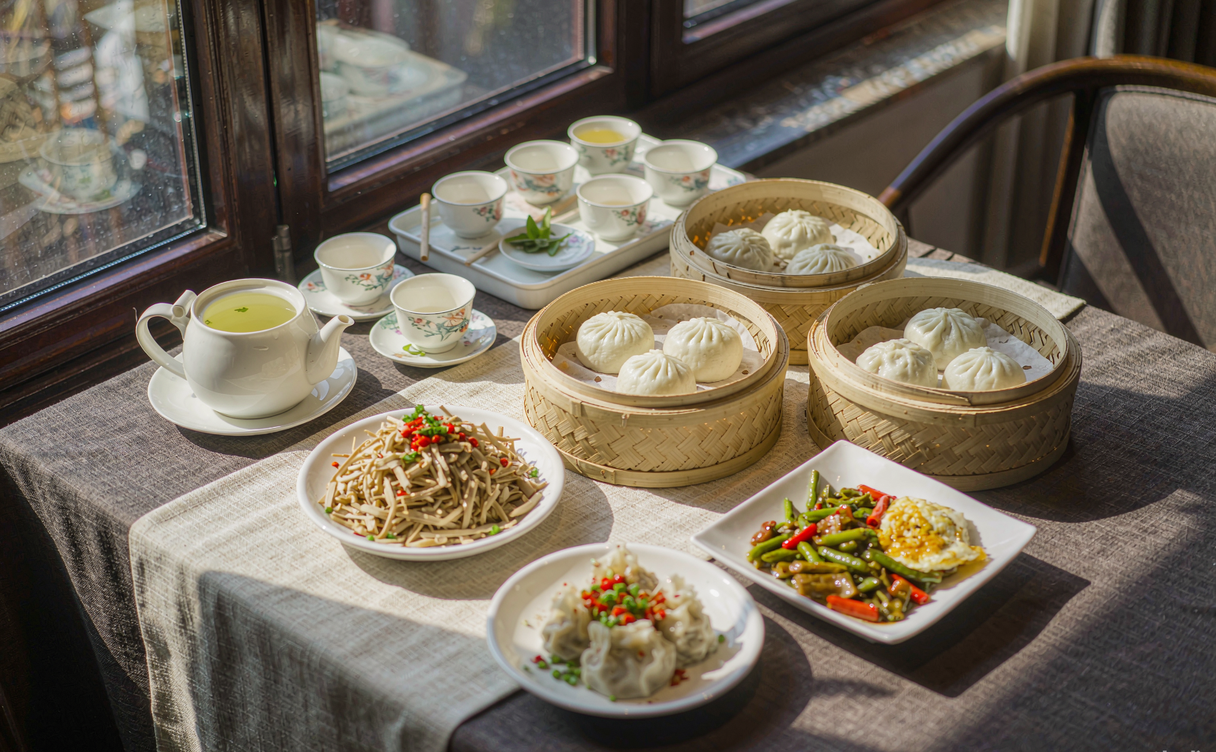
The local word for this meal is zaocha (早茶), early tea, and it is a seated, multi-course affair rather than a grab-and-go bite. The classic houses are Fuchun, Yechun (冶春) by the Slender West Lake, and the more working-class Gonghechun (共和春). You order a pot of mixed tea, a Yangzhou blend of green, black and flower teas, then a spread of small plates.
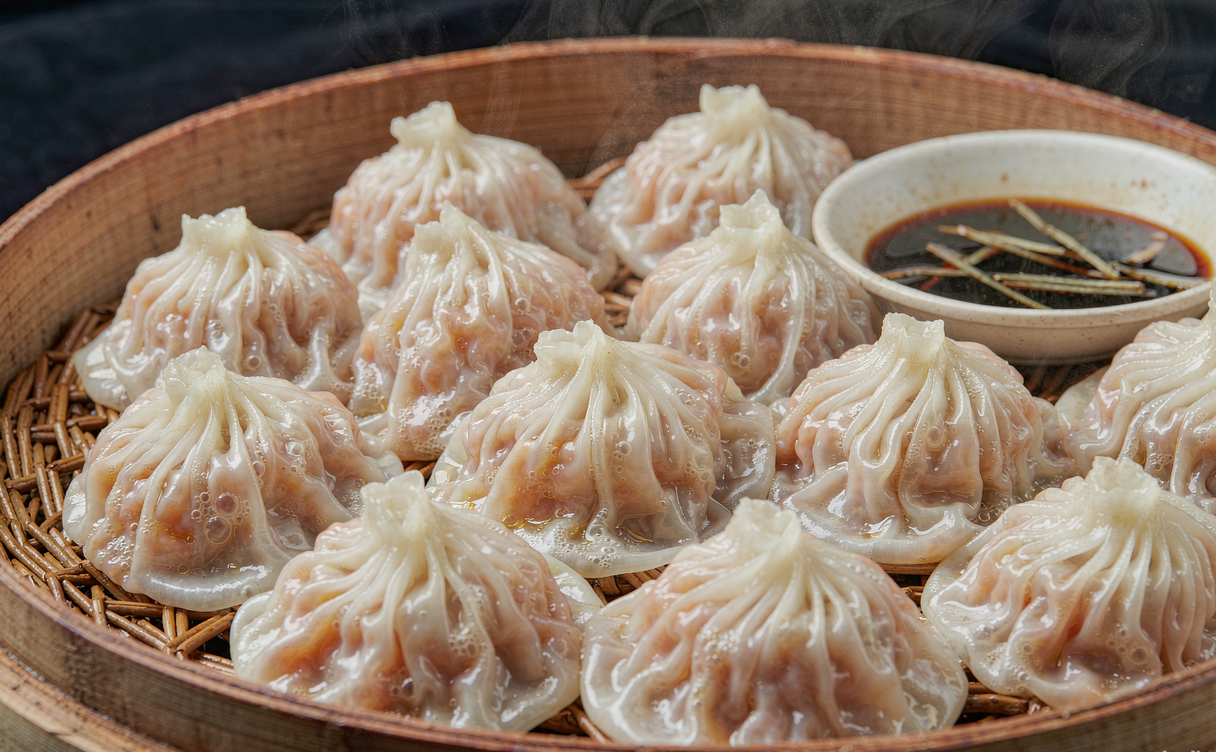
Yangzhou breakfast stars include crab roe soup dumplings (蟹黄汤包, xiehuang tangbao), delicate purses of broth and crab fat you sip through a straw; three-dice buns (三丁包, sandingbao) filled with chicken, pork and bamboo; five-dice buns (五丁包) for a richer version; jade shaomai (翡翠烧卖) with a green vegetable filling; and thousand-layer cake (千层油糕, qianceng yougao), a latticed sweet spiral. A full breakfast for one runs RMB 60 to 120 (USD 8 to 17) depending on how many steamers you open.
We tell travelers to go hungry and slow. The meal is meant to last an hour, and rushing it misses the point. On our last visit a retired teacher at the next table explained each bun as it arrived, which is the kind of local generosity Yangzhou is known for, and it turned a meal into a lesson.
Tofu, cut to threads
No dish shows Huaiyang skill like dried tofu threads. The cold version, blanched shredded tofu (烫干丝, tang ganxi), dresses silken threads with soy, sesame and scallion oil. The hot version, lion’s head with dried tofu (大煮干丝, dazhu ganxi), simmers those same threads in a gentle chicken broth with shrimp and ham. A plate is RMB 28 to 48 (USD 4 to 7). We have watched cooks at Yechun pull a block into hair-thin strands in under a minute, and it never stops being impressive, because the cut is the dish.
Lion’s head and the savory mains
The lion’s head meatball (狮子头, shizitou) is the dish travelers remember: a palm-sized ball of pork, sometimes laced with crab roe (清炖蟹粉狮子头), braised until it yields to a spoon. A single ball with broth is RMB 38 to 68 (USD 5 to 9). Salt-water goose (盐水鹅, yanshui’e) is the other local staple, a pale, fragrant poach of goose eaten cold in slices, RMB 30 to 50 (USD 4 to 7) a half bird. Yangzhou fried rice (扬州炒饭), despite being copied worldwide, is worth eating here where the grains are distinct and the ham and shrimp are real.
Best restaurants in Yangzhou for these classics are the old teahouses for breakfast and a handful of Huaiyang banquet houses for dinner. We book the teahouses for the morning and a quiet restaurant near the old canal for the evening, because the two meals show different sides of the same refined hand, and the contrast is the point of visiting.
Best seasons and timing
Spring, March to May, is the peak: crab roe is at its richest and the city’s gardens are in bloom. Autumn, September to November, is the second window, with milder weather and good poultry. We cross-check the season before scheduling, because Yangzhou’s charms are outdoor as much as culinary and the weather shapes both the canal walk and the crab roe, which is the dish most worth timing.
Getting there
Yangzhou has no central high-speed station of its own for some lines, so most travelers arrive via Nanjing or Zhenjiang and transfer, about 1 hour from Nanjing and 2 from Shanghai. For ticketing and onboard food, our China high-speed train guide for foreigners is the practical reference. Yangzhou Taizhou Airport (YTY) serves major hubs, and the city sits on the Grand Canal, a UNESCO listing we note for travelers interested in the waterway that fed this cuisine.
The Grand Canal is documented by UNESCO, which records the channel’s role in moving grain and cooks between north and south for a thousand years, and that history is why Yangzhou became a kitchen at all.
Where we send people
For a first Yangzhou food day, we book Fuchun or Yechun for the morning zaocha, walk the Slender West Lake, then eat lion’s head and salt-water goose at a canal-side house in the evening. That arc shows the city’s rhythm better than any single restaurant. We avoid the tourist-fried rice stands near the gates and steer clients to places where the tofu is cut to order, because the knife work is the whole promise of Huaiyang cooking.
A sample eating day
We suggest this rhythm to newcomers. Morning: zaocha at Fuchun with crab roe dumplings and thousand-layer cake. Late morning: walk the Slender West Lake while the tea settles. Lunch: a plate of blanched tofu threads and a small lion’s head. Afternoon: coffee by the old canal. Dinner: salt-water goose and a crab roe lion’s head at a banquet house. It is leisurely by design, and it lets the precision of the food sink in.
Final bites
Yangzhou rewards patience. Its food is not loud, and its best moments are small: a thread of tofu, a sip of crab broth, an hour that disappears over tea. For a different but related style, our Shanghai soup dumpling guide shows how the same region’s dumpling craft travels downriver, and the comparison is a good one to make on a single trip.
Closing note
Eat here once and you understand why China’s cooks hold this city in such quiet regard. The breakfast alone is worth the train fare, and the banquet that follows explains a thousand other menus you will meet on the road. Yangzhou is a lesson dressed as a meal, and we send people back every year for exactly that reason.