

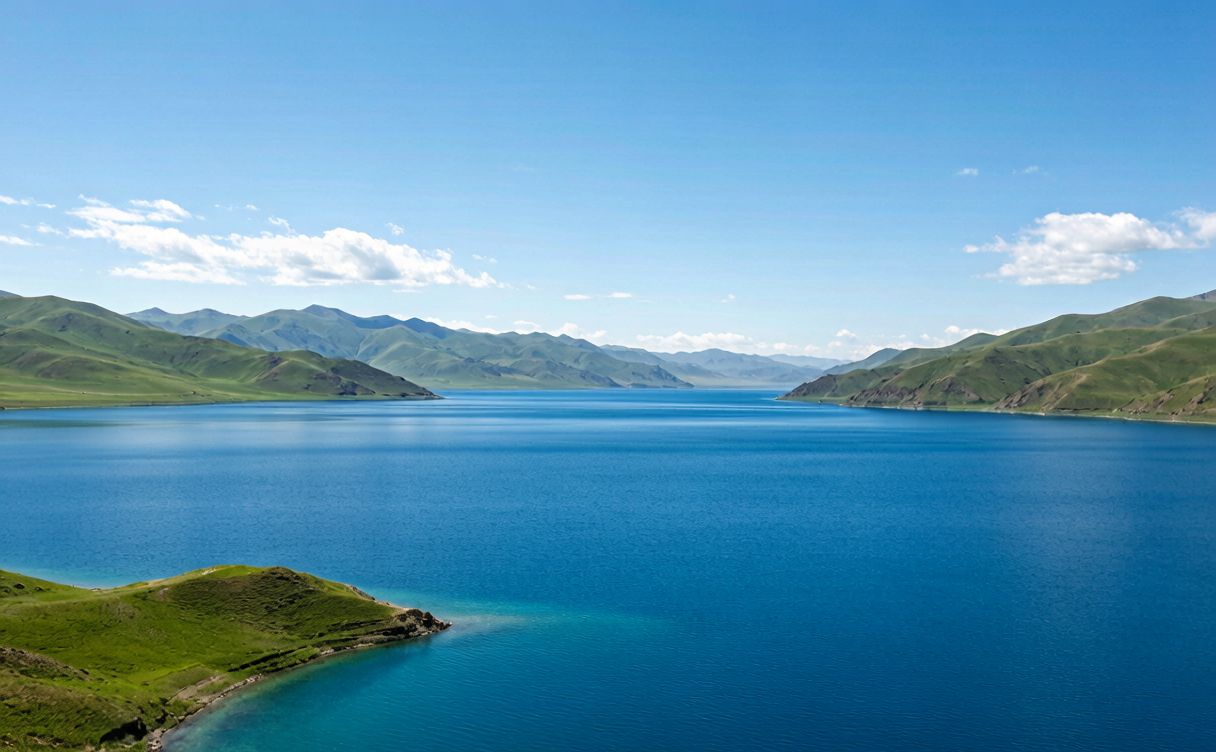
The first time I stood on the shore of Sayram Lake (also called Sailimu Lake or Sayram Hu), I stopped talking. The water was a blue I did not know existed on land, deep and almost unreal, ringed by snow-streaked mountains that dropped straight into the cold. A local guide beside me smiled and said the Kazakh name means something like “a lake on the ridge of the sky.” The Chinese nickname is even more poetic: the “Last Tear of the Atlantic,” because this is as far east as the warm Atlantic moisture ever reaches before the great interior deserts swallow it.
Sayram Lake sits in the northwest of Xinjiang, China, up near the Kazakhstan border, at about 2,070 meters above sea level. It is the largest and highest alpine lake in Xinjiang, China. Most travelers plan their Xinjiang trip around deserts and Silk Road towns, then add this lake as a stop on the way north — and it ends up being the picture they show everyone back home. I want to give you the practical, first-person details that actually help you plan.
Getting There from Urumqi
Getting to Sayram Lake from Urumqi is the classic first leg of a northern Xinjiang loop. The straight-line distance is not huge, but this is real mountain geography, so budget your time.
The most common route is by road. From Urumqi you head west on the G30 Lianyungang–Khorgas Expressway, passing through the lush, windswept Dzungarian Basin. The drive to the lake is roughly 540–560 km and takes about 6 to 7 hours with stops. I broke it up with an overnight in a smaller town, which I recommend — a long single-day push leaves you arriving tired and the lake deserves a clear head.
If you prefer rail, you can take a high-speed train from Urumqi to Bole (Bortala) Station, which is the nearest city to the lake, then a taxi or pre-booked car for the final 90-minute hop north. Some tours combine the train with a private transfer so you skip the long highway drive but still control your schedule.
A rental car with a driver is the most flexible option. The lake is circled by a one-way scenic ring road, and having your own vehicle lets you stop wherever the light is good. If you are building a northern route, pair this visit with the nearby Guozigou Bridge and the lavender fields of Huocheng in summer.
For a full regional plan, read our Xinjiang 7-day itinerary and our broader Xinjiang travel guide. If you start in the capital, our Urumqi things to do guide explains how to spend your first nights before heading out.
What to See
The lake itself is the main event, but the surroundings are worth real time. Here is what I found worth stopping for.
The shoreline and viewing platforms
A paved ring road runs about 90 km around the lake, and almost every kilometer has a pull-off. The eastern and southern shores catch the early sun and turn the water gold-pink. The western end, backed by the taller ridges, is where I saw the deepest, most saturated blue. Get out of the car. The shoreline is grazed by horses and sheep, and in June and July the meadows explode with wildflowers — yellow buttercups, purple gentians, and whole carpets of red tulips that grow only at this altitude.
Guozigou Bridge
Just south of the lake, the Guozigou (Fruit Valley) crossing is an engineering spectacle: a long cable-stayed bridge slung across a green canyon. There is a dedicated viewing area where you can photograph the lake, the bridge, and the snow peaks in one frame. I spent an unexpected hour here.
Kazakh yurts and local life
In summer, Kazakh herders set up yurts near the shore. You can sometimes drink fresh milk tea, try homemade cheese, or just watch eagles wheel over the water. It is a gentle, non-performative look at pastoral life in Xinjiang, China. Ask before photographing people, and tip modestly if you accept food.
The Alpine Lake
What makes Sayram Lake different from other famous Chinese lakes is its altitude and its mood. At 2,070 meters, the air is thin and clean, and the surface changes color with the sky — steel blue under cloud, gem blue in sun, near-black at dusk. Because it is a closed, alpine lake fed mostly by snowmelt and rain, the water is strikingly clear.
I visited twice. In July the shore was soft and green and full of families picnicking. In late September the same shore was silver with frost at dawn, the tourists gone, and the silence was total. Both versions are worth seeing, but they are completely different trips.
The lake is also a bird haven. Migrating swans and geese rest here in spring and autumn, and if you are quiet at the northern inlets you may spot them gliding in. Bring binoculars; the distance across the open water plays tricks on your eyes.
One honest warning: this is a high mountain lake near the Kazakhstan border, and it is cold even in summer. I wore a fleece and a windbreaker in August and was glad for both. The wind comes off the water fast and drops the temperature 10 degrees in minutes. Do not plan to swim — the water stays around 10°C (50°F) even at peak summer, and there are no safe swimming beaches.
Tips
These are the practical things I wish someone had told me before my first visit.
- Dress in layers, always. Mornings and evenings are genuinely cold. Pack a windproof jacket even if Urumqi is 35°C.
- Circumnavigate by car. The ring road is one-way and about 90 km. Give yourself at least half a day, ideally a full day with a picnic stop.
- Fuel up in Bole. Gas and food options at the lake are limited and pricier. Fill the tank and bring water and snacks.
- Cash and apps. Mobile payments dominate. Set up Alipay or WeChat Pay before you leave the city; small yurt vendors may prefer cash.
- Altitude. At 2,070 m most people are fine, but take it easy on the first morning if you arrive from low elevation.
- Border zone. This is near the Kazakhstan border in Xinjiang, China. Carry your passport, and follow any checkpoint instructions calmly.
- Stay overnight if you can. The lake at sunrise, before the day-trippers arrive, is the real reward. There are lakeside yurt stays and a few hotels at the south gate.
Best Time
The best window is roughly June through early October, and each month gives a different lake.
- June–July: Wildflower peak. Meadows are at their most colorful, and the weather is mild. This is also the busiest scenic period.
- August: Warmest, most stable weather, long daylight. Good for the ring-road drive and photography.
- September–early October: My personal favorite. The crowds thin, the air is crisp, and the surrounding hills turn gold. Frost on the grass at dawn makes for stunning photos.
- Winter (Nov–May): Harsh, snow-blocked roads, and many facilities close. Only attempt it with a specialized winter tour.
If you are matching this lake to a wider seasonal plan, our guide to the best time to visit Xinjiang breaks down the region month by month, including how Sayram Lake fits into a northern loop with Kanas and Hemu.
Good to know
Sayram Lake is part of the Silk Road scenic belt in the northwest of Xinjiang, China, and is managed as a national scenic area with a single ticket gate. Opening hours and the exact ticket price change by season, so confirm before you travel. For official, up-to-date details on the lake and the wider region, consult the Xinjiang tourism board: Xinjiang Travel — Official Tourism. I also recommend checking current border-zone entry notes with your hotel or tour operator, since nearby areas near the Kazakhstan frontier can have occasional access changes.
Sayram Lake rewarded me more than almost any “must-see” spot I was sent to. It is remote, it is cold, and it asks for a long drive to reach — but the blue is worth the effort. If you are already coming to Xinjiang, China for the deserts and the Silk Road, give yourself the extra day for this high, quiet lake. You will be the one showing the photo to everyone back home.