

What Xiaolongbao Really Are
Xiaolongbao (小笼包, Xiǎolóngbāo) are the pleated soup dumplings that arrive at the table in a bamboo steamer, each one holding a spoonful of hot broth trapped inside the wrapper. The first time I tried to lift one with chopsticks in a crowded Shanghai brunch house, the skin split and the soup ran down my wrist — a rite of passage every visitor goes through. They look like modest pork buns, but the genius is the liquid: a pork-and-gelatin aspic that melts into soup during steaming.
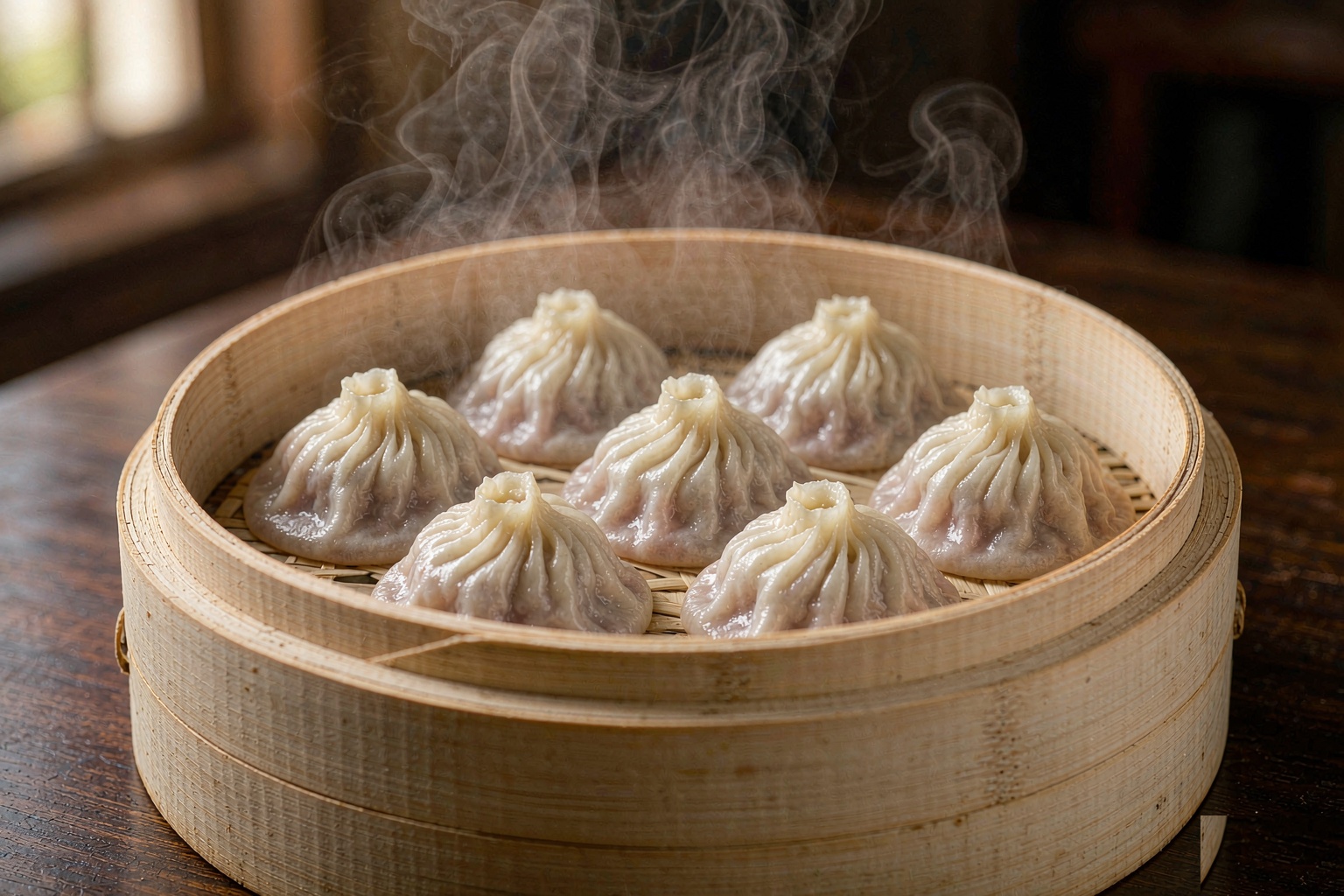
Although people call them “Shanghai soup dumplings,” the form comes from the Jiangnan town of Nanxiang, now absorbed into Shanghai’s suburbs. Today they sit at the heart of Shanghai’s soup-dumpling culture and are a benchmark dish of Huaiyang cuisine, the refined Jiangsu style known for knife work and delicacy.
How They Taste
A good xiaolongbao is a three-part hit. The wrapper is thin enough to see light through but strong enough to cradle the soup. The filling is finely minced pork, seasoned just short of salty, with a whisper of ginger and scallion. And the soup — that’s the payoff — is rich, meaty and clean, not greasy. Eaten in one careful bite, the order is: sip the broth, then chew the pork and dough together.
Part of the appeal is texture contrast. The pleated crown stays slightly chewy; the base, where it met the paper liner, picks up a faint toasty note. Done right, it is one of the most satisfying single bites in Shanghai Benbang cooking.
Core Ingredients
For about 16 dumplings (two to three servings):
- Wrapper dough: 200 g plain flour, 100 ml warm water, a pinch of salt — rested 30 minutes, then rolled paper-thin
- Filling: 250 g fatty pork mince (around 20% fat), 1 tbsp light soy, 1 tsp Shaoxing wine, 1 tsp sesame oil, 1 tsp grated ginger, 2 tbsp finely sliced scallion, a pinch of white pepper and sugar
- The soup (aspic): 300 ml good chicken stock set with 1–2 sheets gelatin (or use traditional pork-skin stock reduced until it gels when cold)
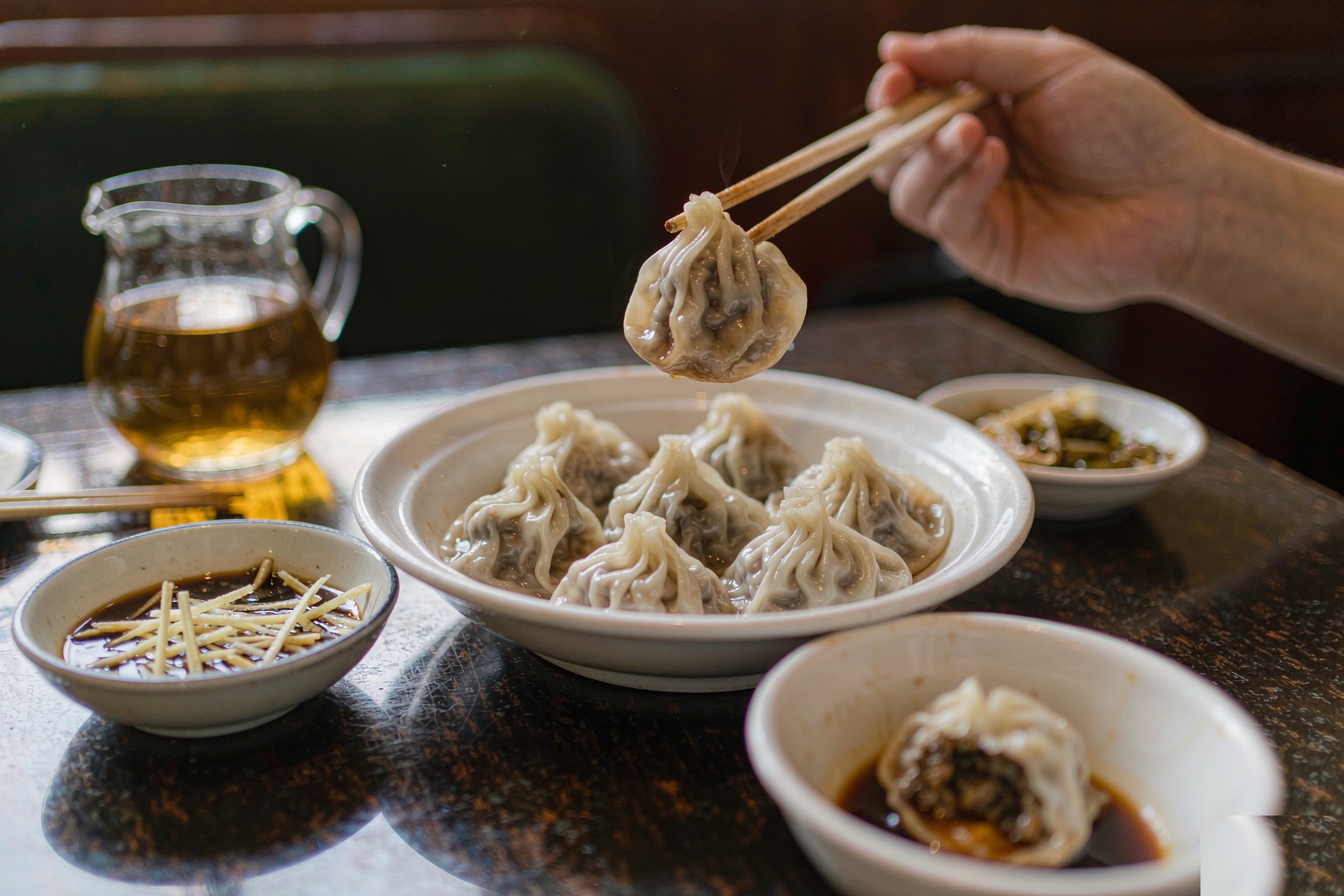
- To serve: aged black vinegar, shredded ginger, a little soy
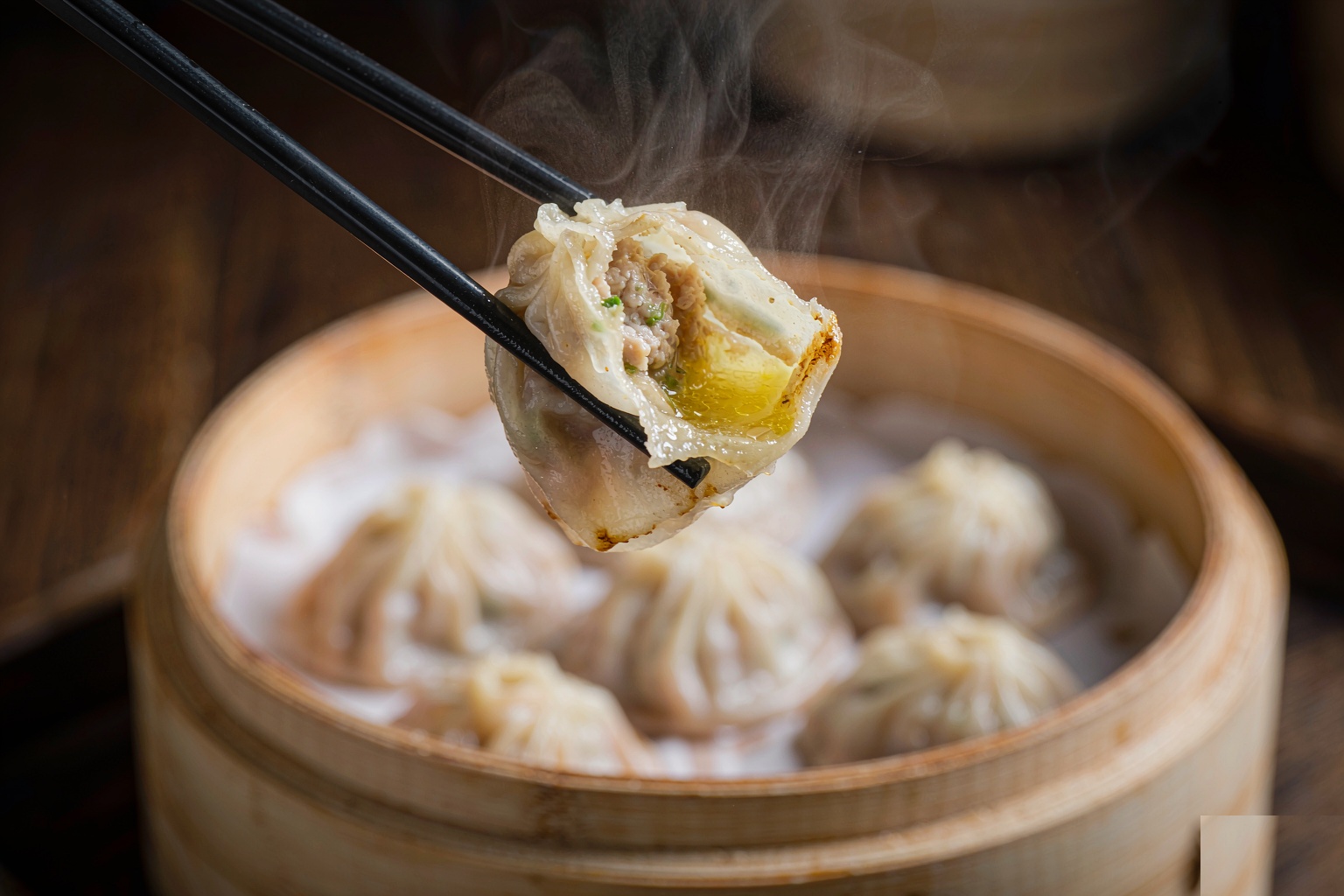
The aspic is the non-negotiable. Without it you simply have a small bun. Home cooks can cheat with gelatin; purists simmer pork skin for an hour and chill the result until it slices like jelly.
Who They’re For
Xiaolongbao suit almost everyone. They are not spicy, not bony, and easy to share, which makes them a safe and delightful order for families, older travelers, and anyone nervous about “adventurous” Chinese food. They pair naturally with other Chinese dumplings on a mixed table.
Two cautions. The soup is scalding — children should be helped, and nobody should bite straight in. And because the wrapper is delicate, they are a poor choice for eating on the move; xiaolongbao want a table, a steamer, and a minute of patience. People who avoid pork or gelatin should look elsewhere, though many Shanghai shops now offer crab-roe or vegetarian versions in season.
Step-by-Step Method
1. Make the aspic. Warm the stock, dissolve the gelatin, and chill until firm (a few hours, or overnight). Dice it small.
2. Mix the filling. Combine pork with soy, wine, sesame oil, ginger, scallion, pepper and sugar. Fold in the diced aspic last, keeping everything cold so it stays solid.
3. Roll the wrappers. Knead the dough, rest it, then roll into a rope and cut into 16 pieces. Press each into a 8–9 cm disc — thinner at the center, slightly thicker at the rim so the pleats hold.
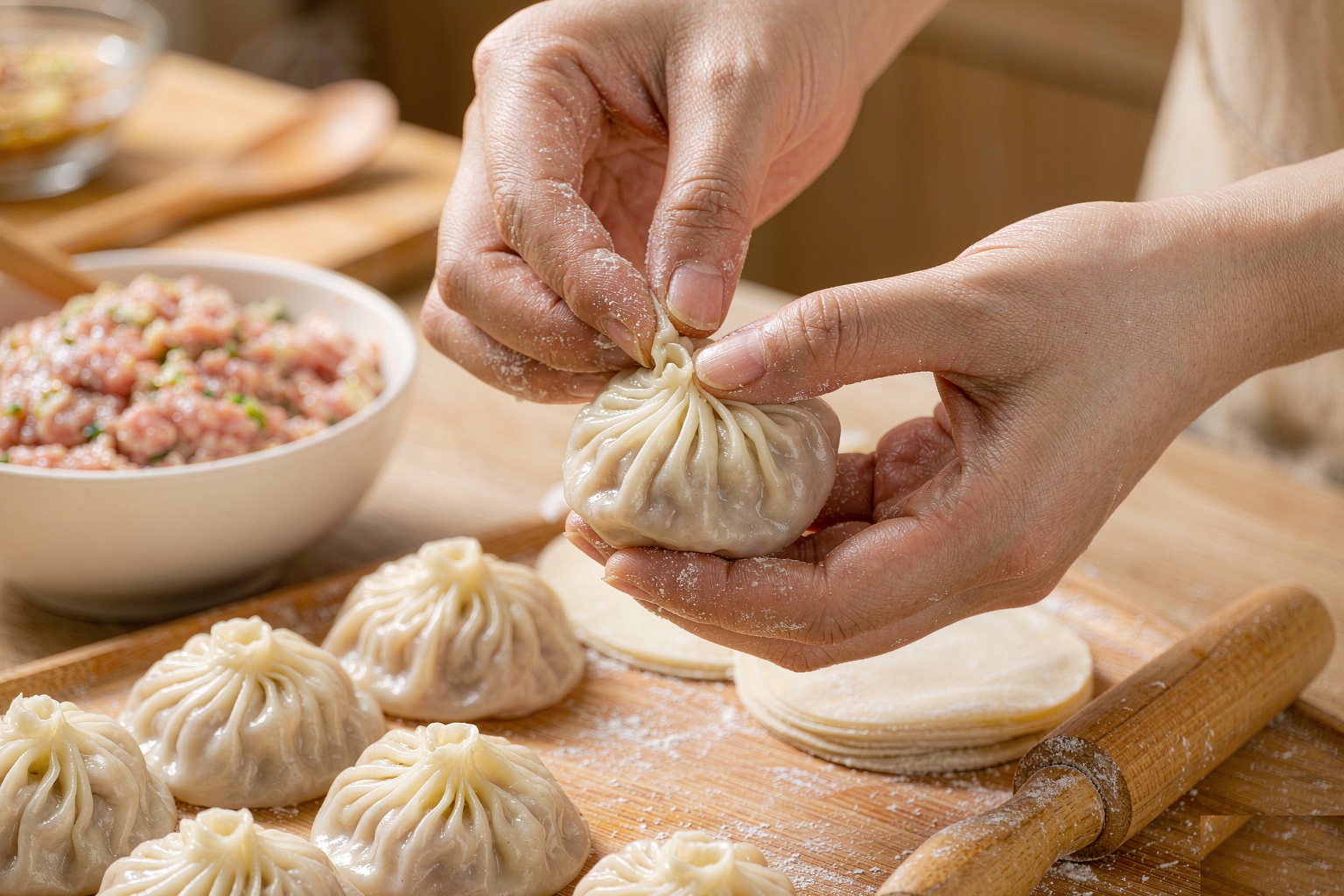
4. Fill and pleat. Spoon a heaped teaspoon of pork-aspic mix into the center. Gather the edge into 14–18 pleats, twisting at the top so the bundle seals but the soup stays enclosed. Rest the finished dumplings on squares of parchment.
5. Steam. Bring water to a rolling boil, set the steamer over it, and steam 8 minutes exactly. The wrappers turn translucent and the tops glisten. Over-steam and they collapse; under-steam and the aspic stays solid.
6. Eat carefully. Lift each dumpling onto your spoon. Nibble a small hole in the pleated top, slurp the broth, then eat the rest with a dip of vinegar and ginger.
The Eating Technique Worth Learning
Locals have a rhyme for it: “Lightly lift, slowly move, open a window, sip the soup.” The “window” is the small bite you take to release steam and broth before the whole thing goes in. Trying to eat it like a regular bun is how sleeves get stained, so the spoon is your friend. In a proper house the dumplings come straight from steamer to table in under a minute, and they are best in that first rush of heat.
If you want to compare Regional styles, a China food tour through Shanghai, Wuxi and Nanjing will show you how the filling shifts — Wuxi leans sweet, Nanjing adds crab roe in autumn — while the soup-in-a-dumpling idea stays constant.
Common Mistakes at Home
Three things trip up first-timers. The first is a wrapper that’s too thick — it steams into a doughy lump instead of a sheer pouch, so roll thinner than feels safe. The second is letting the aspic warm up while you pleat; if it melts on the board the soup never forms, so keep the filling bowl over ice if your kitchen is hot. The third is crowding the steamer: dumplings that touch fuse together, and the ones in the middle undercook. Give each one a finger’s width of space and line the tray so nothing sticks. Get those three right and a home batch is surprisingly close to a Nanxiang original.
Where to Try Them
Nanxiang’s original houses and the big Shanghai brunch halls (老字号) are the famous stops, but nearly every Jiangnan city has a respected version. Look for places where the steamers never stop moving and the queue is local, not only tourist. A fresh, hot xiaolongbao beats a famous-name one that sat under a heat lamp every time.