

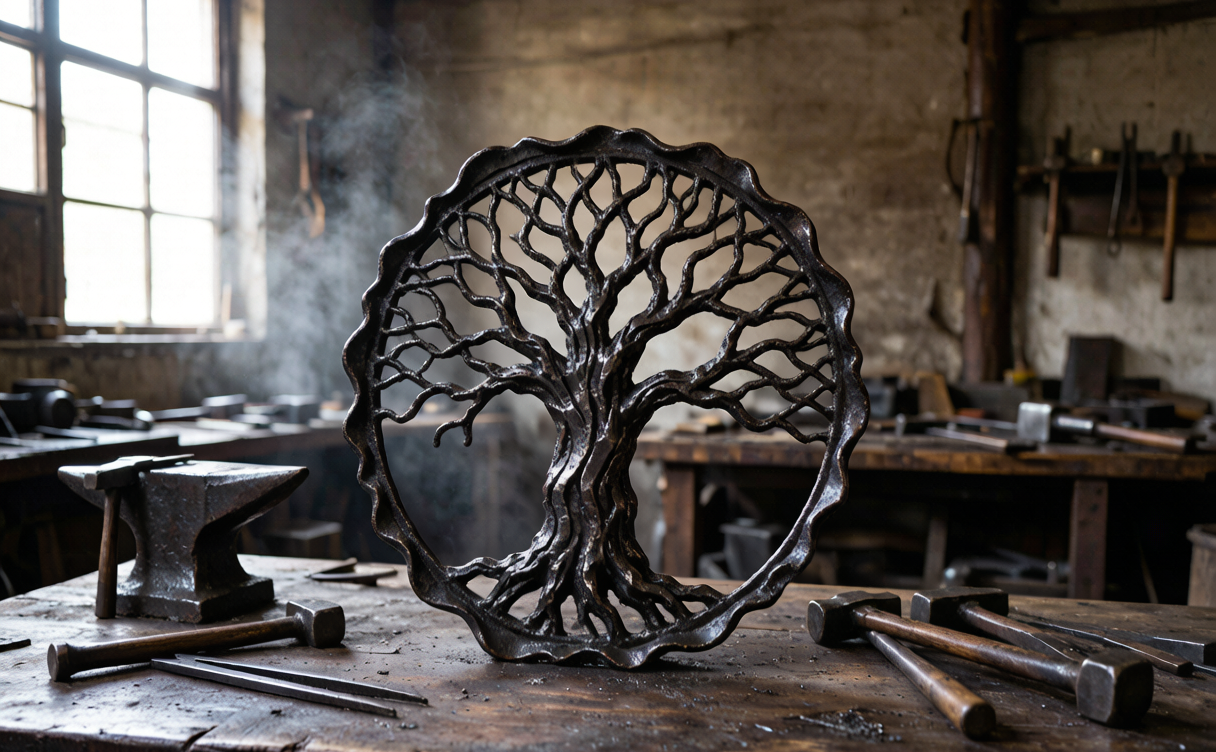
Sometime in the seventeenth century a blacksmith called Tang Peng set up next door to a painter, watched him work, and started copying ink landscapes in hammered wrought iron. The results — black, flat, framed against white paper — became Wuhu iron painting, and the workshops are still going four hundred years later. That is the kind of place this is: a Yangtze port that was forced open to foreign trade in 1876, got rich on rice, built a Gothic cathedral and a row of consulates on a hill, and then quietly turned itself into a theme-park capital. This Wuhu travel guide covers all of it, plus the practicalities of using the city as a staging post for the Anhui mountains.
Content Preview
- Why a treaty port on the Yangtze ended up with four Fantawild parks
- Best time to visit and what each season costs you
- Trains from Nanjing, Shanghai and Hefei, plus the monorail
- Fantawild, Zheshan Park, the old town and the iron painting workshops
- Where to stay, what to eat, a two-day plan and practical tips
Why Wuhu Is Worth a Stop
Wuhu sits on the south bank of the Yangtze where the Qingyi River joins it, about 90 kilometres upstream of Nanjing. In the Qing dynasty it was one of China’s four great rice markets, and after the 1876 Chefoo Convention it became a treaty port — hence the European-style customs house, the consulate buildings on Fanluo Hill and St Joseph’s Cathedral, finished in 1891 and still in use.
Today about 3.7 million people live in the prefecture. The city has a straddle-beam monorail as its main urban rail system, which is unusual in China and genuinely useful for visitors, and it is the headquarters of Fantawild, the domestic theme-park operator whose flagship cluster sits on the city’s southern edge. Wikipedia’s entry on Wuhu is a decent primer on the treaty-port period.
Best Time to Visit
Late March to May. The best window: 15–26°C, cherry and plum blossom on Zheshan, and the theme parks open without the summer queues.
June to mid-July. Plum rains and Yangtze flood season. Grey, humid, and the outdoor rides shut in heavy weather.
Late July and August. Hot — often 32–37°C with high humidity. This is peak Fantawild season for Chinese families, so expect long waits. The water park is the sane choice.
September to November. The other good season, and for most people the best time to visit Wuhu. Dry, 16–27°C, clear enough to see across the river. Skip 1–7 October.
December to February. 2–9°C and damp, with no domestic heating. Some outdoor park zones close or run reduced hours. Hotels are cheap.
How to Get There
Wuhu Station is on the Shanghai–Kunming and Hefei–Fuzhou high-speed lines, so connections are good in all four directions. Wuhu Xuanzhou Airport (WHA) handles domestic flights only. If you are working out how to get to Wuhu from Nanjing, the train takes less time than the taxi to Nanjing’s airport. Our guide to China’s high-speed trains for foreigners explains passport-name booking.
| From | Mode | Duration | Typical cost |
|—|—|—|—|
| Nanjing South → Wuhu | High-speed rail | 40 min | ¥55 (US$8) |
| Shanghai Hongqiao → Wuhu | High-speed rail | 2 hr 20 min | ¥200 (US$28) |
| Hefei South → Wuhu | High-speed rail | 50 min | ¥70 (US$10) |
| Wuhu → Huangshan North | High-speed rail | 1 hr 30 min | ¥130 (US$18) |
| Wuhu → Chizhou, for Mount Jiuhua | High-speed rail | 45 min | ¥60 (US$8.50) |
| Wuhu Station → Fantawild parks | Monorail + bus, or Didi | 40 min | ¥6 / ¥45 (US$6) |
The monorail runs two lines with fares of ¥2–6 and English station names on board. Didi rides across the city rarely exceed ¥30.
Wuhu Travel Guide to the Sights That Matter
The Fantawild parks
Four Fantawild (方特) parks sit side by side in Yijiang district: Dreamland, Adventure, Oriental Heritage and a summer water park. They are not copies of Western parks. Oriental Heritage in particular builds its rides around Chinese myth — the Monkey King, the Legend of the White Snake, Nüwa mending the sky — using dark-ride projection and motion simulators rather than big steel coasters.
Tickets run around ¥230–320 (US$32–45) per park, cheaper booked online a day ahead, and each takes a full day if you want everything. Almost no signage is in English and the pre-ride safety announcements are Chinese-only, so watch what everyone else does. Go on a weekday if you possibly can.
Zheshan Park and the old pagoda
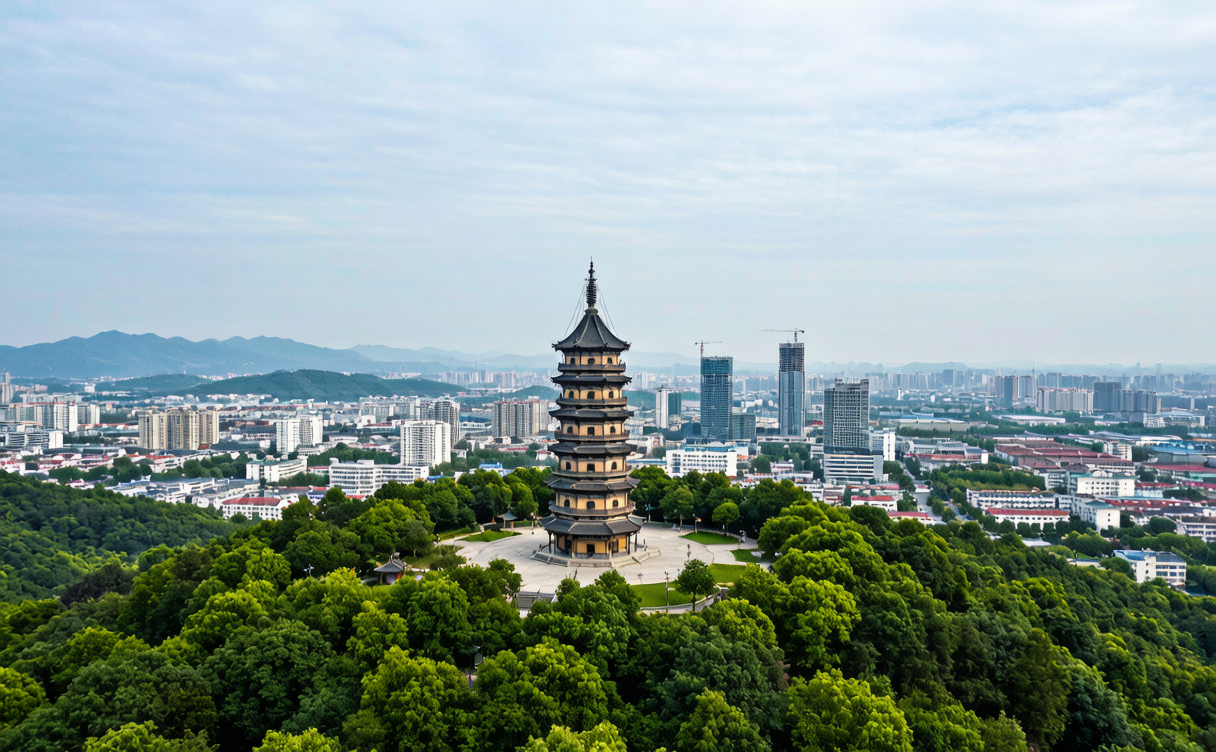
Zheshan (赭山) is a red-earth hill of about 86 metres right in the middle of the city, wooded, free to enter, and busy from six in the morning with people walking, singing and playing cards. On its slope stands Guangji Temple (广济寺) and the brick pagoda that gives Wuhu one of its classical “eight views” — the tower in clear mountain haze. Allow ninety minutes, more if you stop for tea.
Down on the waterfront, the Ming-dynasty Zhongjiang Pagoda (中江塔) marks the confluence of the Qingyi and the Yangtze. The promenade around it is the best evening walk in the city.
The old town and the treaty-port streets
Wuhu Ancient City (芜湖古城) is a restored block of grey-brick shophouses, temples and a former county yamen. It is a reconstruction rather than a survival, and it knows it, but the lanes around Nanmenwan and Huajie still have the right proportions and it is free to wander.
More interesting to my eye is the treaty-port layer: the old British consulate buildings on Fanluo Hill, the customs house, and St Joseph’s Cathedral, a twin-spired Gothic church consecrated in 1891 and open for services. None of it is packaged as a tourist site, which is exactly why it is worth an hour.
Iron painting
Wuhu iron painting (芜湖铁画) is national intangible cultural heritage and the city’s real souvenir. Wrought iron strips are heated, hammered, chiselled and welded into what look like ink-brush pines, bamboo and mountains, then lacquered black and mounted on white board. Workshops and a small museum sit near the old town; small framed pieces start around ¥300 (US$42) and large panels run into thousands. Watching one being forged is the better part of the visit.
Where to Stay
Budget — ¥130–250 (US$18–35). Chain hotels around Wuhu Station and Zhongshan Road pedestrian street. No English at reception, but check-in for foreign passports is routine at the bigger chains.
Mid-range — ¥300–550 (US$42–77). Jinghu district, near Zheshan and the Zhongshan Road area, is the practical base: monorail access, food streets, ten minutes to the river.
Splurge — ¥700–1,400 (US$98–196). International-brand towers in the new CBD, plus themed hotels attached to the Fantawild complex, which are worth the money only if the parks are your main reason for coming.
Deciding where to stay in Wuhu mostly comes down to this: parks first, sleep south; city first, sleep in Jinghu.
What to Eat
Wuhu eats like the lower Yangtze — freshwater fish, soy, sugar in places you would not expect — with Anhui robustness underneath.
- Xiazi mian (虾籽面) — noodles in a broth loaded with tiny river shrimp roe. The city’s breakfast. ¥12–18.
- Wuwei banya (无为板鸭) — smoked and pressed duck from the county upriver, sold by weight. ¥40 a half.
- Zharou zhengfan (渣肉蒸饭) — steamed rice topped with rice-flour-coated pork belly, wrapped in a leaf. ¥8.
- Jiangxian (江鲜) — river fish restaurants along the Qingyi, priced by the catch.
Sample Itinerary
A two-day Wuhu itinerary for foreign tourists, arriving from Nanjing.
Day 1 — the city
- 09:00 arrive Wuhu, monorail to Jinghu, drop bags
- 09:45 Zheshan Park and the pagoda
- 12:00 shrimp roe noodles near Zhongshan Road
- 13:30 iron painting workshop and museum
- 15:30 Wuhu Ancient City, then Fanluo Hill and the cathedral
- 18:00 riverside promenade and Zhongjiang Pagoda at sunset
Day 2 — either/or
- Full day at one Fantawild park, back in the city by 19:00, or
- 07:30 train to Huangshan North for the mountain, leaving Wuhu behind
With three days, add Chizhou and Mount Jiuhua, or push on to the whitewashed Huizhou villages in our Hongcun ancient village guide, rather than a second theme park.
Practical Tips
- Book park tickets online. Fantawild sells through WeChat mini-programs and Chinese OTAs; entry is by passport scan, so buy under your passport name, not a nickname.
- Scenic-area reservations. Most Anhui sites now expect an online booking even when entry is free. Ask your hotel to submit it.
- Payment. Set up WeChat Pay or Alipay with a foreign card before arrival. Ticket windows and small restaurants often will not take cash quickly, though they must accept it.
- English is scarce. Outside international hotel chains, expect none. Save every address in Chinese and use an offline translator.
- Didi over taxis. Street taxis rarely use meters for foreigners; Didi has an English interface and fixed fares.
- The monorail runs roughly 06:30–22:00 and is the fastest way across town during rush hour.
FAQ
Is Wuhu worth visiting?
As a destination in its own right, only if theme parks, crafts or treaty-port architecture interest you. As a one-night stop between Nanjing and Huangshan, absolutely — it breaks the journey somewhere with real character and hotel prices half those of the mountain towns.
How many days should I spend?
One full day covers the city. Two if you are adding a Fantawild park, which needs a day of its own.
What are the best things to do in Wuhu with children?
The Fantawild parks, in a word. Oriental Heritage suits younger kids; Dreamland has the bigger rides. Zheshan Park and the riverside promenade fill the gaps.
Can I use Wuhu as a base for Huangshan?
You can, but I would not. Huangshan North is ninety minutes away and the mountain really needs a night on or near it. Use Wuhu as a stop on the way, not a base.
Is Wuhu iron painting worth buying?
If you want one genuinely local souvenir from Anhui, yes. Buy at a workshop rather than a station shop, ask to see the forge, and expect ¥300 and up for something small and real.
Written by Karl · Updated August 6, 2026