

For six years, from 1267 to 1273, the Mongol army sat outside this city and could not get in. The walls held, the river kept supplies coming, and the siege became the hinge on which the conquest of southern China turned. Look at the moat and you understand why: it averages around 180 metres wide and reaches roughly 250 metres at its broadest, the widest city moat in China and a problem no siege engine could solve. This Xiangyang travel guide covers the walls, the moat, the hillside where Zhuge Liang was living when Liu Bei came looking for him, and the beef noodles you are expected to eat at seven in the morning.
Content Preview
- Why Xiangyang mattered, from the Three Kingdoms to the Mongol siege
- Best time to visit and what the Han River valley does each season
- Trains from Wuhan, and onward to Wudang Mountain
- The city wall, Gulongzhong, Tang City film set and Mi Fu’s shrine
- Where to stay, the beef noodle ritual, a two-day plan and practical tips
Where Xiangyang Sits and Why It Mattered
Xiangyang straddles the Han River (汉江) in northwest Hubei, upstream of where the Han joins the Yangtze at Wuhan. The south bank, Xiangcheng, is the walled old city; the north bank, Fancheng, is the commercial half. They were separate towns for most of history, merged under the name Xiangfan until 2010, when the city took its older name back.
Geography made it. Whoever held Xiangyang controlled the corridor between the North China Plain and the middle Yangtze, which is why it recurs throughout the Three Kingdoms story and why the Siege of Xiangyang is one of the most studied engagements in Chinese military history. About 5.2 million people live in the prefecture.
Best Time to Visit
Late March to May. The best stretch. Typically 15–27°C, green on the hills at Gulongzhong, and the moat at its prettiest.
June to August. Hot and humid, often 30–37°C, with heavy thunderstorms in July. Wall-walking is unpleasant after 10am; go at dawn or after dark.
September to early November. The other good season and, for most people, the best time to visit Xiangyang: 16–26°C, dry, clear light on the river, and the Tang City night shows still running.
Late November to February. Cold, 1–10°C, damp, no central heating. Genuinely quiet, and a frost-lit city wall is a fine thing, but pack properly.
How to Get There
Xiangyang East is the high-speed station, on the Wuhan–Shiyan line and the Zhengzhou–Chongqing line; it sits well outside the centre, so budget 30 minutes and around ¥50 for the taxi. Xiangyang Station in Fancheng handles slower services and is closer in. Xiangyang Liuji Airport (XFN) flies domestic routes. Anyone puzzling over how to get to Xiangyang from Wuhan should just take the train, booked under your passport name. Trains west from here also serve the forest reserve described in our Shennongjia guide.
| From | Mode | Duration | Typical cost |
|—|—|—|—|
| Wuhan → Xiangyang East | High-speed rail | 1 hr 30 min | ¥140 (US$20) |
| Zhengzhou East → Xiangyang East | High-speed rail | 2 hr | ¥190 (US$27) |
| Chongqing North → Xiangyang East | High-speed rail | 3 hr 30 min | ¥300 (US$42) |
| Xiangyang East → Wudangshan West | High-speed rail | 40 min | ¥55 (US$8) |
| Xiangyang East → Yichang East | High-speed rail + change | 2 hr 30 min | ¥170 (US$24) |
| Xiangyang East → old city wall | Taxi or Didi | 30 min | ¥50 (US$7) |
City buses cost ¥2 and Didi is cheap and reliable. A car with driver for a day covering Gulongzhong and Tang City runs ¥400–600 (US$56–84).
Xiangyang Travel Guide to the Sights That Matter
The city wall and the widest moat in China
The Xiangyang city wall (襄阳古城墙) runs roughly 7.3 kilometres in its Ming-dynasty form, with several original gates surviving. Linhan Gate (临汉门) on the north side is the one to start at: climb the gate tower, look down at the Han River on one side and the moat on the other, then walk the parapet.
The moat (护城河) is the real spectacle. Averaging around 180 metres and up to roughly 250 metres wide, it is less a ditch than a lake wrapped around a city, edged with parks and willow paths. Walking its outside takes about two hours; boat trips run in season for around ¥60 (US$8.50). Wall access is typically ¥30–60 (US$4–8.50) depending on the section, the parks are free, and the whole thing is floodlit after dark. Inside, Zhaoming Terrace (昭明台) anchors the old centre and Beijie (北街) is the restored pedestrian street running north from it — commercial, but the place to eat in the evening.
Gulongzhong: where Zhuge Liang was found
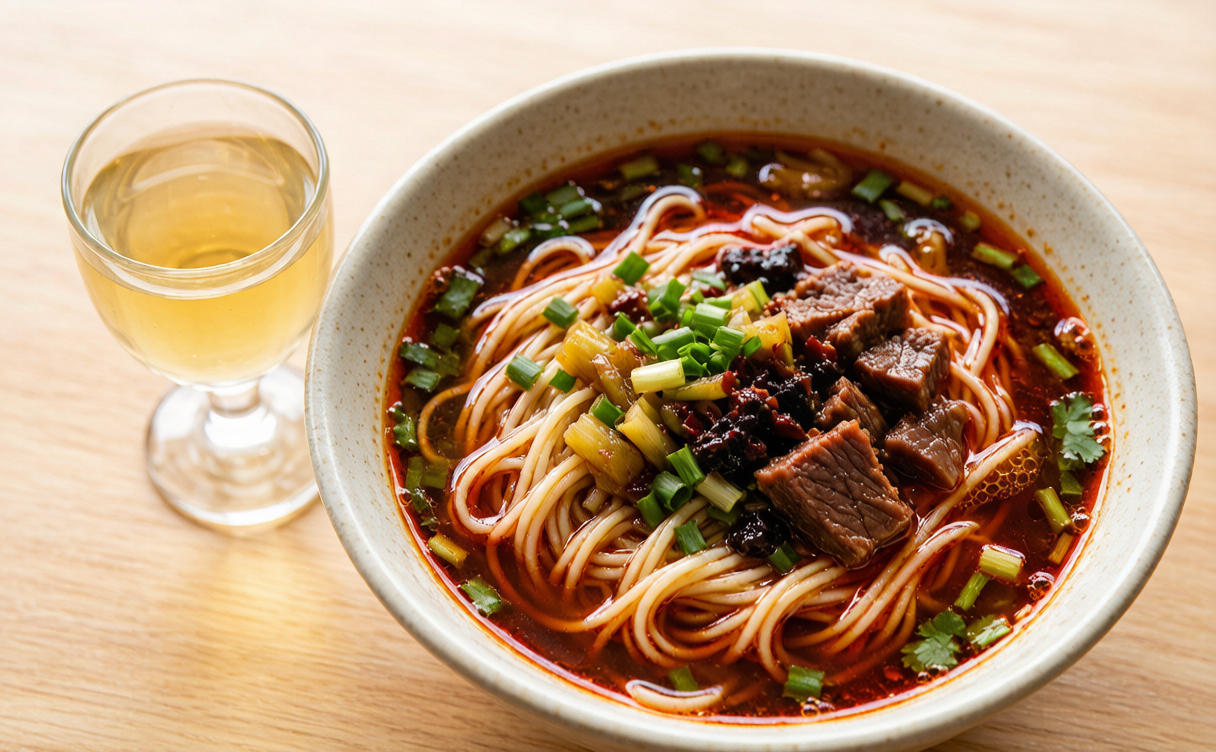
Thirteen kilometres west of the city, Gulongzhong (古隆中) is the wooded hillside where Zhuge Liang lived as a farmer-scholar in his twenties, and where Liu Bei came three times to ask him to serve — the “three visits to the thatched cottage” every Chinese schoolchild knows. What survives is a Ming and Qing memorial complex: a stone archway, a reconstructed thatched hut, bamboo groves, a well and a temple on the slope above.
Historians argue over whether this hill or a site in Henan is the real place; it hardly matters when you are there. Tickets run around ¥60–90 (US$8.50–13), open roughly 08:00–17:30, and two to three hours covers it. Weekday mornings are calm; weekends bring coach parties.
Tang City film base
Xiangyang Tang City (唐城影视基地) was built as the set for Chen Kaige’s 2017 film Legend of the Demon Cat: a full-scale Tang-dynasty capital quarter of timber halls, a great gate, a palace and wide processional avenues. It is still a working studio, and it is enormous. Tickets are around ¥100–120 (US$14–17). Go late — the evening lighting and costumed performances are the point, and daytime sun on all that empty stone is brutal in summer.
Mi Fu’s shrine and the river
Across in Fancheng, the Mi Gong Ci (米公祠) honours Mi Fu, the eccentric Song calligrapher who called himself a madman for rocks. The courtyards hold stone-carved copies of his work and, on the right day, almost nobody else. Free or a token fee, and a good half hour before a walk along the Han embankment.
Where to Stay
Budget — ¥120–240 (US$17–34). Chains around Xiangyang Station in Fancheng and along Changzheng Road. Reliable, no English.
Mid-range — ¥280–520 (US$39–73). Inside or just outside the old city near Beijie and Zhaoming Terrace. This is where I would stay: you can walk the wall at dawn and eat noodles two minutes from your door.
Splurge — ¥650–1,300 (US$91–182). International-brand towers in the Fancheng CBD and a couple of resorts towards Gulongzhong with hill views. Anyone deciding where to stay in Xiangyang before an early train should note the East station is 30 minutes out — the old city is still the better base.
What to Eat: Noodles at Seven in the Morning
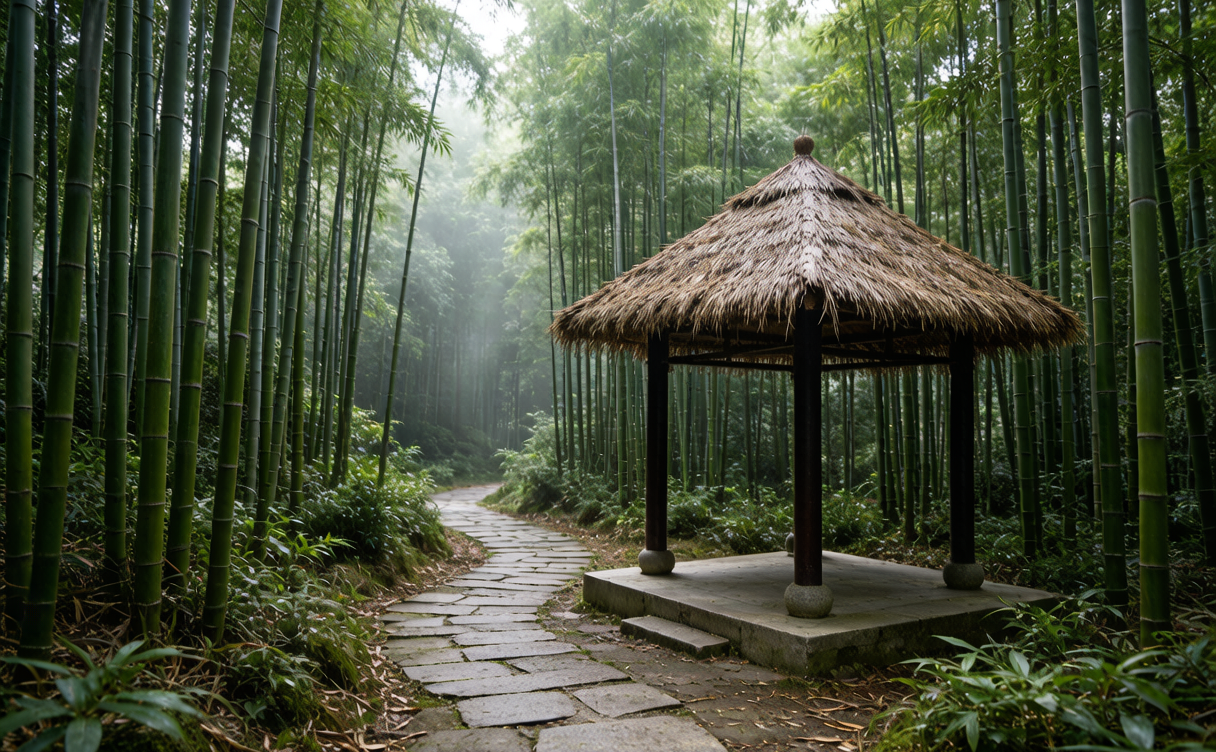
Xiangyang breakfast is a ritual and it is not gentle. Xiangyang beef noodles (襄阳牛肉面) are alkaline noodles blanched to order, drowned in beef broth, chilli oil and Sichuan pepper, topped with braised beef or tripe. You eat them on a plastic stool from about six in the morning, with a bowl of cold huangjiu (黄酒), cloudy low-alcohol rice wine, alongside. At seven in the morning. Around ¥12–18 for the noodles, ¥3 for the wine.
Beyond that: chanti (襄阳缠蹄), a pressed pork trotter roll; river fish from the Han; and flatbreads from the counties south of town. Our Wuhan food guide covers Hubei’s breakfast culture in more depth.
Sample Itinerary
A two-day Xiangyang itinerary for foreign tourists arriving from Wuhan.
Day 1 — the old city
- 07:00 beef noodles and a bowl of yellow wine
- 08:30 Linhan Gate, the wall walk and Zhaoming Terrace
- 11:00 cross to Fancheng for the Mi Fu shrine
- 14:00 walk or boat the moat
- 18:30 Beijie for dinner, then the floodlit wall
Day 2 — hills and sets
- 08:30 car to Gulongzhong; two hours on the hill
- 12:00 lunch in town
- 15:00 Tang City, staying for the evening lighting
- 20:30 back to the old city, or the last train onward
A third day gets you to Wudang Mountain and back, though it deserves an overnight.
Practical Tips
- Passport for everything. Rail tickets, scenic-area registration and hotel check-in run on your passport number. Use the manned gate at stations.
- Book Gulongzhong and Tang City online at weekends and holidays; both use WeChat mini-programs and the walk-up window can close early.
- Payment. Link a foreign card to Alipay or WeChat Pay before arriving. Keep ¥200 cash for noodle stalls.
- English is essentially absent. Save addresses in Chinese characters and photograph your hotel’s business card.
- Distances are real. Gulongzhong, Tang City and Xiangyang East are each 20–40 minutes apart by road, so a half-day driver earns its cost here.
- Summer heat. Do the wall and Tang City early or late; midday in July is punishing.
FAQ
Is Xiangyang worth visiting?
Yes, if you have any interest in Chinese history. The wall-and-moat combination is the most impressive surviving urban defence of its kind in the country, and it comes without the queues of Xi’an or Pingyao. On a ten-day first trip to China, though, it is a stretch.
How many days do I need?
Two: one for the walled city, one for Gulongzhong and Tang City. Add a third only if you are going on to Wudang.
What are the best things to do in Xiangyang in one day?
Beef noodles at dawn, the wall from Linhan Gate, the moat, and Gulongzhong in the afternoon.
Do I need to speak Chinese?
It helps enormously. Assume no English signage, no English menus and no English at reception outside the top-end chains. A translation app and saved Chinese addresses cover most of it.
Can I combine Xiangyang with Wudang Mountain?
Easily, and you should. Wudangshan West is 40 minutes away by high-speed rail, making Xiangyang the natural base or first stop before the mountain.
Written by Karl · Updated August 6, 2026