

Tucked into the barren, wind-scoured valley of the Sutlej River in far-western Tibet, China, Tholing Monastery is one of the most historically significant yet least-visited Buddhist sites in the Himalaya. We have sent travelers here on the Ngari circuit, and without exception they tell us the journey — long, high, and demanding — is repaid many times over by standing inside a temple that helped revive Tibetan Buddhism a thousand years ago. If you are building a serious Tibet travel itinerary for first-timers, understand up front that Tholing is not a quick stop; it is a destination for patient, prepared travelers who can handle altitude and remote roads.
Where Tholing Is, and Why It Matters
Tholing sits in Zhada County, Ngari Prefecture, in the Tibet Autonomous Region of China, close to the borders with India and Nepal. The monastery was founded in the late 10th century by King Yeshe Ö of the Guge Kingdom, and it became the headquarters of the “Second Diffusion” of Buddhism in Tibet, China. The king dispatched the great translator Rinchen Zangpo to Kashmir and India to invite teachers back, and the wall paintings and wooden architecture at Tholing still show Kashmiri, Indian, and Tibetan influences blending together. For context on this lineage, the Tholing Monastery article on Wikipedia is a useful primer before you go, with photos of the very murals you will stand before.
Most visitors pair Tholing with the nearby ruins of Tsaparang, the former Guge capital, about 18 km away. Together they form one of the great archaeological landscapes of the plateau. Very few foreign travelers make it this far west, so when you do, you often have the temples largely to yourself — a rare thing in a country where famous sites are crowded.
Getting to Tholing, Tibet, China
The practical gateway is Ali (Ngari) Prefecture. The fastest route is to fly: Ngari Gunsa Airport (NGQ) is served by flights from Lhasa and Chengdu (seasonal), with a one-way economy fare typically around ¥1,400–¥2,200 from Lhasa. From Gunsa you drive west toward Zhada County — a long, rough 250 km that takes roughly 5–6 hours by private 4WD. We always arrange a driver, because public transport on this stretch is unreliable and the altitude makes self-driving exhausting.
The alternative is the epic overland approach along the G219, the “Sino-Indian Border Highway,” which connects Lhasa to Ngari over roughly 1,600 km of high desert. It is spectacular but should only be attempted as part of a multi-day, guided road trip. Either way, note that this is not a journey you can do on the high-speed rail network — western Ngari has no train at all, and you should not expect one soon. Plan the overland drive with at least a week of buffer for weather and checkpoints.
Permits and Paperwork
Foreign travelers in Tibet, China require a Tibet Travel Permit, arranged through a registered travel agency as part of a guided tour — independent travel is not permitted. Because Tholing is in Ngari, you also need the additional Ali (Ngari) border-area permit issued by the Public Security Bureau. Budget extra days in Lhasa for paperwork; agencies typically need 7–15 working days. Carry your passport and permit copies at all times, as there are multiple checkpoints on the road from Lhasa to Ngari, and you cannot proceed without them.
Best Time to Visit
The window is narrow. From the best time to visit China guide, the Ngari region’s comfortable season runs late May through early October. July and August are warmest (daytime 15–22°C) but bring occasional afternoon rain and the most fellow travelers. We prefer late September to early October: cold nights near freezing, but crystal-clear skies, golden light on the mud-brick stupas, and the Sutlej valley at its most photogenic. Avoid November to April entirely — passes close, temperatures plunge below -20°C, and most guesthouses shut.
What to See at the Monastery
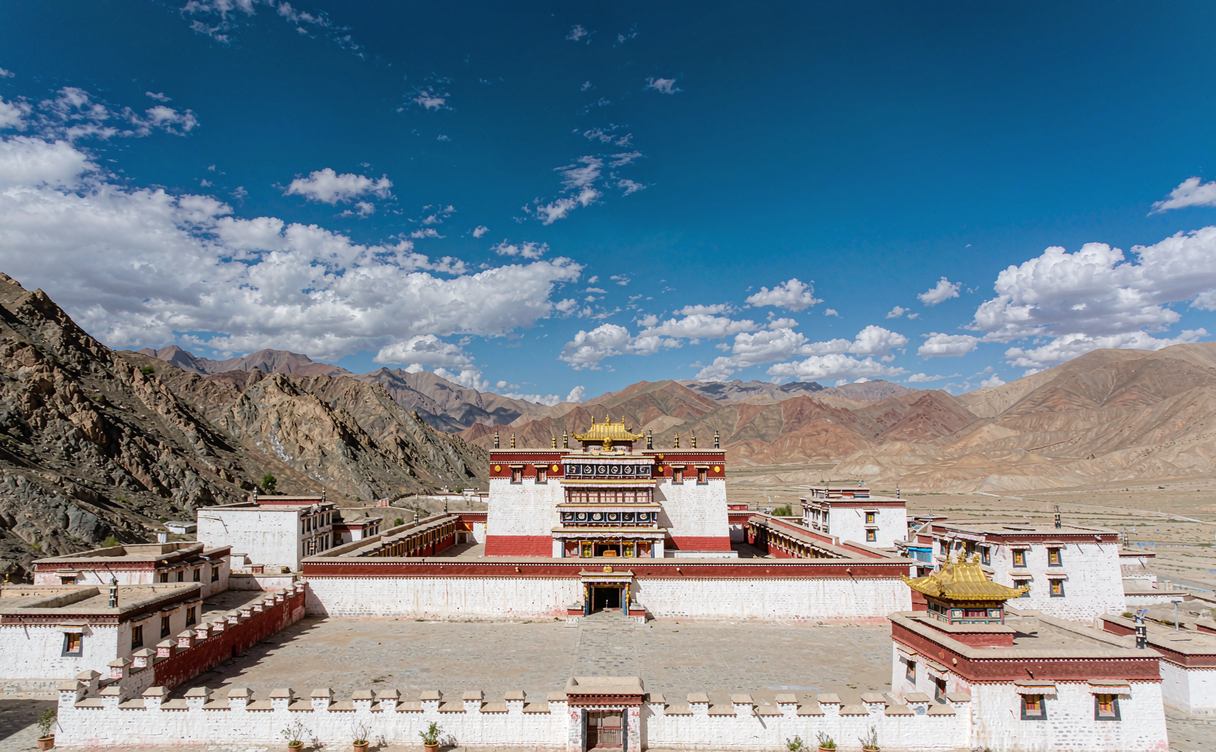
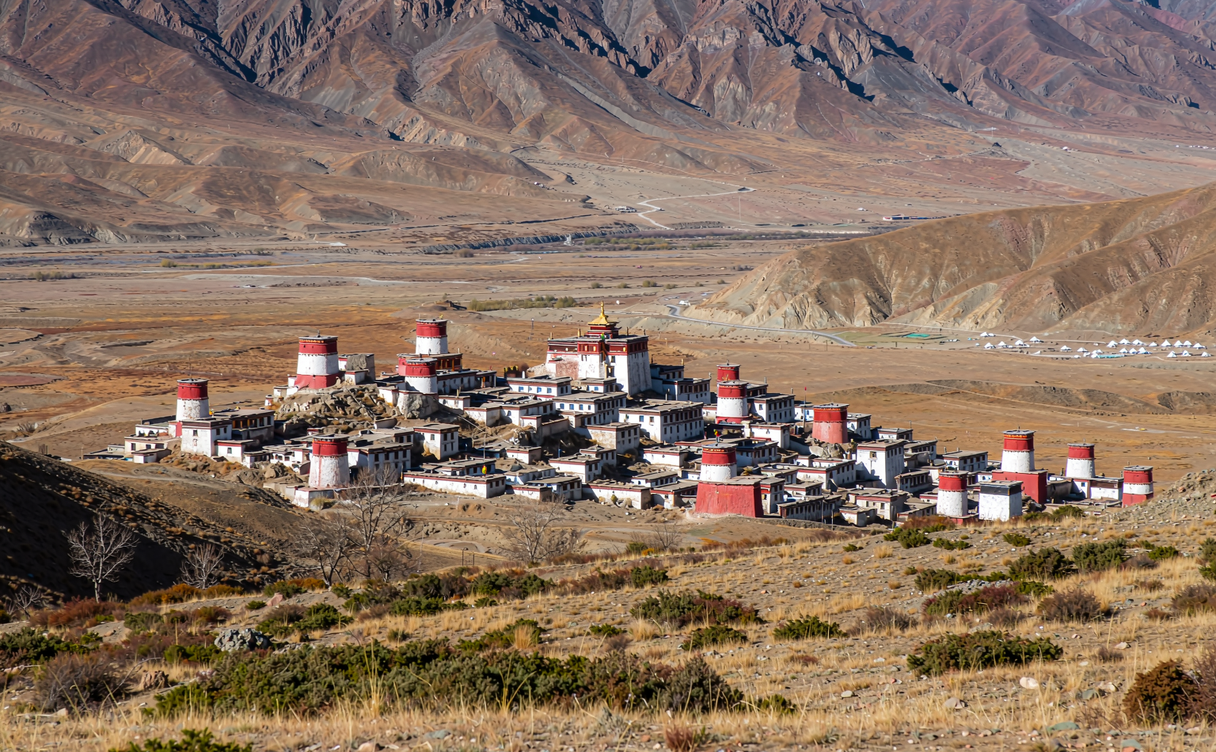
The surviving complex centers on the White Temple (Lhakhang Karpo) and Red Temple (Lhakhang Marpo). The White Temple holds a central Buddha statue and exceptional early wall paintings of Buddhas and bodhisattvas in the Kashmiri style. The Red Temple preserves mandala murals and images of protective deities. Above the temples sits a cluster of chortens (stupas), some still bearing faded frescoes.
Spend at least half a day here, and another half-day at Tsaparang if your permit and energy allow. A local guide from Zhada town costs roughly ¥200–¥300 for a half-day and is well worth it; the stories behind each mural are not signposted in English, and the climb up Tsaparang’s citadel hill is easier with someone who knows the route. The view from the top of the Guge ruins, with the Sutlej winding below, is one of the great overlooked panoramas of Asia, and the walk down through the collapsed prayer halls is unforgettable.
Where to Stay and Eat
Base yourself in Zhada County town (also spelled Zanda), about 5 km from the monastery. Accommodation is basic: the best options are clean Tibetan-run guesthouses charging ¥200–¥400 per night, with intermittent hot water and no heating beyond electric blankets. There is no international hotel chain out here. Meals are simple noodle and momo (dumpling) joints; expect to pay ¥25–¥50 per person. Bring snacks, a reusable water bottle, and any medication from Lhasa, because supplies in Zhada are limited and a stomach bug this far from a city is no joke. A thermos of hot water from your guesthouse goes a long way on the cold morning drive to the temples.
Practical Tips From the Road
Altitude at Tholing is around 3,800 m. Acclimatize in Lhasa (3,650 m) for at least two nights before flying or driving west, and move slowly on arrival. The sun is fierce — bring SPF 50, sunglasses, and lip balm. Network coverage is patchy; download offline maps. Cash is still useful in Zhada, though Alipay and WeChat Pay now work in most guesthouses. Keep a roll of toilet paper in your daypack, as temple sites have none, and carry a small headlamp for the dim interior shrines.
Tholing rewards curiosity more than almost anywhere else on the plateau, and it sits naturally alongside the cultural stops in our other western-China coverage. If your trip to Tibet, China leaves you wanting more remote landscapes, the far northwest offers its own high deserts and Silk Road ruins worth a separate journey.
A Note on Responsible Visiting
Tholing is an active place of worship as well as a heritage site. Dress modestly (cover shoulders and knees), walk clockwise around stupas, and never climb on the fragile mud-brick structures or use flash photography on the murals. Drones are prohibited without special permission. The remote location means your visit directly supports a small local community, so choose locally owned guesthouses where you can, and ask before photographing monks or pilgrims.
Sample 4-Day Ngari Add-On
If you are already in Lhasa, a realistic Tholing-focused mini-trip looks like this:
- Day 1: Fly Lhasa–Ngari Gunsa, acclimatize, drive to Zhada.
- Day 2: Full day at Tholing Monastery and Tsaparang ruins.
- Day 3: Explore Zhada earth-forest and Sutlej viewpoints; overnight Zhada.
- Day 4: Drive back toward Gunsa for the return flight, or continue the G219 west.
This is a demanding addition to any trip, but few experiences beat standing beneath a thousand-year-old Kashmiri-style Buddha with no one else in the room.
FAQ
Do I need a guide to visit Tholing?
Yes. Foreign travelers must join a registered tour with a Tibet Travel Permit, and Ngari additionally requires the Ali border-area permit. Independent travel is not allowed.
How long should I spend at Tholing?
Half a day for the monastery itself, plus a half day for nearby Tsaparang. Build in travel buffer days for the remote roads.
Is Tholing worth the effort to reach?
For history and photography lovers, absolutely. The Kashmiri-style murals and the Guge ruins together are unique in Tibet, China.