

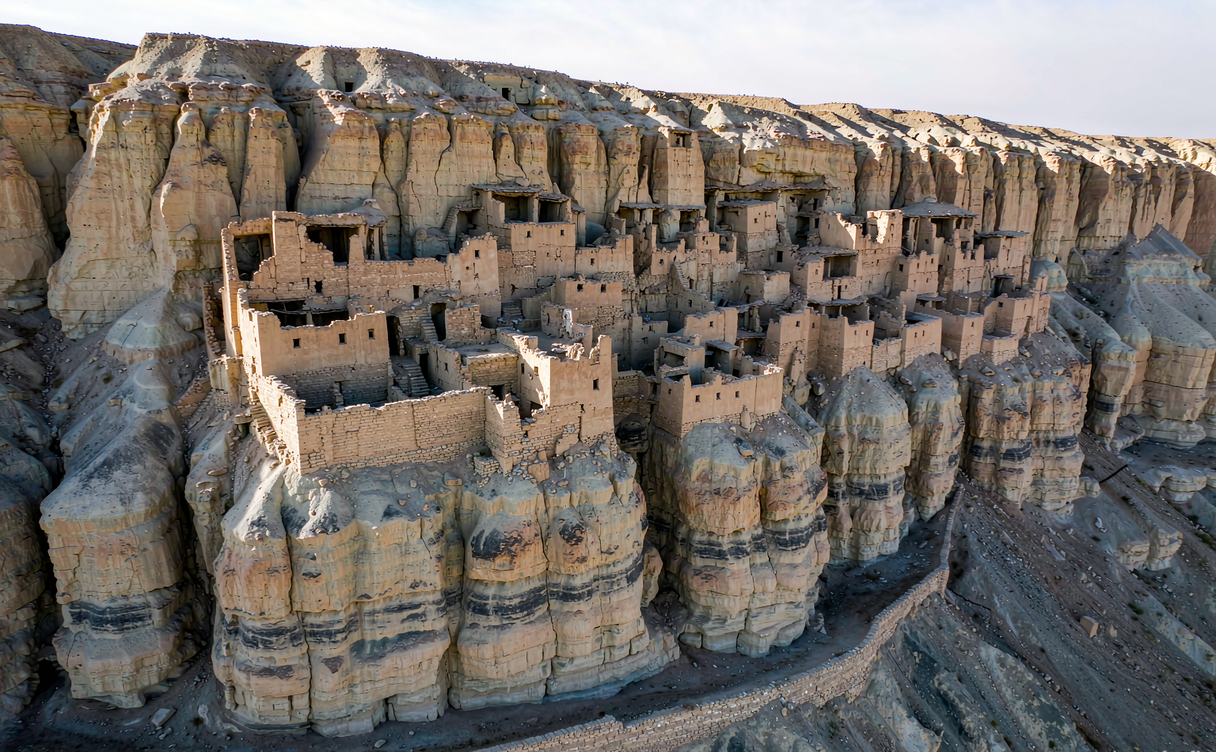
In the clay canyons of Zanda County, in the far west of Tibet, China, a ruined citadel clings to a vertical rock face and holds one of the plateau’s greatest mysteries. This is the Guge Kingdom, a civilization that ruled these valleys for almost seven centuries, produced some of the finest murals in Himalayan history, and then vanished almost overnight in the 1600s. We have walked its empty chapels with travelers who came for photos and left with questions, and we think Guge is the single most underrated ruin in Tibet, China. Because it sits in a controlled borderland, first read our China travel guide for first-timers to understand the permits that gate the region.
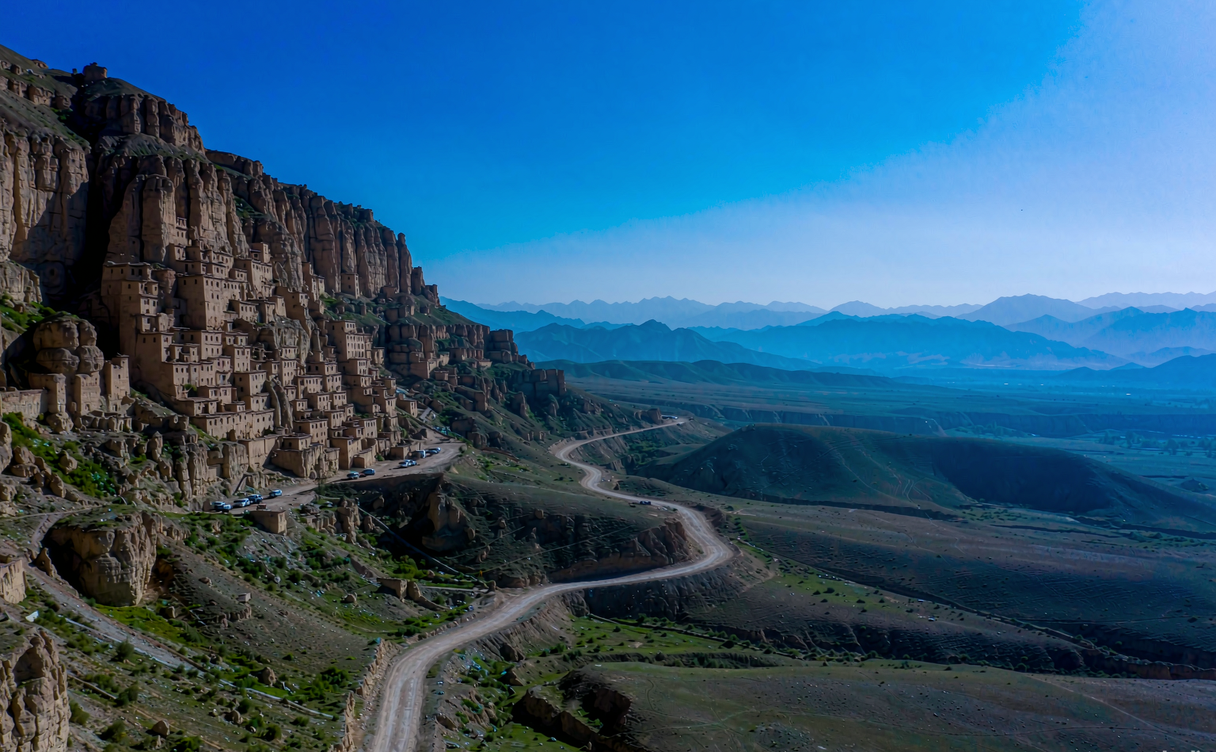
Guge is not a tidy archaeological park. It is a sprawling, half-buried city of cave dwellings, defensive walls, and temple murals scattered across a pinched clay mountain, with the emptiness of the Ngari plateau pressing in on every side, and the first sight of it—a honeycomb of windows glowing in the late light—is genuinely startling.
How to Get to Guge
The ruins lie about 250 kilometers southwest of Ngari Gunsa Airport, near the town of Zanda. Most visitors fly Lhasa to Gunsa (about two hours, 1,500 to 2,500 RMB) and then drive roughly four to five hours south through the Zanda earth forest to reach the site. The road is rough in sections and entirely weather-dependent, so a 4×4 with an experienced driver is the only sensible choice. As with all of Ngari, you cannot travel here independently: Tibet, China requires a licensed guide and a Tibet, China travel permit, plus the additional Ali-region permits that Zanda demands. Allow 200 to 400 RMB for processing and book well ahead, because the quota of foreign visitors to this corner is small.
The overland route from Lhasa along the highway is possible for the truly committed but adds a week of driving. Our high-speed train guide for foreigners covers the Lhasa leg by rail, but the final desert drive to Guge is off any rail map and best attempted with a local who knows the seasonal riverbeds and the passes that close without warning. The approach alone rewards the effort, crossing high plains where you can drive for an hour without seeing another vehicle.
Best Time to Visit
Guge shares Ngari’s short season. Travel is reliable from late May to early October, with July and August the warmest and the roads at their best, though afternoon winds can be fierce and the dust long-lasting. We favor June and September, when the light on the clay cliffs is at its most dramatic and the handful of guesthouses are not full, and the photographs you take then will be the ones you frame. Outside this window, snow and cold shut the access road and there is nowhere to stay, so do not be tempted by a cheap winter flight.
Altitude again rules everything: Zanda sits near 3,700 meters, lower than the lake country but still demanding. Acclimatize with two nights in Lhasa or Shiquanhe first, and keep the first day at the ruins short. Plan dates with the seasonal planner in our resources, but treat Guge’s summer window as the hard limit, because the site has no shelter from weather once you are on the climb.
Things to Do at Guge Kingdom
The heart of the visit is the climb. From the base you ascend through layers of the former city—cave homes, storerooms, and narrow defensive channels—to the White and Red Temples near the summit, where vivid murals of Buddhas, guardians, and apsaras survive in astonishing color, lit by narrow windows that turn the paint to stained glass. The top of the citadel, where the royal palace once stood, commands the whole canyon and explains why this spot was chosen and so hard to take, with a single switchback path as the only approach. Inside the cave dwellings you can still see the blackened soot of centuries-old cooking fires, and the sheer number of rooms carved into the clay suggests a population far larger than the empty silence implies today.
Below the main massif, the Zanda earth forest stretches for kilometers: eroded clay pinnacles in shades of ochre and rust that look like a petrified city, and that geologists date to the lake beds of an ancient Pleistocene sea. Sunset is the moment—the cliffs ignite and the ruins read as pure silhouette. A short drive away, Tholing Monastery holds more of Guge’s mural legacy and is usually bundled into the same visit. For the broader context of Tibet, China’s far-west wonders, our best things to do in China list ranks Guge among the essential, off-the-radar sites worth the effort to reach.
Food, Stay, and Money
Zanda town is small and basic. Guesthouses run 200 to 400 RMB a night with shared baths and thick quilts but no central heating, and the restaurants serve noodle soups and fried rice for 15 to 30 RMB a plate. There is no supermarket worth the name, so carry water, snacks, and any altitude medication from Lhasa. No ATM accepts foreign cards, so withdraw all cash before you fly into Ngari, and keep small bills for the entry gate and the occasional roadside tea. Pack a few energy bars and a thermos of sweet tea from Lhasa as well, because the one café in Zanda keeps short hours and the altitude makes a hot drink feel like medicine.
The kingdom’s story is told well online; Wikipedia’s Guge page summarizes the dynasty’s rise from the collapse of the Tibetan empire, its golden age of art and trade with Kashmir and northern India, and the war with Ladakh that ended it in the 1600s. Read it on the plane so the empty chapels have a history by the time you stand in them, and the mystery of a whole population that disappeared becomes something you can almost hear in the wind.
A Sample Guge Itinerary
A realistic Guge Kingdom, Tibet, China plan is about twelve days including acclimatization. Fly to Gunsa, rest in Shiquanhe, then drive south to Zanda for two full days: one for the citadel climb and murals, one for Tholing and the earth forest at golden hour. Many travelers link Guge with Lake Manasarovar and Kailash on a grand Ngari loop. For gentler rest stops on the return, lower-altitude towns worth an extra night before Lhasa, where a real bed feels like a reward earned, make the drive home gentler.
Practical Notes
Wear sturdy shoes—the climb is loose scree and broken stone, and there are no railings on drops of hundreds of meters, so watch your footing at the top. The sun is brutal and the wind cold, so layer up and bring a hat and sunscreen even in July. Signal is thin, so download offline maps in Lhasa and share your route with your guide each morning. A head torch is indispensable for the pre-dawn start that lets you reach the summit temples in the best light, and a spare battery is wise because the cold drains electronics faster than at home. Above all, tread with care: the murals are irreplaceable and the structures fragile, so stay on marked paths and never touch the wall paintings. Guge rewards the curious with a silence that lingers long after you leave, and the people of Zanda, Tibet, China are quietly proud to share a home that the world forgot for three centuries.