

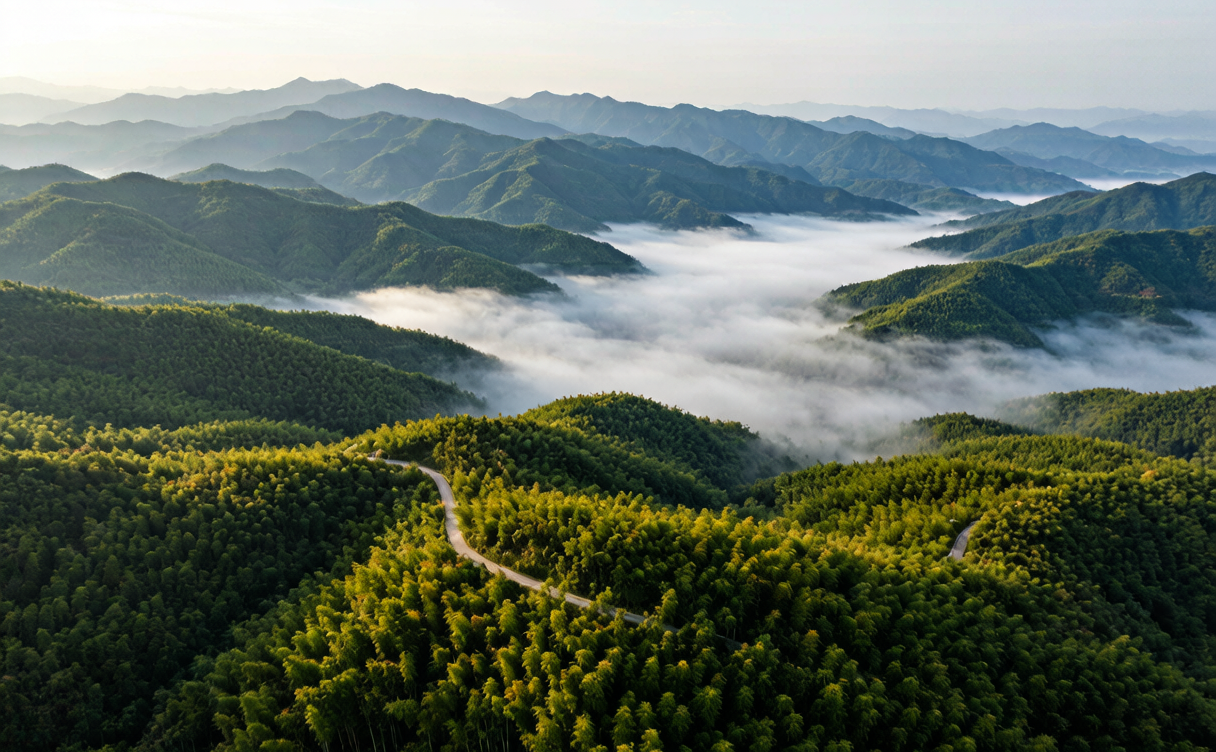
When people plan a Sichuan trip they usually think of pandas and peppery hotpot. This Shunan Bamboo Sea guide is for the travellers who want the quieter side of the province: 120 square kilometres of bamboo forest so dense it filters the light into a soft green haze. Known in Chinese as Zhuhai, the “Sea of Bamboo,” this park in southern Sichuan is where the 2004 film House of Flying Daggers was shot, and walking its ridge trails still feels like stepping into a painted scroll.
What the Shunan Bamboo Sea actually is
The Shunan Bamboo Sea is not one grove but a whole mountainous region carpeted with bamboo, split by gullies, waterfalls and wooden walkways. More than 400 species grow here, from tall mao bamboo to slender fern-leaf varieties, and the canopy rises dozens of metres overhead. On a misty morning the hills look like green waves frozen mid-roll, which is exactly where the “sea” name comes from.
The park is large enough that you cannot see it all in a single day, so a good Shunan Bamboo Sea guide plans a route instead of wandering. The highlights cluster around a few hubs: the Emerald Corridor, the Colourful Water Lake, the Inkstone Creek, and the high viewpoints at Guan Yun Terrace and the Dragon Wall.
Shunan Zhuhai tickets and shuttle
Let us talk money first, because it shapes your day. The Shunan Zhuhai tickets and shuttle are sold as a combined package at the main gate. As a 2026 baseline, a standard entry ticket runs about 100 RMB, and the mandatory sightseeing bus that loops the far-flung viewpoints adds roughly 90 RMB. You will want the bus: the scenic spots are spread across a wide area, and walking between them would eat your whole visit.
Buy at the gate or through major Chinese travel apps; either way keep the paper or QR ticket handy because drivers check it at several stops. Seniors and children often get discounted rates, so bring ID if it applies. The shuttle runs on a loop rather than on demand, so once you hop off at a stop, check the return timetable posted at the shelter.
Bamboo forest Sichuan hiking
This is the part that rewards a little effort. The bamboo forest Sichuan hiking here ranges from flat boardwalk strolls to real climbs with sweat involved. The walk up to Guan Yun Terrace is the classic workout: a long staircase through bamboo that opens suddenly onto a cliff-edge platform with a view across the entire sea of green. On a clear day you can see layered ridges fading into haze.
For something gentler, the Emerald Corridor is a flat, shaded path where sunlight falls through the canes in stripes. It is the most photographed spot in the park and for good reason. If you want a longer trek, the trail linking the Colourful Water Lake to the bamboo museum passes streams and small falls where locals wash their feet in summer.
Our China hiking and treks guide has tips on layering and trail etiquette that apply just as well under bamboo as on a mountain. And for framing those long green tunnels, the China photography tour guide covers the light and timing that make forest shots pop.
Shunan Bamboo Sea best time
Timing matters more than you might expect. The Shunan Bamboo Sea best time is late spring through early autumn, when the bamboo is lush and the streams run full. May to June brings fresh shoots and frequent mist, which photographers love. July and August are hot but the canopy keeps the forest noticeably cooler than the open Sichuan plains, making it a decent summer escape.
Avoid the worst of the winter grey if you can; the bamboo stays green but the light goes flat and the mountain viewpoints sit in cloud. Weekdays beat weekends, and arriving at the gate when it opens lets you catch the corridor before tour buses arrive around mid-morning.
How to get to Shunan Bamboo Sea from Yibin
The practical gateway is Yibin, the city where the Yangtze and Jinsha rivers meet and where Wuliangye liquor is made. Knowing how to get to Shunan Bamboo Sea from Yibin is the key to a smooth visit. From Yibin’s south bus station, direct coaches to the Changning county town near the park run several times a day and take roughly 90 minutes. From Changning you switch to a local bus or taxi for the final short hop to the east gate.
If you would rather build a longer southern-Sichuan loop, our Yibin travel guide covers the city’s riverfront and food scene, while the Zigong travel guide adds dinosaur fossils and lantern festivals within easy reach. Both pair naturally with a night or two among the bamboo.
Bamboo shoot dishes Sichuan style
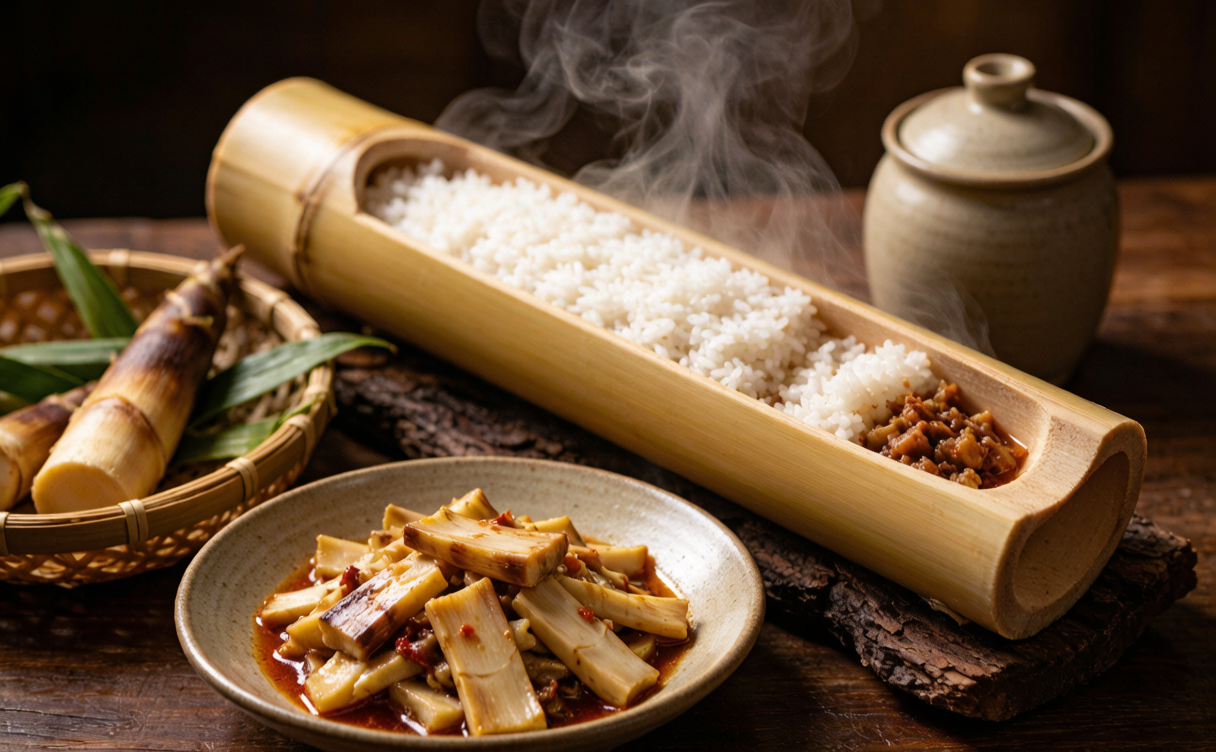
You cannot come to a bamboo sea and skip the food. The bamboo shoot dishes Sichuan style here are the real local draw: tender spring shoots stir-fried with pork, braised in broth, or pickled into a sharp side that cuts through rich meat. Many restaurants near the gates serve a “bamboo feast” where nearly every plate features the plant in a different form, from shoot tips to bamboo rice steamed inside a fresh joint.
A dish worth seeking out is bamboo tube rice, glutinous rice and red bean steamed inside a green cane until it picks up a grassy sweetness. Wash it down with local tea, and if you are lucky the restaurant will let you peek at the day’s shoots arriving from the hills. For a wider look at the region’s table, our Chengdu travel guide is the natural next stop for hotpot and street snacks a few hours north.
Where to stay
Most visitors make this a long day trip from Yibin or Chongqing, but staying inside or just outside the park changes the experience. A few guesthouses near the east gate open their windows onto bamboo, and the early-morning light before the crowds is worth the extra night. Book ahead in holiday periods, when domestic tourists fill the rooms.
If you prefer a bigger town with more dining choices, base yourself in Yibin and do the park as a day loop. Either way, pack a light rain layer; mountain weather here turns quickly.
Why it belongs on an off-beaten-path list
The bamboo sea gets busy on Chinese holidays, but on a normal weekday it feels wonderfully uncrowded compared with Jiuzhaigou or Mount Emei. That balance, easy enough to reach yet calm enough to breathe, is why it earns a spot in our China off-the-beaten-path guide. It is a reminder that Sichuan’s beauty is not only in its peaks and pandas.
A note on the forest’s background
The cultural weight of the place is real. The Shunan Bamboo Sea has been recognised as a national scenic area and appears on China’s lists of important bamboo heritage landscapes. For the official framing and conservation notes, the China National Forestry and Grassland Administration publishes background on the country’s protected forest scenic areas, including this one.
Final thoughts
A Shunan Bamboo Sea guide can list trails and tickets, but the memory that stays with you is simpler: the hush under the canes, the cool green light, and the taste of a shoot pulled from the hill that morning. It is an easy, refreshing counterpoint to Sichuan’s louder attractions, and a fine reason to slow your trip down for a day.