

Most visitors to Hong Kong, China never leave the dense core of Hong Kong Island and Kowloon. This Sai Kung guide is for the ones who want the other half of the territory: a relaxed seaside district in the New Territories where volcanic rock columns meet empty beaches and the day ends with a plate of just-caught seafood. Sai Kung is often called the “back garden” of Hong Kong, China, and once you take the coastal road out past the high-rises, you will see why.
Why Sai Kung is worth the trip
Sai Kung sits in the far east of the New Territories, wrapped by the Hong Kong, China Geopark, a UNESCO-recognised landscape of hexagonal volcanic columns formed by an ancient super-eruption. The town itself is a low-key waterfront hub with a lively seafood street, while the surrounding country parks hold some of the finest coastline in southern China. You can hike, kayak, boat to islands, or simply eat well and watch the sampans.
The appeal is contrast. One hour you are in a crowded metro car under skyscrapers; the next you are standing on a dam looking at a turquoise reservoir backed by green hills, with no building in sight.
Hong Kong, China Geopark boat tour
The headline experience is a Hong Kong, China Geopark boat tour through the eastern waters. Small kai-to ferries and chartered motor boats leave from the Sai Kung public pier and thread past the Ninepin Group and the sharp volcanic islands of the geopark. The star sights are the hexagonal rock columns at the Po Pin Chau sea stack and the layered cliffs of the High Island area.
You have two options. The cheap way is the scheduled kai-to to places like Kiu Tsui Chau (Sharp Island), where you can wade at low tide to a tombolo. The comfortable way is a half-day chartered boat shared with other travellers, which gets you closer to the column clusters and lets you stop for a swim. Either way, go on a calm day; the open channel gets choppy when the wind picks up.
The geopark’s global status is worth knowing before you go. It is part of the UNESCO Global Geoparks network, and the UNESCO Global Geoparks site explains how these landscapes are protected and studied. It adds context to the strange symmetry of those stone pillars.
High Island reservoir east dam
A Sai Kung guide would be incomplete without the High Island reservoir east dam, one of the most photogenic walks in Hong Kong, China. Built in the 1970s, the dam wall closes off a bay to form a vast freshwater reservoir, and the approach road is lined with the same hexagonal volcanic columns that made the geopark famous. On a clear day the contrast of grey rock, blue water and green hills is striking.
The walk is flat and easy, about an hour each way along the dam and the nearby MacLehose Trail section. Bring water and sun protection; there is little shade and no shop at the end. Note that parts of the area sit within a restricted zone near the coast, so check whether a permit is required on the day of your visit, especially around the secondary dam.
Tai Long Wan beach hike
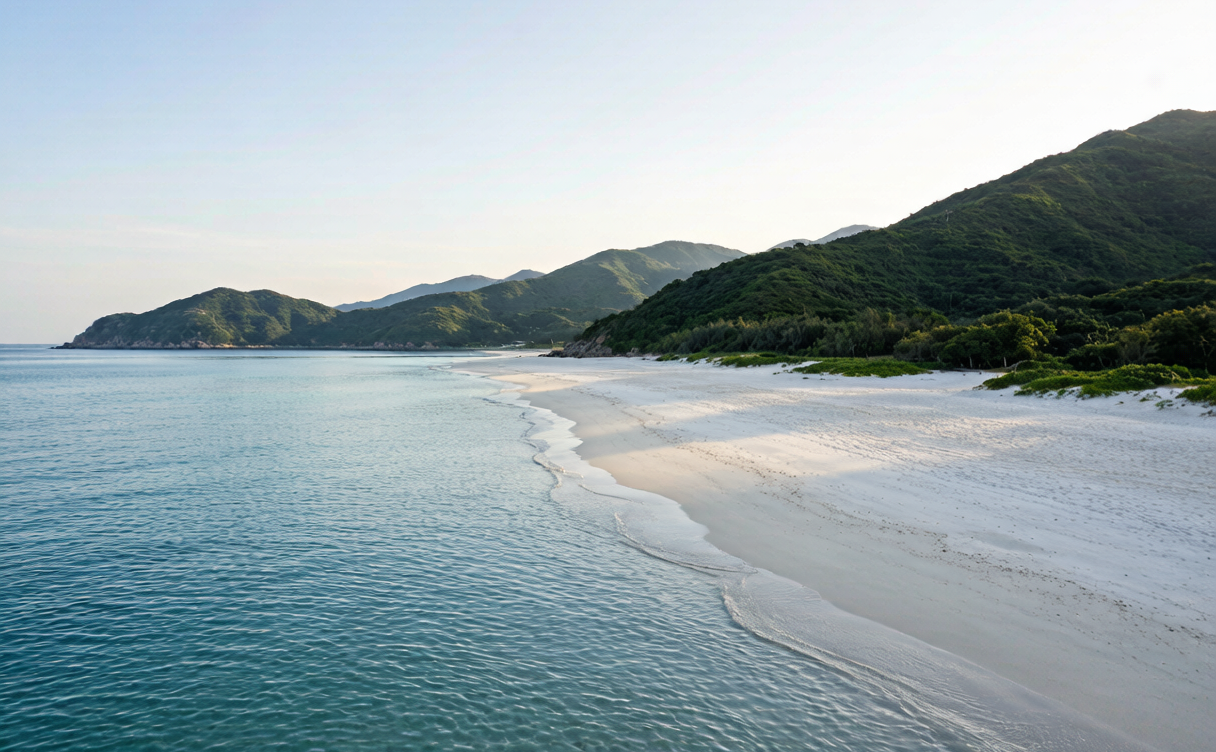
For a proper payoff beach, the Tai Long Wan beach hike is the classic Sai Kung day out. Tai Long Wan (“Big Wave Bay”) is a sweeping crescent of pale sand backed by hills, reachable on foot from the east dam via Stage 1 and Stage 2 of the MacLehose Trail, or by boat from the town pier. The hike is exposed and hilly, roughly two to three hours, but the reward is a wide empty beach with clear shallow surf and almost no development.
If a full hike sounds like too much, a boat from Sai Kung pier drops you at the beach in under half an hour. Either way, the water is cleaner and the scene calmer than the busy southern beaches of Hong Kong, China. Our China beaches guide compares this stretch with other coastal escapes across the country.
Sai Kung seafood street
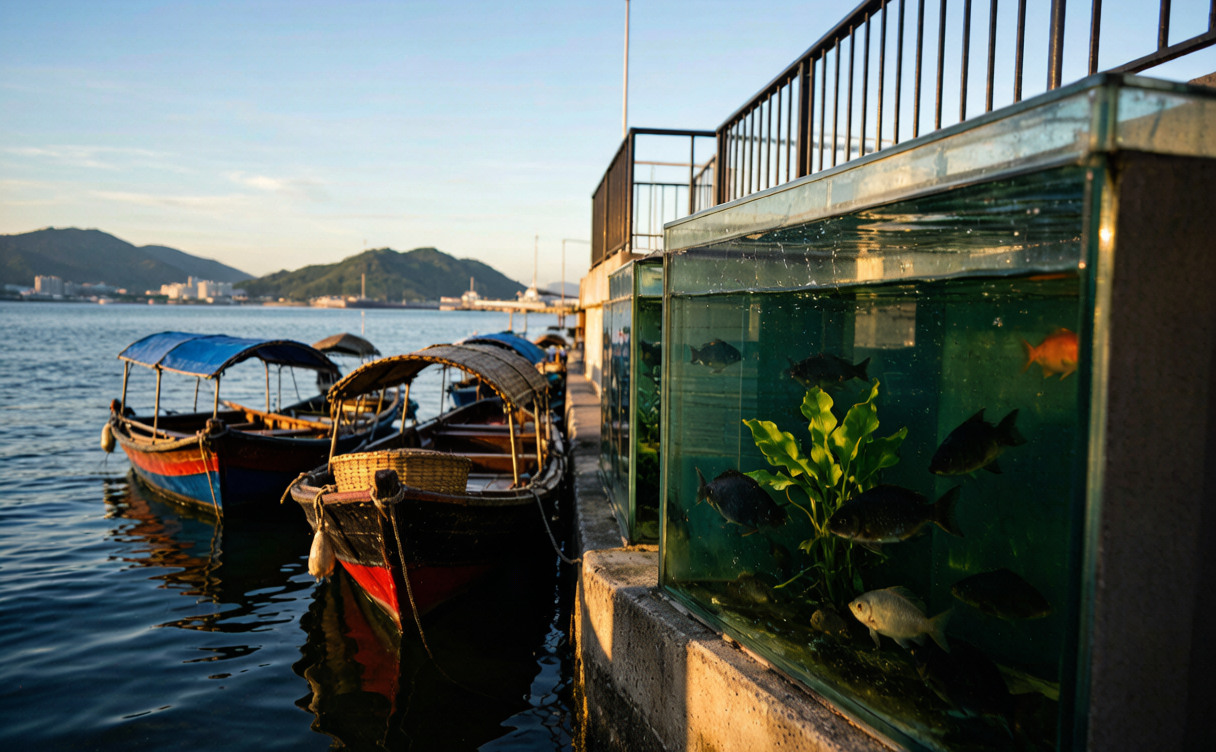
Back in town, the Sai Kung seafood street is the reason many locals make the drive. Along the waterfront, restaurants keep live tanks of fish, prawns, crabs and clams, and you choose your catch before it is weighed and cooked. Prices are by the catty (about 600 grams), so confirm the rate before pointing at a lobster.
The ritual is part of the fun: stroll the promenade, pick your seafood, then sit at a restaurant table while the kitchen steams, fries or braises it. Go early on weekends or expect a wait. For a wider lens on coastal China’s island life, our China ferry and island hopping guide covers how to reach other shorelines by boat.
How to get to Sai Kung
The practical question is how to get to Sai Kung. From central Hong Kong, China, take the MTR to Choi Hung or Hang Hau, then a green minibus (routes 1A or 1) or a taxi for the final run into Sai Kung town. The bus ride is short and cheap, and it is the only public transport that drops you right at the waterfront. Driving is also easy if you have a rental, with car parks near the pier.
From Sai Kung town, everything branches out: minibuses to the High Island east dam, ferries to the outlying islands, and boats to the beaches. Plan your return time, because the last buses and boats leave earlier than visitors expect.
Pairing Sai Kung with the rest of the city
Sai Kung works as a half-day or full-day counterpoint to the urban icons. If you want the classic skyline view, our Hong Kong, China Victoria Peak guide covers the tram and the lookout. For the harbour itself, the Victoria Harbour Hong Kong, China guide walks through the promenade and the nightly light show. And if you are travelling with kids, Hong Kong, China Ocean Park is an easy add-on on another day.
For hikers, our China hiking and treks guide places the MacLehose Trail in the context of the country’s best walks, with Sai Kung as one of its most scenic stages.
When to go and what to bring
Autumn (October to December) is the best window: cool, dry and clear, ideal for the east dam and the beach hike. Summer is hot and humid with afternoon storms, though the sea is at its bluest. Spring can be hazy. Avoid typhoon days entirely; boats and trails close.
Pack light: swimwear if you plan to swim, sturdy shoes for the dam and ridge, sunscreen, and cash for small boats and markets. The town has ATMs, but the outlying piers often do not.
Final thoughts
A Sai Kung guide can only hint at the calm you feel sitting on the dam with the reservoir behind you and the columns at your feet. Hong Kong, China is far more than its skyline, and Sai Kung is the clearest proof: volcanoes, empty beaches, and a seafood dinner that tastes of the morning’s catch. Give it a day and you will leave the territory understanding a different, quieter side of the place.