

Shapotou sits in Zhongwei City, Ningxia Hui Autonomous Region, where the Tengger Desert runs straight into a wide bend of the Yellow River. This rare meeting of shifting sand dunes and a great flowing river is what makes a Shapotou trip so memorable. Few places on earth let you slide down a desert dune in the morning and drift on a sheepskin raft along China’s mother river by afternoon. Our Shapotou guide covers exactly where it is, why it is unique, and what you can do there, from sand sliding and camel treks to Yellow River rafting and desert survival camps. If you are planning a Ningxia adventure, the Shapotou tips below will help you build a smooth, fun itinerary.
Where Is Shapotou and Why Is It Special
Shapotou is located on the northern edge of the Tengger Desert, about 20 kilometers west of Zhongwei city center in north-central Ningxia. The name means “sand slope head,” a simple description of the tall golden dune that leans right over the Yellow River. The unique geography here has earned Shapotou a place among China’s most celebrated eco-tourism spots, and it is often listed as one of the best places to experience desert and river scenery in a single view.
What makes the area so special is the contrast. On one side you have the rolling, wind-shaped dunes of the Tengger, one of the largest deserts in China. On the other side the Yellow River, the second-longest river in the country (Yellow River, Wikipedia), bends gently and flows calmly, lined with green poplar trees. This desert-meets-river landscape creates microclimates, unusual plants, and a playground for adventure that is hard to find anywhere else. The region is also famous for the “wheat straw checkerboard” method, a clever sand-control technique developed by local railway workers that helped tame the moving dunes and protect the Baotou-Lanzhou railway.
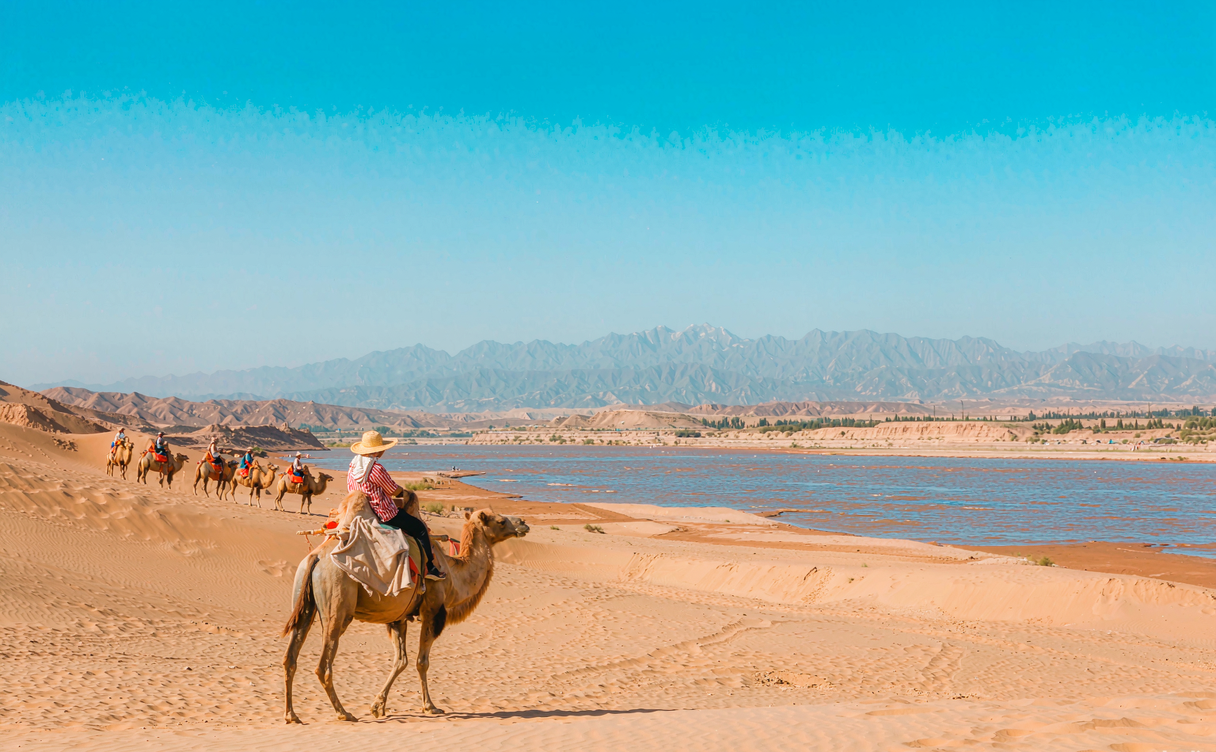
Desert Activities at Shapotou
A Shapotou visit is built around the sand. The headline experience is sand sliding, where you ride a wooden sled down a steep dune face toward the river below. The slide is fast, a little thrilling, and ends with a soft run near the water’s edge. Many visitors say the sound of the sliding board humming against dry sand is unforgettable.
Camel rides are another classic. Long lines of two-humped Bactrian camels carry you along the crest of the dunes, giving you a slow, swaying view of the desert meeting the river. For more speed, try a dune buggy or a desert off-road vehicle tour. These bounce across the sand at speed and are popular with families and adrenaline seekers alike.
Adventure parks inside the scenic area also offer zip lines across the river valley, high-wire walks, and even a desert train for visitors who prefer to watch rather than climb. In the evening, some camps stage bonfires and stargazing sessions, because the dry desert air makes the night sky remarkably clear.
If you want a broader taste of China’s desert landscapes, our guide to the Badain Jaran Desert area pairs well with a Ningxia route, though Shapotou remains the easiest desert to reach by high-speed train. You can also combine your trip with cultural stops such as the Xi’an Shaanxi History Museum guide, since many travelers route through Xi’an on the way to Ningxia.
Yellow River Drifting and Rafting
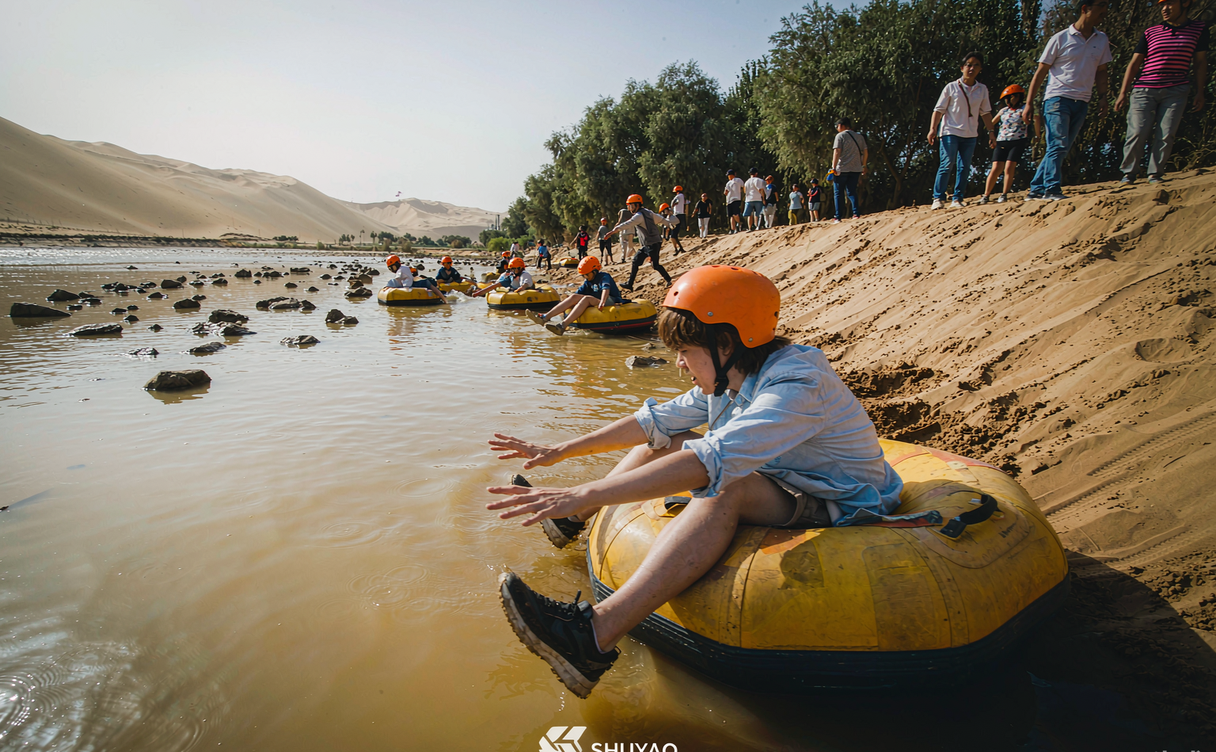
The river side of Shapotou is just as fun as the sand. The signature water experience is the sheepskin raft, a traditional local craft made of inflated sheepskins lashed to a wooden frame. Riding one is slow, wobbly, and deeply traditional. Boatmen often sing folk songs as they pole you across a calm stretch of the Yellow River, and the view back at the towering dunes is spectacular.
For more excitement, try the Yellow River zipline that stretches from the desert bank across to the far side, or join a motorized speedboat run through the bends. The water here is wider and gentler than the gorges upstream, which makes it suitable for beginners and older travelers.
[CTA]Pair your Ningxia trip with our Guilin Yangshuo travel guide for a river-and-mountain contrast.[/CTA]
Best Time to Visit Shapotou
Timing matters in the desert. The best months are May through October, when daytime temperatures are comfortable and the river activities run at full schedule. Summer, especially July and August, brings the warmest weather and the liveliest atmosphere, though midday sun can be strong. Spring and early autumn offer cooler, clearer days that are ideal for photography.
Winter is quiet and very cold, with some rides closed, but the snow-dusted dunes have a stark beauty that few tourists see. Whenever you go, bring sun protection, a windproof layer, and plenty of water. Sand gets into everything, so a small bag for your phone and camera is smart.
Getting There and Where to Stay
Reaching Shapotou is surprisingly easy. Zhongwei Shapotou Airport has flights from major hubs, and the city is a stop on the high-speed rail line between Lanzhou and Xi’an, with direct trains from several big cities. From Zhongwei, local buses and taxis reach the scenic area in about 30 minutes.
For lodging, you can stay in Zhongwei city for budget and mid-range hotels, or book a desert camp or resort right at the edge of the dunes for a more immersive night under the stars. Desert camps range from basic tents to comfortable yurts with heating and private baths. Booking ahead during summer weekends is wise, as rooms near the park fill quickly.
Travelers who enjoy combining nature with city culture might also enjoy the Shanghai Xintiandi guide as a stop before or after an inland journey, and the Chengdu Mount Emei guide works well for those extending toward Sichuan.
Shapotou Travel Tips
A few practical Shapotou tips will make your day smoother. Arrive early to beat both the heat and the crowds, and buy a combined ticket that includes the shuttle between the desert and river zones. Wear closed shoes that you do not mind filling with sand, and carry a scarf for windy afternoons.
Photography is best in the golden hours, just after sunrise and before sunset, when the dunes glow orange. If you plan to do the sheepskin raft and sand slide together, leave at least half a day. Families with small children should check height limits on the faster rides, but there is plenty that is suitable for all ages.
FAQ
How do I get to Shapotou from Xi’an?
The easiest way is the high-speed train from Xi’an to Zhongwei, which takes roughly three to four hours. From Zhongwei railway station you can take a taxi or tourist bus directly to the Shapotou scenic area. Flights to Zhongwei are also available, and some visitors drive or join a tour bus from nearby provinces.
Is Shapotou suitable for families with kids?
Yes. The area is family friendly, with gentle camel rides, a desert train, and calm Yellow River rafting that children usually love. Some high-speed rides have height restrictions, but there are plenty of soft adventures. Desert camps also offer safe, contained spaces for kids to play in the sand.
What should I pack for a Shapotou day trip?
Pack sunblock, sunglasses, a hat, a windproof jacket, closed shoes, and more water than you think you need. A small dry bag protects your phone and camera from sand. If you stay overnight in a desert camp, bring warmer clothing even in summer, because desert nights get cold.
Can I visit Shapotou in one day?
Absolutely. Most travelers spend one full day covering the main desert rides, the camel trek, and a Yellow River raft. If you want a relaxed pace, a sunset, and stargazing, consider an overnight stay at a desert camp just outside the park.
Conclusion
Shapotou delivers a genuinely rare experience: the Tengger Desert and the Yellow River sharing the same horizon. With sand sliding, camel treks, sheepskin rafting, and clear desert nights, it is an easy and rewarding stop in Ningxia. Use the Shapotou tips in this guide to plan your timing, transport, and activities, and you will leave with photos and memories that few destinations can match.
[CTA]Explore more of China’s landscapes with our Lijiang Old Town travel guide.[/CTA]
[CTA]Plan a southwest loop with our Yunnan Lijiang Dali itinerary.[/CTA]