

When travelers tell me they’re doing the classic Anhui loop — Huangshan, the Huizhou villages, maybe a Yangtze delta city — I always ask whether they’ve left a day for Qimen. Most haven’t, and that’s a shame, because this quiet county in the southwest of Huangshan City is where China’s most famous black tea was born, and the air still smells of it. On our last visit, the train pulled into Qimen South Station and within ten minutes we were walking past drying racks of dark red leaves outside a family workshop. If you want a slower, greener, tea-scented corner of Anhui that most foreign visitors skip, this Qimen travel guide is the briefing we give our own clients.
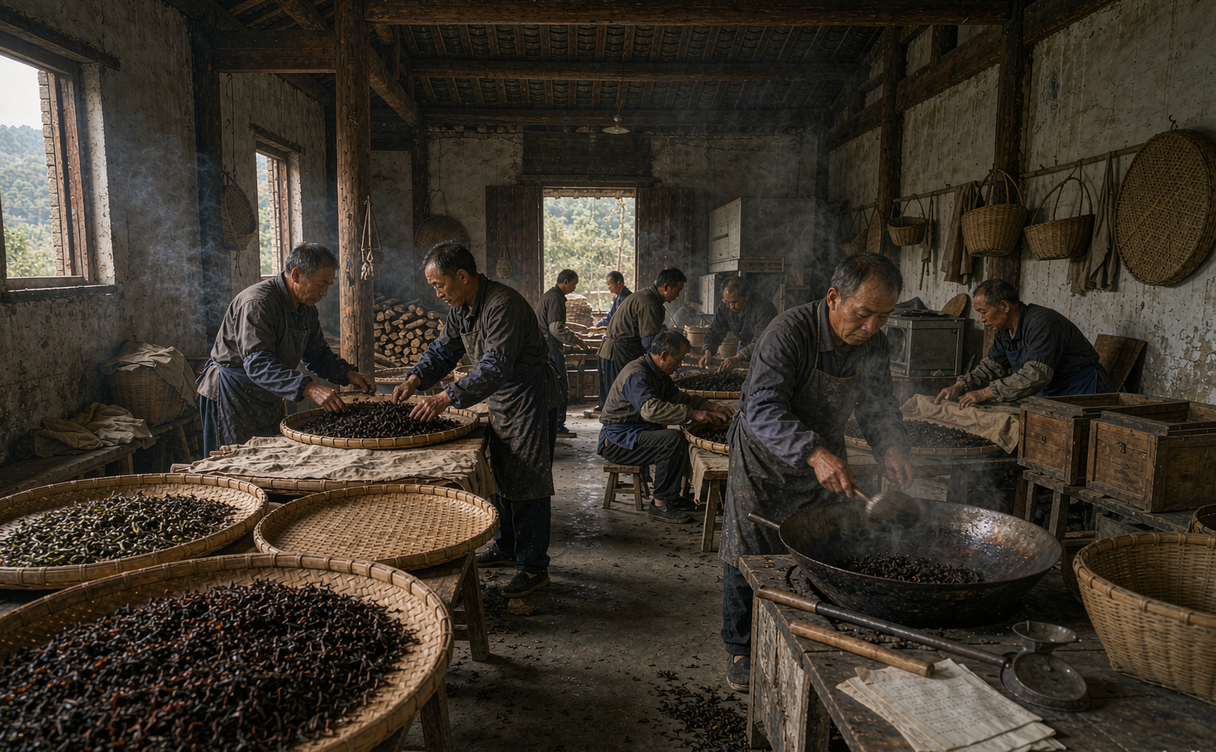
The single reason Qimen sits on the map is Qimen black tea, known internationally as Keemun. It was first produced here in 1875 by a frustrated civil servant named Hu Yuanlong, who traveled to Fujian to learn black-tea making and brought the craft home. Within a decade it was winning prizes in Europe, and Queen Victoria’s court reportedly drank it. Today the local 祁红 (Qihong) is still graded by leaf tip and aroma, and the best grades carry a fruity, almost orchid note you simply don’t get from mass-produced breakfast blends. We’ve sent clients there who bought a few hundred grams straight from a village processor for ¥200–600 per 250 g, and they rate it above anything they found in Shanghai tea shops.
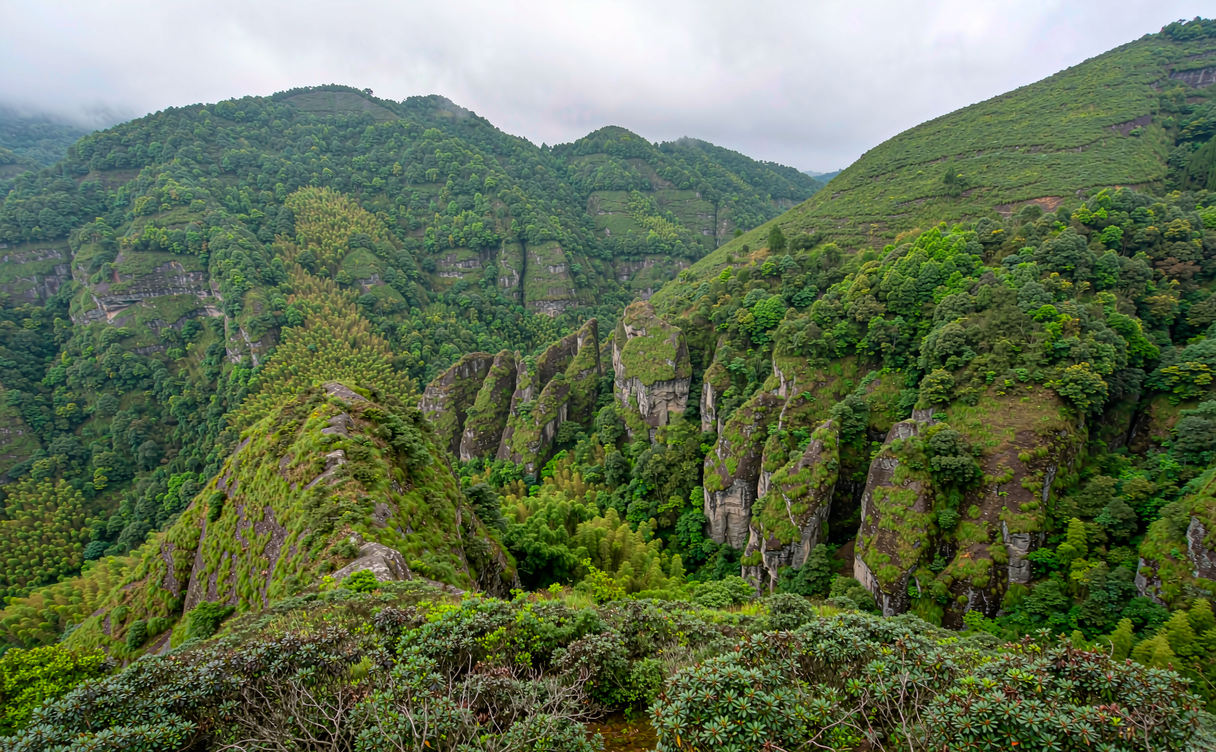
Beyond tea, the county is wrapped in the same Huizhou landscape that made the region famous: misted ridges, stone-arched bridges, and white-walled villages with horse-head gables. The standout natural sight is Qimen Guniujiang, the wild core of the Guniujiang National Nature Reserve that Qimen shares with neighboring Shitai. At 1,728 m, the main peak is the highest in central Anhui south of the Yangtze, and the protected forest below it is old-growth broadleaf and conifer, threaded by cold streams and waterfalls. Locals call it the “little Huangshan,” and while that’s marketing, the virgin forest genuinely feels primeval — we counted more fallen logs and hanging moss than we did other tourists on a weekday in April.
The best time to visit Qimen is spring (late March to May) or autumn (September to November). Spring is the tea season, when the hills are green and the air carries the scent of fresh leaves, and it’s when the tea museums and family farms are most active. Autumn gives you dry, clear hiking on Guniujiang and softer light for photography. Summer is lush but hot and humid, with afternoon thunderstorms; winter is cold and quiet, and some mountain lodges close. We tell clients to avoid the plum-rain weeks of mid-June, when the trails get slick and the tea is already picked.
How to get to Qimen has become dramatically easier since the Hangzhou–Nanchang high-speed railway opened its Qimen South Station in late 2023. From Huangshan North Station you can now ride in roughly 30–40 minutes for ¥25–40, and from Hangzhou East the run is about 2 to 2.5 hours with a change or direct service for ¥130–180. That’s the option we book by default. If you’re coming from the west, trains from Nanchang and Jingdezhen also stop here. For air travelers, the nearest airports are Huangshan Tunxi International (TXN), about 1.5–2 hours by car, and Jingdezhen (JDZ), similar. Long-distance buses still run from Huangshan’s Tunxi bus terminal and from Jingdezhen for ¥30–50, but since the rail line opened we rarely recommend them. Once in the county, local buses and ride-hail taxis reach the tea villages and the Guniujiang gate; a rental car helps if you want to combine Qimen with nearby Huizhou towns.
Things to do in Qimen split neatly into tea and nature. Start at the Qimen Black Tea Museum (祁红博物馆) on the edge of the county town, where you can see the withering, rolling, fermenting and firing steps and taste several grades side by side — admission is usually free or a nominal ¥20. Then drive out to a working village like Xiangyuan or Laba to watch the spring picking and try a wok-fried session yourself. For the outdoors, Guniujiang’s lower trails (entrance about ¥100, with shuttle bus ¥20) take you past the Nine Dragon Pool and a series of falls; serious walkers can push toward the ridge with a local guide. History buffs should visit the Huizhou-style villages of Zhukou and Lixi, where restored clan halls and old camphor trees tell the story of the merchants who funded all that tea.
A realistic Qimen travel itinerary is two days. Day 1: arrive by morning train from Huangshan, lunch on tea-infused cuisine, tour the Black Tea Museum, and check into a hillside guesthouse. Day 2: a 9 a.m. walk through a tea village during the picking window, then drive to Guniujiang for a half-day forest hike, and a late train back toward Huangshan or onward to Hangzhou — pair it with our Hangzhou travel guide for the delta city side of the loop. Daily spend for two runs roughly ¥200–400 transport, ¥300–600 lodging, ¥200–350 food and tickets. It’s an easy add-on to any Anhui route and far less crowded than the mountain itself.
Where to stay ranges from the county-town business hotels (¥250–450) to the kind of rural, low-impact stays our China eco-lodges guide covers — hillside timber houses where you wake to mist over the tea rows for ¥400–800 a night. We usually book the guesthouse near the Xiangyuan tea belt so the morning walk starts at the door before the road fills with tour buses. Book ahead in April, when the tea festival pushes occupancy up.
For a wider Anhui plan, the Huangshan Yellow Mountain guide is the obvious anchor — Qimen makes a perfect low-altitude counterpoint to the peak — and the nearby Shexian travel guide covers the best-preserved Huizhou towns if you want more white-walled architecture. If your interest is the leaf itself, the China tea tour guide lays out the full trail from Anhui to Fujian and Yunnan, and the Xidi ancient village guide shows the merchant villages that the tea money built.
Eating in Qimen leans on the tea itself. Local cooks braise free-range chicken with young tea leaves, fry river fish with pickled greens, and serve a simple tofu simmered in a tea broth that tastes cleaner than it sounds. A countryside dinner for two runs ¥100–180, and the county town’s night market adds grilled skewers and sticky-rice cakes for under ¥40 a head. We always tell clients to try the tea-smoked duck at least once — it is the dish that makes the local leaf make sense on the plate.
A honesty note we always give: Qimen’s tea shops near the station sell a lot of “Qihong” that is really blended or low grade. Buy from a workshop you can see processing, or from the museum’s certified counter. And check Guniujiang’s weather before you go — the upper ridge closes in heavy rain and the shuttle stops, so don’t plan a summit day around a forecast that looks shaky. For background, the county’s geography and history are summarized on Wikipedia’s Qimen County page, handy if you want the wider Anhui context before you travel.
In short, Qimen rewards travelers who like their China slow and specific: a cup of genuinely historic tea, a forest that hasn’t been logged in living memory, and villages that haven’t been dressed up for coaches. Pair it with the high peaks to the east and you get the full Anhui story — the mountain and the leaf that paid for it.