

Pingdingshan (平顶山) rarely appears on foreign itineraries, but for travelers exploring Henan beyond the famous names, it’s a genuine surprise. This prefecture-level city in central Henan pairs dramatic granite peaks at Yao Mountain with a string of hot spring resorts in the surrounding valleys — a combination that’s hard to beat after a long train ride. We’ve sent outdoors-loving travelers here and they’ve come back relaxed and impressed. This Pingdingshan travel guide shows you how to fit it in.
The name means “flat-top mountain,” but the real draw is the rugged Yao Mountain (尧山) to the west, part of the Funiu range and a UNESCO Global Geopark. Pair it with a Luoyang travel guide or Zhengzhou travel guide base for a rich Henan loop that balances nature, history, and rest.
Best time to visit Pingdingshan
The best time to visit Pingdingshan is spring (April–May) and autumn (September–November). Spring brings wildflowers on the lower slopes; autumn paints the valleys red and gold with clear summit views. Summer is warm but good for the waterfalls, though afternoons can storm and the cable cars sometimes pause. Winters are cold, and Yao Mountain sometimes sees snow that closes upper cables — check ahead and call your hotel. Avoid National Day week in early October for lighter crowds and open pools.
How to get to Pingdingshan by train
Pingdingshan has two stations: Pingdingshan West (on the high-speed line) is the one foreign visitors want. From Zhengzhou East, high-speed trains take about 40–60 minutes (¥55–90); from Luoyang Longmen, about 1–1.5 hours (¥70–110). Our China high-speed train guide for foreigners covers booking. From Pingdingshan West station, a Didi to the city center is ¥25–40; to Yao Mountain scenic area, budget ¥120–180 (about 90 minutes northwest). Buses to the mountain also run from the central bus station for ¥30–45 but take longer and leave on a fixed schedule.
Things to do in Pingdingshan
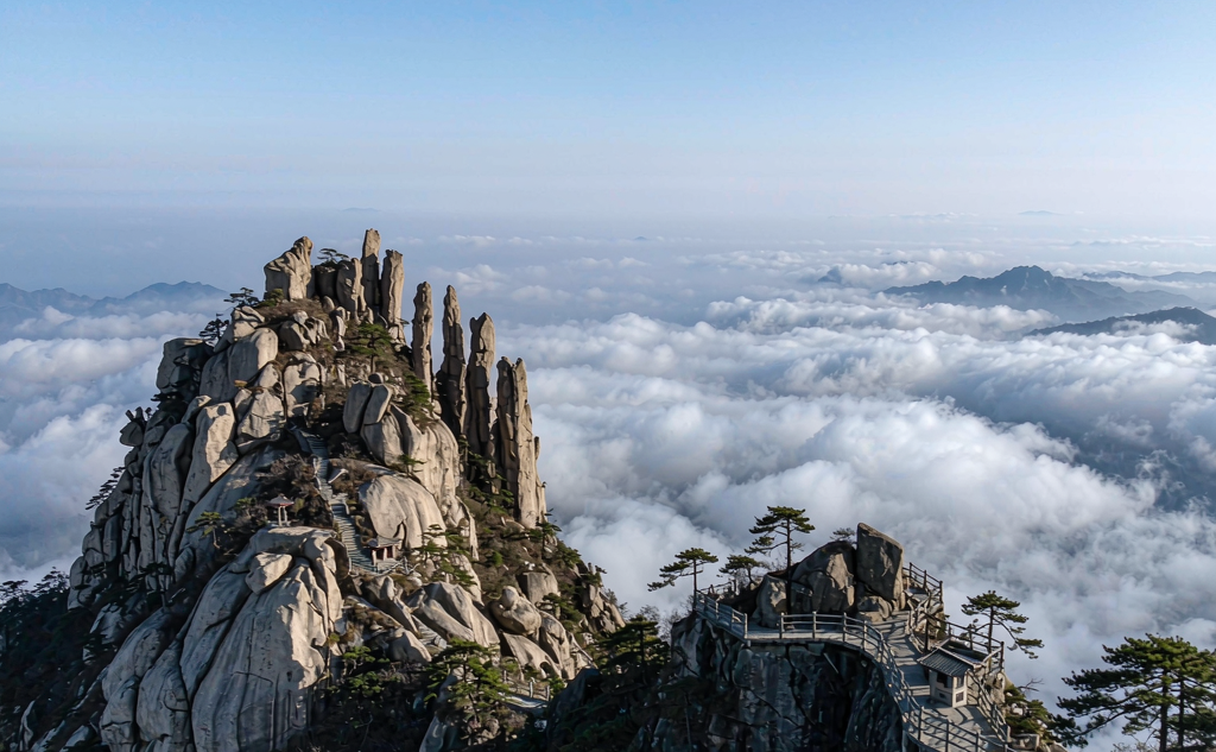
Yao Mountain Scenic Area (尧山风景名胜区) — The headline. Granite pinnacles, sea-of-clouds viewpoints, waterfalls, and a long cable car system. Yao Mountain scenic area tickets are about ¥80 for entry, plus ¥60–120 for cable cars depending on the section; a full up-and-down combo pass runs roughly ¥200. We suggest taking the lower cable car up, walking the ridge boardwalks, and descending by the glass slide or opposite cable. Allow a full day; bring layers because the summit is 10–15°C cooler than the base.
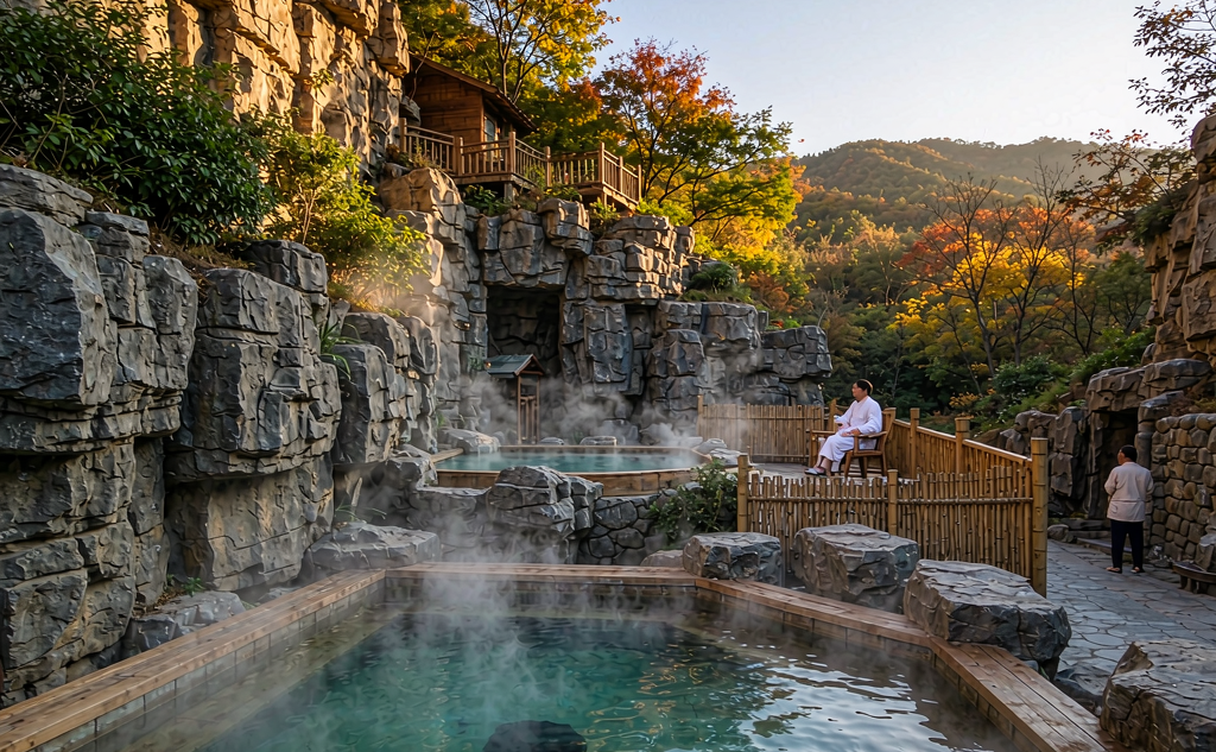
Pingdingshan Hot Springs Resorts — After the hike, the valleys around Yao Mountain are dotted with spring resorts. A Pingdingshan hot springs resort day pass typically costs ¥128–228, with overnight packages from ¥400–800 including a room and unlimited soaking. The water is sulfur-rich and pleasant; most have indoor and outdoor pools, plus a snack court. Our China hot springs resorts guide compares regional options if you want to plan a spa-focused route across several provinces.
Ruzhou Hot Springs (汝州) — A county under Pingdingshan with a long imperial bathing history; older, cheaper pools from ¥60–120, favored by locals over tour groups.
Fanli Ancestral Temple and old town — In the city center, small museums and temples tell the story of local statesman Fan Li. Free or ¥10–20 entry, a nice half-day between trains.
What to eat and where to stay
Henan food here is noodle- and wheat-heavy. Try “luoyang shui xi” nearby, local “hu la tang” spicy soup, and Pingdingshan roasted lamb skewers; a filling meal is ¥30–60 per person. City-center hotels run ¥180–350 per night; for the mountains, stay at a Yao Mountain foot hotel (¥300–600) or a hot spring resort to soak before bed. Booking the resort with dinner included often saves ¥80–120 versus paying separately.
A recommended two-day plan: day one train in, afternoon at the hot springs; day two early start on Yao Mountain, summit and descend by mid-afternoon, train on to Luoyang. This gives you peaks and pools without rushing.
For a culture-heavy add-on, the Shaolin Temple Henan guide is an easy extension from Zhengzhou, adding martial-arts heritage to your nature-and-wellness route.
As part of our best things to do in China research, Pingdingshan is a strong pick for nature plus wellness without big-city prices, and it breaks up the standard Xi’an–Luoyang–Zhengzhou corridor nicely.
The Funiu mountain region’s geological value is documented by UNESCO: Funiu Shan.
Before you go: payment and connectivity
Sort Alipay and WeChat Pay at home, because the mountain-foot hotels and resort spas around Yao Mountain often don’t take foreign cards. A data eSIM keeps your map working on the long transfer from Pingdingshan West station. Book Yao Mountain tickets and cables through the official mini-program or Trip.com before you go, and reserve your hot spring resort with dinner included to avoid sold-out pools on weekends. Keep your hotel’s Chinese name handy for the driver, and pack layers — the summit runs 10–15°C cooler than the city, and the wind up top is no joke.
Who Pingdingshan is for
Pingdingshan is for outdoors lovers and wellness travelers who want peaks plus a soak without big-city prices. It fits a Henan loop (Luoyang, Zhengzhou, Shaolin) as the recovery day between history-heavy stops. It’s less essential for a first, short China trip focused on icons like Beijing and Xi’an — save it for when you’re exploring the heartland. We recommend it most to repeat visitors and hikers who’d otherwise skip Henan’s nature entirely. If you only have one night, spend it at the hot spring resort so the soak and an early Yao Mountain start both fit; a same-day round trip from Zhengzhou is possible but tiring, and you’d miss the best sunrise light on the granite.
Getting around and a realistic budget
Yao Mountain is remote, so a private car (¥400–600/day) or the mountain shuttle bus is the practical choice. Within Pingdingshan city, Didi is ¥10–30. Plan ¥450–750 per person per day: hotel ¥180–350 (or resort ¥400–800 with soaking), food ¥60–120, tickets and cables ¥200–320, transport ¥80–160. The hot spring soak after the hike is the part travelers remember longest, so don’t skip it to save a few yuan.
When not to go
We’d avoid the deepest summer (July–August) if you hate heat and storms, and deep winter (January) if snow closures would block the summit cable. The shoulders — April–May and September–November — are reliably the best. If you’re stringing together Xi’an, Luoyang, and Zhengzhou, Pingdingshan slots in as the wellness break that keeps the long train days from wearing you down.
The geology that makes Yao Mountain special
Yao Mountain’s sharp granite peaks come from the same Funiu-range uplift that UNESCO recognized for its geological value — weathered domes, cleft ridges, and rounded boulders shaped over hundreds of millions of years. On a clear morning the sea of clouds sits below the boardwalks, and the rock glows red at sunrise, which is why photographers time the first cable up. Understanding the geology adds a layer: you’re not just on “a mountain,” you’re on a cross-section of ancient crust that survived ice ages and erosion. We point this out because the view lands harder once you know what you’re standing on, and because the interpretation panels on the ridge are Chinese-only, so a little context before you go goes a long way. Bring a wide lens if you photograph; the domes are broader than they look from the base, and the sunrise red on the granite is worth the early cable.