

You Hear Peking Duck Before You Taste It
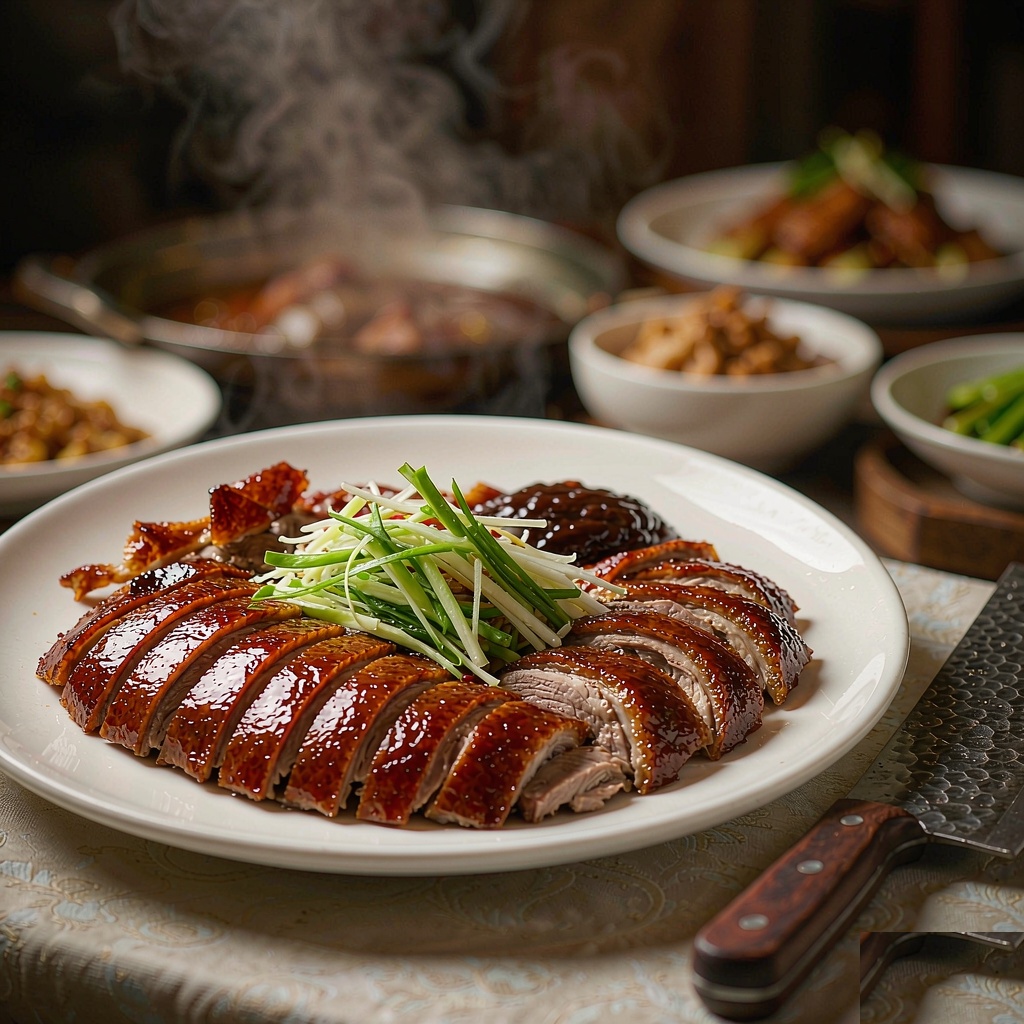
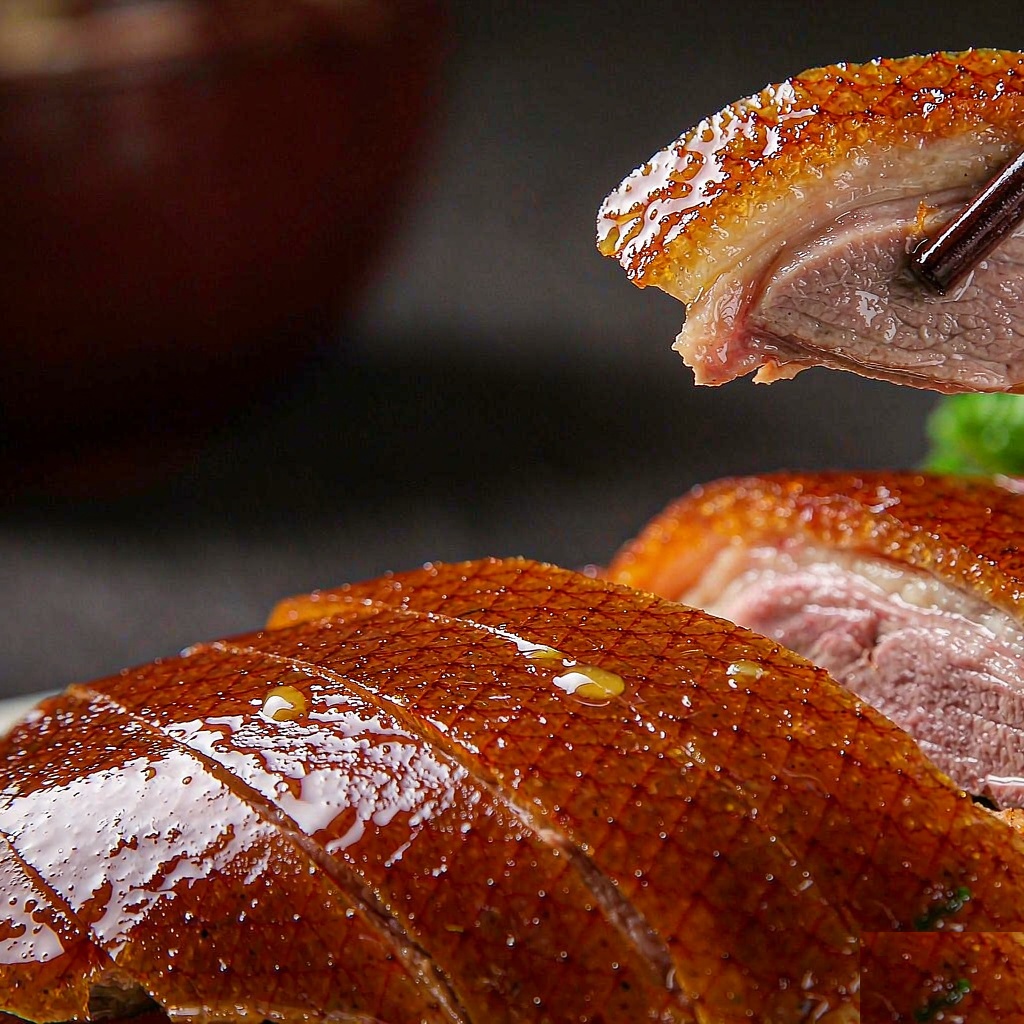
Slice the breast of a well-made Peking duck and it answers with a soft, glassy crackle — the sound of thin ice giving way under a boot. That crackle is the whole reason the dish exists. Everything served alongside it, the sweet bean sauce, the shredded scallion, the paper-thin pancakes, is scaffolding built to hold one achievement: skin dried so thoroughly and glazed so lightly that it shatters, with meat beneath still moist enough to need almost no seasoning at all.
I only understood this after watching a Beijing cook hang his ducks by a window and rotate them like washing on a line. He never mentioned oven temperature once. He kept talking about the wind.
What the Dish Actually Is
Peking duck (北京烤鸭, Beijing kaoya) is a whole roasted duck judged almost entirely on its skin. It is not Cantonese roast duck, which is seasoned harder, often smoked, and served at room temperature on a siu mei platter. Peking duck is roasted hot, carved at the table, and eaten within minutes. The birds come from a purpose-bred Beijing variety with a thick pad of fat trapped directly under the skin; that fat melts away in the oven and leaves the skin crisp rather than oily.
The flavour is deliberately quiet. The meat tastes mild and faintly gamey, closer to dark turkey than to chicken, while the skin carries what little seasoning there is — a wash of maltose or honey that caramelises to a deep amber. If the only “crispy duck” you have eaten came shredded in a takeaway box, you have not met this dish. You have met a version engineered to survive a twenty-minute journey home.
Why the Calendar Matters More Than the Recipe
Restaurants will tell you Peking duck takes three days. They are not exaggerating for effect. Day one separates the skin from the flesh. Day two tightens and glazes it. Day three dries it until the surface feels like parchment. Rush any of those stages and the skin steams instead of crisping — the single most common home failure.
Air is the trick most home cooks miss. Blowing air between skin and meat lifts the two apart so hot air can circulate in the gap, which is why restaurant ducks look faintly inflated. Once the skin is loose, a boiling-water bath tightens it, and a thin sugar glaze gives it colour. Then comes the part no shortcut replaces: hanging the bird in moving air until it is bone-dry.
What You Need for a Home Version
Serves three to four people comfortably.
The duck
- 1 whole duck, 2.2–2.5 kg, neck and giblets removed
- 2 litres boiling water, for the skin-tightening bath
- 2 tablespoons maltose syrup, or 1 tablespoon honey dissolved in 1 tablespoon hot water
- 1 tablespoon Shaoxing wine
- 1 tablespoon rice vinegar
- 1 teaspoon fine salt
- Optional: 1 teaspoon five-spice powder rubbed inside the cavity
To serve
- 20 thin Mandarin pancakes (he ye bing), steamed briefly to soften
- 4 spring onions, white parts only, julienned
- 1 cucumber, seeds scraped out, julienned
- 4 tablespoons sweet bean sauce (tianmianjiang), loosened with 1 teaspoon sesame oil
Who It Suits, and Who Should Pass
This is a celebration dish, and it earns its place at a big table. It suits anyone who loves contrast — crisp against soft, rich against sharp — and anyone hosting a meal where the cooking is meant to be watched. It also suits people who find roast chicken a little dull; duck carries more fat and more flavour in the darker meat.
It suits fewer people than it charms. The skin is mostly fat, so anyone managing cholesterol, heart disease, or a gallstone-prone diet should treat it as an occasional pleasure and lean on the meat. The maltose glaze and the sweet bean sauce both carry sugar, which matters for anyone with diabetes — ask for the sauce on the side, or dip sparingly. That sauce is salty too, so those watching blood pressure should go easy. The pancakes are wheat, so anyone avoiding gluten should wrap the duck in lettuce or eat it with cucumber only. Duck is a moderate purine food, so people managing gout should keep portions small. And if gamey flavours put you off, this bird will not win you over.
Step by Step, From Raw Bird to Carved Plate
- Step 1 — Loosen the skin. Work a finger, then a cloth-wrapped chopstick, between the skin and the breast meat at the neck opening. Separate the skin across the breast, thighs, and back without tearing it. A small balloon pump makes this faster; blow gently until the bird looks slightly puffed.
- Step 2 — Tighten with boiling water. Set the duck on a rack over the sink and pour the 2 litres of boiling water slowly over the whole surface. The skin will visibly contract and shine. Pat the outside dry without pressing hard.
- Step 3 — Glaze it twice. Stir the maltose, Shaoxing wine, rice vinegar, and salt into a thin syrup. Brush it over every surface. Wait ten minutes, then brush a second coat. This is what turns the skin amber in the oven.
- Step 4 — Dry it properly. Hang the duck by its neck, or set it on a rack in a cool room with a fan pointed at it, or in the fridge uncovered, for twelve to twenty-four hours. The skin must feel like dry paper, never tacky. Do not skip this, and do not cover it.
- Step 5 — Roast hot, then gentler. Heat the oven to 220°C. Stand the duck breast-up on a rack over a roasting tray with a little water in the base to catch drips. Roast for 40 minutes, then lower to 180°C for a further 20 to 30 minutes, until the skin is deep amber and a thermometer in the thigh reads about 75°C.
- Step 6 — Rest, then carve skin first. Let the duck sit for 10 minutes. Carve the skin in thin, even slices before you touch the meat, and keep the two separate on the plate; the skin is the first thing anyone should taste.
Small-Kitchen Fixes
You do not need a brick oven. A domestic fan oven at 200–220°C produces a credible bird as long as the skin was genuinely dry beforehand. If you have no room to hang the duck, refrigerate it uncovered on a wire rack and aim a hairdryer on the cool setting at it for a few minutes twice a day. Do not salt the skin itself, only the cavity — surface salt draws out the moisture you spent a whole day removing. And resist opening the oven to peek; every door opening drops the heat that crisps the skin.
The Two Beijing Schools, and What Else Counts
In Beijing the argument is old and friendly. One school roasts in a closed, pre-heated oven (焖炉, menlu), where the duck never meets open flame; the other hangs the bird over a fruitwood fire in an open oven (挂炉, gualu). Hung-oven ducks tend to have smokier, glossier skin; closed-oven ducks are often juicier. Both are legitimate, and the difference is part of why locals swear by different restaurants for a dish that, on paper, is identical. If you want pointers on where to eat the best Peking duck in Beijing, that long-running argument is the best guide you have.
Beyond the capital, roast duck divides again. Guangdong roasts duck with soy, star anise, and a sweeter glaze; Nanjing cures and salts it; Sichuan braises it with chilli. Peking duck sits at the crisp, restrained end of that spectrum, which is worth remembering before you judge it by another region’s standards. If you are mapping the broad differences, our Beijing food guide is a good place to start, and the bigger picture sits in the eight great regional cuisines of China.
Serving It the Way the City Does
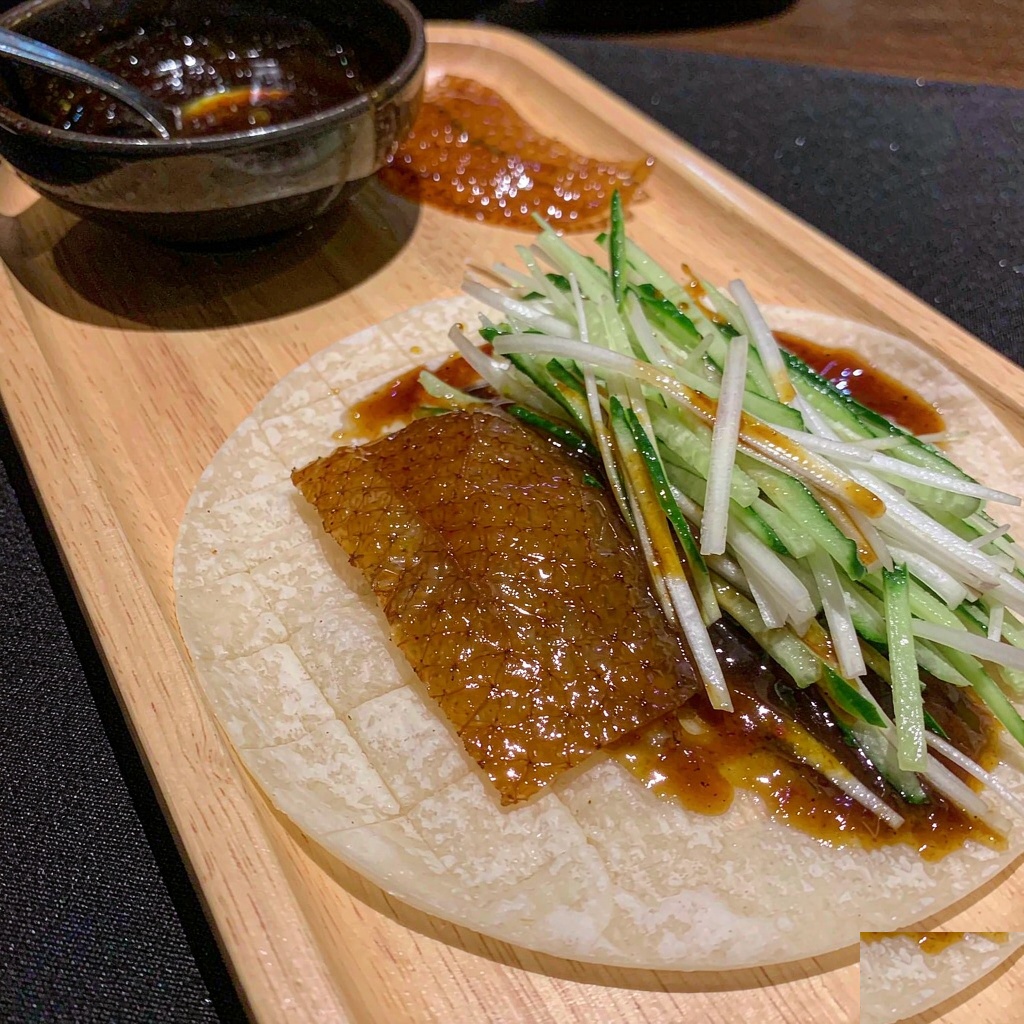
The ritual matters to the eating. Lay a warm pancake flat, brush a thin streak of sweet bean sauce down the middle — a little, not a puddle — then add two or three slices of duck, a few strands of scallion, and a few of cucumber. Fold the bottom edge up, roll it tight, and eat it in two bites while the skin is still crisp. Some tables serve the very first slices of skin with a small dish of sugar and nothing else, so the crackle arrives without competition. Try it once that way; it explains the dish faster than any description.
Keep the drinks simple. A dry sparkling wine, a light lager, or plain jasmine tea all cut the fat without fighting it. Serve the duck as the centre of a longer meal rather than the whole of it, so that a wider China food tour of cold dishes, greens, and soups can balance the richness.
A Dish Worth the Wait
Nothing about Peking duck is quick, and that is precisely why it still carries weight. It asks for three days of patience to produce maybe ten minutes of perfect eating. Cooked at home it rarely matches the theatre of a restaurant carving trolley — but it can match the crackle, and that crackle is the only scoreboard that counts. Start the drying early, keep the glaze thin, and roast hotter than feels safe. The sound from the first slice will tell you whether it worked.