

Mianxian is a county that history books mention in one line and tourists never visit. It sits in the upper Han River valley in southern Shaanxi, a green basin bracketed by forested ridges, and it holds the tomb that for seventeen centuries has been venerated as the burial place of Zhuge Liang — the chancellor of the Three Kingdoms, the strategist whose campaigns are still staged in Beijing opera. This Mianxian travel guide covers the tomb, the mountain above it, and how to reach a corner of China that most first-time visitors skip entirely.
Getting here is now easy, which is the reason this guide exists. The Xi’an–Chengdu high-speed line runs through Mianxian, and the county is close enough to both cities to make it a comfortable overnight rather than an expedition.
Thinking about adding a southern Shaanxi leg to a Xi’an trip? Our China travel guide for first-timers explains the train routine and the pass, and it will save you a wasted afternoon.
The Mianxian Zhuge Liang Tomb, Quietly
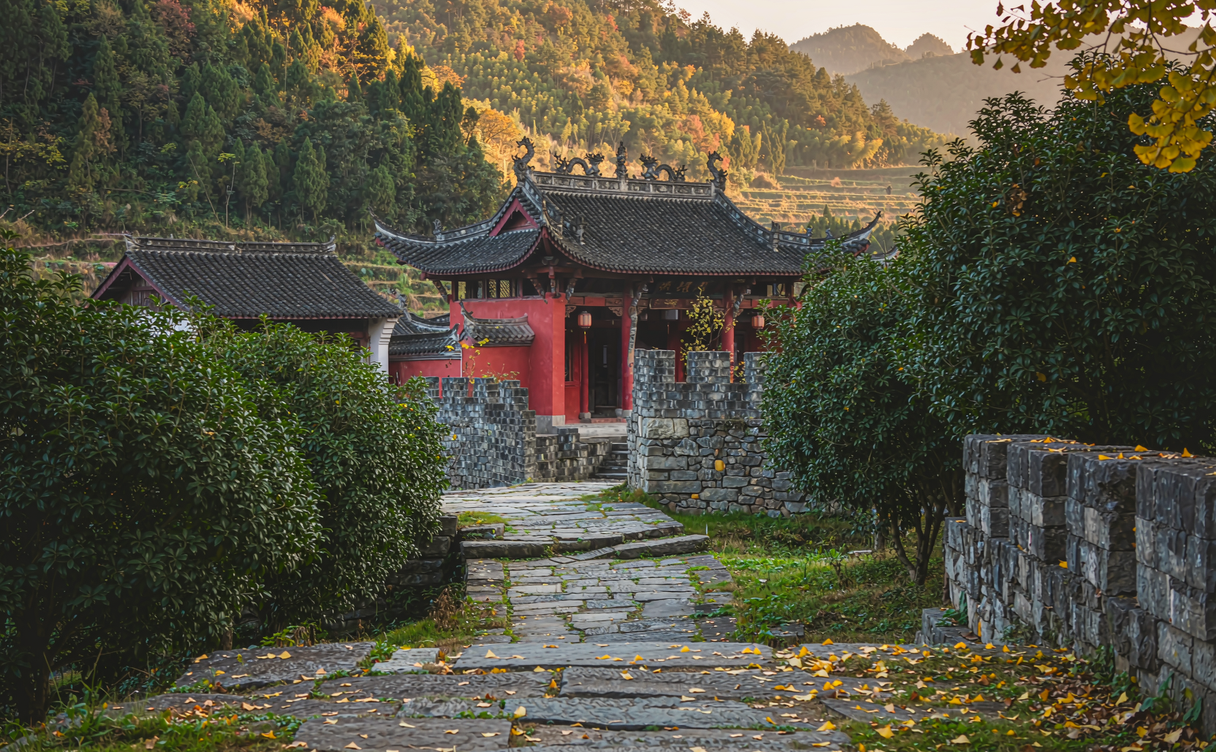
The Wuhou Tomb stands about five kilometres west of the county seat at the foot of Dingjun Mountain. Enter through a low gate court, walk a long cedar avenue, and the tomb itself is a circular mound behind a stone altar, ringed by rails — modest, a little sad, and completely unhurried. Groups of Chinese visitors come here on school trips and drop coins into the offering trays; foreigners almost never come.
Be honest with yourself about the history. Zhuge Liang died in 234 CE at Wuqi, far north on the Wei River, and nobody knows where he was buried in the first place. The tomb at Mianxian is the one that the tradition settled on, and it has been maintained continuously since at least the Tang dynasty, when local officials began the worship that produced the nearby shrine. A shrine rather than a tomb is the accurate description, and the attached 武侯祠 is the busier half of the site, full of tablets, steles and maps of the campaign across the mountains.
What you get here is an argument with the novel. Romance of the Three Kingdoms made Zhuge Liang into a god of strategy; Mianxian is the place where the real geography of those campaigns is legible — valleys, passes and supply roads, not camelot.
Dingjun Mountain and the Battle That Made the Opera
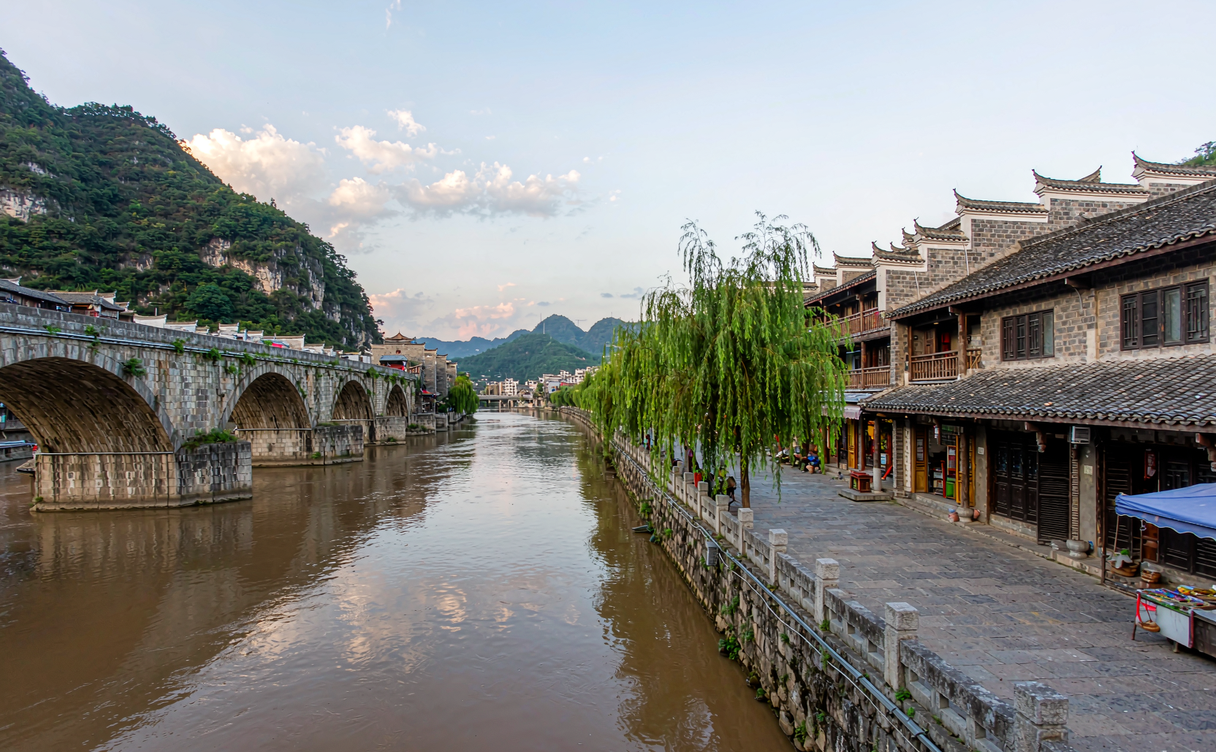
Dingjun Mountain rises immediately behind the tomb and is the setting of the episode that every Chinese speaker knows even if they have never read the novel: the duel in which the general Huang Zhong kills the Wei commander Xiahou Yuan with an arrow shot from a height. It is the single most performed scene in the Peking opera repertoire, and the mountain is real, steep and forested.
There is a cableway and a stone path up to the summit ridge. The climb takes most people two to three hours and gains about a thousand metres, and the payoff is the view back over the Han River valley, the paddy terraces and the road the army actually used. Go in the morning; the cloud sits on the ridge until late and the valley fills with it in autumn. Entry to the mountain park and the cablecar are priced separately and both are cheap, so allow ¥120–200 per person with the cablecar and a snack.
Below the ridge are the field remains that give Mianxian its Three Kingdoms density: 天荡山 to the north, the old entrenchments, and 阳平关, the pass town where Zhuge Liang’s forces held against Wei for years. Several of these sites are signposted but undeveloped, which for some travellers is the entire appeal — you can walk a battleground with no fence around it.
Things to Do in Mianxian Outside the Three Kingdoms Sites
The things to do in Mianxian add up to more than the generals, which surprises people who arrive expecting a single tomb.
Walk down to the Han River. The county seat sits on a broad flat where the river swings, and the river road in the early evening is the best walking in town: water buffaloes coming down to drink, women washing, rice drying on the terraces above.
Go up the valley north of town to the Shimen plank road and its cliff carvings. This is the ancient route through the gorge that carried people and goods between the Wei valley and Sichuan, and the stone inscriptions cut into the cliff face here — the famous 石门十三品 — are foundational pieces of Chinese calligraphy study. The site sits on the corridor toward Hanzhong and pairs well with a half day. Culturally it is far more important than most of the reconstructed temples you will be sold elsewhere.
If your interest is tea rather than generals, this valley produces some of Shaanxi’s green tea. The hills around Dingjun Mountain are planted with it, and in April the picking comes up the roadside tracks in baskets. A small tasting with a local grower costs very little and beats anything you will buy at the airport.
How to Get to Mianxian
The train is the answer to how to get to Mianxian. Mianxian station on the Xi’an–Chengdu high-speed line takes you from Xi’an in roughly 1.5 to 2 hours, second-class fares around ¥95–140, and from Chengdu in about two hours too. The station sits outside the county seat, and a taxi into town is ¥15–30. If ticket machines with a foreign passport are new to you, our guide to riding China’s high-speed trains walks through collection, seat choice and the limits on what you carry on board.
By road, Mianxian sits on the G5 Beijing–Kunming expressway, about 250 km from Xi’an and 4 to 5 hours by coach, and Hanzhong is 40 km east with frequent trains between the two. Most independent travellers base themselves in Mianxian for one night and run the sites by taxi — a full-day charter with a driver typically runs ¥300–450 for the tomb, the mountain and the valley, which is cheap for what you get and worth it because the three sites are spread out.
One night in Mianxian is the right length. Take the evening train in from Xi’an, sleep in the county seat, and be at the tomb gate when it opens — the whole place empties of people by ten and you will have the cedar avenue to yourself.
Best Time to Visit Mianxian
The best time to visit Mianxian is April to June and September to October. Spring brings green terraces, tea picking along the valley and manageable heat; autumn gives you clear views from Dingjun Mountain and the rice harvest on the flats. July and August are genuinely hot and humid — this is a subtropical valley and the temperature does not drop much after dark.
Winter here is wet rather than cold, and the mountain paths can be slick with moss. If you come between December and February, choose boots with grip and accept that the cablecar may stop in high wind. Our guide to the best time to visit China is a good cross-check on regional differences, because southern Shaanxi runs hotter and wetter than Xi’an in the same weeks.
A Mianxian Itinerary That Fits Into Two Days
A Mianxian itinerary with two nights in the county seat covers the tomb, Dingjun Mountain and the valley in the right order, and it still leaves you time to eat.
Day one: morning train from Xi’an, drop bags, taxi or charter out to the Wuhou Tomb as it opens, walk the shrine, then up to Dingjun Mountain for the afternoon and the ridge view. Evening down at the Han River with hot noodles.
Day two: the Shimen plank road and the cliff carvings, a tea stop, the Yangping Pass entrenchments if you are a pedant, then a train to Hanzhong or back north to Xi’an. If you are continuing southwest, this is also the natural handover point to a Chengdu leg, and the Chengdu food guide will tell you what changes in the cooking once you cross the ridge — chilli and numbing pepper arrive with the Sichuan border.
Eating and Sleeping Locally
Order 汉中热面皮 — wide, glossy rice noodle sheets dipped in chilli oil and vinegar, served cold, and the single best reason to eat in this county. Then 菜豆腐, a light tofu made from cleavers broth and eaten with chilli oil, and 蒸面, the steamed noodle plate you will see in every window. A bowl runs ¥8–15 and a filling table for two ¥60–90. In the tomb’s own courtyard there are also the standard steamed buns and tea, and they are fine for a mid-morning stop.
Sleep in the county seat. There are mid-range hotels around ¥180–320 and a handful of small inns near the tomb at ¥120–220, the latter being the choice if you want to walk to the gate at opening. Take a room away from the main road; the evening karaoke in the smaller hotels is louder than the signage suggests.
Traps, and One Honest Caveat
Tickets: the tomb and shrine have one admission and the mountain park another, with bundled tickets occasionally available; prices have crept up and I would budget ¥60–80 for the tomb complex and treat any number you read online as approximate.
If your time is short, the Mianxian Zhuge Liang tomb and Dingjun Mountain together are the whole inscription, and everything else is a bonus. The bigger trap is expectation. This is not Xi’an, and the shops here close early, the bank may not have English signage, and the guesthouse will probably not speak English. That is the trade for having a Three Kingdoms site almost entirely to yourself. The UNESCO inscription for the Silk Roads corridor that starts at Chang’an and runs west across Shaanxi is documented on the UNESCO World Heritage page for the Silk Roads: Chang’an–Tianshan routes, and although Mianxian sits on the southern branch rather than the main artery, it is the same landscape of river valleys and passes that carried the roads.
Take the train from Xi’an, spend one quiet night at Zhuge Liang’s tomb, and add the mountain in the morning — a two-day detour into southern Shaanxi that most itineraries leave out completely.