

There are about a dozen “ancient towns” within an hour of Chengdu, and most of them were rebuilt from memory in the 2000s. Huanglongxi is one of those, and I am going to say that up front, because you should know what you are buying. It is also the closest one to the city with a river running through it, real shade trees and street-level people still living above the shopfronts. This Huanglongxi Ancient Town guide is the short version of what to do there, how to get there, and when the crowds make it unbearable. A good Huanglongxi Chengdu old town day trip needs no more than that.
The town lies about 40 km south of Tianfu Square in the southern part of Chengdu, sitting where a clear rocky stream comes down off the low hills. It was a river crossing and a teahouse stop on the old road to Leshan and宜宾, and it kept that character for centuries before the 2003 rebuild gave it the tidy stone paving it has now.
New to the Chengdu area? Our China travel guide for first-timers covers the metro, the payment apps and how to reach the surrounding towns, all of which apply here too.
What Huanglongxi Actually Feels Like
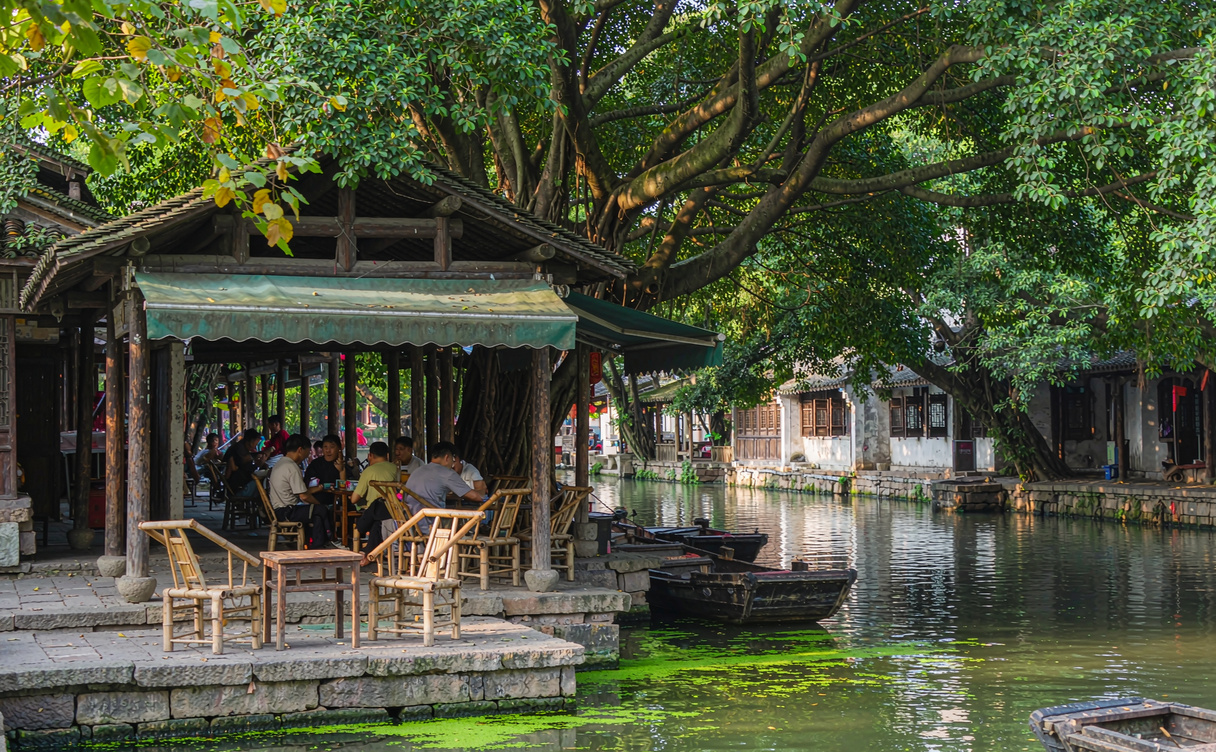
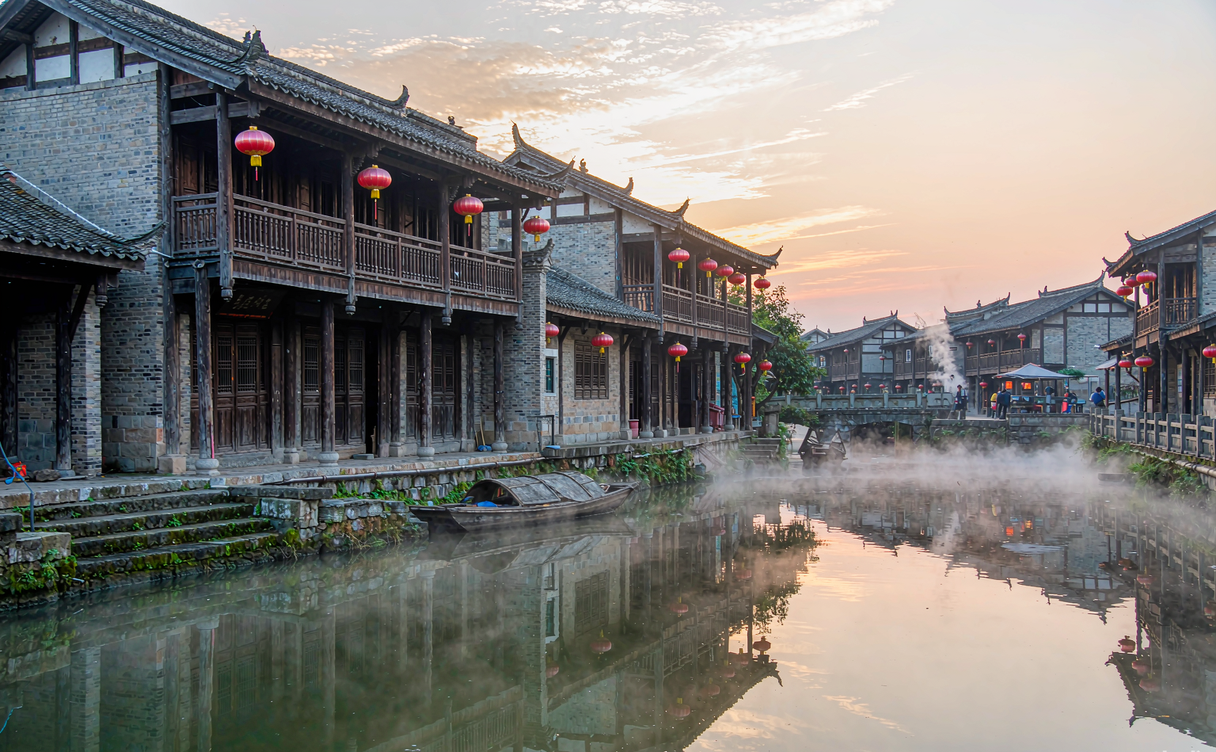
The first thing to understand is that the water is the town. A shallow stream runs the length of the main street, crossed by a couple of low timber bridges, with big banyan trees overhanging the banks and families sitting on plastic stools with a pot of green tea and nothing to do. The air is warm even in winter because of the trees and the water.
Second, understand the scale. The whole walkable old core takes a little over an hour at an easy pace, maybe two if you eat twice. Anyone who tells you to give it a weekend is selling something. Huanglongxi works as a half day: four or five hours from leaving the city to getting back, and that is exactly the right dose.
Third, accept the commercialism. The front end of the main street is a strip of claw-machine arcades, shoe-shine stands and fried-cart stalls pretending to be old. Walk ten minutes in and it thins out.
Things to Do at Huanglongxi
The things to do at Huanglongxi are small and few, which is why it works as a half day: sit by the water, watch a face change, eat a bowl of tofu, walk two back lanes.
Sit in the water. That sounds like a joke and it is the single best thing here. In the warmer months, people pull their chairs right down to the stream on the side lanes behind the main street, feet in the shallows, tea in hand. Bring ¥15 and a bottle of water, find a free chair near the banyan roots, and watch the afternoon go by. Nobody will rush you out.
Take a 川剧 face-changing short show. Several teahouses along the old street run 变脸 demonstrations, fifteen to twenty minutes, with the drum and the gong and the quick hand changes in front of a room of fifty people. Tickets run around ¥60–120 depending on the house and whether tea is included, and the good ones let you sit close enough to hear the rosin on the strings.
Walk up to the small temple at the top of the stream and down the back alleys behind the teahouses, where the streets narrow to a metre and a half and the houses keep their blue tile eaves and carved lintels. There are a few free small shrines and one pagoda with a small admission. The back lanes are where the town stops performing, and they are the reason to come rather than to shop.
How to Get to Huanglongxi
There is no rail station at the town, which is the main practical annoyance. The simplest route is the direct bus from Chengdu’s New South bus terminal (新南门汽车站), which runs to Huanglongxi in about 70 minutes and costs ¥15–25; the buses leave frequently through the day and the return service thins out after about 6pm, so check the last departure. A taxi or ride-hail runs the 40 km in roughly 50 minutes to an hour in normal traffic and ¥100–140 each way, which for a group of four works out cheaper than four bus tickets and a lot faster.
If you drive yourself, follow the ring road south and look for the 黄龙溪 exit; parking at the town’s main lots costs ¥10–20 and fills on weekend mornings before 10am. Some visitors combine the trip with a metro leg — line 1 or 7 into the southern suburbs and then a connecting bus — but honestly the direct coach is the least painful option. If rail travel is new to you, our guide to riding China’s high-speed trains covers the general rules even though this particular leg is by road.
Best Time to Visit Huanglongxi
Weekdays. That is the real answer, more than any month. Saturday and Sunday the streamside chairs are all occupied by day-tripping families from Chengdu, the main street is a slow line of people, and the teahouse prices quietly rise. A Tuesday in May is close to perfect.
For season, May to October is when the water is worth sitting next to and the surrounding fields are green. July and August bring serious heat and even more swimmers, plus a genuinely pleasant evening in the town once the sun drops. Winter is grey, the stream is cold, and the town is nearly empty — a fine time to come if you want photographs without people in them.
Go on a weekday, arrive before eleven, and plan to leave by five. That single change does more for this place than any ticket could, and the difference between a Tuesday and a Sunday here is not subtle. The best time to visit Huanglongxi, in my experience, is a weekday in May or a wet October evening when the stream is running high and the banyans hold the light.
Fire is the other season worth planning around. Around the lunar new year the town runs its 烧火龙 and 打铁花 performances — a long dragon carried through the street while molten iron is struck, throwing orange sparks over the crowd, with drums and firecrackers the whole way. It is dramatic, dangerous-looking and genuinely worth rearranging your schedule for, though it draws serious crowds and you should arrive early for a place. Dates follow the lunar calendar, so confirm them locally.
Eating, and the Honest Verdict on the Food
Huanglongxi earns its place on the Chengdu food map with a handful of street specialities rather than restaurants: 手指麻饼, the finger-sized sesame flatbread still baked on the street; 珍珠豆花, silken tofu in a bowl with chilli oil and sesame; and the peppery 酸辣粉 down by the bridge. Budget ¥15–30 a person to eat properly, and ¥40–60 if you sit down at a teahouse with a pot and a plate.
I would order the tofu and one of the flatbreads and skip the “ancient town banquet” menus that appear on laminated cards near the entrance — the cooking is fine and the presentation is a costume.
A Huanglongxi Itinerary for One Day
The Huanglongxi itinerary I give people is deliberately boring: leave Chengdu at 9am, tea by the water at eleven, the show at midday, home by six.
Leave Chengdu at 9am. Bus or taxi to the town, drop bags at a guesthouse if you stay the night, walk the main street to the far end before the crowd builds. Eleven, streamside chairs and a pot of tea for an hour. Midday, face-changing show, then lunch of tofu and flatbread. Two o’clock, back lanes and the small pagoda. Four, coffee or another tea at the shaded end of the street. Five, out — either the bus back or, if you have the energy, on toward the southern new town for dinner.
Staying the night is worth it precisely because you get the town at seven in the morning, when the shop shutters are down, the women are washing at the bridge, and you can hear water over the street. Rooms in converted old houses near the water run ¥120–260 midweek and double at weekends; the county town further south has the bigger hotels if you want air conditioning and a lift.
Traps and a Straight Answer
Everything about how to get to Huanglongxi comes down to one bus timetable and the last departure back, so check it at the counter before you sit down with your tea. The traps are predictable: arrive at midday on a Saturday and you will hate it; buy the costume photo on the main street and you will pay far too much; and expect a museum-grade ancient town and you will be disappointed. This is a working Chengdu suburb with a historic centre, and the closer you hold that, the better it gets. Chengdu’s own kitchens are a short trip away, and our Chengdu food guide will fill in the rest of the week if this half day leaves you hungry.
One piece of context worth knowing: the fertility of the plain around this town comes from the irrigation system upstream, part of the UNESCO World Heritage listing for Mount Qingcheng and the Dujiangyan irrigation system, which still moves water here after more than two thousand years. The round-up of the best things to do in China puts this kind of day-trip next to the bigger names, and if you are heading west into Sichuan for chilli, the Chongqing food guide will show you how much hotter the next province eats than Chengdu.
Take a weekday morning, one pot of tea by the water, and a face-changing show at midday — and you will have seen the real Huanglongxi rather than the poster on the bus.