

Shanxi is usually sold to travelers as temples, cave dwellings, and the wartime merchants’ mansions of Pingyao. All true, and all at lower altitude than most visitors expect. Push southeast past Changzhi, though, and the loess plain breaks into the Taihang escarpment — a wall of granite and pine that marks the border with Henan. Lingchuan County sits on top of that wall, and it is the most dramatic corner of the province most foreigners never reach. This Lingchuan travel guide is built from the notes we have collected sending readers up there.
Lingchuan is a county in the southeast of Shanxi, wedged against the Henan border at an elevation of 1,000–1,700 metres. Its fame rests on the Wangmangling ridge Lingchuan shares with the neighbouring heights — a windswept crest where the Taihang range drops nearly 1,000 metres into the plains of Henan. We have yet to take a traveler up there who wasn’t quietly stunned by the scale. Background readers often appreciate is the encyclopaedic entry on the Taihang Mountains, which explains the geology that makes this ridge possible.
Best time to visit Lingchuan
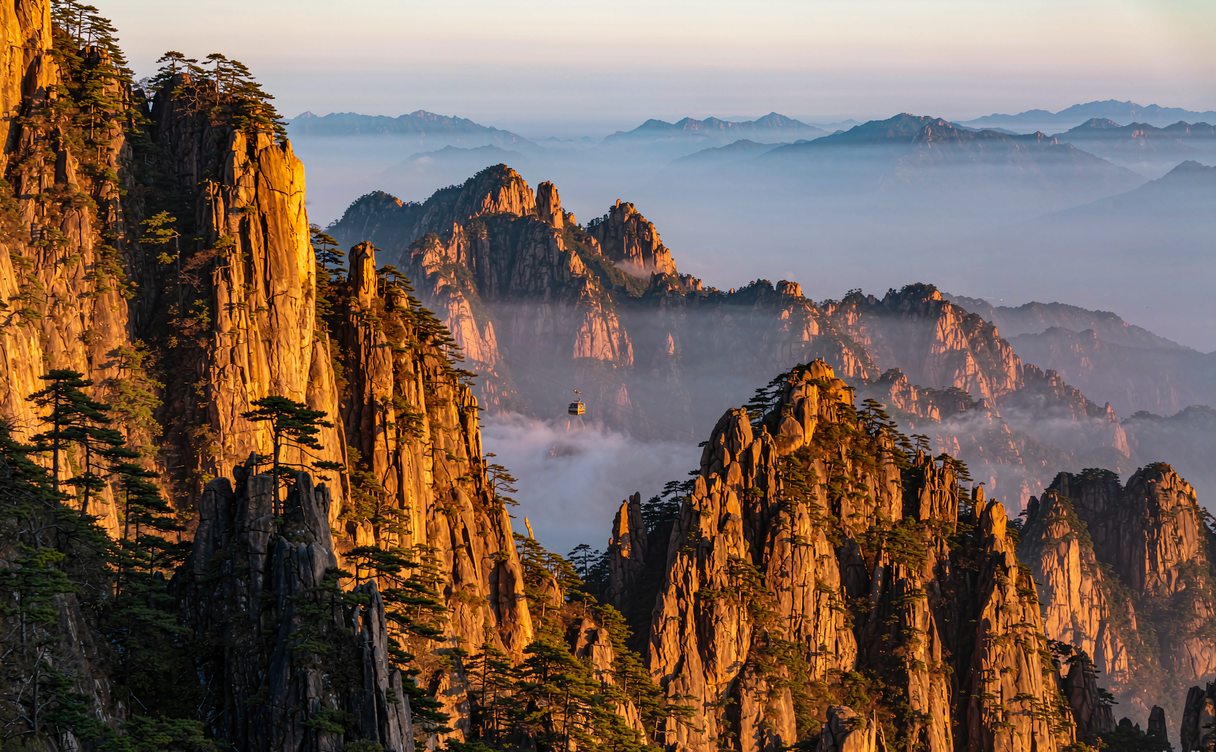
The best time to visit Lingchuan is late spring through autumn, with two distinct sweet spots. Mid-May to June brings fresh green on the slopes and comfortable hiking temperatures of 15–24°C. Late September to mid-October is our favourite: the oak and maple along the ridge turn red and gold, the summer crowds are gone, and the sea of clouds that Lingchuan is known for sits low in the valleys on clear mornings.
Avoid the Chinese national holidays (early May, early October) if you can — Wangmangling’s car parks overflow then. July and August are warm but not oppressive at altitude, and they are the peak months for domestic tourists, so book accommodation ahead. Winter closes some of the higher trails and the cliff road into Xiyagou can ice over; we don’t send first-timers then. For a province-wide seasonal read, our best time to visit China guide lays out the trade-offs month by month.
How to get to Lingchuan
Figuring out how to get to Lingchuan is half the adventure, because there is no airport or high-speed station in the county itself. The realistic routes are:
- Fly or train to Changzhi, then drive: The nearest transport hub is Changzhi (CZX airport, plus a high-speed station on the Taiyuan–Jiaozuo line). From Changzhi city it is roughly 90 minutes by car or bus up the mountain road to Lingchuan town. Our Changzhi travel guide covers arrival and onward transport.
- Train to Jincheng or Taiyuan, then bus: Long-distance buses run from Taiyuan (about 4 hours) and Jincheng to Lingchuan. The China high-speed train guide for foreigners explains how to book the rail legs.
- Self-drive: This is genuinely the best option. The ridge roads are the attraction, and having a car lets you stitch Wangmangling, Xiyagou, and Qizi Mountain into a single loop.
Within the county, the scenic spots are 30–60 minutes apart on switchback roads. There is no public transport between them except seasonal tourist shuttles, so a car or a hired driver is close to essential.
Things to do in Lingchuan
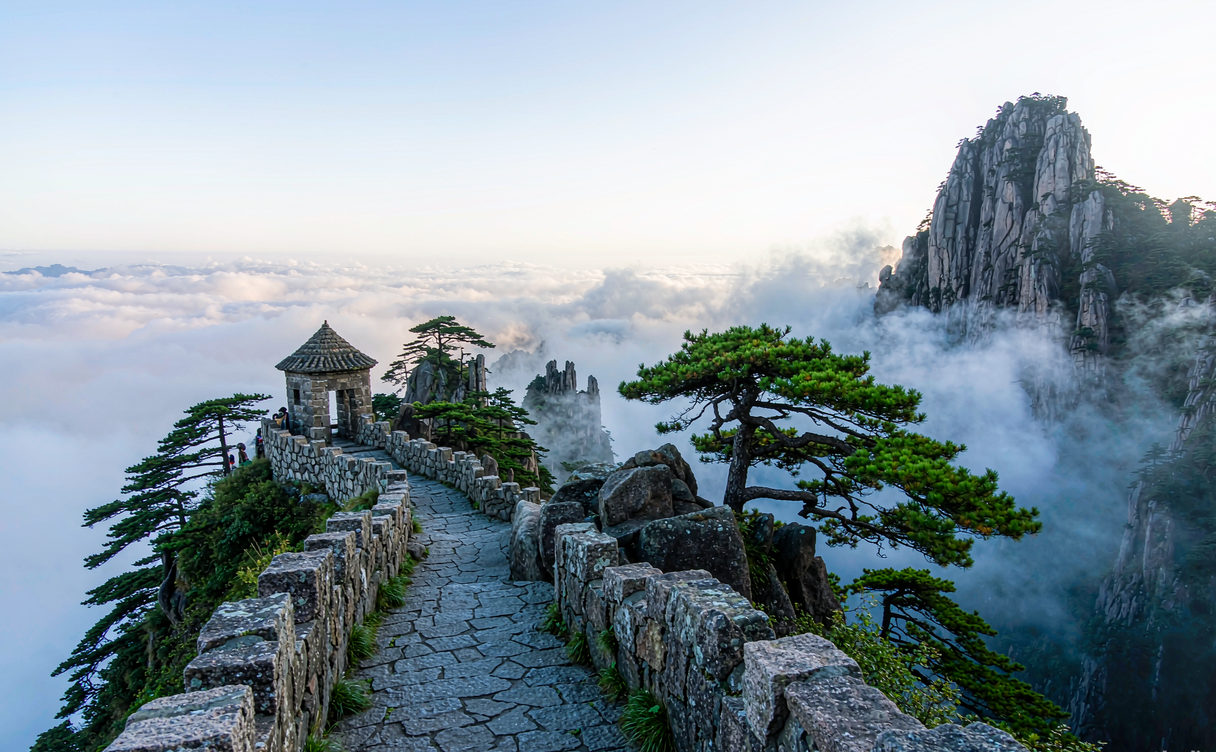
The spine of things to do in Lingchuan is the Wangmangling scenic area and the string of villages and gorges that hang off it. The headline experience is standing on the Wangmangling ridge at sunrise, when the peaks of the Taihang range emerge from a rolling ocean of cloud. A cable car (¥60–¥80 round trip) lifts you most of the way; from the top, boardwalks lead to viewing platforms over the “Thousand-Ren Wall” (千仞绝壁), a near-vertical cliff face that drops into Henan.
Below the ridge, Xiyagou (锡崖沟) is the human story of the mountain. For three decades from the 1960s, villagers cut a 7.5 km road into the cliff face by hand and dynamite — the famous 挂壁公路 (hanging cliff road), a tunnel with rectangular windows punched through the rock to let in light. You can still drive or walk a section of it; the engineering is extraordinary and the viewpoint back up at the hanging road is one of the best photos in Shanxi.
Qizi Mountain (棋子山), north of the county seat, is tied to the legend of Go (围棋): tradition holds that the game was invented here, and the mountain’s black-and-white stone arrangements are said to resemble a board. There is a modest museum (¥30) and easy forest walks. Phoenix Happy Valley (凤凰欢乐谷) is a family-friendly canyon with waterfalls and a short rafting stretch in summer.
For more on what else the province offers, our best things to do in China roundup places Lingchuan among Shanxi’s overlooked natural highlights.
The Lingchuan Shanxi mountains on foot
The Lingchuan Shanxi mountains reward walkers more than any temple town in the province. The ridge loop at Wangmangling is about 4 km of well-maintained boardwalk — allow two hours with photo stops — and connects to a longer trail that follows the escarpment south toward the Henan border. We routinely send fit travelers on the descent from the ridge down to Xiyagou on foot (roughly 3 hours), which is the most rewarding way to appreciate the cliff road from below; just carry water and start before 10 a.m., because there is no shade on the upper switchbacks.
For a quieter alternative, the forests around Huangwei Mountain (黄围山), southwest of the seat, have Buddhist cliff carvings and a cableway to a hilltop temple. It sees a fraction of Wangmangling’s visitors and is our default recommendation when the main ridge is busy.
Where to stay and eat
Lingchuan town has the widest choice of lodging: clean business hotels at ¥150–¥300 a night, and a few courtyard guesthouses rebuilt in local stone style at ¥300–¥500. For the ridge experience, stay inside the Wangmangling scenic area (¥400–¥800 in peak season, half that in May or October) so you can walk to the sunrise viewpoint without a pre-dawn drive.
Food is hearty northern Shanxi fare. Try 陵川羊肉 (Lingchuan lamb, slow-braised with mountain herbs, ¥60–¥90 a portion for two), 炒圪糁 (a local millet pancake scramble), and the region’s 小米 (millet) porridge at breakfast. A filling dinner for two runs ¥70–¥130. The county seat’s night market, off the main square, is the best place to graze on 壶关/陵川-style skewers.
Practical tips before you go
A few lessons from our own trips. First, the altitude and the wind make it cooler than the plains — pack a fleece and a windbreaker even in July. Second, the cliff roads are spectacular but not for nervous passengers; if you are prone to motion sickness, take the morning shuttles rather than a hired car on the tightest sections. Third, card acceptance is poor outside the larger hotels, so carry RMB. Finally, signage is in Chinese only; a translation app with offline Chinese is worth loading before you lose signal on the ridge.
First-timers to the region should read our China travel guide for first-timers, which covers payment, connectivity, and getting around counties like this one.
A side trip to Taiyuan or Changzhi
Most travelers approach Lingchuan from one of two cities, and both are worth a night. Changzhi is the closer, sleepier base, with good road links and a handful of museums on the Taihang guerrilla history. Taiyuan, the provincial capital two hours north by rail, makes a logical bookend with its Jin祠 (Jinci Temple) and the provincial museum. Our Taiyuan travel guide details how to use the capital as your entry or exit point.
What to do beyond the obvious
Once the ridge and Xiyagou are done, two lower-key stops reward the extra day. Xi溪二仙庙 (Xixi Erxian Temple), just outside the county seat, is a精细 Yuan-dynasty wooden hall that few tour groups visit but that architecture buffs will recognise as significant. And the drive south toward the Henan border passes a series of unnamed lookout points where you can see the whole North China plain open up below — pull over, there is no ticket and no crowd.
Final thoughts
Lingchuan breaks the stereotype of Shanxi as flat and historical. Up on the Wangmangling ridge, with the Taihang falling away into Henan and the clouds boiling in the gaps, you get a version of China that the guidebooks shorten to a single line. We keep sending people here precisely because it surprises them.