

Laolongtou (老龙头), the “Old Dragon’s Head,” is the only place on Earth where the Great Wall plunges straight into the sea — a stone dragon head dipping into the Bohai at the eastern end of the Ming fortifications. This Laolongtou Great Wall guide covers the seasonal timing, ticket prices in yuan, the train from Beijing, and what to book, so you can stand where the wall meets the waves without fighting the summer crowds.
The site sits at the southern tip of Qinhuangdao, about 300 km east of Beijing, where the wall that began at Jiayuguan finally runs out of land. Ming general Qi Jiguang built the seaward extension in the late 16th century so raiders could not slip past the land wall along the beach. The result is a short, dramatic stretch of rampart that ends in a stone platform literally lapped by the tide — and because it sits inside the Shanhai Pass defensive system, you can walk from the “First Pass Under Heaven” gate down to the water in one connected visit.
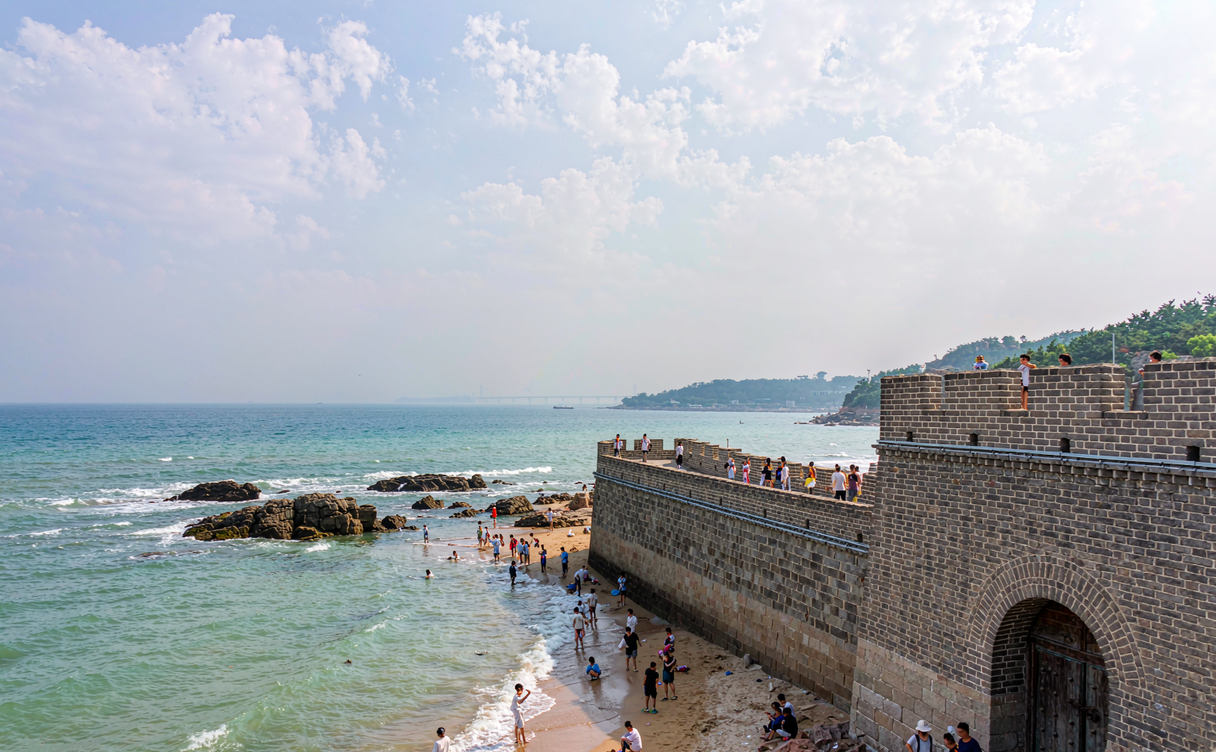
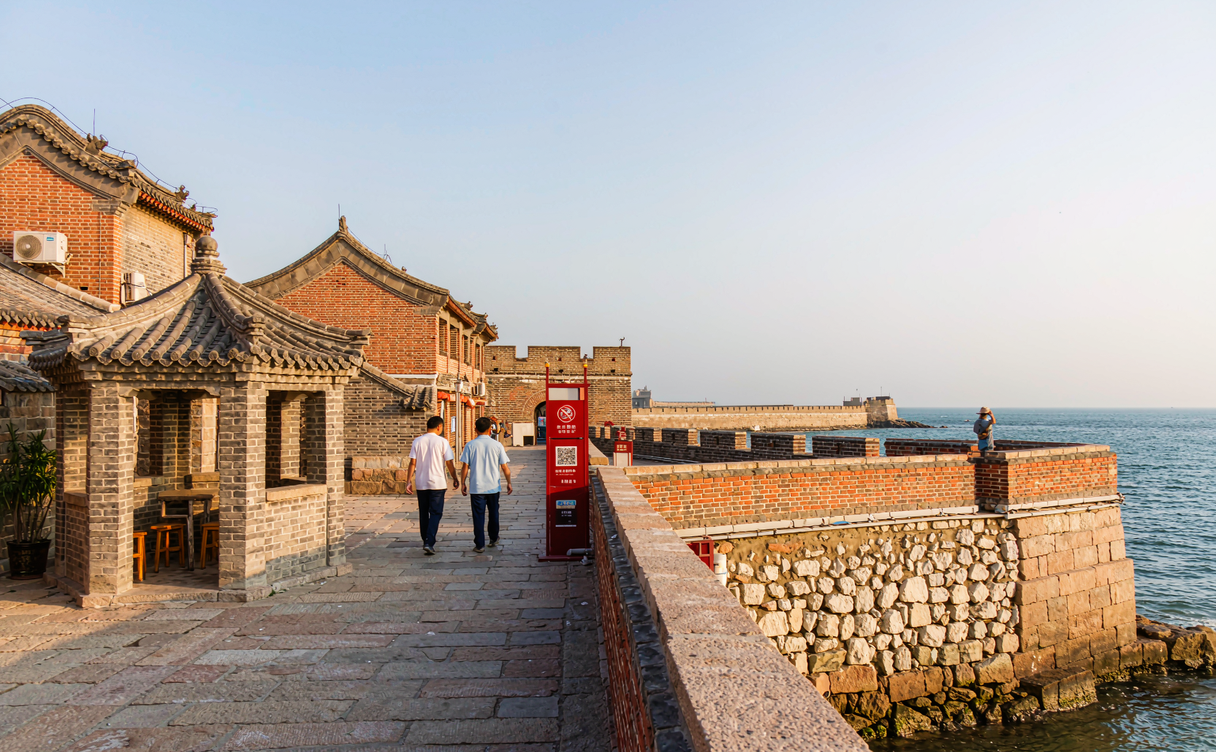
Things to do at Laolongtou begin with the sea wall itself, a 20-minute walk from the entrance along restored battlements to the Chenghai Tower (the “Sea-Viewing Tower”) at the very tip. Time your arrival for low tide if you want the classic shot of the wall meeting wet sand, or for an hour before sunset if you want the rampart lit warm against a cold sea. Beyond the head, the ticket covers the “Old Dragon’s Head” garden, a small naval-history exhibit on the coastal forts, and the repaired bastions that run back toward Shanhai Pass. A short taxi or the local bus connects you to the Qinhuangdao and Beidaihe travel guide beach strip 15 km north, where most visitors actually sleep. For the big-picture context on the whole fortification, our Great Wall of China guide explains how this seaward end fits the 5,000 km of Ming wall.
Best time to visit Laolongtou is late May through June and September through early October. Summer (July–August) is hot, humid, and packed with Beijing families escaping the city heat, and the sea wall gets a shoulder-to-shoulder crowd by midday. Spring and autumn give you 18–24°C days, crisp light, and manageable lines; the wind off the Bohai is constant year-round, so bring a shell even when it looks calm. Winter is stark and nearly empty, with ice on the rocks and a real sense of the wall’s isolation, but the sea spray freezes the lower steps and some exhibits close. If you are coordinating a multi-region trip, our best time to visit China guide lines this up with Beijing and the northeast coast.
How to get to Laolongtou is fast from Beijing. The high-speed train from Beijing to Qinhuangdao runs roughly 2–2.5 hours (second class about 180–210 yuan), and from Qinhuangdao station a Didi to Laolongtou is another 40–60 yuan and 30–40 minutes south. Trains also link straight from Tianjin and Shenyang. If you are starting in the capital, our Beijing first-time travel guide is the natural launch point, and the rail booking mechanics are in our high-speed train guide for foreigners, which covers 12306 passport ticketing. Once in Qinhuangdao, base yourself in Beidaihe for the beach and do Laolongtou plus Shanhai Pass as a single wall-focused day.
Tickets and what to book: Laolongtou entry is about 50 yuan, and a combined Shanhai Pass + Laolongtou ticket runs around 120 yuan if you buy them together at either gate. You do not need to pre-book; buy at the kiosk. The wall’s seaward history and Qi Jiguang’s role are summarized on Wikipedia’s Great Wall of China entry, a useful read before you stand at the head, since the on-site English signage is limited and the story is richer than the panels suggest.
Food and stay favor Beidaihe over the site itself. Laolongtou has snack stalls selling squid, corn, and seabuckthorn juice (10–25 yuan) but no real restaurant; Beidaihe’s seafood street 15 km north does the proper coastal meal for 80–150 yuan per person. Hotels there range from 200-yuan guesthouses to 1,000-yuan resorts, and they book out in August, so reserve a month ahead for summer. First-timers should skim our China travel guide for first-timers for payment and SIM basics, because rural ticket windows here still lean on Alipay and WeChat Pay rather than cards.
What to photograph and pack: the sea wall faces south, so the morning sun is behind you for clean head-on shots of the rampart meeting the water, while the hour before sunset gives the stone a warm glow against a cold sea — both windows are worth planning around. A polarizer tames the Bohai glare, and a mid-telephoto compresses the Chenghai Tower nicely against the horizon. Footwear is the real concern: the seaward steps are worn stone and slick with spray even on a dry day, and the rail is low at the very tip, so grippy soles beat fashion sneakers. Bring a wind shell regardless of forecast — the sea breeze is constant and cuts through a light shirt by midday. Cash is handy at the snack stalls, which are cash-only and ignore cards. If you buy the combined Shanhai Pass + Laolongtou ticket, start at the pass gate in the morning and present the same stub at Laolongtou; the joint saving is modest but it skips a second queue. The naval exhibit near the entrance has English subtitles on a short film about Qi Jiguang’s coastal defense, and it is the clearest on-site explanation of why the wall was pushed into the surf at all. Allow the full two-hour loop rather than a rushed forty minutes, because the scale of a fortification that marched from the Gobi to the ocean only lands once you have walked the whole head and felt the spray.
Pairing the coast with the capital? Use our Beijing first-time travel guide to launch a rail day-trip that ends where the Great Wall hits the sea.
The practical rhythm of a Laolongtou day works best early. Arrive at the gate by 8:30, walk the sea wall before the 10:00 bus tours, shoot the head at low light, then taxi 20 minutes to Shanhai Pass for the midday and the “First Pass” tower. By 15:00 you can be back on the beach in Beidaihe with the rest of the afternoon free. Wear grippy shoes — the seaward steps are worn stone and slick with spray even on a dry day, and the rail is low at the very tip.
Planning beyond the wall? Check our best time to visit China guide to time Laolongtou with Beijing and the northeast coast at mild weather.
One more tip: Laolongtou is photogenic precisely because it is small, so do not over-schedule it. Give it two hours, not a rushed forty minutes, and the scale of a wall that marched from the Gobi to the ocean actually lands. If the sea is rough, the lower platform closes for safety — check the wind forecast the morning of, because a closed head means you miss the one shot that justifies the trip. Done right, Laolongtou is the most singular Great Wall vista in the country, and an easy half day out of Beijing.
Ready to walk the wall into the sea? Start from our Shanhai Pass guide and link Laolongtou as the eastern finale of your Ming-wall day.