

The first time I ordered it, the English menu translated the dish as “Saliva Chicken.” I assumed the translation was a joke, or a mistake made by someone who’d given up on the nuances of Sichuan gastronomy. Then a pale, glistening plate of cold poached chicken arrived at my table in Chengdu, drowned in a pool of crimson chili oil, and I understood the logic immediately: this is the kind of food that makes you salivate before the first bite even lands. In Chinese it’s 口水鸡 — kǒushuǐ jī — and most restaurants abroad render it politely as “mouth-watering chicken” or “steamed chicken with chili.” Both miss the gleeful, almost rude honesty of the original name. If you’re traveling through Sichuan and want a single dish that explains the region’s relationship with spice, numbness, and restraint all at once, this is the one to chase.
What is koushui chicken, and what does it actually taste like?
At its core, koushui chicken is a cold appetizer built from a whole poached chicken — bones in or out, skin on — that is cooked until just done, chilled, and then hacked into bite-sized pieces still on the bone. The magic is not the chicken, which is deliberately plain and silky, but the sauce poured over the top: a glossy emulsion of chili oil, Sichuan peppercorn, soy sauce, black vinegar, sugar, toasted sesame, crushed peanuts, garlic, and often a spoon of fermented bean paste. The result is a layered hit that unfolds in a specific order. First the saltiness of the soy, then the clean sour snap of the vinegar, then the heat of the chili oil building across your tongue, and finally the slow floral tingle of the numbing peppercorn that lingers long after the bite is gone.
So if you’ve ever typed “what does koushui chicken taste like” into a search bar, the honest answer is: it tastes like almost everything at once, but in sequence rather than all at once. The chicken itself stays mild, juicy, and faintly savory, which is exactly the point. It’s a blank canvas that lets the sauce do the talking. That contrast — cold, tender meat against a hot, aromatic dressing — is what separates it from the heavier braised or stir-fried chicken dishes most Western diners expect from a Chinese menu.
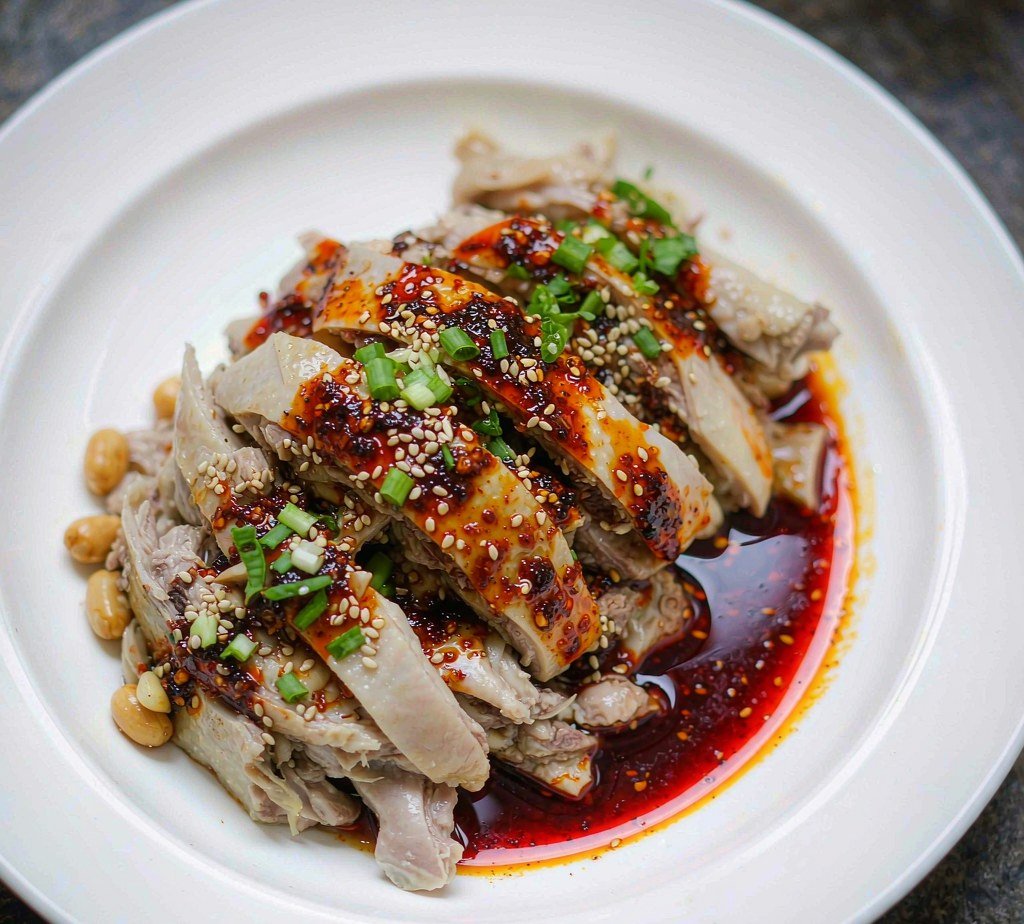
Because the dish is served cold or at room temperature, it behaves differently from a hot entrée. It’s the kind of thing that appears at the start of a Sichuan meal alongside cold noodles and pickles, waking up the palate rather than filling it. If you want to understand the broader logic of the region’s cooking, a good Sichuan cuisine guide will point you toward the same trio of flavors — la (辣, chili heat), ma (麻, numbness), and xian (鲜, savory umami) — that this one bowl manages to balance in a single spoonful.
Why a chicken dish is named after saliva
The name is the part everyone remembers, so it’s worth getting the story straight. The most common folk explanation is simply that the dish is so appetizing it makes you drool — kǒushuǐ literally means “mouth water,” and the dish earns the name by triggering salivation the moment the aroma of chili oil and peppercorn hits you. There’s a second, more romantic version tied to the scholar-era Sichuan countryside, where a similar dressed chicken was sold by vendors who cried out its name so evocatively that passersby’s mouths would water. Either way, nobody is actually putting saliva in the food. The name is praise, not an ingredient.
Historically the dish sits in the same family as bang bang chicken (棒棒鸡), another Sichuan cold chicken dressed in chili oil, and the two are constantly confused by travelers. Both poach a whole chicken and dress it cold; the difference, which I’ll come back to, is mostly in the cutting technique and the exact sauce. Koushui chicken leans sweeter and soupier, with more oil pooling at the bottom of the plate, while bang bang chicken is drier, firmer, and often pounded with a stick (the “bang bang”) to loosen the fibers before slicing. Knowing which one you’re ordering changes the whole experience.
The core ingredients, and the amounts that actually matter
A proper home version does not need a pantry of obscure items, but the proportions decide whether you get a balanced dressing or a greasy mess. For a chicken that serves four as an appetizer:
- Whole chicken or chicken thighs: 1 bird (about 1.2 kg) or 800 g bone-in thighs. Thighs are more forgiving than breast, which dries out fast.
- Chili oil (hong you): 5 to 6 tablespoons, homemade if possible, with the sediment included for texture.
- Light soy sauce: 2 tablespoons for salt and color.
- Black vinegar (zhenjiang): 1.5 tablespoons for the sour backbone.
- Sugar: 1 teaspoon to round the heat without making it sweet.
- Toasted sesame paste or tahini: 1 tablespoon, the secret to a creamy mouthfeel.
- Garlic: 3 to 4 cloves, finely grated into a paste.
- Sichuan peppercorns: 1 teaspoon, toasted and ground, plus a little infused oil.
- Garnish: 2 tablespoons toasted sesame seeds, 3 tablespoons crushed roasted peanuts, sliced scallions, and cilantro.
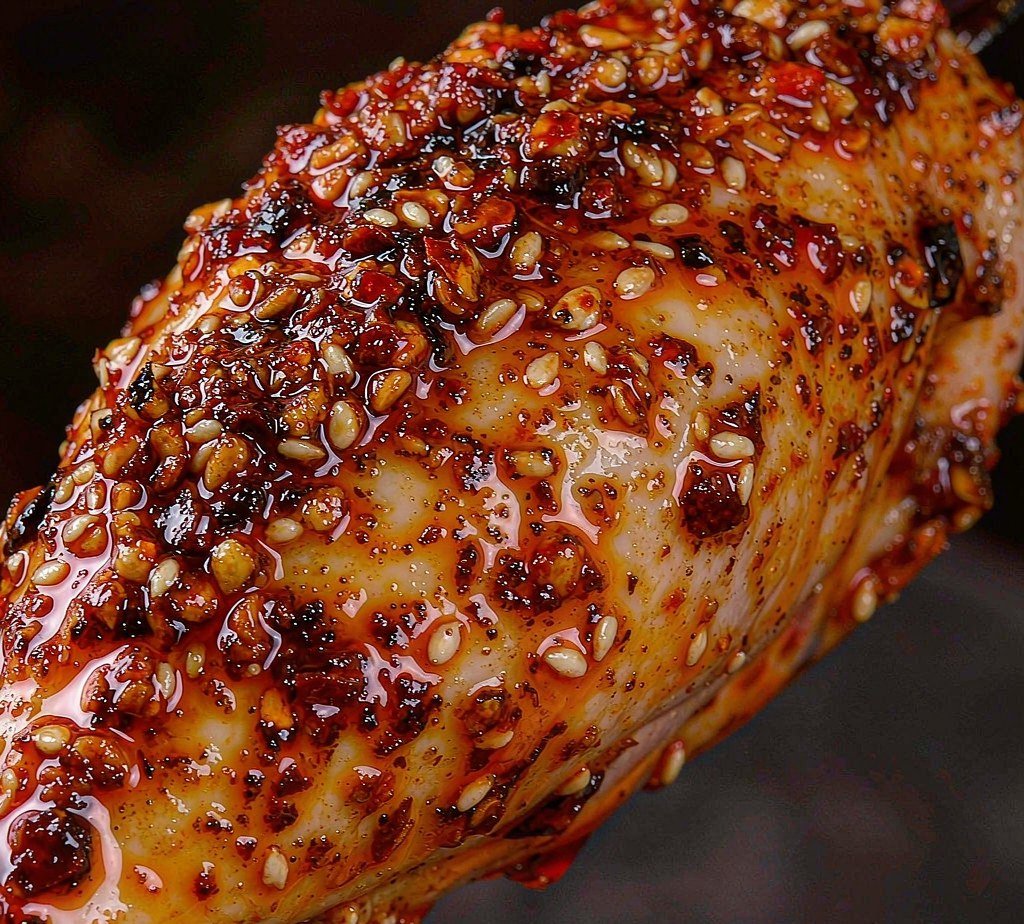
The sesame paste is the ingredient most recipes skip, and it’s the one that separates a restaurant-grade bowl from a flat, oily one. It binds the chili oil and vinegar into something that clings to the chicken instead of pooling untouched at the plate’s edge. If you only change one thing from a basic recipe, add the sesame.
Who should order it — and who should steer clear
Koushui chicken is a near-perfect traveler’s dish: it’s served cold so it’s safe even when you’re wary of undercooked food, it’s protein-forward without being heavy, and it pairs with plain rice to stretch a meal cheaply. Anyone who enjoys bold flavor and isn’t afraid of spice will love it. It’s also a strong choice for people who want to taste Sichuan peppercorn’s numbing tingle without committing to a full mapo tofu or hotpot session.
The cautions are specific. The sauce is built on peanuts and sesame, two of the most common hidden allergens in Chinese restaurant cooking, so if you have a nut or seed allergy this is a dish to avoid or to request without those garnishes. The chili oil is genuinely hot, not just decorative, so small children or anyone with a sensitive stomach should ask for a milder pour. And because the chicken is served cold, travelers with compromised immune systems who avoid raw or undercooked proteins should confirm the chicken was brought fully to temperature before chilling. For a fuller rundown of hidden allergens and how to phrase requests in restaurants, our Chinese food allergies and dietary guide covers the practical phrases and risky dishes beyond this one.
How to make koushui chicken at home: a 7-step method
The home version is more forgiving than people expect. The single skill that matters is poaching the chicken gently so the meat stays silky rather than rubbery. Here is a reliable sequence:
- Step 1 — Bring a pot of water to a bare simmer with a few slices of ginger and scallion whites. Do not boil hard; you want 90°C wisps, not a rolling boil.
- Step 2 — Lower the whole chicken or thighs in, then immediately turn the heat down so the water stays just below simmering. Poach for 25 to 35 minutes depending on size, turning once.
- Step 3 — Check doneness at the bone with a skewer; the juices should run clear. Pull it the moment it’s done — overcooking is the enemy here.
- Step 4 — Shock the chicken in an ice bath for 10 minutes. This stops cooking, tightens the skin, and gives that signature snappy texture.
- Step 5 — Chop through bone and all into bite-sized pieces and arrange on a platter, skin side up.
- Step 6 — Whisk the soy, vinegar, sugar, sesame paste, grated garlic, and ground Sichuan peppercorn into the chili oil until it emulsifies into a thick, glossy sauce.
- Step 7 — Pour the sauce over the chicken, scatter sesame, peanuts, scallions, and cilantro, and let it sit 10 minutes so the meat drinks in the dressing before serving.
That resting step at the end is the part home cooks skip and then wonder why their version tastes flat. The chicken needs those ten minutes of contact with the sauce to stop tasting like two separate things.
Practical tips and the regional twists that change the bowl
A few habits separate a decent bowl from a great one. Poach the chicken with the skin on and never trim it first; the skin is what carries the sauce and gives the dish its luxurious mouthfeel. Make your own chili oil if you can — store-bought versions vary wildly, and a homemade oil infused with cinnamon, star anise, and bay leaf before the chilies go in adds a depth no bottle matches. And resist the urge to drown the plate; the sauce should coat, not swim.
Regionally, the dish shifts as you move. Around Chengdu it leans sweeter and soupier, closer to the version I first ate. Head toward Chongqing and you’ll find a punchier, drier dressing with more peppercorn and less sugar. In northern China the same idea sometimes appears with a sesame-paste-heavy, almost halva-like sauce that barely resembles the Sichuan original. None of them are wrong; they’re just local accents on the same cold-chicken idea. If you’re building a trip around food, a broader Chengdu food guide will point you to the neighborhoods where the sweet-Chengdu style is done best, usually in unmarked shops where the chili oil is made daily.
Koushui chicken vs bang bang chicken: what’s the difference?
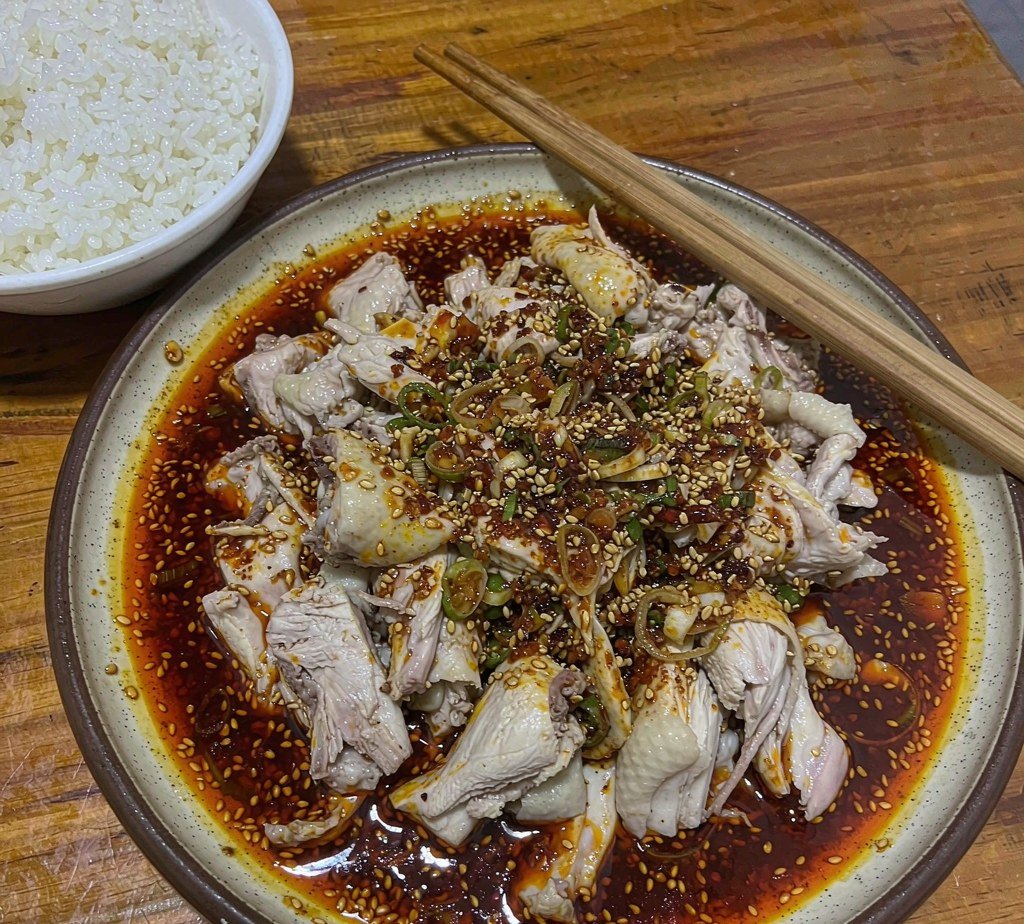
Because the two share a cold-poached chicken base, travelers constantly mix them up, so it’s worth a direct comparison. Bang bang chicken is traditionally pounded with a wooden stick to break the muscle fibers, then sliced thin and dressed with a drier, sharper chili-soy sauce that contains less oil and more vinegar. Koushui chicken is chopped on the bone, saucier, slightly sweet, and arrives with more chili oil pooled beneath the pieces. If you want a clean, tangy bite, bang bang wins; if you want a lush, saucy, spoon-the-oil-over-your-rice experience, koushui is the move. Both belong on the same Sichuan cold-dish table, and ordering both lets you taste the range of the region’s dressing logic in a single sitting.
Frequently asked questions
What does koushui chicken taste like?
It tastes layered rather than single-note: savory soy first, a clean vinegar sour next, then building chili heat, and finally the floral numbness of Sichuan peppercorn. The cold, silky chicken underneath stays mild, which lets the dressing carry the flavor.
How to make koushui chicken at home?
Poach a whole chicken or thighs at a bare simmer, ice-bath it, chop it on the bone, then pour over a sauce of chili oil, soy, black vinegar, sugar, sesame paste, garlic, and ground Sichuan peppercorn. Rest ten minutes, garnish with sesame and peanuts, and serve cold. The seven steps above walk through the timing in detail.
Koushui chicken vs bang bang chicken — which is spicier?
Koushui chicken usually reads as spicier and oilier because of the generous chili-oil pour, while bang bang chicken is tangier and drier with a sharper vinegar edge. Heat tolerance aside, the mouthfeel is the bigger difference: saucy and lush versus clean and snappy.
How many calories are in koushui chicken?
A typical restaurant portion runs roughly 350 to 500 calories, but most of that comes from the chili oil and peanuts rather than the chicken. At home, trimming the oil to four tablespoons and using chicken breast drops a serving closer to 300 calories while keeping the flavor intact.
Why is it called “saliva chicken”?
The name is a compliment, not a recipe. Kǒushuǐ jī means “mouth-watering chicken,” rooted in the idea that the aroma of chili oil and peppercorn makes people salivate before they eat. No saliva is involved; the dish is simply that appetizing by reputation.
If you spend any real time in Sichuan, you’ll notice koushui chicken shows up everywhere — at airport lounges, at ten-table noodle shops, and at the banquet restaurants where the meal opens with a dozen cold plates. That ubiquity is the surest sign of how beloved it is. Order it once, eat it slowly with a bowl of plain rice to blunt the heat, and you’ll have tasted the single dish that explains more about Sichuan’s sweet-heat-numb philosophy than any textbook paragraph could. Just don’t be thrown off by the name on the menu. The chicken is far too good to let a translation get in the way.