

The Han dynasty (202 BC to 220 AD) was one of the most powerful and enduring empires in Chinese history, and it is the very reason Chinese people today call themselves Han Chinese. Divided into the Western Han and Eastern Han periods, this dynasty gave China its name, opened the Silk Road, advanced papermaking, made Confucianism the state philosophy, and built grand capitals at Chang’an and Luoyang. For travelers, the legacy is not locked in textbooks. You can still walk the grounds of the Han Chang’an city ruins in Xi’an, stand before the tomb of Emperor Wu, and explore remarkable Han tombs across the country. In short, the Han dynasty shaped Chinese identity, and its monuments remain some of the most rewarding sites on any serious trip through China.
A Quick History of the Han Empire
The Han empire rose after the short-lived Qin dynasty unified China but collapsed under harsh rule. Liu Bang founded the Western Han in 202 BC and established his capital at Chang’an, near modern Xi’an. The early emperors restored stability, lowered taxes, and let agriculture recover. The dynasty reached its peak under Emperor Wu (Han Wudi), who expanded the empire’s borders, centralized power, and sent the envoy Zhang Qian westward, opening what became the Silk Road.
In 9 AD, the short-lived Xin interregnum interrupted the line, but the Liu family returned in 25 AD under Emperor Guangwu, moving the capital east to Luoyang and beginning the Eastern Han. The Eastern Han prospered for two centuries before court intrigue, eunuch power, and peasant uprisings weakened it. The dynasty formally ended in 220 AD, yet its cultural blueprint lasted far longer.
What makes the Han dynasty special is continuity. For over four hundred years, it set patterns of governance, language, and belief that later dynasties inherited. The very word “Han” became the label for the majority ethnic group, the Han Chinese in China, and for the Mandarin language family that grew from this era. If you want to understand why China feels like one civilization across millennia, the Han dynasty is the key chapter.
What Made the Han Dynasty Powerful?
Several factors combined to make the Han empire a regional superpower. First was its bureaucratic state. The Han refined the Qin system of prefectures and counties, staffed by officials selected through recommendations and later examinations rooted in Confucian classics. This created a stable administration that outlasted any single ruler.
Second was economic strength. The Han minted uniform coins, built granaries, and expanded irrigation. A growing population, estimated at over fifty million at its height, provided both labor and tax revenue.
Third was the Silk Road. When Zhang Qian traveled west, he returned with knowledge of Central Asian kingdoms, horses, and trade routes. The Han court secured these corridors, letting silk, jade, and ideas flow between Chang’an and distant markets. This trade funded the empire and connected China to the wider world.
Fourth was innovation. The Han period produced the world’s first widely used paper ( credited to Cai Lun’s refinement), the seismograph, advances in astronomy, and steel-making techniques. These inventions reinforced the image of a sophisticated, confident civilization.
For a deeper context on how this empire fits into a broader itinerary, see our China travel guide for first timers.
The Silk Road and Han Inventions
The Silk Road is the Han dynasty’s most famous legacy. Under Emperor Wu, the empire pushed into the Hexi Corridor and set up garrisons that protected merchant caravans. Chinese silk became a luxury across Eurasia, while grapes, alfalfa, horses, and Buddhism entered China along the same paths. This exchange was not only commercial but cultural, reshaping art, food, and religion for centuries.
At the same time, the Han era was a golden age of practical invention. Papermaking transformed record-keeping and education, eventually spreading westward and changing human communication forever. The suspension bridge, the wheelbarrow’s ancestors, and improved agricultural tools all emerged or matured in this period. The imperial astronomical observatory tracked eclipses and planetary motion with surprising accuracy.
The promotion of Confucianism gave the dynasty a shared moral framework. Schools and imperial academies taught the classics, and filial piety became a social ideal still echoed in Chinese culture today. When you visit Han sites, you are not just looking at old walls. You are seeing the foundations of a value system that still shapes daily life.
What Can You Visit from the Han Dynasty Today?
This is the practical part for travelers. The Han legacy is spread across several provinces, and many sites are open to visitors.
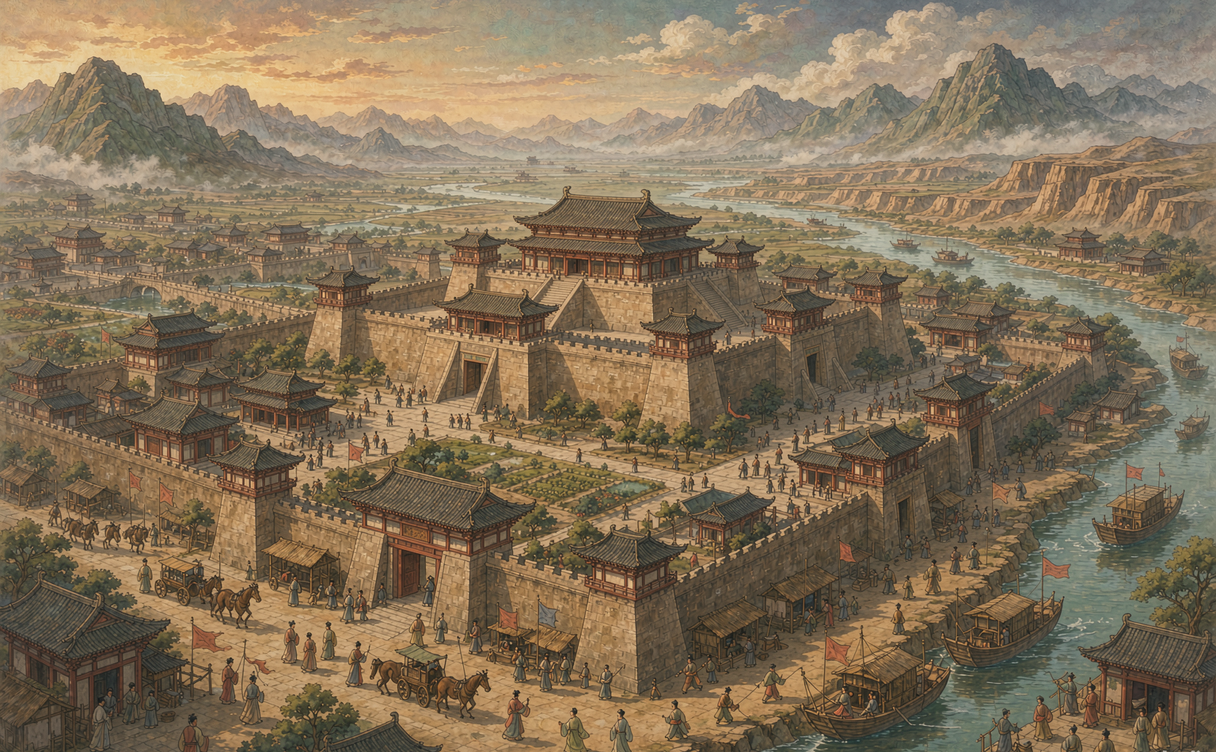
Start in Xi’an, the heart of the Western Han. The Han Chang’an city ruins area preserves sections of the original capital layout, including earthen walls and gate foundations. Nearby, the Shaanxi History Museum holds stunning Han artifacts such as pottery, bronze mirrors, and jade burial suits.
The tomb of Emperor Wu, known as Maoling, sits west of Xi’an and is one of the largest imperial tombs in China. Its museum displays fierce stone sculptures of horses and mythical beasts that guarded the spirit road.
In Xuzhou, Jiangsu, the Han tombs carved into mountains display vivid murals and stone relief chambers. In Mancheng, Hebei, the tomb of Prince Liu Sheng astonished archaeologists with a complete jade burial suit sewn with gold thread. Both are excellent, less crowded stops for history lovers.
If your route includes Beijing, pair the Han story with later dynasties. Our Forbidden City guide and tickets explain the Ming and Qing palaces built long after the Han, while the Great Wall of China guide connects you to the frontier defenses that echoed Han border strategy. To plan a route that includes these highlights, check our best things to do in China.
Tips for Visiting Han Sites
Plan your Han dynasty trip around Xi’an as a base, because the richest Western Han sites cluster in Shaanxi province. Spring and autumn offer the most comfortable weather for walking open-air ruins. Hire a local guide or download an audio tour, since many Han remains are subtle earthworks rather than towering buildings. Combine museum visits with outdoor tombs to get both the artifacts and the atmosphere.
Remember that Han sites reward patience. Unlike the Great Wall or the Forbidden City, the Han dynasty often speaks through foundations, ceramics, and quiet hills. Give yourself time, and the scale of a four-hundred-year empire will sink in.
FAQ
Was the Han dynasty the longest in Chinese history? It was one of the longest, ruling in continuous and restored lines from 202 BC to 220 AD, about four centuries. Only a few later dynasties matched that span.
Is Han Chinese the same as Han dynasty? The name comes from the dynasty. Over time, “Han” became the name of the majority ethnic group, the Han Chinese in China, and a label for the related language tradition, sometimes called Han Mandarin in broad cultural discussion.
Why is the Han dynasty important for travelers? Because its ruins, tombs, and museums are scattered across China and offer a deeper understanding of the culture you see everywhere today.
Conclusion
The Han dynasty built more than an empire. It built the identity that still defines China, from the name Han Chinese to the trade routes, inventions, and Confucian ideals that shaped daily life. Walking its ruins in Xi’an, Hebei, or Jiangsu is walking through the roots of a civilization. With the right planning, these quiet, powerful sites can become the most memorable part of your journey.
Ready to explore China’s history? Start planning your Han dynasty route with our China travel guide for first timers.
Want a curated list of must-see sights? Browse our best things to do in China to build your itinerary.
Curious about later dynasties? Read our Forbidden City guide and tickets before you fly.
For authoritative background and further reading, see the Han dynasty overview on Wikipedia.