

In the remote Altay region of northern Xinjiang, China, Koktokay (Keketuohai) is a geopark of granite peaks, birch forests, and the cold headwaters of the Irtysh River — a landscape so striking it was named a UNESCO Global Geopark. We have sent travelers here as an autumn color destination that rivals anywhere in China, and it is still delightfully off the mainstream Xi’an–Zhangye–Urumqi loop. If you are planning a China travel guide for first-timers, treat Koktokay as a rewarding add-on once you are already heading to Xinjiang, China.
Where Koktokay Is
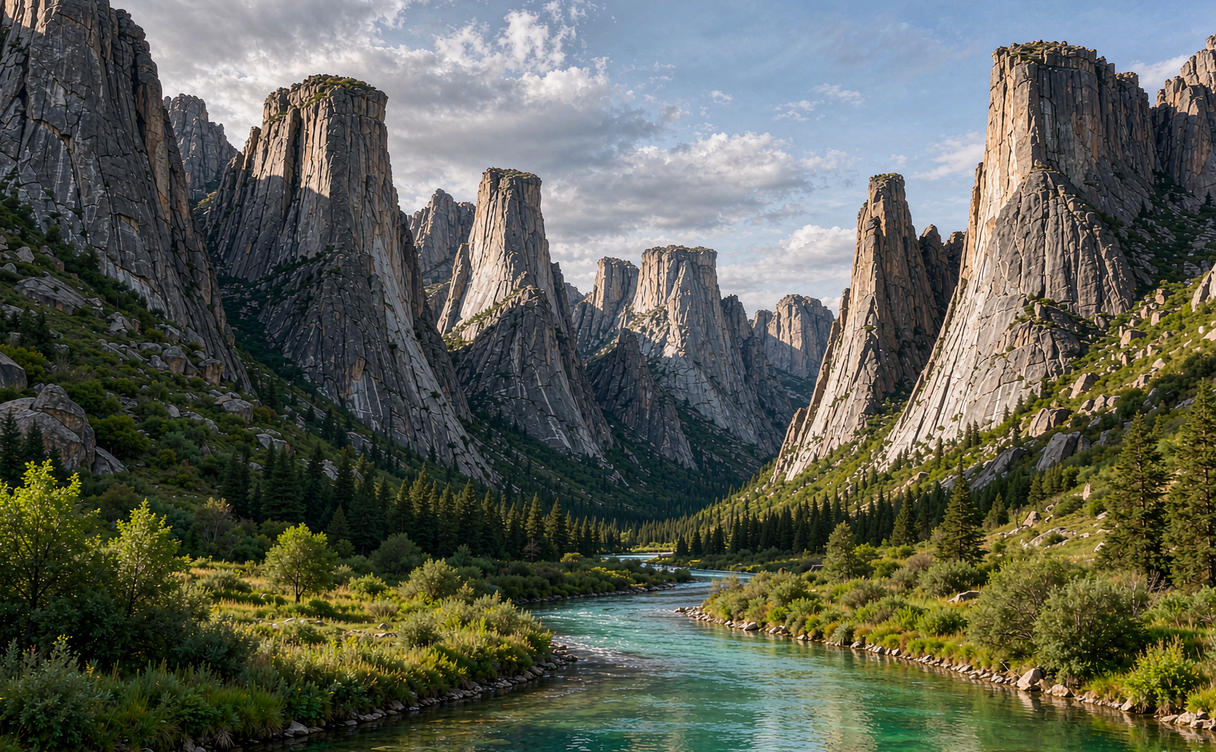
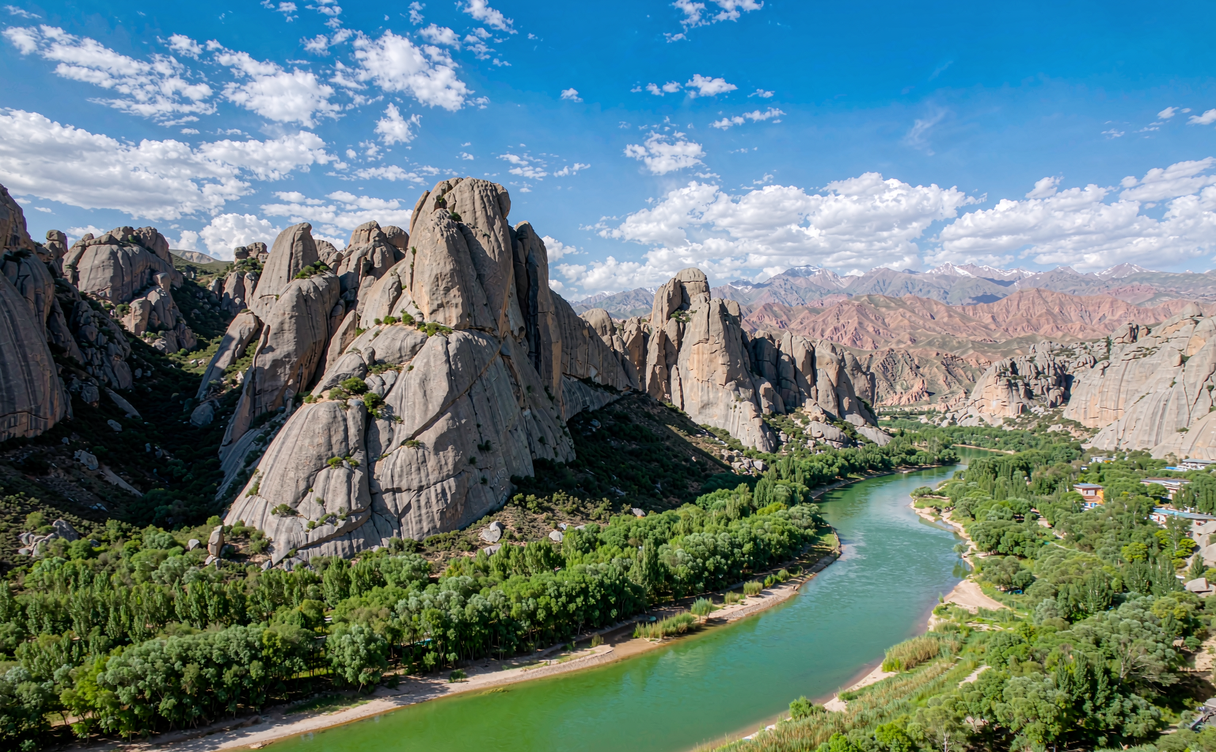
Koktokay National Geopark lies in Fuyun County, Altay Prefecture, in the north of Xinjiang, China, near the borders with Mongolia, Russia, and Kazakhstan. It sits roughly 230 km northeast of Urumqi and about 50 km from the county town of Fuyun. The park’s centerpiece is the Irtysh Grand Canyon, where a series of granite monoliths — most famously the “Spirit of the Irtysh,” a 1,000+ m quartz-rock pinnacle — rise from the river. The Koktokay National Geopark entry on Wikipedia provides solid background on its geology and the rare-metal mining history that shaped the area.
Getting There
The easiest access is flying to Urumqi, then either renting a car (about 3–4 hrs to Fuyun) or taking the train to Fuyun Station (Keketuohai Station), served by routes from Urumqi (about 4–6 hrs, ¥80–¥150). From Fuyun, a taxi or tour shuttle covers the final 50 km to the park gate (¥100–¥200). A small airport, Fuyun Keketuohai Airport (FYU), also has seasonal flights from Urumqi (about 1 hr, ¥400–¥900). There is no high-speed rail this far north, but our high-speed train guide for foreigners covers reaching Urumqi first. Within the park, electric shuttles (included or ¥20–¥40) run along the canyon.
Best Time to Visit
Per our best time to visit China guide, Koktokay has two strong seasons. Late September to mid-October is the showstopper: the birch and poplar forests blaze yellow against dark granite, with crisp blue skies — peak foliage draws domestic photographers. June to August is the cool summer escape (daytime 18–28°C), perfect for hiking and river views, though mosquitoes appear. We avoid November to April, when temperatures drop below -20°C and access is limited.
Things to Do at Koktokay
The Irtysh Grand Canyon walk is the heart of the visit: a flat-to-gentle riverside trail of 3–5 km past the “Spirit of the Irtysh,” the “Holy Spring,” and carved granite formations. Allow half a day. The higher Shenzhong (Bell) Mountain and the alpine lake area (open in season) add another half day. In autumn, simply sitting by the river among the birches is enough. History buffs note Koktokay was once a top-secret rare-metal mine — the “No. 3 Mine Pit” nearby is an industrial-heritage curiosity. Many of the best things to do in China for nature lovers list this geopark for exactly its granite-and-golden-forest contrast, unique even within Xinjiang, China.
Tickets and Costs
Park entry is about ¥90–¥120 (peak/off-season), with shuttle buses extra. A typical independent day — train to Fuyun, shuttle, entry, simple lunch — runs ¥350–¥600 per person. Staying overnight in Fuyun town keeps costs down; guesthouses there are ¥150–¥350, and a few comfortable hotels reach ¥500–¥800. Book entry via the park’s official channels or major Chinese apps; show your passport at the gate. During October peak, arrive early — the car park fills by mid-morning.
Where to Stay
Base in Fuyun town for value and simplicity, or stay inside the geopark’s limited lodging (¥400–¥900 for the better inns) to catch dawn light on the granite. For a fuller Xinjiang, China road trip, our Xinjiang travel guide maps how Koktokay fits with Kanas, Hemu, and Ürümqi. If you enjoy historic towns and old villages, the Kazakh and Mongol yurt settlements around Altay add cultural depth, with opportunities to stay in a felt yurt and share airag (fermented mare’s milk) with herders.
Food
Altay eating leans hearty northern: hand-grabbed lamb (paomo), laghman noodles, dairy from Kazakh herders, and wild mushroom dishes in autumn. A filling meal runs ¥40–¥80 per person. Try the local cold-water fish from the Irtysh if available. Cash is useful in Fuyun; mobile pay works in most spots, but the geopark stalls may be card-only or cash-only depending on the season.
Practical Tips
Koktokay sits around 1,200–1,500 m — no serious altitude issue, but the far north gets cold fast after dark even in September, so pack a warm layer. Trails are easy but long; wear solid shoes. Sun and wind are intense on the open canyon; bring sunglasses and lip balm. Mobile coverage is decent near the entrance but fades deeper in; download offline maps. As in all of Xinjiang, China, carry your passport — there are routine security checks on the roads, and you may be asked to show it at fuel stops and hotels.
Sample 2-Day Plan
- Day 1: Urumqi to Fuyun (train); afternoon transfer to park, short canyon walk; overnight Fuyun or in-park.
- Day 2: Full morning in the geopark for foliage and the “Spirit of the Irtysh”; afternoon return toward Urumqi.
Geology of the Granite
Koktokay’s drama comes from its rock. Around 300 million years of tectonic grinding left a batholith of quartz-rich granite that erosion sculpted into the towering monoliths you see today, the “Spirit of the Irtysh” chief among them at over a kilometer tall. The Irtysh, one of the few rivers of the region that flows northward toward the Arctic, carved the canyon over millennia, and the abandoned No. 3 Mine Pit beside it recalls the rare metals — lithium, beryllium, tantalum — once extracted here under tight secrecy.
Birch Forests and Wildlife
The park’s autumn fame rests on its birch and poplar groves, which blaze yellow against the dark stone. Beneath them scurry squirrels and pheasants, and the Irtysh’s cold water holds trout that local kitchens turn into a prized dish. Mosquitoes appear in July and August, so a repellent is wise in summer, while autumn is blessedly bug-free and crisp.
Photography Tips
Golden hour is everything at Koktokay. At sunrise the low sun lights the east face of the granite pinnacles and sets the birches alight; at sunset the opposite walls glow. A polarizer deepens the blue Xinjiang, China sky and tames glare off the river. Arrive at the canyon gate at opening time in October — the car park fills by mid-morning and the best light is gone by 9 am.
What to Bring
Northern Xinjiang, China turns cold fast after dark even in September, so pack a warm layer, a hat, and gloves for dawn at the canyon. Sturdy shoes handle the long riverside trail, and a water bottle plus snacks cover the half-day walk since stalls are sparse. Sunglasses and lip balm counter the intense canyon wind and sun, and a power bank helps because signal fades deeper into the park.
FAQ
Do I need a permit for Koktokay?
No special border permit is needed for the geopark itself, unlike Ngari in Tibet, China. A standard Xinjiang visit via the usual channels is enough, but always carry your passport.
Is Koktokay worth it if I’m also doing Kanas?
Yes — Koktokay’s granite canyon and autumn birches are different in feel from Kanas’s lakes, and they are only a few hours apart by road.
When is the foliage peak?
Usually the first to second week of October, but it shifts with the snow line; check local reports before locking dates.