

For eight centuries this town was not called Jinxi. It was called Chenmu — literally “Chen’s Grave” — because a consort of a Southern Song emperor was buried here, in the water, and the settlement took its name from her tomb. The old name was only retired in the early 1990s. I mention this on every visit because it tells you what kind of place Jinxi is: a small Jiangsu canal town that has never quite bothered to market itself, sitting eight kilometres from one of China’s most photographed water towns and drawing a fraction of the crowds.
I first came in 2017 on a scouting day for a client who had found Zhouzhuang unbearable in August. We arrived at 09:00, walked an empty stone quay, and spent an hour in a museum of roof tiles with three other people in the building. This Jinxi ancient town guide covers how to get here, what the ticket buys, how it honestly compares with its famous neighbour, and where the day can go wrong.
The Town Named After a Grave
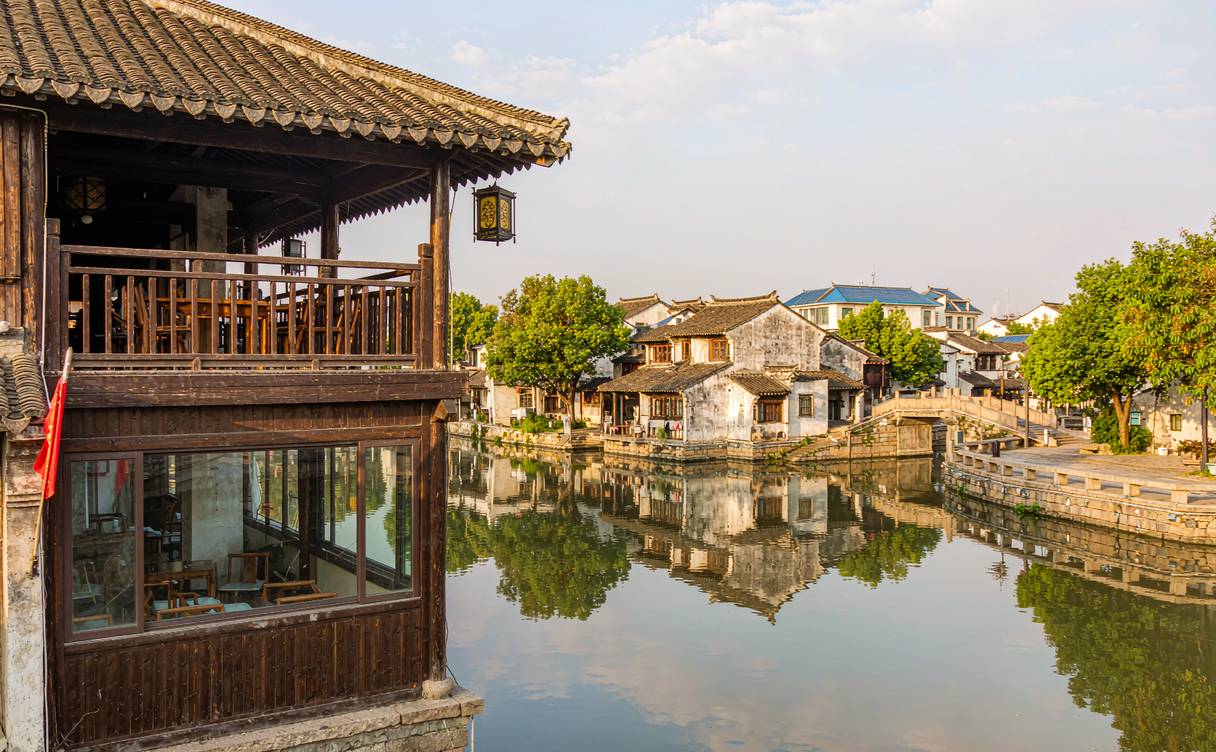
Out in Wubao Lake on the town’s southern edge is a low mound ringed by water — the tomb of Lady Chen, who according to local tradition died here while the Song court was in flight and was buried in the lake rather than on land. Whatever the historical detail, the effect is remarkable: a green island with a stone marker, unreachable and unbuilt-on, floating a hundred metres offshore. Locals will tell you the mound has never been submerged no matter how high the water rises.
Beside the lakeshore stands a Zen temple of Song foundation, rebuilt over centuries, with a pavilion honouring the god of literature. This corner — temple, lake, tomb, and the long Ming-era bridge with its many arches marching across the shallows — is the single best thing in Jinxi and the reason to walk south rather than staying on the main lane.
Jinxi Ancient Town vs Zhouzhuang: An Honest Comparison
The question I get asked most is Jinxi ancient town vs Zhouzhuang, so here is the blunt version.
Zhouzhuang has the better set pieces: the twin bridges, the grand merchant mansions, a full evening programme, dozens of restaurants and hotels. It also charges roughly double the admission, and on a spring weekend it can feel like a railway concourse. Jinxi has a combined ticket in the ¥50–65 range, perhaps a fifth of the foot traffic, a genuinely unusual set of small museums, and a lakeside quarter that Zhouzhuang cannot match. What it lacks is dining variety and nightlife — after 19:00 the streets mostly go to sleep.
My rule: if you have one canal-town day in your whole China trip and you want the iconic images, go to Zhouzhuang early and leave by noon. If you have already seen one water town, or you value quiet over spectacle, choose Jinxi. Ambitious travellers do both in a day, since the two are a 15-minute drive apart.
The Brick and Tile Museum and Jinxi’s Other Collections
Jinxi calls itself a town of folk museums, and that is not marketing fluff — there are more than a dozen small private collections behind the old shopfronts. The anchor is the museum of ancient bricks and tiles, which sounds like a specialist indulgence and is in fact fascinating. This part of Jiangsu supplied kiln products to imperial construction projects for centuries, and the galleries walk you through clay preparation, moulding, firing and the difference between a decorative eave tile and a dense polished floor brick. There are Han-dynasty tomb bricks, Ming eave-end tiles stamped with beasts, and a reconstructed kiln section.
Around it sit a purple-clay teapot collection, an antiques hall, a coin and currency collection with Qing-era silver ingots, a stone-carving display and a painting gallery donated by a local-born artist. Each takes 15–25 minutes. Not all open reliably on weekday mornings in low season — that is part of the town’s charm and its frustration.
How to Get to Jinxi From Shanghai
Practical routing for how to get to Jinxi from Shanghai, in order of how often I use it:
By train and taxi: Shanghai Hongqiao to Kunshan South takes about 20 minutes on a high-speed service for ¥25 or so. From the station, a ride-hail to Jinxi costs ¥90–130 and takes about 40 minutes; local buses run the same corridor via Zhouzhuang for ¥3–6 but need 60–80 minutes. If Chinese rail booking is unfamiliar, see our walkthrough of buying tickets and boarding high-speed trains.
By metro plus car: take Shanghai Metro Line 17 west to its terminus, then a ¥70–100 taxi across the provincial boundary. Slower on paper, cheaper in practice, and it avoids station queues.
From Suzhou: buses run from the northern bus station toward Zhouzhuang and Jinxi in about 1.5 hours for ¥18–25, or a car is ¥130–170. Anyone basing themselves in the gardens and canals of Suzhou can treat Jinxi as an easy half-day.
Total door-to-door time from central Shanghai is 75–110 minutes whichever way you go. Show drivers 锦溪古镇, Kunshan — not the similarly-named towns elsewhere in Jiangsu.
Jinxi Water Town Boats and the Lakeshore
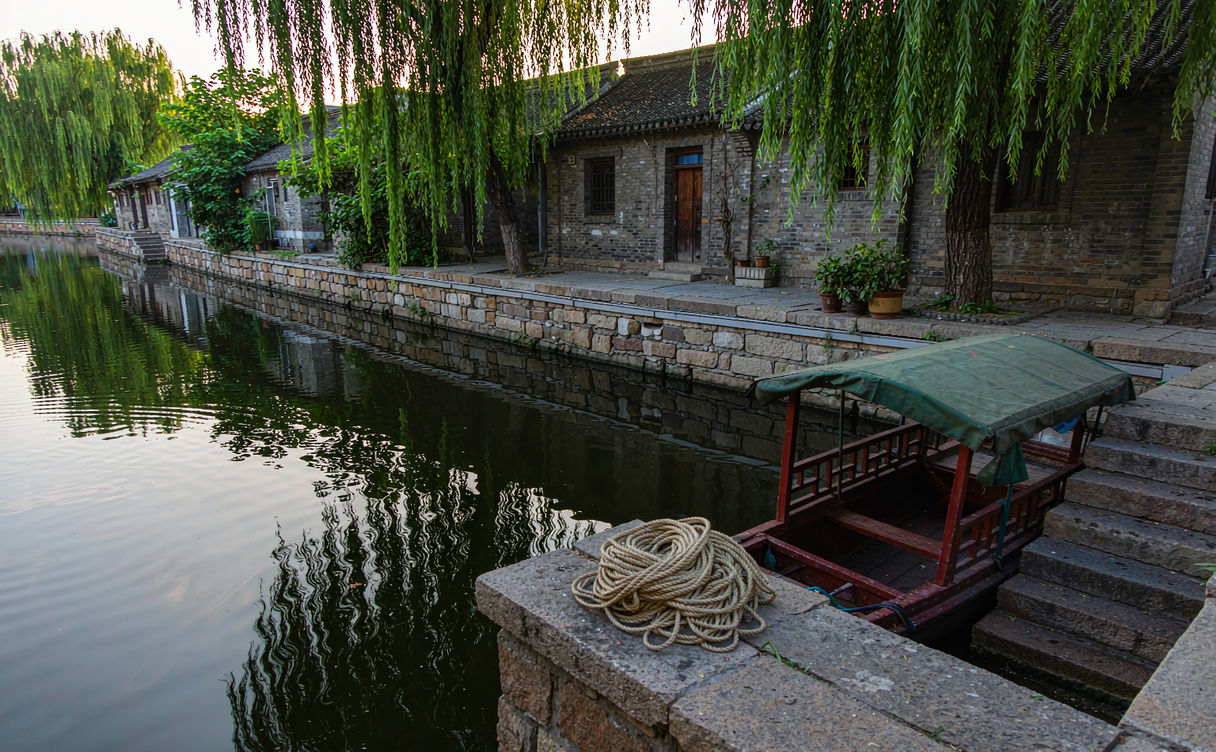
Jinxi water town boats are hand-rowed wooden craft with a canopy, hired per boat rather than per seat. Expect ¥120–180 for a 25-minute circuit that leaves the central canal and opens onto Wubao Lake — the lake leg is what makes it worthwhile, because you pass close to the Lady Chen mound and see the long arched bridge from the water. Six passengers fit at a squeeze; four is comfortable.
Two tips from experience. Ride between 08:30 and 10:00, when the water is glassy and the light is soft; by midday the surface chops up and reflections vanish. And agree the route explicitly — some boatmen will offer a short in-town loop for the same money, which is the lesser trip.
A Jinxi Old Town Walk, Step by Step
A Jinxi old town walk covers roughly 3 km and fits comfortably in three to four hours:
1. Enter at the main gate and buy the combined ticket (open roughly 08:00–17:00, last entry about 16:30).
2. Walk the central lane east to west, dipping into the brick-and-tile museum first while you’re fresh.
3. Cross to the north bank via the humpback bridge and walk back along the residential side, where laundry and vegetable plots outnumber shops.
4. Head south to the lake: temple, literature pavilion, long bridge, then the view out to the mound.
5. Take the boat from the lake-end jetty.
6. Finish with tea on a canalside terrace, then walk the back lanes toward the old kiln area.
Eating in Jinxi
Food here is modest and local. The signature snack is a flaky layered pastry the locals call “sock-sole” for its shape, sold warm for ¥3–6 apiece, savoury with scallion and lard or sweet with sugar. Add malt-sugar flatcakes, crab-shell pastries, and in spring the sweet green rice-flour dumplings of the Qingming season.
Sit-down meals lean on the lake: braised silverfish, river shrimp fried with tea leaves, steamed white fish, marinated pork knuckle, and water celery. A meal for two costs ¥90–160. Look for the grandmother’s tea tradition — a simple ceremony of coarse tea with pickled vegetables and dried beans, served at a few family houses for ¥15–30 and worth twenty minutes of your time. Restaurants close early; do not plan on dinner after 19:30.
Best Time to Visit Jinxi
The best time to visit Jinxi is late March to early May, or October to late November. Spring gives you willows in leaf, 15–25°C days and lotus buds forming in the lake by June; autumn brings the clearest air of the year and comfortable 15–23°C. I’ve had my best photography here in early November mornings, when mist sits on the lake until nine.
Skip the plum rains from mid-June to early July. High summer runs 31–36°C and humid, though the lakeside stays tolerable in the early morning. Winter is 2–9°C, damp and very quiet — half the museums may be shut, but you’ll have bridges to yourself. Avoid the first three days of the October national holiday and the Labour Day break in early May, when day-trippers from Shanghai overflow from Zhouzhuang into Jinxi. Our regional overview of when to visit different parts of China helps with wider planning.
Costs, Pitfalls and Pairings
Budget for two people: ¥100–130 tickets, ¥120–180 boat, ¥90–160 lunch, ¥180–260 return transport from Shanghai. Jinxi has small guesthouses at ¥220–450 a night; staying over is pleasant precisely because evenings are so still, but most travellers do this as a half or full day out.
Common mistakes: arriving after 13:00 and missing both the light and the boat window; buying the combined ticket and then never leaving the main shopping lane, which wastes the best part of the visit; and assuming the museums have English signage — coverage is patchy, so a translation app earns its keep. It also pays to remember that this whole district owes its wealth to Kunshan’s position between Shanghai and Suzhou, which is why so much old money went into kilns, temples and bridges.
For itinerary shape, Jinxi works best as a morning between two cities — Shanghai to Suzhou, or Suzhou onward to the city walls and Ming-era sites of Nanjing. Slot it in as your quiet day, not your headline one.