

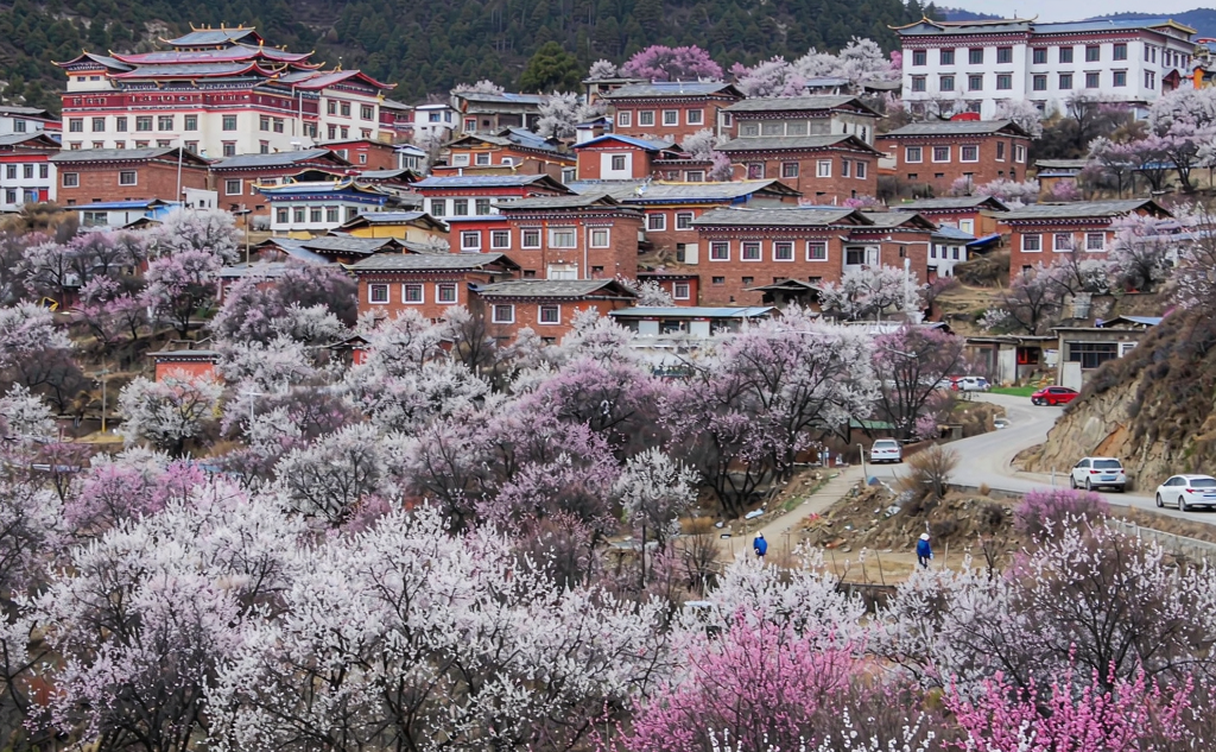
Jinchuan (金川) sits in the deep valleys of western Sichuan Province, where a narrow river corridor becomes, for a few short weeks each spring, one of the largest pear-blossom landscapes on earth. On our last visit in late March, we followed the Dadu River upstream from Danba and found whole hillsides painted white and pale pink, with traditional stone towers rising out of the orchards. This is a quietly famous spot among Chinese road-trippers but remains almost unknown abroad. Below we share the practical, first-hand details we use when sending clients there—real prices, the right weeks, transport, and the traps to dodge.
Why Jinchuan is worth the detour
Most foreigners who travel Sichuan head to Chengdu, Jiuzhaigou, or Mount Siguniang and never see Jinchuan. That is the point. The county is home to the Jiarong Tibetan communities whose fortified stone villages dot the slopes, and in spring those villages sit inside a sea of pear trees. We have taken slow-travelers and photographers here and the combination of blossom, snow peaks, and living Tibetan culture is hard to beat. If you are already planning a western Sichuan loop, Jinchuan slots in neatly between Danba and the higher passes, and it is far less crowded than the marquee names.
Best time to visit Jinchuan
The pear blossom is the draw, and like Menyuan’s flowers it is a narrow window. Blooming usually starts in mid-to-late March and peaks around March 20 to April 5, depending on that spring’s temperature. We tell clients to target the last week of March; by mid-April the petals are mostly gone and the hills turn green. Daytime highs sit around 12–18°C, but mornings and evenings drop near 2–6°C, so layers are essential. Summers are mild and green and good for hiking, while autumn brings harvest color and fewer tourists. Winter is cold and many guesthouses close, so we don’t usually recommend it. Because the blossom is weather-driven, build flexibility into any fixed-date plan.
How to get to Jinchuan
The practical gateway is Chengdu, and from there you have two main routes. The most comfortable is to hire a car with driver (¥800–1,200 / $115–175 per day including fuel), which most of our clients choose because the mountain roads reward an experienced local driver. Self-driving is possible if you have read our China road trip guide, but the Dadu River gorge sections are narrow and occasionally closed by rockfall after heavy rain. Public buses run from Chengdu’s Chadianzi station to Jinchuan town in about 7–8 hours and cost ¥120–160 ($17–23), though they are less frequent off-season. A newer option is to fly into Chengdu and then take the high-speed rail partway toward Kangding, then transfer—still a long road leg remains. For a broader plan, our Chengdu travel guide explains how to base yourself in the city first.
Things to do in Jinchuan
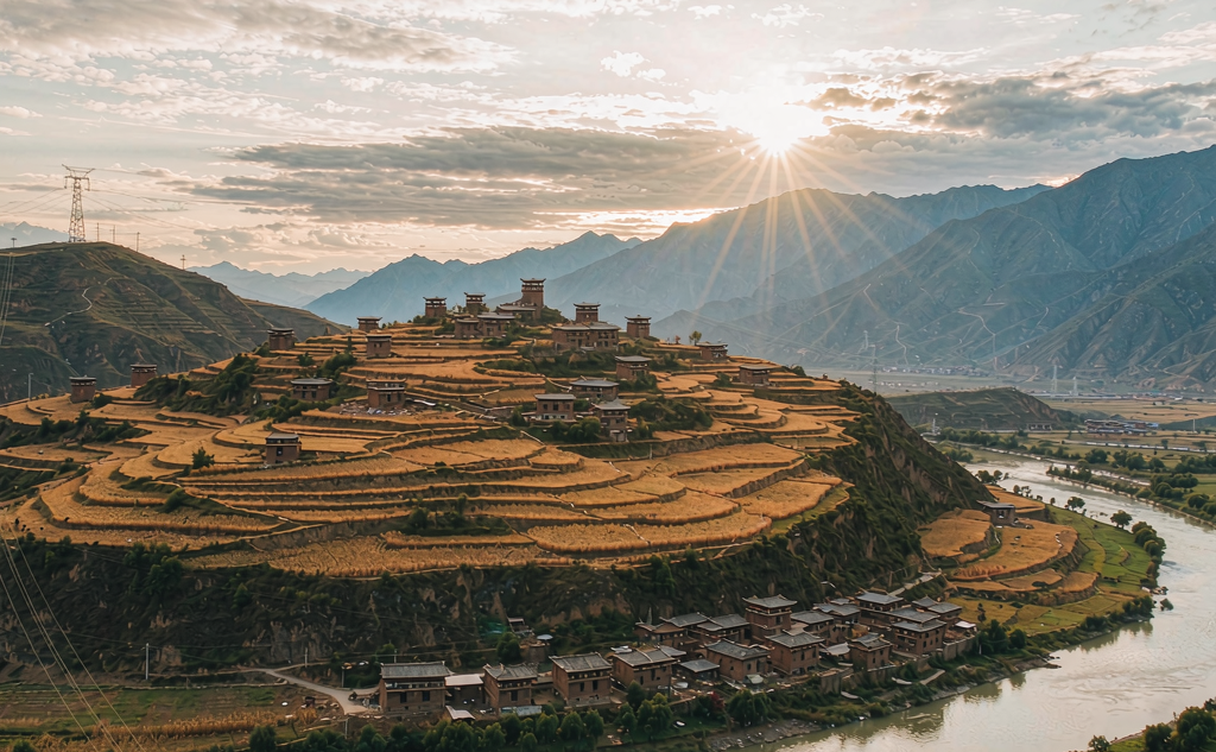
The obvious activity is wandering the blossom-covered hills, but the deeper reward is the culture. The Jiarong Danba travel guide covers the famous watchtower villages just downstream, and Jinchuan shares that same heritage—fortified stone homes, prayer flags, and barley fields. A typical Jinchuan Tibetan village sits among the orchards, its tower doubling as both granary and lookout, and we always build time to walk one slowly rather than photograph from the road. We encourage clients to visit a Tibetan family home for butter tea and tsampa (roasted barley flour); a modest tip of ¥20–30 is appreciated. Short hikes above the orchards give sweeping valley views, and the riverside hot springs (¥50–80 / $7–12 entry) are a soothing end to a driving day. Local markets sell pear cider, dried pear, and hand-woven wool at fair prices—bargain gently and with a smile.
A practical Jinchuan travel itinerary
A sensible three-day version works well. Day one: drive from Chengdu toward Danba, overnight in a tower village. Day two: continue to Jinchuan, spend the afternoon among the blossoms and a family visit, overnight in Jinchuan town (guesthouses ¥150–300 / $22–43; a couple of newer hotels run ¥400–600). Day three: sunrise photos, then push on toward the higher passes or loop back. If you want a fuller western Sichuan route, our Sichuan 7-day itinerary shows how to combine this with Mount Siguniang and the east edge of the plateau. We generally avoid packing too much—the roads are slow and the joy is in the stops, not the mileage.
Practical tips and honest caveats
Altitude here is moderate (Jinchuan town is around 2,100 m / 6,900 ft), so serious sickness is rare, but the gorge drives can upset stomachs—take it easy the first day. The Dadu River corridor is prone to landslide closures after rain; we have had clients delayed half a day, so never schedule a same-day flight out of Chengdu after a mountain drive. Accommodation in peak blossom weeks sells out and prices spike to ¥500–800, so book two to three weeks ahead. Roads are winding—if you get carsick, bring medication. And respect village photography etiquette: always ask before photographing people or household shrines.
The river and the landscape
Jinchuan lies along the Dadu River, a major tributary documented by Wikipedia’s Dadu River entry, which helps explain why the valley is both fertile and dramatic. The same river carved the gorges that make the drive so scenic and so occasionally treacherous. Upstream and downstream the valley widens into terraces where barley and corn grow once the blossoms fall. We like to tell clients that the river is the through-line of the whole trip: follow it, and you pass from Han Chinese farmland into Jiarong Tibetan country almost without noticing the border.
Where to eat and sleep
Food in Jinchuan leans hearty plateau style: yak meat hotpot (¥60–100 per person sharing), steamed buns, and spicy Sichuanese stir-fries brought in from the lowlands. Vegetarians do fine with potatoes, greens, and noodles but should expect limited variety. For lodging, the family guesthouses are the charm—wooden beams, thick walls, and hosts who cook breakfast—but bathrooms may be shared in the cheapest places, so check before booking if that matters. Our Xinduqiao travel guide is useful if you extend west, since that town is the classic “photographer’s paradise” on the plateau edge.
Extending toward the high plateau
If Jinchuan whets your appetite for the Tibetan plateau edge, the natural next steps are Mount Siguniang to the north and Daocheng Yading far to the southwest. The Mount Siguniang guide and the Daocheng Yading guide cover those higher, more demanding destinations, where altitude climbs past 4,000 m and the bloom gives way to glacial peaks. We usually advise first-timers to enjoy Jinchuan’s gentler 2,000 m elevation first, then decide whether to push higher. Either way, build rest days into any plateau plan.
Responsible travel in the valley
Jinchuan’s blossom fame has grown quickly, and with it some pressure on the villages. We ask clients to carry their trash out of the orchards, to tip fairly for family hospitality, and never to pick blossoms or climb the old fortified towers. Buying directly from village stalls—pear cider, dried fruit, woven wool—puts money in local hands far better than the roadside souvenir trucks. The Jiarong communities are welcoming but private; a little patience and a few Mandarin pleasantries go a long way, and a local guide helps bridge both language and custom.
Final thoughts
Jinchuan is a springtime secret: a few weeks of white blossom, warm village hospitality, and a river valley that looks painted. Go in late March, drive the gorge slowly, and let the orchards surprise you. Plan transport and lodging early, respect the culture, and you will come home with photos—and stories—that almost no one you know has.