

If you ask most travellers to name China’s great regional kitchens, you will hear about Sichuan, Guangdong and maybe Hunan. Jiangxi, the province tucked between them, almost never comes up. That is a real shame, because the food here is some of the most honest, fiery and deeply satisfying cooking in the country. Locals call it Gan cai, after the one-character abbreviation for the province. This Jiangxi cuisine guide is written for foreign visitors who already enjoy spicy food and want to travel a layer deeper than the standard hotel buffet.
Jiangxi sits on the southern bank of the Yangtze River in eastern China, sharing borders with six provinces: Hubei, Anhui, Fujian, Guangdong, Hunan and Zhejiang. That position explains a lot about the plate in front of you. The cooking borrows the chilli devotion of neighbouring Hunan and the freshwater fish of the Yangtze plain, but it keeps its own stubborn personality: salty, sour, smoked and seriously hot. Unlike Sichuan, there is almost no numbing peppercorn to soften the experience. If you want a genuine Jiangxi spicy dishes for foreigners test, order anything described as “xiangla” (fragrant-spicy) and keep a cold drink within reach.
What Makes Gan Cai Different
The first defining trait is the chilli. Jiangxi grows some of the hottest peppers in the country and uses them fresh, dried, pickled and as a paste. A typical home stir-fry can contain more green chilli than protein. The second trait is preservation. Smoked pork (larou), salted fish and fermented mustard greens show up at nearly every meal, a habit left over from the humid climate that once made keeping food difficult. The third is the clay pot, slow-cooking tradition that we will come to shortly.
If you are mapping out a wider eating trip, our Chinese food guide to the eight cuisines places Gan cai next to its louder neighbours and explains why it stays under the radar. And if you want to see how chilli behaves just across the border, the Hunan cuisine guide makes a useful companion read.
Nanchang Mixed Rice Noodles
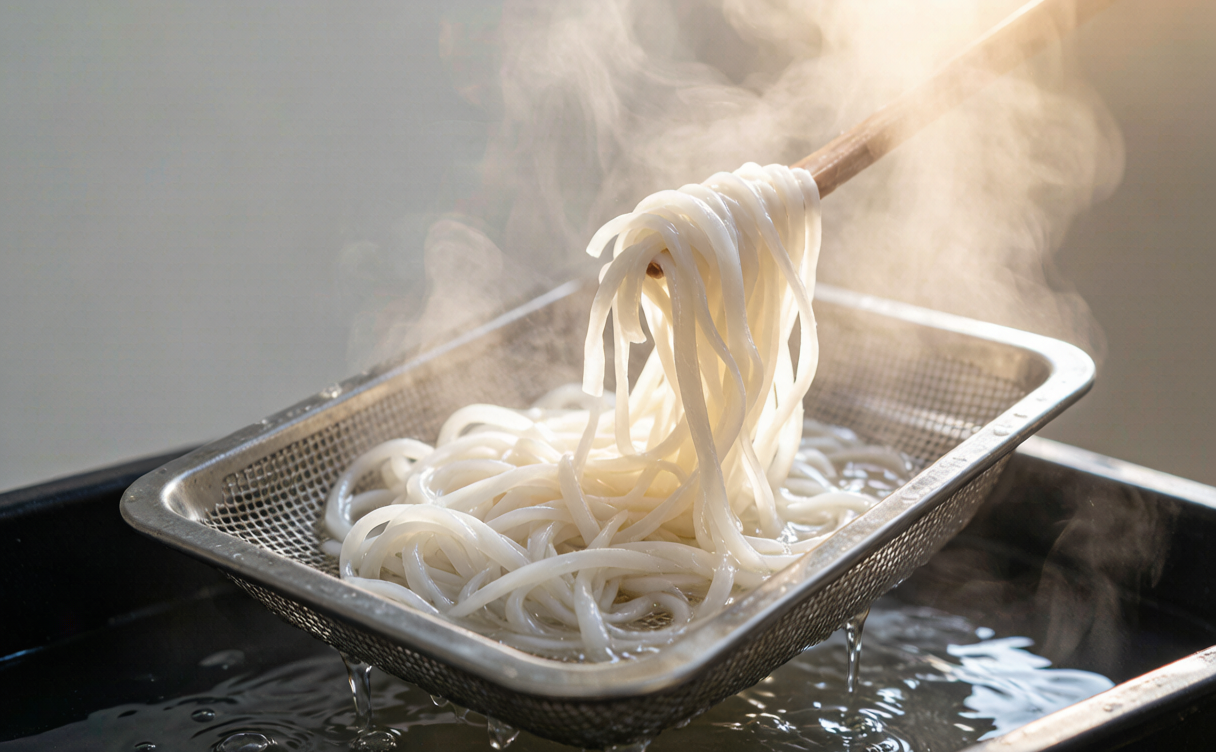
The provincial capital, Nanchang, has a breakfast ritual every visitor should try at least once. Nanchang mixed rice noodles — locally “mixian” — are thin, chewy rice noodles tossed while hot with lard, light soy, pickled vegetables, scallion, crushed peanut and a spoonful of chilli oil. There is no broth; the sauce clings to every strand. You eat it standing at a stall, usually before nine in the morning, and it costs less than a dollar.
The texture is the whole point. Good mixian snaps back when you bite it and never collapses into mush. Find a stall with a crowd of locals and a wok that never stops steaming — that is where the freshness lives. Our Nanchang travel guide points to a few dependable breakfast counters near the railway station, which is also where most people arrive.
The Clay Pot Tradition
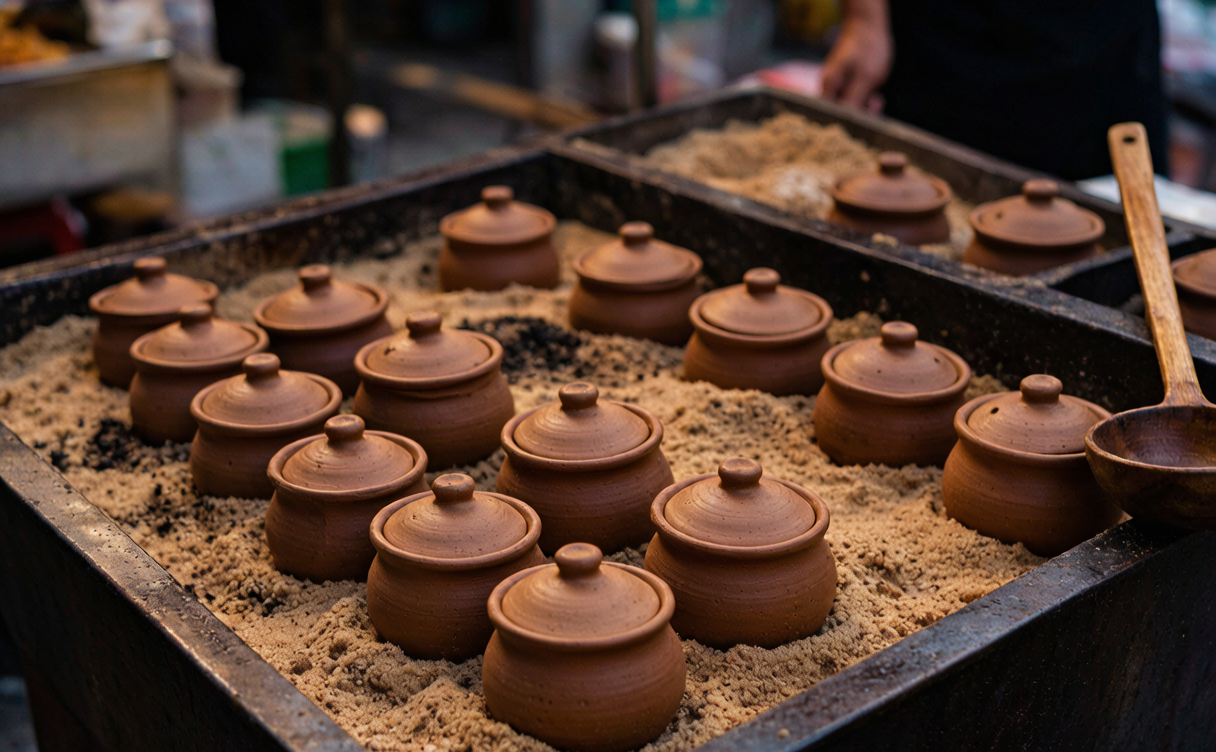
No Jiangxi cuisine guide would feel complete without the sand-pot soup, or “shiguo.” Small brown earthenware pots are buried in a bed of hot sand over a low flame, slow-cooking meat, herbs and bone into a clean, intense broth. The method holds the heat steady and keeps the lid sealed, so none of the aroma escapes. Common versions use pigeon, black-boned chicken, or pork ribs with lotus root. It reads as comfort food and as medicine at the same time — locals order it after a long train ride the way others order coffee. This Jiangxi clay pot soup is the dish I most miss after leaving the province.
You will see rows of these pots at late-night stalls and inside older restaurants, each one a single serving. Order one per person alongside a plate of greens and you have a proper Jiangxi dinner for very little money. The Jingdezhen travel guide explains where to pair this with the city’s famous porcelain-tableware dinner, where the bowl is sometimes the best part of the meal.
What to Eat in Jiangxi: A Short List
If you only remember a handful of dishes, make it these. This is the core of what to eat in Jiangxi for a first visit.
- Larou stew with dried bamboo — smoked pork braised until the fat turns glassy, balanced by the chew of preserved bamboo shoots.
- Poyang Lake fish — freshwater fish from China’s largest freshwater lake, usually steamed with pickled chilli and ginger.
- Fuzhou tuomian — a denser wheat noodle from the east of the province, served in a pork-and-herb broth that borders on gravy.
- Gan-style braised tofu — fried tofu pockets soaked in a dark, spicy soy reduction until they weigh twice as much.
- Stir-fried lotus root — crunchy, slightly sweet, and a signature of the wetlands around Nanchang.
- Nanchang fried noodles — wider than mixian, tossed with beef and green pepper over fierce heat.
For a broader eating plan that folds Jiangxi into a multi-province route, the China food tour guide has itinerary ideas that balance the heat with proper rest days.
Jiangxi Spicy Dishes for Foreigners: How Hot Is Too Hot?
The honest answer: Jiangxi food can hit harder than Sichuan for people who don’t eat chilli often, simply because there is no numbing effect to distract the palate. If you are new to this level of heat, ask for “weila” (mild) and watch how the table next to you orders. Most stall owners will happily turn the chilli down if you gesture and smile. Beer helps more than water, and so does plain rice — the local antidote, not the tourist one.
One more practical note: the pickled chilli and the fresh green chilli are different beasts. The pickled one is sour and sneaky, building slowly; the fresh one is sharp and immediate. Try a little of each before committing a whole bowl to either.
A Sample Eating Day in Nanchang
To make this concrete, here is how a good day of eating looks. Start at 7:30 with mixian at a railway-station stall, eaten standing up with a fried dough stick on the side. By 11:30, move to a lunch counter for a larou-and-bamboo stir-fry with a bowl of rice. In the late afternoon, graze on fried noodles near the pavilion district. Dinner is the clay-pot moment: one shiguo per person, plus dry-fried green beans and a cold beer. If you are still awake at 10 p.m., the night markets reopen the soup pots for a final round. That rhythm is the real Jiangxi.
Beyond the Capital
Nanchang is the easy entry point, but the south of the province rewards the curious. Ganzhou, near the border with Guangdong, leans sweeter and uses more Hakka preservation techniques — salt-baked chicken, stuffed tofu, and a rice wine that warms rather than burns. The Ganzhou travel guide is worth a look if your route heads that way.
Jingdezhen, the porcelain capital, is another good food stop, especially for its night market where clay-pot soups sit beside sweet rice cakes. And if you want scenery with your meal, Mount Lushan, a UNESCO World Heritage Site, sits a few hours north of Nanchang and is famous for cloud-sea mornings that have inspired Chinese poets for more than a thousand years.
Practical Tips for First-Timers
Carry small cash for stalls, though Alipay and WeChat Pay now cover most counters in the cities. Learn the characters for “mild,” “no chilli” and “spicy” before you go — a screenshot in your phone works fine. Lunch is the cheapest and freshest meal of the day; dinner is when the clay pots come out. And don’t skip breakfast — in Jiangxi the morning is when the rice noodles are at their best.