

Nanjing sits on the Yangtze about three hours west of Shanghai, and it eats duck the way some cities eat beef. The locals joke that a Nanjing table sees a duck in soup, a duck in cold cuts and a duck in the broth, often in the same meal. If you are building a Nanjing food guide in your head before you fly, start with the bird and work outward from there.
The city was a capital on and off for six dynasties, and that long imperial history left a refined, slightly sweet kitchen that sits inside the broader Huaiyang tradition. But Nanjing street food has a rougher, saltier edge all its own. This guide covers where to find the classics, what they taste like, and how to order without embarrassment.
Nanjing Salted Duck: Where to Eat It
The dish everyone asks about is Nanjing salted duck, or “yan shui ya.” It is not roasted and it is not heavily spiced. The bird is cured in salt and aromatics, then poached gently so the meat stays silky and the skin carries a thin layer of fat. Served at room temperature, chopped through the bone, it tastes clean and savoury rather than aggressive. The best versions come from shops that have been doing nothing else for decades. This is the heart of any good Nanjing salted duck where to eat plan.
For a reliable first try, head to the old quarter near the Nanjing Confucius Temple, where century-old brine shops sell half a duck wrapped in paper. Locals buy it to take home, but a few stools outside let you eat it on the spot with a bowl of plain rice. Our Nanjing travel guide maps the streets where the queues form before lunch.
Duck Blood Vermicelli Soup
The comfort dish of the city is duck blood vermicelli soup, “ya xue fen si.” It sounds stranger than it is: silky strands of sweet potato vermicelli in a clear, smoky duck broth, with cubes of tender duck blood, a few scraps of gizzard or liver, and a scatter of coriander. The blood is silken, almost tofu-like, and carries the broth rather than fighting it. Order it from any breakfast stall and you’ll see office workers slurping it standing up at eight in the morning. This duck blood vermicelli soup converts more sceptics than any other bowl in town.
The broth is the point — long-simmered, never greasy — and the vermicelli soaks it up. Ask for “jia dan” if you want a fried egg floated on top. It’s a cheap, filling start to a cold day.
Nanjing Snack Street Food
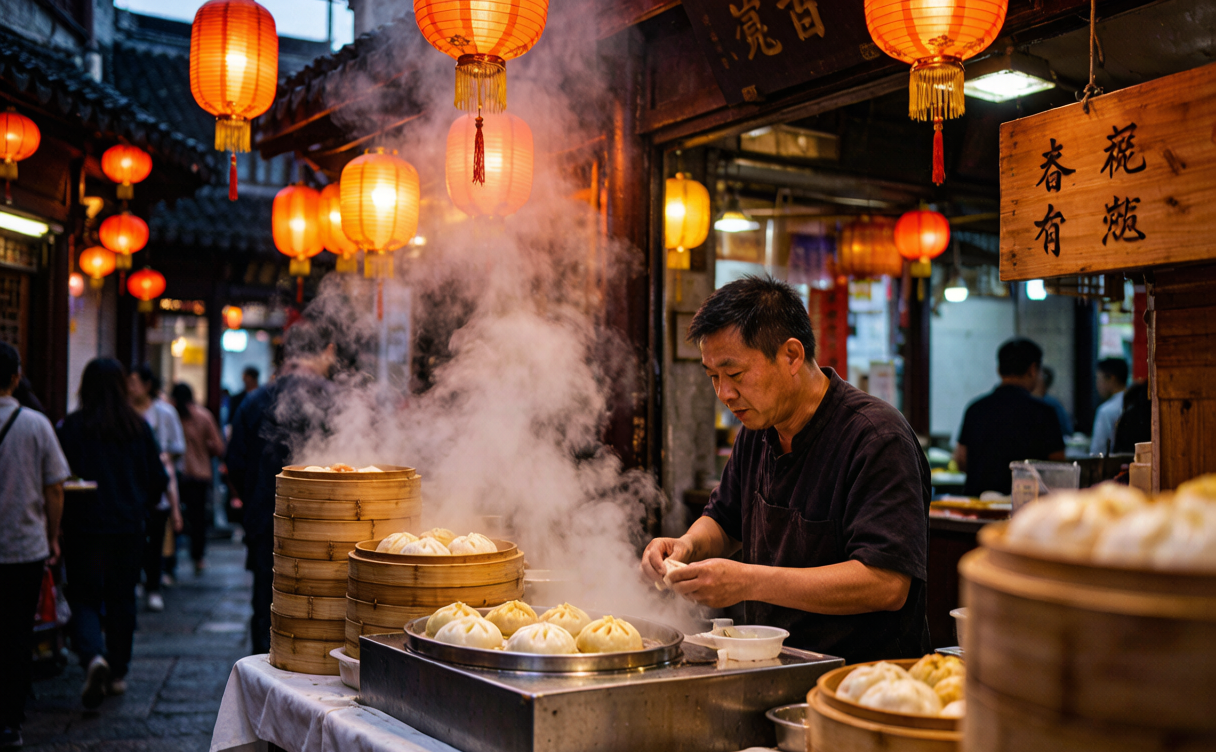
The Confucius Temple area turns into a night market that runs for blocks, and that is where the China night markets guide mentality pays off. You are not here for one meal; you are here for ten small ones. Tangbao (soup dumplings) steamed in bamboo, sweet osmanthus lotus root stuffed with sticky rice, roasted seeds, stinky tofu for the brave, and sugar-coated hawthorn skewers that taste like hard cider candy.
This Nanjing snack street food circuit is touristy, yes, but it is also genuinely local on a weekend night. Go hungry, bring small change, and share everything so you can taste more. The lantern-lit lanes are the postcard image of the city after dark.
Best Restaurants in Nanjing
If you want a proper sit-down meal rather than street grazing, Nanjing rewards a little planning. The Huaiyang-style banquet houses near the city centre serve the refined side of the local kitchen: clear-broth lion’s head meatballs, river shrimp with Longjing tea, and braised wheat gluten. These are the best restaurants in Nanjing for a quieter, more elegant evening, and they suit a group that wants to slow down.
For something more casual but still excellent, the areas around the old south gate have small family places where the salted duck and the blood soup are both made in-house. Prices stay low; portions stay generous. If your trip also covers nearby Suzhou, the Suzhou food guide shows how the same Huaiyang root branches into something sweeter and more delicate.
Nanjing Breakfast Dishes
Breakfast in Nanjing is a serious affair. Beyond the duck blood soup, look for “shui you bing” (oil-fried wheat cakes), “cai shao bing” (vegetable-stuffed baked buns), and “doufu nao” (warm silken tofu in a light sauce). The city wakes early and eats early, so the best stalls sell out before ten. These Nanjing breakfast dishes are worth setting an alarm for.
If you want the full context of where this kitchen sits in China’s map of taste, the Huaiyang cuisine guide explains the technique behind the gentle broths and the knife work that defines the region.
Sweet Things and Cold Treats
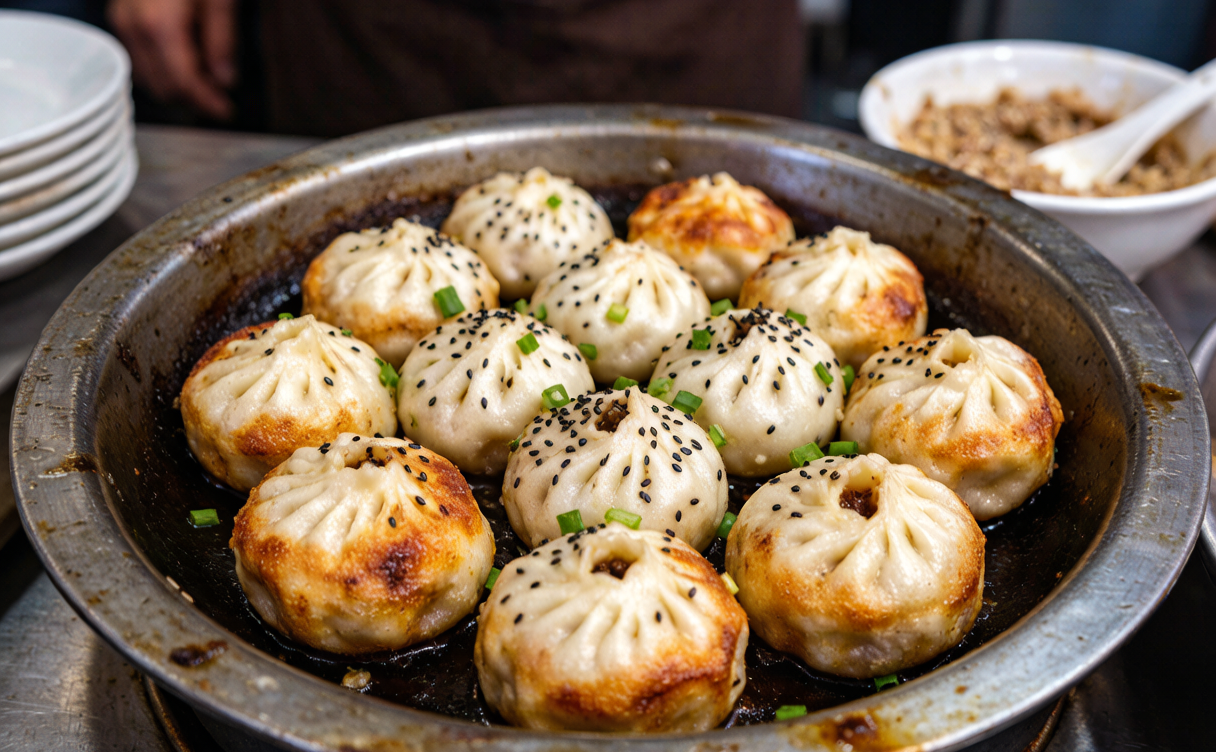
Don’t leave without trying “chi lian gao,” a glutinous cake steamed with osmanthus and red bean, or the lotus-root powder mixed with hot water into a warm, fragrant paste sold by older vendors near the temples. In summer, the city’s shaved-ice stalls pile mango and taro over condensed milk. These sweets balance the salt of the duck and the smoke of the grill.
What to Drink With the Duck
Nanjing’s own beer is light and forgettable, so most locals reach for a cold lager from any national brand, or a warm soy milk at breakfast that balances the salt of the duck. In the older lanes you’ll also find “ju hua nao,” a sweet chrysanthemum-infused drink served in winter, and the salty-sweet “doujiang” that locals argue about endlessly. None of it is fancy, and that is the point — the food is the star, the drink just keeps you going.
A Two-Day Eating Plan
If your stop is short, here is a sensible spread. Day one: salted duck at a brine shop near the Confucius Temple for late lunch, then the night market for ten small bites and a tangbao. Day two: duck blood vermicelli soup for breakfast, a Huaiyang banquet for lunch, and a wander through the old south gate for baked buns and sweet osmanthus cake in the afternoon. That plan covers the salty, the smoky and the sweet without repeating itself, and it leaves room for the snacks you’ll inevitably grab on sight.
Getting There and Around
Nanjing is an easy high-speed rail hop from Shanghai (about 90 minutes on the fastest trains) and sits on the main Beijing–Hangzhou line, so it slots into almost any eastern-China route. The metro is clean, cheap and signposted in English, and most food districts are a short walk from a station. Taxis are plentiful but melt away after midnight, so if the night market runs late, sort your ride before the crowds do.
A Heritage Note
Nanjing is also where the Ming dynasty’s first emperor lies buried at the Xiaoling Tomb, part of the UNESCO World Heritage List of imperial tombs. It makes an easy half-day trip between meals, and the tree-lined approach is one of the calmest walks in the city. Pair it with a duck lunch and you have a very Nanjing day.