

In the high valleys of Congjiang, Guizhou, China, the Jiabang Terraces step down the mountains like a giant’s staircase, filling with water in spring until each level mirrors the sky. This Jiabang Terraces guide covers the best time to visit Jiabang Terraces, how to get to Jiabang Terraces from Guiyang and Kaili, the top things to do at Jiabang Terraces, the Jiabang Terraces entrance fee, and a set of Jiabang Terraces travel tips that help you manage the long, winding transfer. If you want one of China’s most photogenic rural landscapes without the crowds of the famous Yunnan fields, Jiabang is the answer.
Content Preview
- The best time to visit Jiabang Terraces for the flooded mirrors or the golden harvest
- How to get to Jiabang Terraces from Guiyang, Kaili, and Zhaoxing
- The top things to do at Jiabang Terraces, from sunrise points to village walks
- The Jiabang Terraces entrance fee and local village contributions
- Practical Jiabang Terraces travel tips for the remote mountain roads
Best Time to Visit Jiabang Terraces
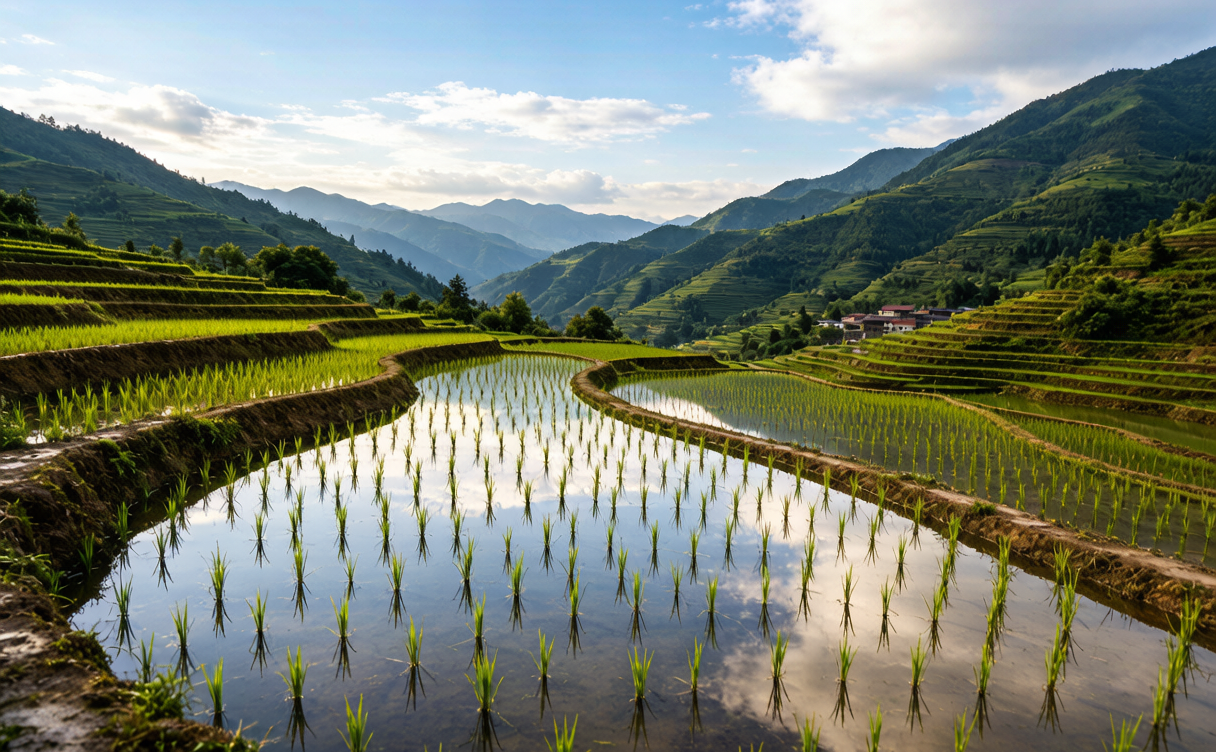
The best time to visit Jiabang Terraces depends on the image you want. From late April to June, the fields are flooded and polished to a mirror finish, reflecting the clouds and the terraced lines in perfect symmetry, which is the classic Jiabang shot. From late September to early October, the rice turns golden and the same staircases glow in warm light, a quieter but equally beautiful season. July and August are green and lush, good for hiking but less photogenic, while winter sees the terraces drained and brown.
Spring and autumn also bring the most comfortable travel weather, with mild temperatures and clearer mountain roads. For province context, the China Highlights Guizhou travel guide outlines the seasons and the rail network that reaches the southeast. Aim for a weekday in May or early October to enjoy the mirrors or the harvest with fewer visitors.
How to Get to Jiabang Terraces
Learning how to get to Jiabang Terraces starts with the long transfer into Congjiang county in southeast Guizhou, China. The fastest rail link is the high-speed station at Congjiang, reachable from Guiyang in about two hours, and from there a winding mountain road of roughly 90 minutes reaches the terraces. Many travelers also approach from the Guizhou Zhaoxing Dong Village guide area, which is close by and makes a natural pairing, since both sit in the same remote corner of the province. Our Guiyang travel guide covers the trains into the capital, and the Kaili travel guide explains the southeastern Miao and Dong route in detail.
Because the final road is narrow and switchbacked, a private car or a booked driver is strongly recommended over rural buses. The Zunyi travel guide is useful if you are looping from the north, and the Guilin and Yangshuo travel guide helps if you cross into Guangxi afterward. Within the terrace area, local motorbike taxis connect the viewpoints, and the main ridges are walkable once you are dropped at the top.
Things to Do at Jiabang Terraces
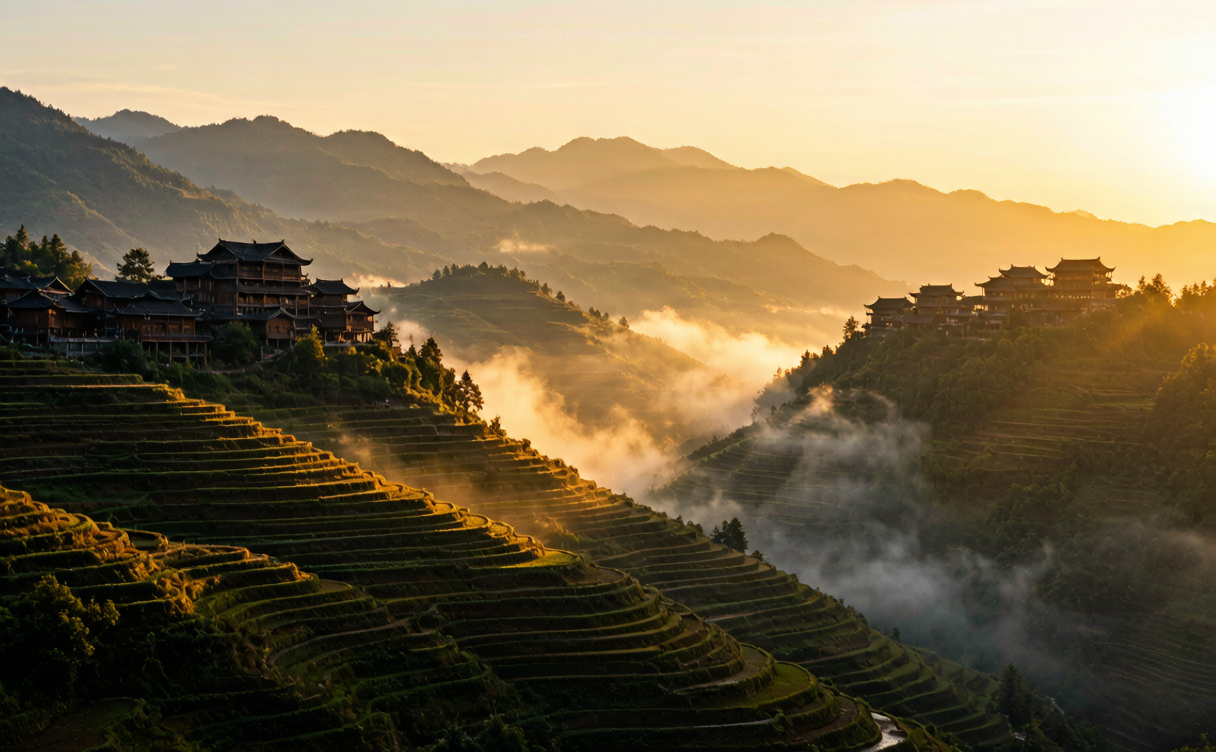
The things to do at Jiabang Terraces center on the viewpoints along the main ridge, where the stepped fields drop toward the river in a series of silver mirrors. Sunrise is the magic hour, when the first light slides across the water and the mist lifts from the valley floor. The nearby Miao villages, built on stilts among the fields, are calm places to walk, with wooden granaries, drying chili strings, and old women in embroidered dress going about the day.
Beyond the classic lookout, the things to do at Jiabang Terraces include a guided hike between hamlets, a meal of sour fish and sticky rice with a farming family, and a slow scooter or motorbike loop of the lesser-known terrace arms. Unlike the heavily marketed terraces of Yunnan, Jiabang remains largely undeveloped, so the experience is raw and authentic. Photographers should allow two mornings if possible, because cloud cover varies and the mirror effect is best on still, clear days after the fields are freshly flooded.
Where to Stay at Jiabang Terraces
Accommodation at Jiabang is basic but improving, with a handful of guesthouses near the main viewpoint and a few homestays inside the surrounding Miao villages. Staying on the ridge puts you first at sunrise without a predawn drive, while a village homestay gives you deeper cultural contact and home-cooked meals. Standards are simple: expect clean rooms, warm hosts, and limited heating, so pack for cool mountain nights even in spring and autumn.
Most visitors combine Jiabang with Zhaoxing Dong Village and the Kaili area for a southeast Guizhou loop of two to four nights. Base in Kaili or Congjiang for train access, and use a private car to reach the terraces, which avoids the slow local buses. Book the ridge guesthouse ahead in May and October, when the mirror season and the harvest draw the most visitors to this quiet corner of Guizhou, China.
Sample Itinerary
A practical two-day sample itinerary takes a morning high-speed train from Guiyang to Congjiang, a private car to the terraces for a late-afternoon arrival and sunset, and a full next morning at the ridge for sunrise before returning. If you have three days, add Zhaoxing Dong Village on the way in or out, which balances terrace landscapes with Dong minority architecture. Travelers with four days can begin in Kaili, explore Miao villages, then drop south to Jiabang for the final night.
The sample itinerary above relies on a private car for the Congjiang-to-terrace leg, because buses are infrequent and slow. If you depend on public transport, plan extra buffer time and accept that you may miss the ideal sunrise. Either way, spend at least one night on the ridge so you are already in position when the first light hits the water.
Jiabang Terraces Entrance Fee
There is no grand gated ticket hall at Jiabang, and the Jiabang Terraces entrance fee is usually a modest village or scenic-area charge collected at a small booth, often around 20 to 60 RMB, sometimes bundled with a shuttle from the parking area to the ridge. Because the site is managed locally rather than by a major state operator, the exact figure shifts, and some viewpoints are free if you walk in from the village. Confirm the current Jiabang Terraces entrance fee with your guesthouse before paying.
Carry cash, as cards and mobile pay are not always accepted at the small booth. If a local guide or motorbike taxi takes you to a private lookout, agree the price first, and keep any receipt in case attendants ask at the upper gate. The simple fee structure is part of Jiabang’s charm: you are paying a rural community to maintain paths rather than funding a large commercial park.
Jiabang Terraces Travel Tips
A set of Jiabang Terraces travel tips will make the remote trip smoother. First, hire a private car for the final mountain road, because public buses are slow and the switchbacks are not for nervous drivers. Second, pack layers and a warm layer for dawn, since ridge temperatures drop sharply before sunrise even in May. Third, bring cash and a power bank, because signal is weak and the best photos will drain your phone.
Other Jiabang Terraces travel tips: stay on the ridge for sunrise rather than commuting up in the dark, respect the working fields by staying on the paths, and visit a Miao family for a meal to support the local economy. Avoid the week of the National Day holiday if you want solitude, as the mirror season already draws domestic photographers. With these basics covered, Jiabang rewards you with one of the most peaceful and photogenic terrace landscapes in Guizhou, China, far from the busier fields to the west.
FAQ
Are the Jiabang Terraces better than the famous Yunnan terraces?
For uncrowded, authentic scenery, many travelers prefer Jiabang. It is less developed and far quieter, though the infrastructure is also simpler, so expect basic lodging.
How do I get to Jiabang Terraces from Guiyang?
Take a high-speed train to Congjiang, then a private car for the final 90-minute mountain road; the train is about two hours and the drive is the scenic, winding part.
What is the Jiabang Terraces entrance fee used for?
It is a local village or scenic charge, often 20 to 60 RMB, that helps maintain the paths and shuttles, and it is usually collected in cash at a small booth.
When is the best time to visit Jiabang Terraces for photos?
Late April to June for the flooded mirrors and late September to early October for the golden harvest, with calm, clear mornings giving the best reflections.
—
This Jiabang Terraces guide was last reviewed and updated on 21 August 2026 by the chinatravelplaces.com editorial team. Prices and schedules change, so confirm details with your hotel before you travel.