

Huludao is the kind of coastal city that regular China travelers overlook, and that is precisely its appeal. Sitting on the western shore of the Liaodong Peninsula where the Bohai Sea bends, it pairs a remarkably intact Ming-dynasty walled town with rocky headlands, fishing harbors, and a stretch of the Great Wall that marches straight into the sea. Our clients who stop here between Shenyang and the Beijing corridor consistently come back saying it felt like the “real” coast — working boats, salt air, and none of the resort polish of Dalian. This Huludao travel guide lays out the fishing villages, the walls, the beaches, and how to work it into a Liaoning route.
Where Huludao Is
Huludao is the westernmost coastal prefecture of Liaoning, west of Jinzhou and roughly halfway between Shenyang and Beijing by rail. The city is elongated along the Bohai shore, so “Huludao” really means a string of distinct coastal zones: the urban seat at Huludao proper, the walled town of Xingcheng to the south, the resort strip of Dongdaehe (东戴河) to the southwest, and the Wall-and-ruin country of Suizhong County beyond that. The Bohai Sea is a shallow inland sea, which keeps the water calmer and warmer for swimming than the open Yellow Sea — useful context when you pick a beach.
Xingcheng: A Walled Town That Still Works
The standout is Xingcheng (兴城), one of the best-preserved Ming-dynasty walled cities in China. Unlike many “ancient towns” that are pure reconstruction, Xingcheng’s square ramparts, four gates, and cross-shaped main streets are the genuine article, and people still live and trade inside. Within the walls you will find the Confucian Temple (文庙), the military governor’s residence (蓟辽督师府), and a pair of stone memorial arches (祖氏石坊) carved in the 1630s. We once arranged a slow morning for a retired couple who simply walked the circuit on top of the wall — about 3.5 kilometers around — and watched vendors setting up inside; they called it the most authentic walled town they saw in the northeast.
Entry to the wall and temples is cheap, usually a combined ticket in the 50 to 80 RMB range, and you can walk the ramparts for free from the outside if you just want the view. Mornings are best before tour groups arrive from Jinzhou and Shenyang.
Xingcheng Beach and Juehua Island
Just beyond the wall, Xingcheng Beach (兴城海滨) is a long, clean swimming shore with pale sand and shallow, family-friendly water in summer. It is developed but not overrun, with changing huts, seafood shacks, and a low-key boardwalk. A few kilometers offshore sits Juehua Island (觉华岛, formerly Chrysanthemum Island), the largest island in the Bohai Sea, reached by a 40-minute ferry from the Xingcheng pier. The island has quiet beaches, a hilltop temple, and a slower rhythm than the mainland; a round-trip ferry plus a half-day wandering runs roughly 100 to 150 RMB all in. We usually tell clients to go on a weekday to avoid the summer weekend boat queues.
The Water Great Wall at Jiumenkou
For Wall enthusiasts, the Jiumenkou section (九门口长城) in Suizhong County is the highlight. Here the Ming Great Wall does something you rarely see: it runs down a hillside and crosses a river on a series of stone arches — the so-called “Water Great Wall” (水上长城). When the stream is low you can stand on the same stones the wall stands on; when it is high, the water surges through the nine openings. It is a UNESCO-listed component of the Ming Great Wall, and the Great Wall of China overview explains how these frontier sections were engineered for both land and river defense. Entry is around 60 to 80 RMB, and you can combine it with the nearby Qiansuo garrison town (前所城), a smaller walled fort that is largely un-restored and wonderfully empty.
Fishing Villages and the Dongdaehe Coast
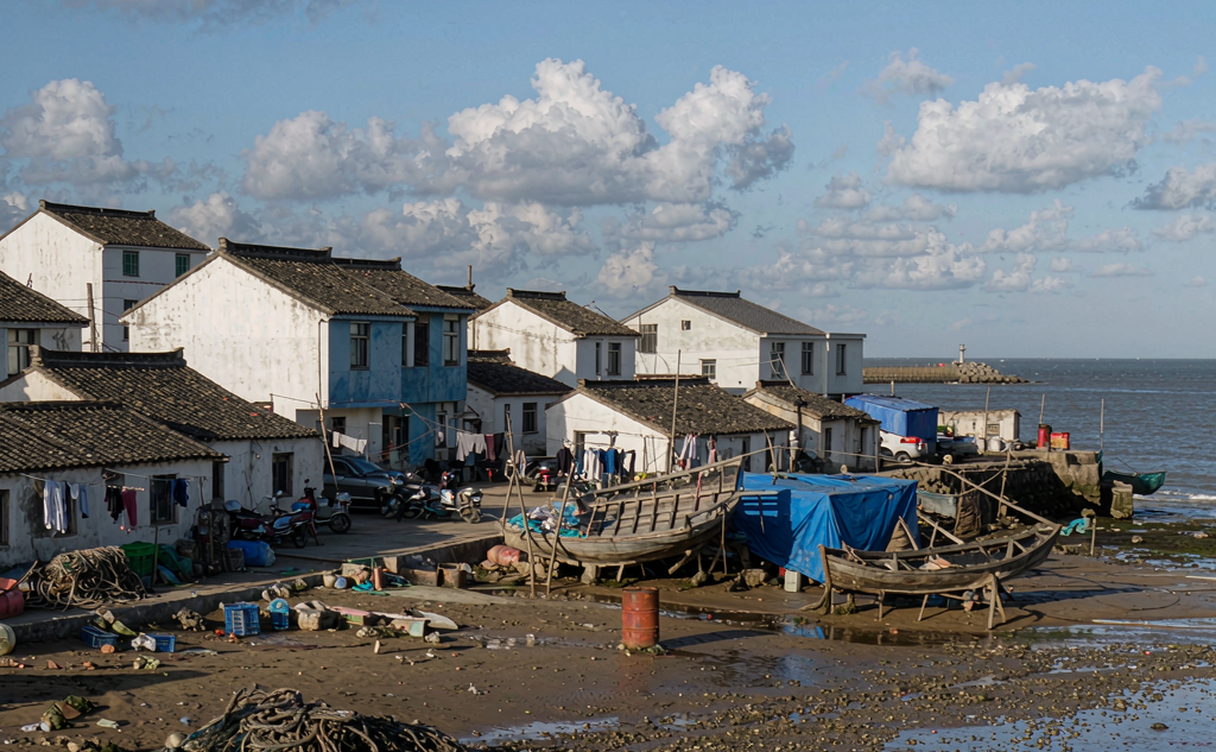
The quieter reward of Huludao is its fishing life. South and west of the urban core, small harbors like those around Suizhong and the Dongdaehe strip wake before dawn as boats land the night’s catch. Dongdaehe (东戴河) itself is a purpose-built beach resort nicknamed “Beijing’s backyard,” with condos, a long sandy shore, and summer crowds — fine if you want facilities, less so if you want solitude. For the fishing-village feel, skip the resort and drive the smaller coves where wooden boats dry on the shingle and nets hang from poles. We once stopped at a nameless cove between Xingcheng and Suizhong where a fisherman sold us just-caught squid; the village cook fried it with chili for 40 RMB and it was the best meal of that client’s trip.
Things to Do in Huludao: Our List
Travelers searching things to do in Huludao will find a scattering of strong, low-key options. In rough order of payoff:
1. Walk the Xingcheng walled town and its temples (half day).
2. Swim or stroll Xingcheng Beach, then ferry to Juehua Island (full day).
3. Explore the Jiumenkou Water Great Wall and Qiansuo fort (half day).
4. Drive the fishing coves west of the city and eat at a harbor cook (half day).
5. Relax at a Dongdaehe resort beach if you want facilities (half to full day).
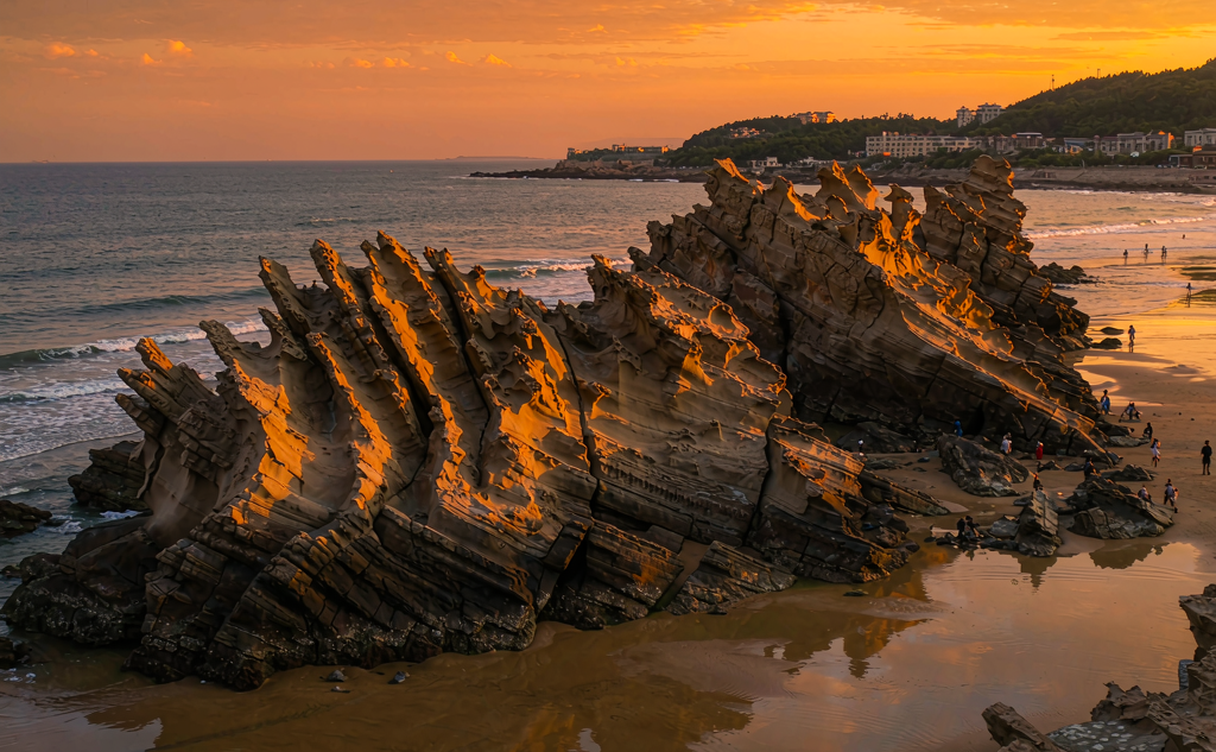
6. Visit the Huludao coastal road at sunset for the rocky headlands.
Seafood and What to Eat
Like the rest of the Liaoning coast, Huludao eats from the sea. The signature is the local catch of the day — squid, mackerel, clams, shrimp, and the prized autumn crab — plus 海蜇 (jellyfish) salad and 咸鱼饼子 (salted fish with corn cakes), a rustic northern-coast dish. A harborside meal for two runs about 120 to 260 RMB depending on how many crab you order, and the cook-your-own market model works here too: buy at the dock, pay a small fee to have it prepared. Xingcheng’s streets inside the wall also have cheap noodle and bun shops for non-seafood meals.
How to Get to Huludao
Huludao sits on the Beijing–Harbin rail corridor, so high-speed trains are frequent. Huludao North Station (葫芦岛北站) is the main stop; Xingcheng has its own station (兴城站 / 兴城西站) for the walled town, which is more convenient if that is your base. From Shenyang it is about 1.5 to 2.5 hours depending on the train; from Jinzhou just 20 to 40 minutes; from Beijing roughly 2.5 to 3.5 hours. For most visitors the natural plan is to base in Shenyang and make Huludao a coastal overnight, or to break a Beijing–Shenyang journey here. Our Shenyang travel guide covers the capital hub, and the Jinzhou travel guide explains the neighboring city just up the line.
Train tickets and classes are detailed in our China high-speed train guide for foreigners, since the northeast corridors use the same apps and rules. Within Huludao, the spread-out sites need a car or taxi; a driver for the day runs roughly 400 to 700 RMB and is the only sane way to link Xingcheng, Jiumenkou, and the coves in one loop.
Best Time to Visit Huludao
The coast has sharp seasons. Summer (July to August) is swimming season — warm, sometimes humid, with the sea at its most inviting, but also the busiest and priciest, especially at Dongdaehe. Late May to June and September are the sweet spots: empty beaches, clean air, lower rates, and (in autumn) the fattest crabs. Winter is cold and the shore closes, but the Wall sections and the walled town are atmospheric in snow and nearly empty.
A Suggested Huludao Itinerary
A realistic loop:
- Day 1: Train to Xingcheng. Walk the walled town, dinner inside the walls, overnight in a wall-town guesthouse (150 to 400 RMB).
- Day 2: Morning beach or Juehua Island ferry; afternoon drive to Jiumenkou Water Great Wall and Qiansuo fort; sunset on the coastal road. Overnight Xingcheng or Huludao, then train on.
This Huludao itinerary keeps the driving tight and the pace slow; add a Dongdaehe beach day only if you want resort time. The fishing coves are best caught spontaneously, so leave a loose afternoon.
Costs, Packing, and Practical Notes
Huludao is inexpensive. A wall-town room runs 150 to 400 RMB, a seafood dinner for two about 120 to 260 RMB, and the Juehua ferry roughly 100 to 150 RMB round trip. Mobile pay works in towns; carry cash for village cooks and small ferries. Pack reef shoes for the pebbly stretches, a windbreaker for breezy evenings, and a light layer even in summer because the Bohai cools fast after dark.
English signage is minimal, so have your hotel write “兴城” (Xingcheng) and key sites in Chinese for taxi drivers. Swim only at flagged beaches, and check jellyfish notices in late summer. The Wall and fort sites involve uneven stone and steps, so wear solid shoes.
Where Huludao Fits in Liaoning
Huludao works best as a coastal link on a north–south Liaoning route, often paired with Jinzhou to the east and Dalian to the south. Our Dalian travel guide covers the peninsula’s flagship city if you continue south. For the wider view, the best things to do in China list ranks the Bohai coast among the country’s underrated seaside options, and first-timers should open the China travel guide for first-timers before booking trains and stays.
We have sent history lovers, families, and a pair of photographers here, and the verdict is steady: Huludao gives you a Ming walled town, a sea-crossing Great Wall, and working fishing villages without the crowds or the price tag of the famous resorts. Come for the wall, stay for the squid, and let the rocky coast fill the gaps.