

Most first-time visitors to Beijing fixate on Badaling. It’s the postcard image, the one with the cable car and the crowds three-deep on every step. I went there once, squeezed between selfie sticks, and decided I’d rather find the Great Wall the way it was meant to be seen — quiet, weathered, and doing something you simply don’t expect a 600-year-old fortification to do. At Huanghuacheng, a section of the wall doesn’t just run along a ridge. It dips straight down into a lake, the grey stone vanishing beneath the green water like a dragon that decided to go for a swim. That’s why the locals call it the Lakeside Great Wall, and why it became my favorite Great Wall day trip from Beijing.
Why Huanghuacheng Is Different
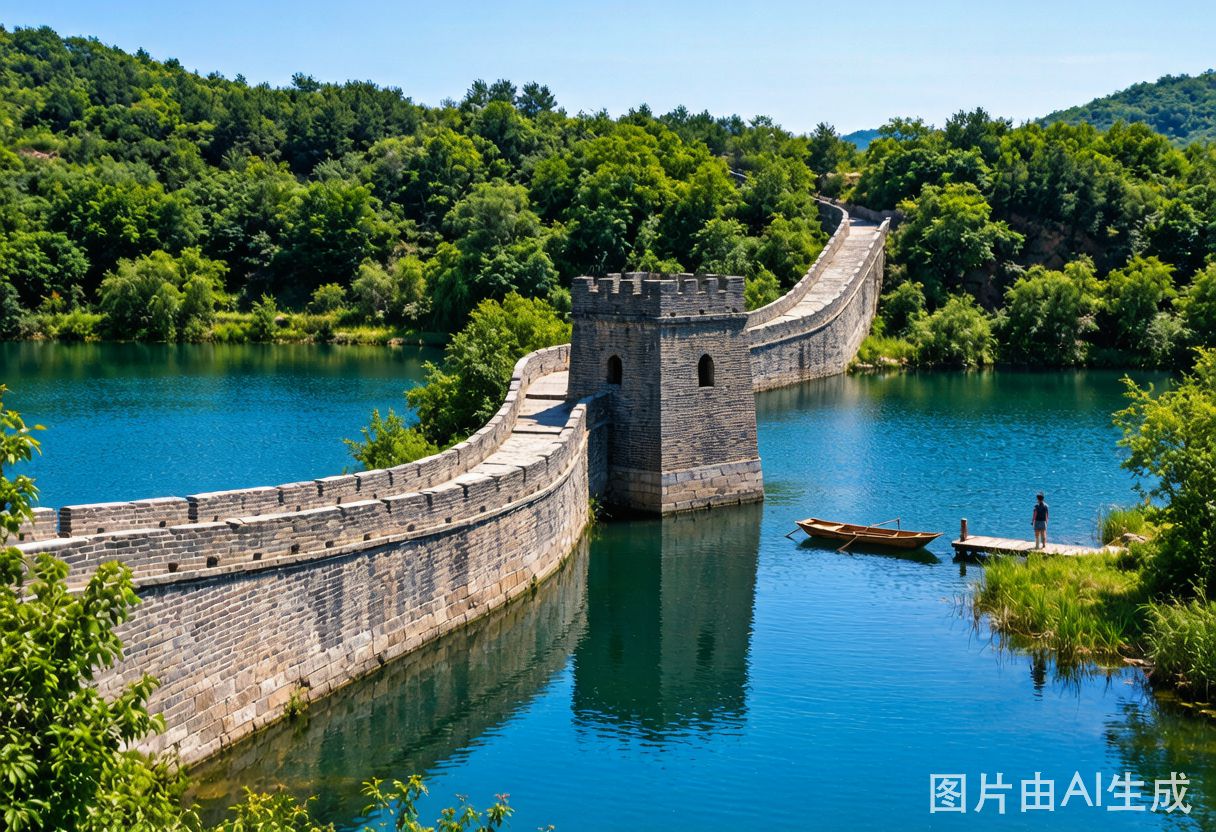
Huanghuacheng (黄花城, literally “Yellow Flower Fortress”) sits about 70 kilometers north of central Beijing in Huairou District. What sets it apart is the Haoming Lake, created in the 1970s when a reservoir dam was built and the rising water deliberately submerged three of the wall’sWatchtower sections. The engineers at the time couldn’t bear to demolish the Ming-dynasty wall, so they let the lake swallow it. Today you stand on a battlement and look down at masonry lying six feet underwater, fish drifting past broken crenellations. It’s the only place near Beijing where the Great Wall and a lake share the same frame.
I’ll be honest — when I first arrived I expected a gimmick. Instead I got a genuinely strange, beautiful sight: the wall climbs a wooded hill, crests the ridge, then steps down the far slope and disappears into the water, only to resurface on a small island a hundred meters out. On a still morning the reflection doubles the whole thing. No other section near the capital gives you that.
Getting There from Beijing
Transport is the part that scares people off, and I get it — there’s no metro line and no direct tourist bus like Badaling has. But it’s very doable, and the lack of a slick shuttle is exactly why the crowds stay away.
The simplest option is a DiDi (Chinese Uber) or private car from Beijing, which runs roughly 45–60 minutes from the city and costs around ¥180–260 one way depending on where you start. I used DiDi from my hotel near the Lama Temple and the driver dropped me at the west gate entrance. Easy, air-conditioned, and you control your own schedule.
If you’re watching your budget, there’s a public bus: line H21 runs from Huairou North Bus Station to Huanghuacheng, but it’s slow (around 90 minutes) and the schedule is thin — maybe five departures a day. I tried it once and spent more time waiting than riding. For a first visit, I’d pay for the car. If you’re building a wider Beijing plan, this pairs naturally with our Beijing 3-day itinerary or as a half-day add-on to a Great Wall day trip from Beijing.
A note on logistics: there are two entrances, east and west, and they’re not connected by road inside the park. The west gate is where the lake-and-wall photo happens; the east gate is the trailhead for the longer, wilder hike up to the high beacon towers. Decide before you go, or you’ll burn an hour backtracking.
What to Expect on the Wall
This is not a restored, handrailed promenade. The central stretch near the lake has been stabilized with wooden walkways and steps, but the moment you walk beyond the first tower the path turns into real, uneven Ming masonry — loose stones, gaps, and a few genuinely exposed drops. Wear proper shoes. I wore trail runners and was glad; I watched a woman in sandals turn back after ten minutes.
The hike from the west side to the highest accessible tower took me about 90 minutes round trip at a relaxed pace, stopping for photos. It’s a moderate climb — nothing like the brutal verticals of Jinshanling or Jiankou — but enough to get your heart going. The reward at the top is a 360-degree view: lake on one side, terraced chestnut orchards (the area is famous for chestnuts) on the other, and the wall snaking off toward the horizon.
If you want the full comparison of which section suits your style, our Mutianyu vs Badaling breakdown is worth a read before you commit — Huanghuacheng is the quieter cousin of all of them.
The Boat Ride and Lake Views
Here’s the thing I didn’t know until I got there: for about ¥40 you can rent a paddle boat or take the small motorized sightseeing launch across Haoming Lake, and from the water the submerged wall is even better. Sitting low on the surface, you see the towers poking out like islands and the wall lines cutting underwater toward the shore. On a sunny day the contrast of grey stone, green water, and blue sky is the photo everyone posts. I paddled myself out to the half-submerged tower and floated there for twenty minutes. No guide rushing me, no ticket queue, just the wall and the water.
There are also a few spots where you can sit at a lakeside café right at the waterline, feet dangling near where the wall goes under. Bring a picnic if you like — there are wooden platforms and a small clutch of local restaurants near the east gate selling grilled trout from the lake and chestnut dishes in autumn.
Best Time to Visit and Avoiding Crowds
Timing is everything here, and it’s the easiest win for a good experience. The best time to visit Beijing generally is spring (April–May) and autumn (September–October), and Huanghuacheng follows that rule. I went in mid-October and the hills around the lake were patchworked red and gold — spectacular. Spring brings the yellow wildflowers that gave the fortress its name (huanghua = yellow flower), blooming across the slopes in late April.
Summer is green and lush but hot and occasionally crowded on weekends. Winter is brutally quiet and cold, with the lake partly frozen — eerie and beautiful if you’re wrapped up, but not for everyone.
Crowd strategy: weekdays beat weekends by a mile, and arrive at opening (around 8:00–8:30 am) to have the lake to yourself for the first hour. Badaling can see 30,000 visitors a day in peak season; Huanghuacheng sees a fraction of that, and on a Tuesday morning in shoulder season I shared the wall with maybe twenty people. For more ideas on weaving this into a wider stay, see our list of things to do in Beijing.
Practical Tips Before You Go
A few things I wish someone had told me:
- Tickets: Entry is around ¥60 in peak season (less in winter). Buy at the gate or via the park’s WeChat mini-program; no need to pre-book unless it’s a national holiday.
- Cash vs card: You won’t need cash — Alipay and WeChat Pay work at the gate and the cafés. See our guide to paying as a foreigner in China if you haven’t set that up yet.
- Combine it: Huairou is also home to the Ming Tombs road and is an easy hop from thereservoir scenery. Don’t try to bolt it onto a Forbidden City morning — give it a half day of its own.
- Swimming: No, you can’t swim in the lake, and yes, they watch. The wall underwater is a cultural relic, not a diving spot.
- Facilities: Toilets exist at both gates but are basic. Bring water and snacks; the on-site options are limited and priced for tourists.
One more honest caveat: the signage is almost entirely in Chinese, and the staff speak little English. Having your destination written in characters (黄花城水长城) on your phone saved me more than once. If you’re nervous about navigating independently, a private driver who waits for you is the low-stress choice and still cheaper than a packaged tour.
Why It’s Worth the Effort
I’ve now walked maybe six different sections of the Great Wall, from the pristine to the ruined. Huanghuacheng isn’t the most dramatic climb and it isn’t the most famous. But it’s the one that made me stop and actually feel something — that mix of human engineering and nature reclaiming it, the stone going quiet under the water. For a foreign visitor who’s already “done” Badaling and wants the Wall without the circus, this is the answer. You’ll come back to Beijing with a photo no one else on your Instagram feed has, and a story about a wall that learned to swim.
For the deeper history and conservation context of the whole fortification, the UNESCO World Heritage listing for the Great Wall of China is the authoritative reference: https://whc.unesco.org/en/list/438.