

Heihe sits on the north bank of the Amur River, which locals call the Heilongjiang, and looks straight across the water at the Russian city of Blagoveshchensk. Few foreign travelers make it this far northeast, but Heihe rewards the curious with a rare experience: two countries, two languages, and two architectures visible at once across a wide river. A Heihe travel guide has to explain not just the city itself but the cross-border rhythm that gives it character.
Most visitors come for one of two reasons. Some want the volcanic landscape of Wudalianchi, a national geological park an hour south of the city. Others come for the border atmosphere, the Russian markets, and the chance to watch another nation’s skyline from a Chinese riverside promenade. Both groups leave surprised by how relaxed and easy the city feels.
Why Heihe stands out in the northeast
Heihe is the kind of place that rewards travelers who have already seen Harbin and want to go deeper into Heilongjiang. The city is smaller and slower than the provincial capital, and its relationship with Russia is woven into daily life. You will hear Russian on the streets, see Cyrillic on shop signs aimed at day-trippers, and find Russian chocolate, vodka, and cosmetics for sale in the border markets.
The Heihe Russia border crossing is one of the more accessible points where a foreign visitor can sense the scale of the China-Russia frontier. You do not need to cross to feel it. Standing on the promenade at dusk, with the lights of Blagoveshchensk switching on across the river, is a quietly memorable moment that costs nothing.
Things to do in Heihe
Start on the riverside. The Heihe Riverfront Park runs along the bank and is the best place to watch the border traffic, the cruise boats, and the far shore. A riverside walk in the early evening, when the light turns gold on the water, is the simplest pleasure in town.
The Russian-style shopping streets behind the waterfront sell matryoshka dolls, amber jewelry, and imported snacks. Prices are negotiable, and the vendors expect a little friendly bargaining. Even if you buy nothing, the market is a window into the cross-border trade that has defined Heihe for over a century.
For history, the Heihe Museum covers the city’s role as a trade and military post, and the nearby Aihui Historical Museum documents the 1858 Treaty of Aigun that fixed the river as a boundary. The exhibits are mostly in Chinese, but the old photographs and maps are informative on their own.
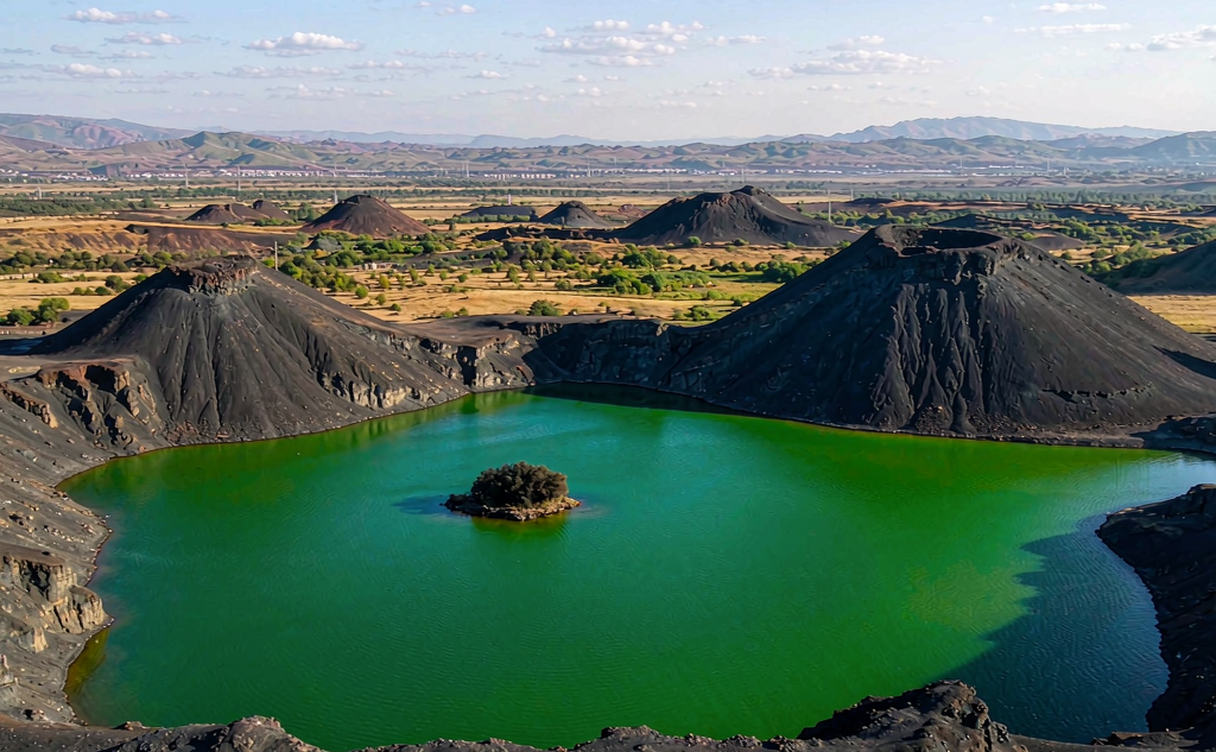
The volcanic park at Wudalianchi is the region’s headline natural attraction. The name means “five connected pools,” referring to a chain of lakes formed when lava dammed a river. You can walk hardened lava fields, climb the conical rim of Laohei Mountain, and visit the cold mineral springs that locals believe have health benefits. A full visit takes most of a day, so budget your time accordingly.
Best time to visit Heihe
The best time to visit Heihe depends on what you want. Summer, from June to August, brings long daylight, green riverbanks, and comfortable temperatures in the low twenties Celsius. This is the easiest season for walking the waterfront and exploring Wudalianchi without cold-weather gear.
Autumn, especially September, paints the riverside trees and turns the lava park crisp and clear. Winter is harsh, with temperatures that can drop well below minus twenty, but it offers a stark, beautiful version of the border city and easy access to nearby snow and ice activities. If you are already planning a winter trip, pair Heihe with Harbin’s festival season for a full northeast experience.
How to get to Heihe
How to get to Heihe starts with Harbin. Flights connect Harbin to Heihe, and there are also long-distance buses, but the most comfortable option for many travelers is the train or a short flight followed by a transfer. From Mohe or Manzhouli, you can thread a northeastern route by coach and rail, though distances are long and winter conditions can slow things down.
If you are building a regional plan, our China high-speed train guide for foreigners explains how to book rail travel in the northeast, and the Harbin Ice Festival travel guide helps you time a visit to the famous snow and ice sculptures. The Mohe travel guide covers China’s northernmost county, and the Manzhouli travel guide describes the tri-border town where China meets Russia and Mongolia.
Wudalianchi as a day trip
Most travelers base in Heihe and make Wudalianchi a day trip by bus or hired car. Arrive early, walk the lava plateau first while it is cool, then take the stair climb up Laohei Mountain for the crater view. The mineral spring area has tasting stations where you can try the slightly fizzy cold water, though the taste is an acquired one. Bring sturdy shoes; the volcanic rock is rough and uneven.
A suggested two-day plan
Heihe works best as a two-night stop. Day one is for the river and the border atmosphere. Walk the riverfront in the afternoon, browse the Russian-market streets behind it, and watch Blagoveshchensk light up across the water at dusk. Eat river fish or dumplings nearby.
Day two goes to Wudalianchi, about an hour south. Arrive early, walk the lava plateau while it is cool, then climb Laohei Mountain for the crater view before the lunch crowds. Save the mineral-spring tasting for the drive back. If you are continuing northeast, an evening train or flight links Heihe to Harbin, Mohe, or Manzhouli.
In winter, swap the volcano for the frozen river and the ice festivals further south. Book the Harbin leg early, because rooms near the festival sell out, and check road conditions before a long drive.
Where to stay and eat
Heihe has a solid range of mid-range hotels near the river, many within walking distance of the promenade. Book ahead if you visit during a Russian holiday, when cross-border day-trippers fill the rooms. Food mixes northeastern Chinese cooking with Russian influence. Try the local river fish, dumplings, and hearty stews, then pick up Russian chocolate or honey as a souvenir. The Russian market behind the waterfront is the place for souvenirs, but compare prices at two or three stalls before you commit. Cards work at the larger hotels and supermarkets, while the small vendors along the promenade prefer cash or mobile pay.

Practical notes for visitors
Heihe is safe and calm, but English is scarce, so prepare a translation app and offline maps. The border zone is sensitive, so do not photograph military installations or crossing infrastructure, and stay within marked public areas along the river. Mobile payment dominates, but carry some cash for small vendors and the Russian market.
For background on the wider region and its cross-border character, the official Heilongjiang tourism information is a useful reference: https://www.travelchinaguide.com/cityguides/heilongjiang/heihe.htm