

If you are planning your first trip and want a deeper cultural experience, pair this reading with our China travel guide for first-timers. Hanfu is the traditional clothing of the Han Chinese people, and today it has become one of the most photogenic and meaningful ways for visitors to connect with Chinese history. This hanfu guide explains what the clothing is, how it evolved, the main styles you will see, and exactly where and when you can wear it on your journey.
What Is Hanfu
Hanfu refers to the historical dress of the Han ethnic group, the largest ethnic group in China. The word itself combines “Han,” from the Han dynasty, with “fu,” meaning clothing. Unlike a single costume, hanfu is an entire family of garments that were worn for more than three thousand years before the widespread adoption of modern Western-style clothing in the early twentieth century.
The defining feature of hanfu is that it is usually worn wrapped across the body and tied with sashes rather than buttoned. Sleeves are often wide and flowing, and the overall silhouette emphasizes elegance over structure. A well-made set moves beautifully when you walk, which is part of why photographers love it.
For travelers, hanfu is more than a pretty outfit. Wearing it in an ancient town lets you step into the same streets, canals, and courtyards that people walked centuries ago. Many visitors tell us it is the single most memorable thing they did in China, which is why we list it among the best things to do in China.
A Short History Through the Dynasties
Han clothing changed with each dynasty, and part of the fun is spotting those differences.
During the Shang and Zhou dynasties, clothing was simple and often made of woven hemp and silk. Rank was shown through color and ornament rather than cut.
The Han dynasty established many of the core forms, including the shenyi, a long robe that joined the top and bottom into one piece. This is where the “Han” in hanfu truly took root as a style identity.
The Tang dynasty brought opulence. Women wore high-waisted skirts, and the broad, open collar styles reflected a cosmopolitan, confident era. Bright colors and patterned silks were common.
The Song dynasty favored restraint. Garments became narrower and more modest, with subtle elegance and lighter fabrics suited to a scholarly aesthetic.
The Ming dynasty produced some of the most recognizable forms, with clearly structured robes, rounded collars, and elaborate official attire. Many hanfu rental shops today base their most popular sets on Ming and Tang designs because they photograph so well.
When you visit museums and ancient towns, looking at the clothing on statues and murals becomes a small game: can you guess the dynasty from the sleeves and waistline?
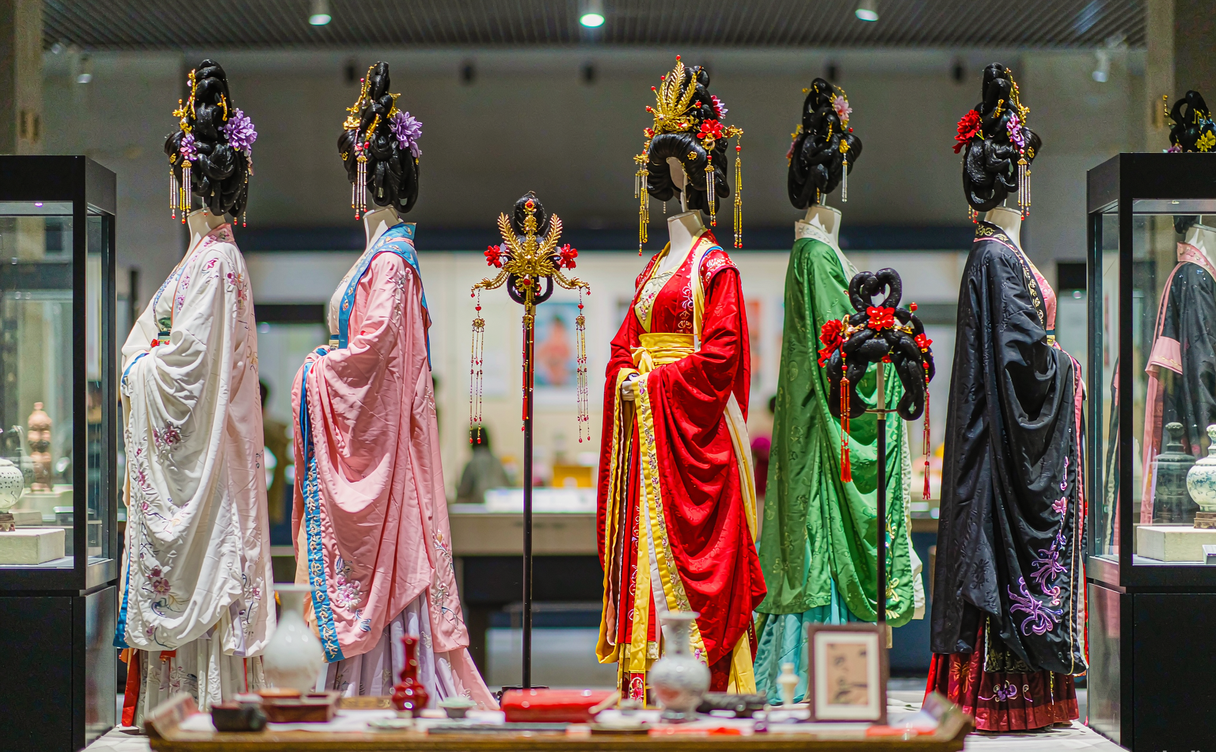
Main Styles You Will See
Understanding a few key terms helps you choose what to rent and what to look for.
Ruqun is a two-piece set: a short top called a ru worn over a long wrap skirt called a qun. It is one of the oldest and most common styles, comfortable for walking, and a favorite for first-time wearers.
Aoqun is similar but uses a longer, often padded jacket called an ao on top of the skirt. It looks warmer and more structured, great for cooler months.
Shenyi is the one-piece robe mentioned above. It gives a tall, graceful line and is often chosen for formal or dramatic photos.
Beizi is a long open jacket, usually worn over a ruqun, with slits on the sides. It is lightweight and layered, perfect for a relaxed stroll through a town.
Most rental shops organize their racks by these names, so knowing them lets you ask for exactly the look you want.
Where and When Travelers Can Wear Hanfu
You do not need to be a model to enjoy this. Across China, hanfu rental shops sit near major old towns and scenic areas. For a curated list of locations, see our guide to the best ancient towns in China.
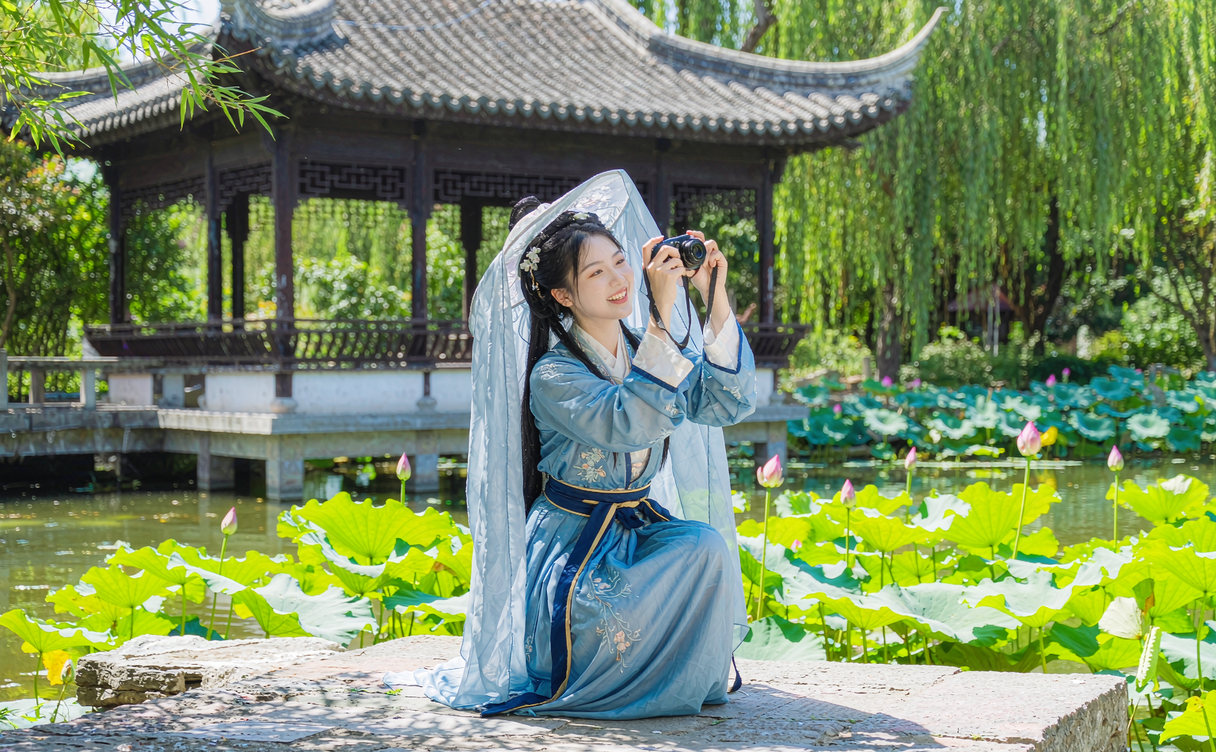
Ancient towns are the best backdrop. Places with preserved wooden buildings, stone lanes, and canals make every photo look timeless. Wearing hanfu there feels natural rather than staged.
Festivals are another highlight. The Qixi Festival, sometimes called the Chinese Valentine’s Day, is hugely popular for couples in hanfu. The Shangsi Festival in spring celebrates renewal and is a lovely time to wear light, flowing sets near water. Many towns host costume parades and themed markets on these dates.
Photo opportunities are everywhere: bridges, pagodas, tea houses, and lantern-lit evenings all work beautifully. If you want the best light, plan your shoot for early morning or just after sunset.
For timing your trip around these events, our best time to visit China article breaks down the seasons and major festivals month by month.
Etiquette and How to Rent
Renting is easy and inexpensive compared with buying. A typical shop offers a package that includes the garment, a simple hairstyle, and basic accessories for a few hours.
A few tips make the experience smoother. Arrive with clean, light clothing underneath, since you will change on site. Treat the garments gently; the silk and embroidery are delicate. Ask staff to help you tie the sashes correctly, because a poorly wrapped collar can ruin the line of the outfit.
Etiquette is mostly about respect. Avoid stepping on hems, and be mindful in temples and busy lanes. Locals are generally delighted to see foreign visitors in hanfu and often offer to take your photo.
If you want a calm setting to wear your outfit while sipping tea, our China tea house guide points you to atmospheric spots where hanfu fits right in.
Pairing a Hanfu Experience With Ancient Towns
The strongest travel memory combines the outfit with the place. Spend a morning exploring a town in normal clothes to learn its layout, then return in hanfu for golden-hour photos. This two-pass approach means you are not rushed and you already know the best corners.
Many visitors combine a hanfu day with a slow boat ride, a calligraphy lesson, or a tea ceremony. The clothing sets a tone of slowness that makes the rest of the trip feel more intentional.
For broader planning, our China travel guide for first-timers covers transport, payments, and etiquette so your hanfu day fits neatly into the bigger itinerary.
Frequently Asked Questions
What is hanfu and is it hard to wear?
Hanfu is the traditional clothing of the Han Chinese, worn for over three thousand years. It is not hard to wear. Rental shops help you dress, style your hair, and tie the sashes, so even complete beginners look great in minutes.
Where to wear hanfu in China as a traveler?
The easiest places are ancient towns and scenic old streets with hanfu rental shops nearby. Festivals like Qixi and Shangsi are especially fun. Tea houses, bridges, and lantern areas all make excellent backdrops.
How does hanfu rental in China work and what does it cost?
You choose a set at a shop, get a hairstyle and accessories included, and pay for a few hours of wear. Prices are modest. Return the outfit clean and on time, and treat the fabric with care.
What is the best hanfu guide tip for first-time visitors?
Book your rental in the morning, learn the town layout first, then shoot photos at sunset. Knowing the styles like ruqun and shenyi helps you pick a flattering set quickly.
A Note on Heritage
Hanfu reflects a living tradition rather than a fixed costume. Museums and cultural exhibitions across the country document its evolution, and you can read an authoritative overview of Chinese clothing history from Britannica. Seeing real examples deepens your appreciation before you put on a set yourself.
For a rigorously researched summary of the tradition, consult the Britannica entry on Chinese clothing.