

Our Guiping travel guide is for travelers who want Guangxi beyond the postcard karst of Guilin and Yangshuo. Guiping (桂平) is a county-level city in central Guangxi, where the Qian and Yu rivers join to form the Xun, and where a sacred Buddhist mountain rises right at the edge of town. It is best known for Guiping Xishan mountain (西山), a revered pilgrimage peak with ancient temples, spring-fed tea terraces, and forest trails, and for the nearby historical canal and river towns that reveal Guangxi’s quieter, older face. We have sent readers there who wanted spiritual calm and real local life, and Guiping delivered both without the tourist machinery of the north.

Why Guiping Deserves More Than a Pass-Through
Guiping sits roughly halfway between Guilin and Beihai, which means many travelers rush past it. That is their loss. The things to do in Guiping Guangxi begin with Xishan, one of the most important Buddhist mountains in the south, where the Longhua Temple (龙华寺) still hosts monks and the cliffside paths offer sweeping views over the confluence of three rivers. The mountain is also the home of Xishan tea, a famed local green tea grown on its terraces and sold freshly by the roadside.
The second attraction is the old canal and river heritage. Guiping was a key node on the ancient water routes of the Xun River basin, and the surrounding towns preserve stone bridges, old wharves, and a slower pace of Guangxi life. For travelers building a wider Guangxi loop, our Guangxi 7-day itinerary often slots Guiping between the karst north and the coast, while our Guilin and Yangshuo guide covers the headline scenery to the north.
A Guiping food guide would lead with the river fish of the Qian and Yu, the local “pig’s foot noodles” (猪蹄粉), and the Xishan tea served in humble houses. It is honest, unfussy food that reflects the city’s role as a working river port rather than a resort town.
Best Time to Visit Guiping and How to Get There
The best time to visit Guiping is spring (March to May) and autumn (September to November). Spring brings warm 20–28°C days and green hills, while autumn is dry and clear, ideal for hiking Xishan. Summers are hot and humid (30–35°C) with afternoon thunderstorms, and winters are mild but damp (10–18°C). We suggest avoiding the wettest weeks of June and the National Day crowds in early October.
How to get to Guiping is easy by rail. Guiping Railway Station sits on the high-speed line linking Nanning, Guilin, and Guangzhou, with trains from Guilin (about 2–3 hours, ¥110–180) and from Nanning (around 2–3 hours, ¥100–160). The nearest major airport is in Nanning or Guilin, each a few hours away by rail or road. For booking help, our high-speed train guide for foreigners explains ticketing and transfers. From Guiping station, taxis reach Xishan’s gate in 15–25 minutes (¥20–35) and the riverfront in 10 minutes.
Want Xishan and the river towns built into a relaxed Guangxi route? Our planners can link Guiping with Guilin and the coast in one tailored trip. Reach out and we will design it around your dates.
Things to Do: Xishan Mountain, Temples, and River History
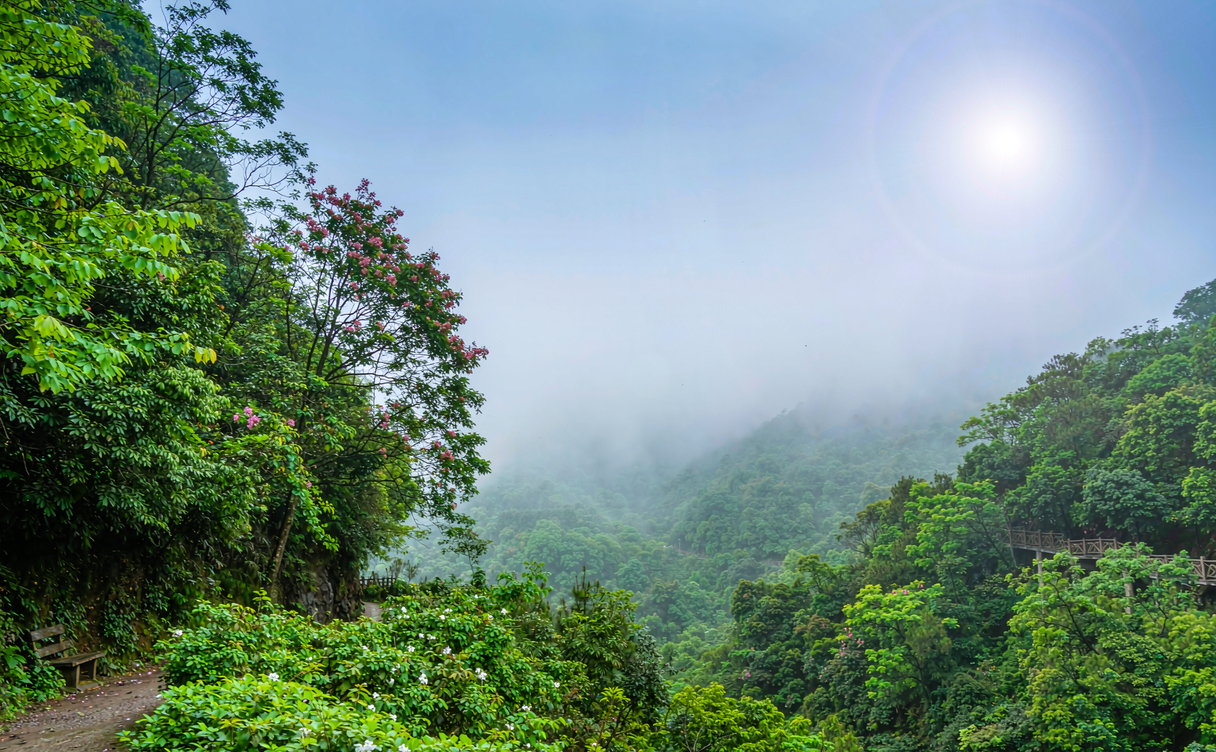
Start with Guiping Xishan mountain. The scenic area ticket is around ¥80–100, with the climb to the main summit taking two to three hours on foot or less via the older paths; a cable car is not always operating, so plan to walk. Highlights include the Longhua Temple, the giant sitting Buddha carved into the hillside, the “Xishan tea” terraces, and the spring where locals fill bottles with mountain water. Mornings are cool and uncrowded, and the chanting from the temple adds a real sense of place.
The river confluence is the other signature sight. Standing where the Qian and Yu meet the Xun gives you a feel for why Guiping was historically a transport hub. A short boat or riverside walk shows old wharves and the calm of a working Guangxi water town. Nearby, the ancient Lijun Canal area and surrounding villages preserve stone architecture and slow teahouse life; our Longji rice terraces guide is a useful companion if you want to compare Guangxi’s mountain landscapes further north.
For a coastal extension, our Beihai travel guide covers the beaches and the old port of Beihai, a natural next stop after Guiping if you are heading south. A Guiping food guide tip: eat the river fish steamed with ginger (¥40–70 per dish) and finish with a pot of Xishan tea (¥15–30), the local ritual.
Where to Stay and How to Plan
Stay in Guiping city center for the easiest access to Xishan and the riverfront, with mid-range hotels at ¥200–380 per night and budget options from ¥120. For a mountain-immersive night, a few guesthouses near the Xishan gate offer temple-view rooms (¥250–450), but book ahead for holiday weekends. We recommend at least one full day for the mountain plus a half-day for the river towns. If you want the early-morning temple atmosphere without the day-trippers, the gate-side guesthouse is worth the small premium, and you can walk up before the crowds arrive.
Local transport is taxis and ride apps plus infrequent buses; having a driver makes the outlying canal villages far easier. For seasonal context, our best time to visit China guide helps you compare Guangxi’s climate with other provinces before you lock in dates.
A practical note for first-timers: Guiping’s English signage is limited, so download an offline map and a translation app before you arrive, and save your hotel’s name in Chinese characters for taxi drivers. The Xishan ticket office and the riverfront are the two hubs; most everything else radiates from them on foot or by short ride. We also suggest carrying small cash for the tea terraces and village stalls, as card readers are unreliable outside the city center. If you enjoy temples, allow extra time at Longhua to watch the midday rituals, and bring a refillable bottle for the mountain spring that locals prize, a small ritual that connects you to centuries of pilgrims who climbed the same paths.
Prefer a private driver and a local guide for Xishan and the river towns? We can arrange Guiping transfers, temple visits, and a tea tasting in one booking. Contact us to reserve your trip.
A Final Word on Guiping
Guiping is the Guangxi that guidebooks under-sell: a sacred mountain within walking distance of a working river city, with temples, tea terraces, and old wharves that ask nothing of you but attention. It rewards travelers who like their destinations authentic and unhurried, and it fits neatly into a Guangxi route that balances the famous karst with the province’s deeper, quieter layers. We have found that travelers who skip Guiping on the way to the coast usually regret it, because the combination of Xishan’s calm and the river town’s honesty is hard to find elsewhere in the province without venturing far off the main lines.
For authoritative context on the region’s geography, the Guiping entry on Wikipedia gives a concise overview of the city’s rivers, history, and administrative role, useful background before you visit.
Best Season and Crowd Tips for Guiping
When we send travelers here, timing is the difference between a serene pilgrimage and a sweaty queue. The Guiping Xishan mountain is at its best in April–May and October–November, when daytime temperatures sit at a comfortable 20–28°C and the temple paths are uncrowded. We avoid June’s afternoon thunderstorms and the early-October National Day week, when domestic crowds fill the Longhua Temple steps and Xishan ticket lines stretch past the gate.
For a peaceful climb, arrive at the Xishan gate before 8 am; the morning chanting and cool air are the real reward, and you beat both the day-trippers from Guilin and the Guangzhou weekenders. Weekdays (Tuesday–Thursday) are noticeably quieter than weekends year-round. If you visit in winter (10–18°C), bring a light jacket for the summit breeze but enjoy discounted rooms (¥120–300) and near-empty trails.
A practical crowd tip: the river-town wharves are calmest at dawn, so pair an early Xishan walk with a sunrise stroll along the Qian–Yu confluence. Locals fill the tea terraces by mid-morning, so buy your Xishan green tea (¥15–30 per pack) before 10 am for the freshest leaves and the friendliest prices. These small adjustments turn Guiping from a pass-through into a genuine slow stop.
Planning a Guangxi journey that mixes mountains, rivers, and coast? Subscribe to our newsletter for new routes, festival dates, and practical China travel tips delivered to your inbox.
This Guiping travel guide shows why a county city can be the most memorable stop on a Guangxi trip. Whether you come for Xishan’s temples and tea or the calm of the ancient canal town, Guiping offers Guangxi at its most genuine.