

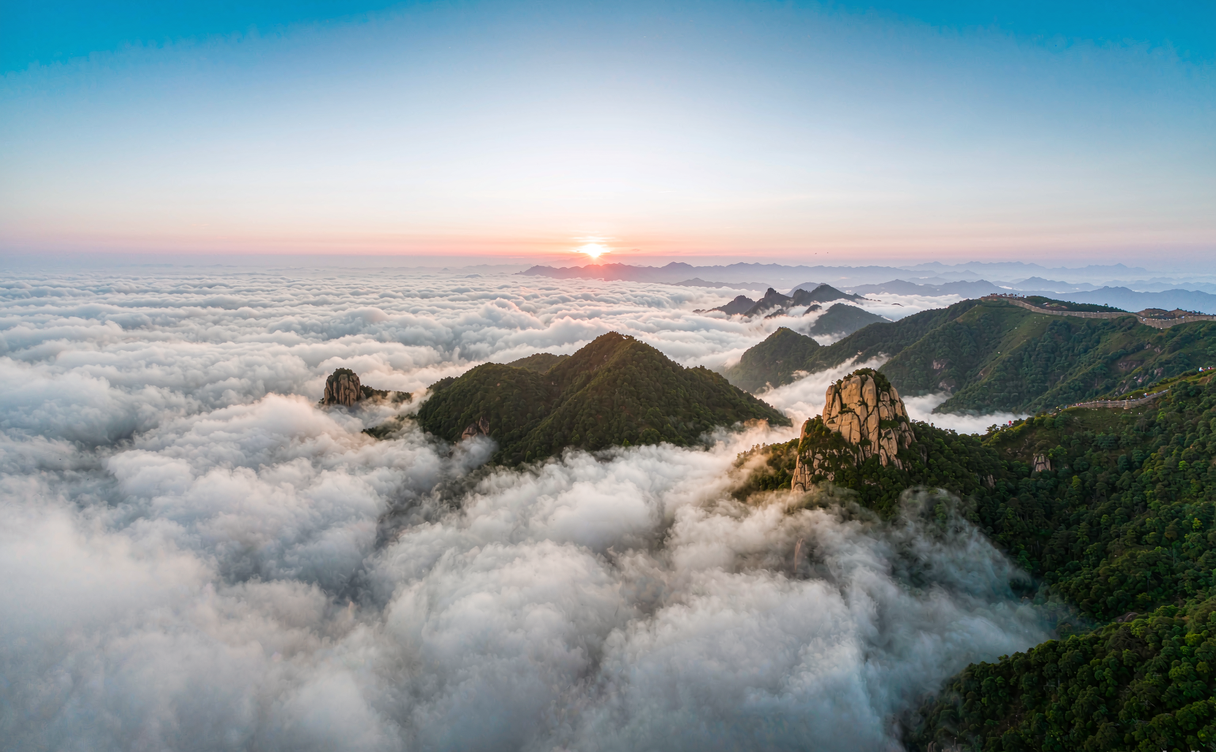
Fanjingshan rises in the remote northeast of Guizhou, China, a granite and basalt peak that has been a sacred Buddhist mountain for more than 1,000 years. We’ve watched travelers stand at the base of the Red Cloud Golden Summit and simply gape — two temple tops sit on a razor-thin pinnacle joined by a sky bridge, with a near-vertical chain climb between them. The mountain was inscribed as a UNESCO World Heritage Site in 2018 for both its living biodiversity and its spiritual history, and it remains one of the most photogenic (and most crowded-on-holidays) days out in the province. This Fanjingshan guide covers the logistics we hand our own clients: real 2026 prices, how the cable car and trails actually fit together, and when mist becomes a blessing rather than a letdown.
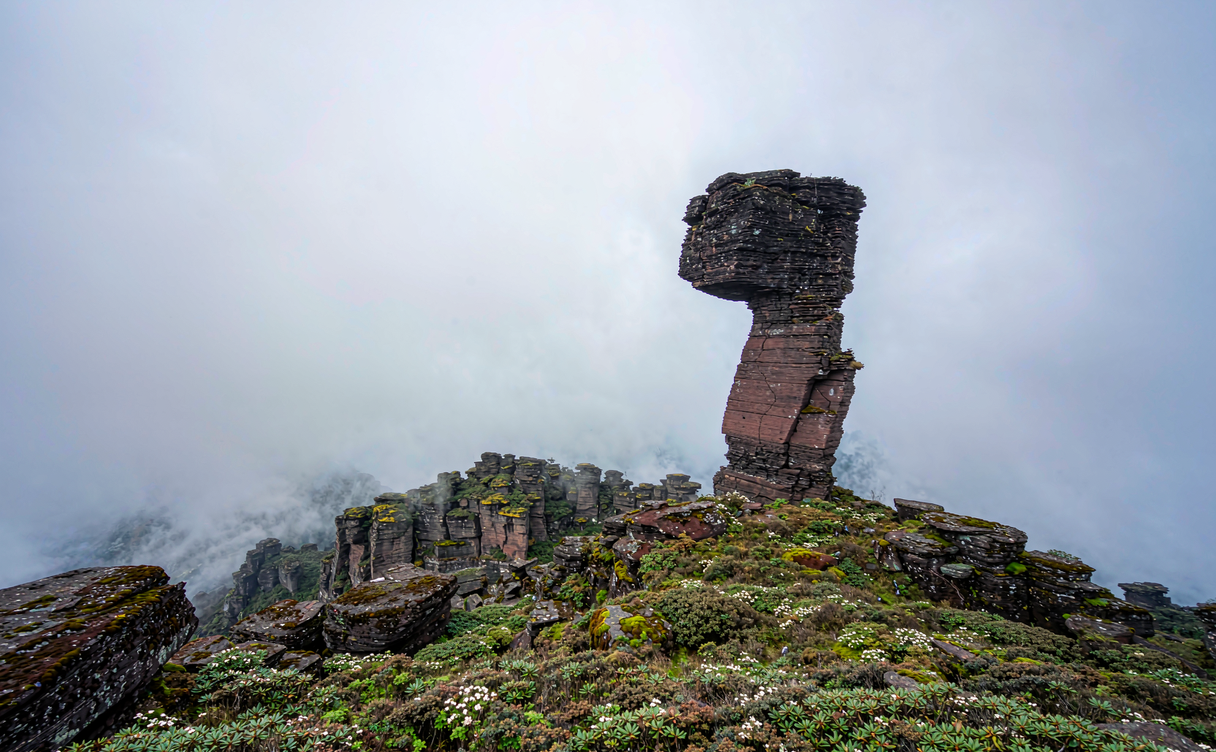
The name means “Mountain of the Buddha’s Samadhi,” and it is the principal site of the Chinese Maitreya (future Buddha) tradition. What draws the cameras is the summit’s split pillar: a narrow rock spine with an older temple on each cap, connected by a small arched bridge so you can walk from one to the other. Below it, the “Mushroom Stone” (Mofushi) is a naturally balanced rock formation that has become the mountain’s logo. The second reason it earned UNESCO status is quieter but real. The forests shelter a remarkable number of endemic species, including the endangered Guizhou snub-nosed monkey and the dove tree (Davidia), a “living fossil” that drops white bracts in late spring. In our experience travelers who only come for the photo miss the genuine wonder of the old-growth cloud forest on the upper slopes.
The climb itself is the day’s test. From the upper cable car station a paved path leads to the sacred summit area, but the final approach to the Red Cloud Golden Summit is a different matter: a metal stair clamped to the rock, then a section of fixed chains where you pull yourself up a near-vertical seam between the two temple caps. It is short — perhaps 100 meters of real effort — but exposed, and the wind up there is no joke. We’ve seen fit hikers hesitate; anyone with balance issues or a fear of heights should enjoy the lower terraces and skip the pinnacle rather than risk it.
Tickets, the cable car, and what you’ll pay
As of the 2026 season the entrance ticket is 100 RMB in peak months (March–November) and 90 RMB in winter. On top of that you must take the sightseeing bus, which costs 20 RMB each way, and almost everyone also rides the cable car. The cable car is 90 RMB one way or 160 RMB round trip. In practice, a standard visit totals roughly 280 RMB per person with the round-trip cable car, or about 230 RMB if you walk both directions (only advisable for fit hikers in good weather). Children under 1.2 meters ride free, and students get a small discount on the gate ticket with a physical ID.
There is a hard daily visitor cap, often cited around 8,000 to 10,000 people, and during national holidays it sells out before noon. We tell clients to book the entry slot online (the official WeChat mini-program or major Chinese travel apps) at least a day ahead, and to pick an early arrival window. The gates usually open around 7:30 and the last cable car down leaves near 17:00, but confirm the season’s hours before you go — they shift with daylight, and a missed last car means a long walk down that nobody enjoys after a summit day.
How to get to Fanjingshan
The nearest transport hub is Tongren, a city in eastern Guizhou with a high-speed rail station. From Guiyang, the provincial capital, a high-speed train to Tongren takes roughly 1.5 to 2 hours. From Zhangjiajie just across the provincial line, you can also reach Tongren by train in a few hours, which makes a combined Hunan–Guizhou route practical.
From Tongren city or Tongren South station, tourist shuttles and private cars cover the final 60 to 90 minutes to the Fanjingshan scenic area entrance in Jiangkou County. A Didi or arranged car runs roughly 150–220 RMB depending on your starting point and the driver’s patience with the mountain road. There is no public bus we’d comfortably recommend to a first-time visitor; the shuttle vans are simpler. If you are building a Guizhou loop, pair the mountain with the province’s other karst and village highlights rather than treating it as a standalone, because the transfer alone eats half a day.
Things to do at Fanjingshan
- Climb the Red Cloud Golden Summit. The final stretch uses fixed chains on near-vertical rock, and it is not for anyone with a serious fear of heights or weak knees. Allow 40–60 minutes round trip from the upper station.
- Photograph the Mushroom Stone early, before the tour groups arrive around 10:00.
- Walk the Ten-Thousand-Buddha Terrace (Wanfo Ding) loop for the cloud-forest experience and the best chance of a sea of clouds after rain.
- Visit Cheng’en Temple near the summit for a sense of the mountain’s living monastic tradition; dress modestly and keep voices low.
Best time to visit Fanjingshan
The best time to visit Fanjingshan is late April to May and again September to October. Spring brings fresh green and the dove tree’s white bracts; autumn gives the clearest air and the most reliable “sea of clouds” mornings. Summer (June–August) is lush but wet, with afternoon storms that sock the summit in thick fog — beautiful if you came for atmosphere, frustrating if you wanted the iconic clear-shot postcard. Winter is cold and occasionally icy enough to close the upper trails, but the snow-dusted pinnacle is spectacular on the days it stays open. If you are juggling multiple provinces, our best time to visit China guide helps you pick a window that also suits the rest of your route.
Where to eat and what to try
The summit area has basic noodle and corn-porridge stalls at inflated prices (figure 25–40 RMB for a simple bowl), so we suggest eating before you board the cable car. Down in Jiangkou or Tongren, the local signature is sour fish hotpot and various pickled vegetable dishes. Our wider Guizhou plan connects the mountain to the province’s other headline parks: the Guizhou Libo Xiaoqikong guide details the province’s other headline karst park, and the Wanfenglin Guizhou guide covers the enormous karst peak forest down south that most foreign itineraries skip entirely.
Practical tips we give every client
- Book your slot online before you leave the hotel. Walk-up tickets are not guaranteed, especially Friday through Sunday.
- Start at first light. The 7:30 opening is when the summit is clearest and the chains are shortest.
- Pack a windbreaker. The upper mountain is 10–15°C cooler than Tongren and the wind cuts hard.
- Wear closed, grippy shoes for the chained summit climb; sandals are a real hazard on wet rock.
- Carry cash for the small stalls, which sometimes lose card signal on the mountain.
Fanjingshan rewards the early and the prepared. It is not a gentle stroll, but the sight of two temples balanced on a stone needle above a sea of cloud is the kind of image that justifies the early alarm. When you come down hungry, make the short detour to a Tongren kitchen for the regional sour-soup cooking, a sour-hot broth that defines eastern Guizhou. If you want to fold a village stay into the same trip, the Dong settlements of the southeast of the province make a natural cultural counterpoint and are easy to reach from the mountain with a little planning.
Background on the inscription and the mountain’s ecology is well covered on the Fanjingshan UNESCO World Heritage page.