

Most travelers have never considered Daqing as a stop, but a Daqing travel guide should argue that this is exactly why it is interesting. Daqing (大庆) is the city that powered modern China’s industrial rise, built on the back of the Daqing Oilfield, the largest in the country. It is not beautiful in the usual sense, but it is authentic, quietly proud, and wrapped in some of the snowiest northern plain scenery in Heilongjiang. We have sent readers here as a one-day industrial-heritage detour between Harbin and the far north, and they came away with a genuine feel for how the modern Chinese economy was literally pumped out of the ground.
Daqing sits in western Heilongjiang, about 160 kilometers northwest of Harbin, on flat, cold plain land threaded with oil wells, cooling towers, and long straight roads. It is a city of around 2.7 million people, unusual in that it was planned around the oilfield rather than grown from an old town. The “Iron Man” spirit of the workers who opened the field in the 1960s is still a living part of local identity, and the museums tell that story with unusual candor.
How to Get to Daqing
The simplest way to understand how to get to Daqing is the train from Harbin. Daqing has several stations, with Daqing West Station (大庆西站) and Daqing East on the high-speed line; from Harbin the fast ride takes about 1 to 1.5 hours and costs 70 to 110 RMB second class. Conventional trains also run and are cheaper but slower. There is Daqing Sartu Airport (DQA) with limited domestic flights, mostly via Harbin, but the train is easier for foreign travelers and drops you close to the city’s heritage sites. From Daqing you can continue north toward Qiqihar or east back to Harbin by rail.
We once arranged a reader’s half-day here between an overnight Harbin stay and a northbound train: they took the 08:00 G-train, stored bags at the station, spent three hours at the Oilfield Museum and a working well site, and were back on a train by early afternoon. Total rail cost under 220 RMB round trip. For ticketing details, our China high-speed train guide for foreigners covers booking with a foreign passport. If you are starting in the provincial capital, the Harbin Ice Festival travel guide pairs naturally with a Daqing winter add-on, and our Mudanjiang travel guide covers another Heilongjiang hub worth linking.
Best Time to Visit Daqing
The best time to visit Daqing is summer, from June to August, when the plain is green, the mosquitoes are manageable if you prep, and the open landscape is pleasant for driving between sites. Highs sit around 25–29°C. Winter, December to February, is harsh (minus 18 to minus 28°C) but striking: the oil derricks stand black against snow, and the city’s winter light is clean and photographic. We generally recommend July for comfort or mid-January for the snowy industrial look, depending on your tolerance.
A note for first-timers: spring brings wind and the occasional dust from dry fields, and autumn is short. If you are building a first China plan, our China travel guide for first-timers has transport and weather notes that apply across the Northeast. For an even deeper cold extension, our Mohe travel guide continues the arctic theme north of Daqing.
Things to Do in Daqing
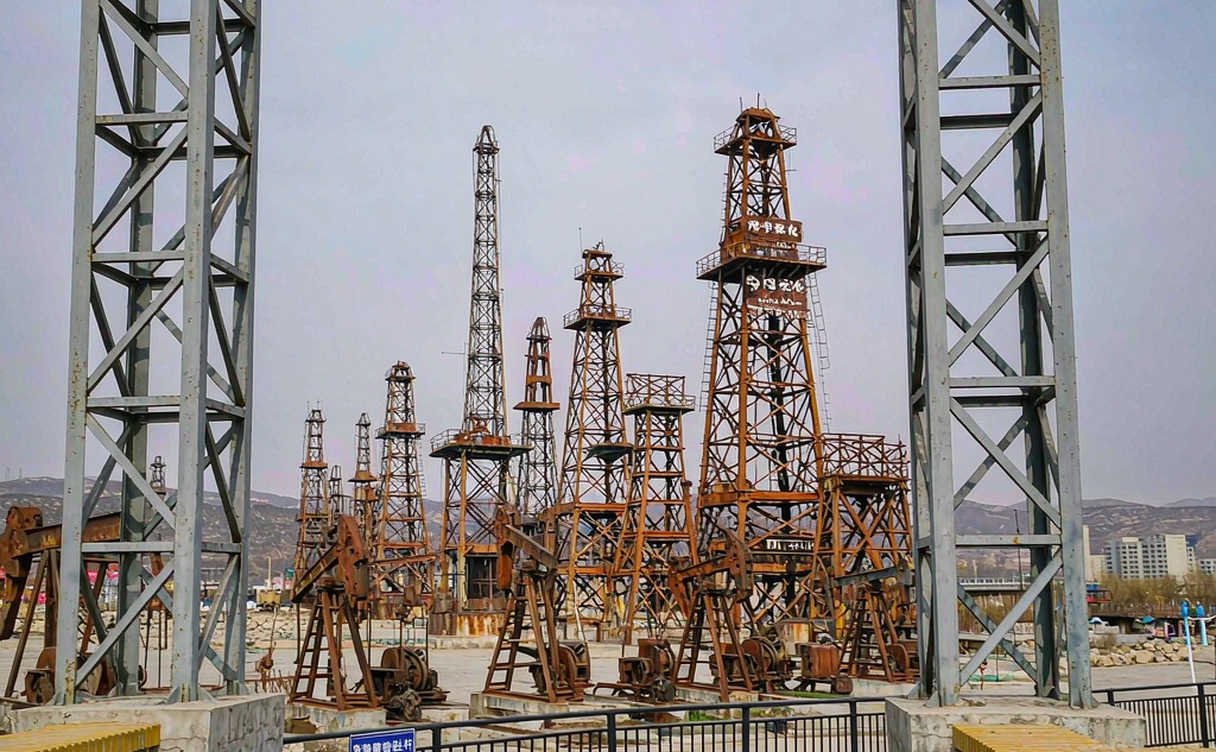
The essential stop is the Daqing Oilfield Museum (大庆油田历史陈列馆 / 铁人王进喜纪念馆), which documents the discovery of the field in 1959, the “Iron Man” Wang Jinxi and his team, and the technology of extraction. It is genuinely good—life-size dioramas, old rigs, and personal artifacts—and easily fills two to three hours. Nearby, you can visit working well sites and the “Oil Cube” science center where the city explains energy to school groups. Things to do in Daqing also include the Longfeng Wetland (龙凤湿地), a surprisingly large urban nature reserve on the city’s edge where boardwalks cross reed beds full of birds in summer, a calm counterpoint to the industry.
We once arranged a reader’s visit that included a short stop at a still-operating pumping unit outside town; standing next to a nodding donkey well while the temperature sat at minus 20°C gave him a visceral sense of why this place mattered. That kind of close-up is possible because Daqing is still a working city, not a museum piece. The local food leans northern and filling: try the stewed river fish, the soybean dishes (Heilongjiang is a soy heartland), and the roasted flatbreads. A solid meal for two runs 80 to 140 RMB.
A Suggested Daqing Itinerary
A Daqing itinerary can be done in a focused day, but two days lets you breathe. Day one: arrive, visit the Oilfield Museum and the Iron Man memorial, then drive the Longfeng Wetland boardwalk at dusk. Day two: a morning loop past working well sites and the science center, lunch on local food, and an afternoon train back to Harbin or onward north. If you want a third day, add a trip out to the surrounding plain villages for winter scenery.
We often build Daqing as a half-step between Harbin’s festival energy and the quieter north, because the rail links are fast and the contrast is instructive. Our best things to do in China includes industrial-heritage and plain-landscape experiences worth weighing against coastal or mountain stops.
Where to Stay and What It Costs
Daqing is cheap. A central business hotel runs 160 to 320 RMB per night, and chains cluster near the West Station for convenience. Taxis start at 6 RMB, and a half-day car for the well-site loop is 200 to 350 RMB. Meals are inexpensive: a noodle or dumpling plate is 15 to 30 RMB, and a fish or meat dinner for two is 90 to 160 RMB. The city is spread out along the oilfield, so a car helps more here than in compact towns.
Connectivity is good in the urban core but patchy at remote well sites; carry cash for small fees, download an offline map, and have your hotel write addresses in Chinese. Mobile payment is standard in the city.
Background and Industrial Notes
Daqing’s oilfield was discovered in 1959 on the eve of the National Day, which is how the city got its name (“Great Celebration”). For decades it supplied the bulk of China’s crude, and the “Iron Man” work ethic became a national symbol of self-reliance. For a neutral overview, the Wikipedia entry on Daqing and the linked oilfield article give the industrial context, though the on-site museums remain the best way to grasp the human story. The city is now diversifying into petrochemicals and services, but the derricks are still part of the daily view.
A practical caution: active well sites are industrial zones, not tourist attractions open at will. Visit only designated viewing areas or with a guide, and never enter fenced operational ground. The heritage museums are the safe, rich way to engage with the oil story.
Local Culture and a Few Extra Tips
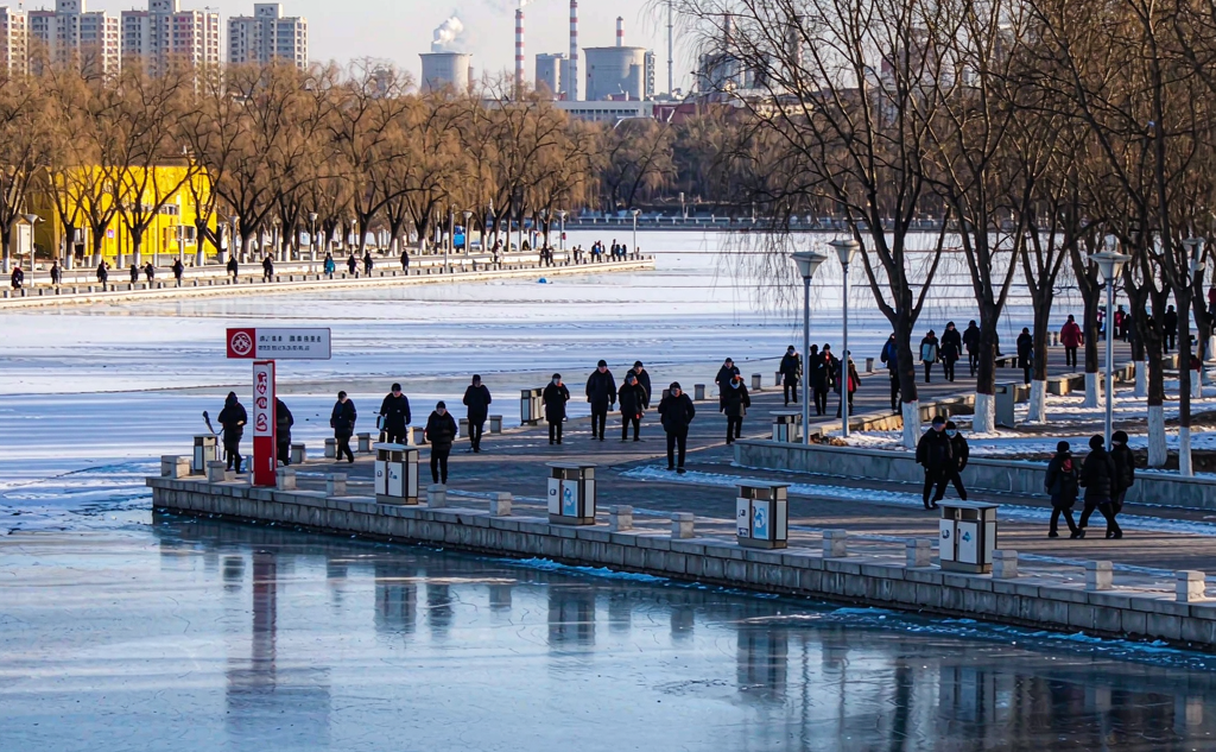
Beyond the well sites, Daqing has a low-key cultural life worth sampling. The city center has a large public square with a prominent Iron Man statue where locals gather in the evenings, and in winter the riverside districts build small ice-and-snow display areas lit after dark. We once joined a reader for a January evening walk there; the contrast of laughing children on the ice and the distant glow of the refinery skyline captured the city’s character better than any museum plaque. Markets sell northern staples—sunflower seeds, smoked fish, and frozen fruit—and a winter street snack of candied haws or roasted chestnuts costs just a few RMB. If you have spare time, the nearby grassland edge toward Qiqihar offers a flatter, wilder horizon, though that is a longer drive best saved for a dedicated day.
Is Daqing Worth It?
A Daqing travel guide should be honest that this is not a leisure destination in the resort sense. It is a working industrial city with a powerful modern story and a unexpectedly calm wetland on its edge. For travelers interested in how China actually built its economy, or who simply want a snowy, uncrowded northern plain experience away from the festival crowds, Daqing is a worthwhile, affordable detour.