

After a brutal work stretch in 2023, I booked myself a four-day reset outside Tengchong, soaking in volcanic hot springs and doing absolutely nothing else. That trip became my template for China wellness retreats — and over the following two years I’ve sent dozens of clients to similar stays, from Tibetan-style spas in the mountains to silent temple mornings. This guide to China wellness retreats is built from those trips: where the water is real, where the mountains actually deliver calm, and where “mindful travel China” stops being a marketing slogan and becomes an experience you feel in your shoulders by day two.
What “wellness” actually means here
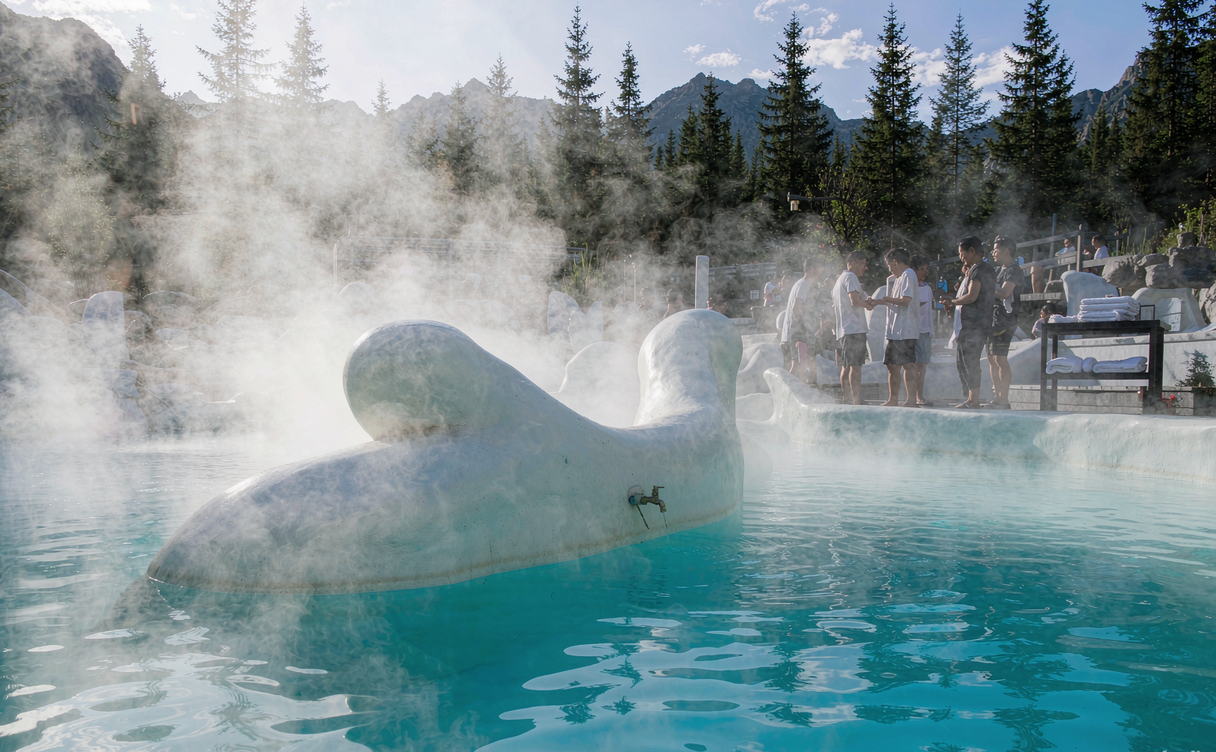
In China, wellness travel splits into three honest categories, and you should pick based on what you need. The first is hot-spring soaking — Japan gets the fame, but China has more thermal fields than almost any country, many of them hotel-based with private tubs. The second is mountain stillness — high lodges where the activity is walking, breathing, and watching cloud. The third is the mindful or spiritual stay, often at a temple or a converted farmhouse where screens are discouraged.
On my first real wellness trip I made the classic mistake: I booked a “spa resort” near a big city that turned out to be a wedding venue with a lukewarm pool. The lesson stuck. The best wellness resorts in China are remote enough that you can’t easily leave — that’s the point. If a “retreat” is thirty minutes from a metro station and has a karaoke floor, it isn’t one.
Hot springs: where the water is worth the flight
China hot spring wellness starts in the southwest. Tengchong in Yunnan sits on a dormant volcanic field, and its spring water runs 60–90°C at source, rich in sulfur and minerals. I stayed at a resort there in January (peak season, ¥1,200–¥2,000/night for a room with a private outdoor tub) and soaked twice daily. The public pools are ¥198–¥398 for a day pass if you’re not a guest. Bring flip-flops, a swim cap (required at many public springs), and expect early mornings — the best light and fewest people are 7–9am.
For a more accessible option, the hot-spring towns around Chengdu — Huaqing in the north and the smaller springs near Mt. Emei — offer day trips from the city. On a November trip I did a hot-spring afternoon outside Chengdu for ¥268 including lunch, then rode back by high-speed train. Our China hot springs resorts guide breaks down the top fields by province and what each water type is good for.
If you want the deep-dive on the geology and health claims behind thermal bathing, the Wikipedia page on Huangshan region also points to the mineral springs that feed nearby resorts in Anhui — useful context before you book.
Mountain retreats that deliver real quiet
China mountain retreats are my personal reset button. The standout for mindful travel China is a lodge I found above a Yunnan valley, at 2,400 meters, where the only scheduled activity was a 7am cloud-watch from the deck. Rooms ran ¥900–¥1,500/night including two vegetarian meals; the silence was the selling point, and they meant it — no TVs, weak Wi-Fi by design.
Huangshan (Yellow Mountain) is the classic, but go mid-week and stay at one of the summit lodges (¥1,000–¥1,800/night) to catch sunrise over the granite peaks without the day-tripper crowds. I did this in late October and had the pre-dawn viewing deck nearly to myself on a Tuesday. Our China mountain lodge stays guide lists the summit and foothill options with honest notes on which have heating that actually works in winter.
Timing matters more than destination for wellness trips. Aim for shoulder months — late April, mid-May, September, or November — when crowds thin and prices drop 20–40%. Our China hot springs resorts guide tags each property by best season so you’re not soaking in a mob.
Temple stays and mindful mornings
The most unexpectedly moving part of my wellness travels was a temple stay in a working Buddhist monastery in the mountains of Zhejiang. For ¥200–¥400 a night (donation-based, often including simple vegan meals), you rise at 4:30am for chanting, help with grounds work, and eat in silence. Phones are surrendered at check-in. I went skeptical and left genuinely rested — there’s something about structured quiet that a resort pool can’t replicate.
These stays book through the temple, not a hotel app, and availability is limited (often 10–20 beds). Our China temple stay guide explains the etiquette and how to write a respectful request in Chinese or through a local contact.
Farm stays and the slow countryside
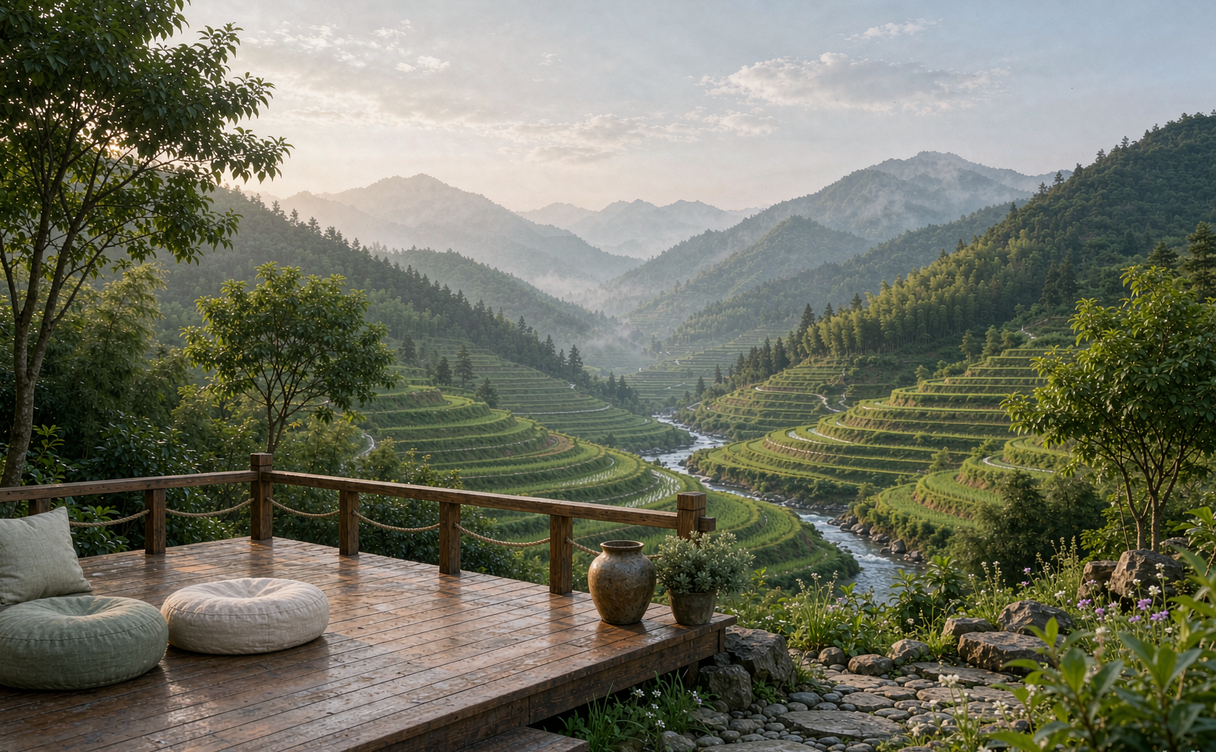
For travelers who find temples too austere, China spa retreats aren’t the only path — farm stays offer a gentler mindfulness. In Anhui’s countryside I spent three nights at a restored hui-style farmhouse (¥500–¥800/night) helping harvest tea in the morning and learning to make tofu in the afternoon. No spa, but the rhythm was the therapy. Our China farm stay guide and China homestay guide cover the regions where hosts actually welcome guests versus those that just list a room.
Glamping and the in-between option
If you want nature without monk-level discipline, glamping bridges the gap. I tried a lakeside dome camp in Qinghai (¥600–¥1,200/night, May–September season) with wood-fired hot tubs and zero cell signal. It’s wellness-lite — comfortable, beautiful, but you can still order a beer. Our China glamping and camping guide flags the camps with real beds and heating versus the ones that’ll freeze you in spring.
Practicalities: what to pack and how to book
Wellness trips in China need different packing than city trips. For hot springs: swim cap, quick-dry towel, flip-flops, and a robe if your resort doesn’t provide one. For mountain lodges: real layers — summit nights at Huangshan drop below freezing even in April. For temple stays: modest, loose clothing that covers shoulders and knees; you’ll be given robes but should arrive appropriately.
Booking is mixed. Resorts take Ctrip, Agoda, and Booking; temple and some farm stays require WeChat or a local phone number. I now book the remote ones through a Chinese agent for a small fee rather than risk a canceled reservation. Transport: most true retreats need a final leg by car — factor ¥200–¥500 for a Didi or private transfer from the nearest station.
Don’t over-schedule. The single biggest mistake I see is travelers booking a “wellness” stay for one night between two cities — you need at least two full days to actually unwind. Build a retreat as the punctuation at the end of a trip, not a drive-by. Our China mountain lodge stays guide suggests minimum stays per property.
My honest recommendation
If you have one wellness trip in you, make it a hot-spring-plus-mountain combo in Yunnan or Sichuan: three nights at a thermal resort, then two at a high lodge. I’ve done this exact shape four times and it resets me every time. Costs run ¥4,000–¥7,000 per person for five nights including trains and transfers — a fraction of a comparable stay in Japan or Switzerland.
The China spa retreats market is noisy with fake “wellness” hotels, so trust the remote ones and read Chinese reviews on Ctrip, not just English ones. The most restorative stays I’ve found had almost no English web presence at all.
Want help choosing between a hot-spring resort, a mountain lodge, and a temple stay? Start with our China hot springs resorts guide and China temple stay guide to match the experience to how burnt-out you actually feel — then book the quietest option you can reach.
Wellness in China isn’t one thing — it’s a spectrum from sulfur-rich soaks to silent mountain dawns. The mindful travel China promise is real if you pick the right end of that spectrum and give it enough days to work. My shoulders remember every trip, and that’s the only review that counts.