

“Red tourism” in China refers to travel built around the towns, museums, and former headquarters associated with the early revolutionary period of the 1920s–1940s. As a visitor, it’s best understood as heritage tourism: you’re touring preserved streets, caves, and exhibition halls that tell the story of a turbulent chapter of 20th-century China. This guide stays practical — Red tourism China as a route-planning and sightseeing subject, with the history offered only as background for travelers who want to understand what they’re looking at.
What You’re Actually Visiting
The sites are scattered across central and northern China, often in places that were remote and defensible decades ago. They range from full preserved towns to single buildings and museums. Taken together, these China revolutionary sites form a loose trail rather than one destination, which is why most visitors choose a node or two rather than attempting all of them. The appeal for a curious traveler is twofold: the sites are genuinely well-curated, with English signage improving every year, and they sit in regions of real natural beauty — loess hills, river valleys, and old Jiangxi countryside — that reward the journey on their own terms.
The preserved compounds are generally well-maintained and walkable, with on-site museums explaining the chronology in both Chinese and, increasingly, English. Expect half a day at a major site and two to three hours at a smaller one; the cave-dwelling complexes of Yan’an take longest because the sights are spread along a hillside rather than gathered in one yard.
A China communist heritage tour is less a single destination than a trail. Most visitors pick one or two nodes rather than attempting all of them, then combine the trip with a nearby major city. The key sites below are the ones I’d send a first-time heritage traveler to.
Ruijin: The “Red Capital” of Jiangxi
Ruijin, in southeast Jiangxi near the Fujian border, was the seat of the early soviet government in the early 1930s. Today it’s a compact heritage town: the former government offices, a congress hall, and a cluster of leaders’ residences preserved as a walkable museum district. The Ruijin red tourism guide details the specific compounds and how long to budget — most travelers spend half a day to a full day.
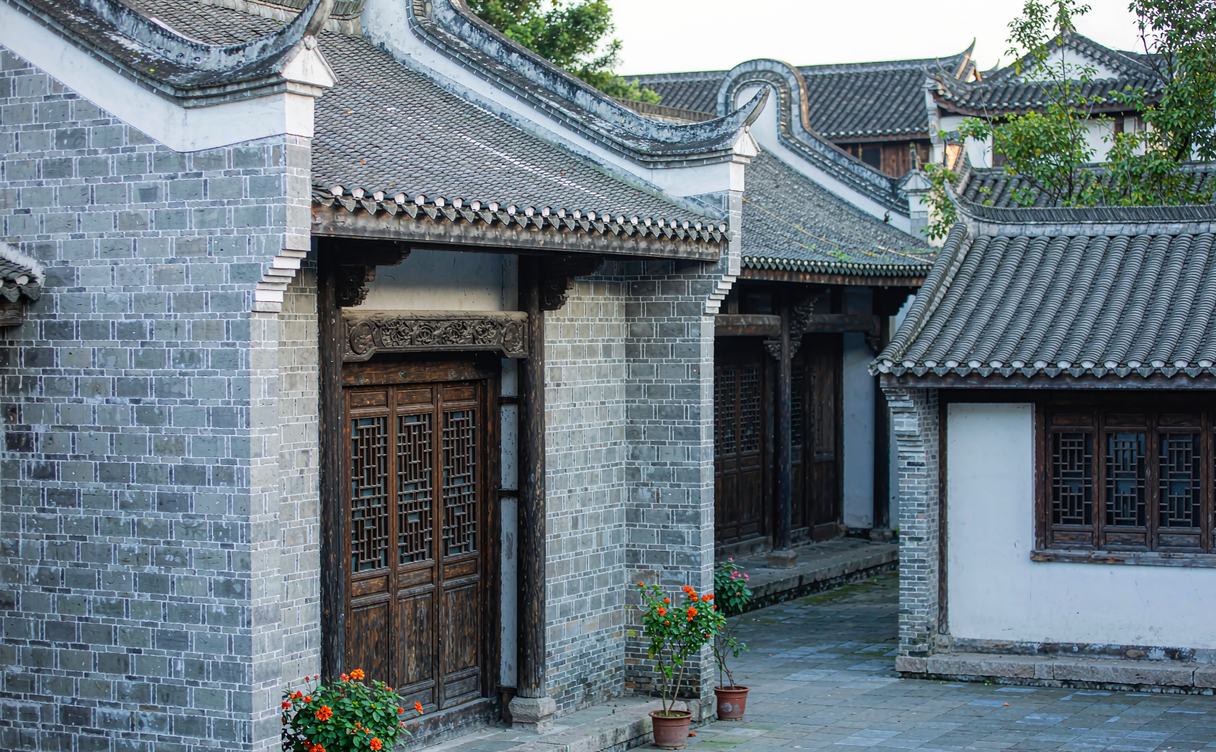
Getting there means a train to Ganzhou (a high-speed hub) then a 1.5–2 hour road transfer; from there, Ruijin town is small enough to cover on foot or by the local sightseeing shuttle (¥10–¥20). Spring and autumn are the comfortable seasons, with rice-terrace scenery on the drive in.
Xibaipo: The Command Post in Hebei
Xibaipo sits in the hills of Hebei province, southwest of Shijiazhuang. In 1948–49 it served as the headquarters where major late-stage campaigns were planned. The site today is a memorial complex — a cluster of simple courtyard houses, a central exhibition hall with period documents and maps, and a calm lakeside setting that makes the history feel remote from modern China.
The Xibaipo red tourism guide covers the hall layout and the best order to walk it. Logistically, it’s the easiest of the three to reach: Shijiazhuang has an airport and fast trains from Beijing (roughly 1–1.5 hours), and Xibaipo is about an hour’s drive west into the hills. Entrance is usually free or nominal (¥0–¥20), with English audio guides sometimes available for rent.
Yan’an: Cave Dwellings and the Loess Plateau
Yan’an, in northern Shaanxi, is the best-known stop and the most atmospheric. Set in a dramatic loess-plateau river valley, it preserves cave-dwelling headquarters, a revolutionary memorial hall, and the Baota Pagoda hill that’s the city’s postcard image. The Yan’an travel guide maps the cave sites, the hall, and the surrounding plateau scenery.

Yan’an is reachable by air from major cities and by high-speed rail (the line from Xi’an takes roughly 2–2.5 hours). Budget a full day for the main sites plus the pagoda hill. The plateau light at sunset is worth staying for, and the local millet-based food — steamed buns, noodle bowls, and sweet potato dishes — is its own reason to linger.
Changsha: The Urban Anchor
Changsha, capital of Hunan, is the natural city-base for a heritage trip, tying together several early revolutionary stories with a lively modern downtown. The Changsha travel guide covers the city’s museums, the riverside monument district, and the food scene that makes it an easy place to spend two nights. Many travelers use Changsha as the hub, then take a day train to a related site before returning.
Best Red Tourism Sites to Combine
If you only have one trip, the best red tourism sites pairing depends on your route. Northern travelers can do Beijing → Shijiazhuang → Xibaipo as a two-day loop. Central travelers can base in Changsha and add a related day trip. Southern travelers can pair Ganzhou with Ruijin. Yan’an fits a Shaanxi itinerary that already includes Xi’an.
The loess-plateau leg around Yan’an also rewards a day spent off the heritage trail: the Yellow River’s Hukou falls, a couple of hours north, is at its fullest with the spring melt, and the cave-homestay villages nearby show a way of life unchanged for generations. Pairing the formal sites with this kind of unplanned wandering is what turns a checklist visit into a real trip.
A China history travel plan doesn’t have to be exclusively red sites — the same regions hold Confucian academies, ancient towns, and national parks, so the heritage thread can run through a broader trip without feeling single-minded.
How to Visit Red Tourism China
How to visit red tourism China logistically is straightforward. The China high-speed train guide for foreigners handles the intercity legs; most sites then need a final road transfer of one to two hours. Hiring a local driver for the day (¥300–¥500) is often simpler than piecing together rural buses, which run but on loose schedules.
Entrance fees are mostly low — many memorial complexes are free, with charges only for guided audio devices or combined shuttle tickets (¥10–¥50 typical). English signage is patchy outside the headline halls, so downloading a translation app or booking a local guide ahead pays off. The best time to visit China guide is relevant here too: April–May and September–October are the comfortable, photogenic windows for these outdoor hill and plateau sites.
Most sites sit within easy reach of non-heritage attractions, which is the trick to a balanced trip. Ruijin pairs naturally with the Hakka earth buildings and rice terraces of southern Jiangxi; Xibaipo sits inside the Pohu Lake recreation area, good for a calm boat ride after the halls; Yan’an opens onto the loess gorges north toward the Yellow River’s Hukou falls a few hours away; and Changsha is a food-and-nightlife city in its own right, with the Xiang River and Yuelu Academy for slower afternoons. Treating the red sites as one thread in a broader regional loop keeps the history from feeling like a lecture and gives you something to do once the exhibition halls close.
Practical tips from having done the loop: wear real walking shoes (the sites involve uneven courtyards and hills); carry water and a sun hat for the outdoor portions; and start at the main exhibition hall before the scattered buildings, since the hall gives you the chronology that makes the rest legible. At Ruijin and Yan’an the main museums now offer QR-code English audio guides through WeChat; Xibaipo’s hall has a printed English booklet at the desk. Budget ¥100–¥200 for a half-day local guide if you’d rather have the chronology explained than guessed. According to Wikipedia’s overview of red tourism, the network of designated sites is formally catalogued and spread across many provinces, which is why it reads less like one attraction and more like a country-wide heritage trail.
Pick your first stop in Ruijin before you book trains.
Use the China high-speed train guide for foreigners to plan the intercity legs and the final road transfers.
Time your visit with the best time to visit China guide, and anchor the trip in Changsha or Yan’an for the full heritage loop.