

Qingming — the “Clear and Bright” festival — falls in early April and is one of China’s oldest observances, a day when families visit the graves of relatives to clean the stones, leave offerings, and remember the dead. For travelers, the holiday is a short spring break (the statutory day plus the weekend, occasionally adjusted into a three-day cluster) that blends solemn family duty with the year’s first big outdoor outing. Understanding Qingming Festival travel China means understanding both halves: the cemeteries and the blossom-seeking crowds. Unlike the autumn holidays, Qingming’s break is short and family-oriented, so the travel pressure is real but more manageable if you stay close to one city.
What Qingming Actually Is
The festival dates to the Zhou dynasty and is tied to the solar calendar, so it lands around April 4–6 each year. Traditionally, families sweep tombs in the morning and then go for a spring walk (踏青, taqing) in the afternoon — the origins of China tomb sweeping day travel as a dual ritual of remembrance and renewal. You’ll see roadside vendors selling paper offerings and feathery willow branches, and in parks the first picnickers of the season. The willow is traditional — families once pinned sprigs to doors or tucked them into hats to ward off misfortune — and you may also spot kites shaped like animals and swords, since Qingming is one of the few festivals where flying kites after dark, with tiny lanterns attached, is part of the play. Historically the day was also a “cold food” observance, when hearths stayed unlit; that strict practice faded centuries ago, but the outdoor-picnic habit it fed has only grown.
For visitors, this is less a spectacle to join than a cultural backdrop to navigate. The China festivals calendar guide places Qingming early in the spring travel season, and the China public holidays 2026 page confirms the exact break once announced.
Qingming Holiday Tips for Visitors
My core Qingming holiday tips start with the roads. Because so many families drive to ancestral hometowns, highways near major cities jam on the first and last day of the cluster — expect 2–3x normal travel times on the Beijing–Tianjin, Shanghai–Suzhou, and Guangzhou–Shenzhen corridors. Trains fill fast too. As with every Chinese holiday, the China high-speed train guide for foreigners is your friend for booking the moment tickets release 15 days out.
Hotels don’t spike as violently as during May or October, but mountain resorts and flower-festival towns near big cities still sell out. Book 4–6 weeks ahead if your plan lands on a known blossom route.
How to Travel During Qingming
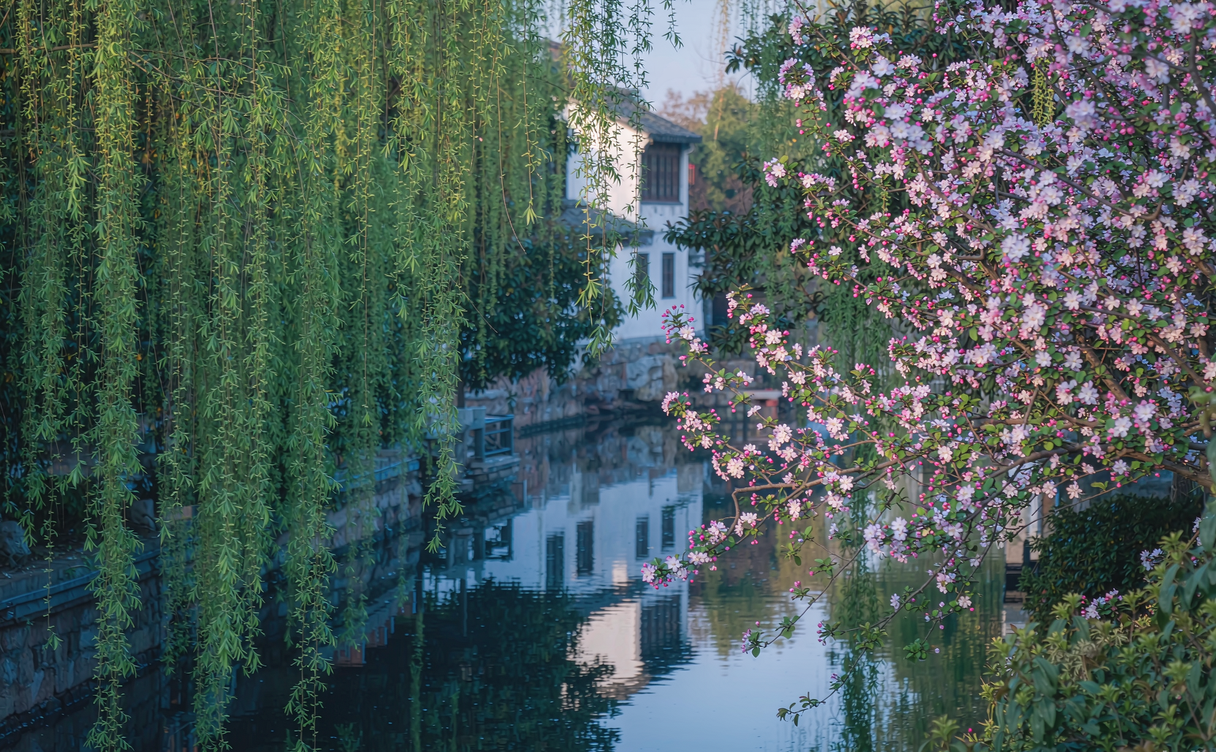
How to travel during Qingming well is about leaning into spring rather than fighting the ritual traffic. The festival is short — usually three days — so it suits a single base city with day trips: think Hangzhou’s West Lake, Suzhou’s gardens, or the tulip and peach routes around Beijing. You get the same mild, blossom-heavy weather the locals are out enjoying, with manageable logistics.
Avoid trying to visit a working cemetery area as a tourist; it’s a private family moment and not a sightseeing stop. Instead, join the public side of the season: kite-flying in parks, riverside walks, and the seasonal food that appears only now.
Intercity high-speed trains on the cluster’s edges sell out fastest on the Beijing–Tianjin, Shanghai–Nanjing, and Guangzhou–Shenzhen corridors, so if you must travel on the holiday’s first or last day, book the evening departure rather than mid-morning. Rural buses to the flower-town destinations run on looser schedules during the break, so confirm your return time the day before rather than assuming a late coach will appear.
A China Spring Holiday Guide
For a China spring holiday guide angle, Qingming is the soft opener before Labour Day’s crush. Crowds are real but lighter, the air is clean after winter, and prices are reasonable. It’s an ideal window for the China travel guide for first-timers reader who wants a first taste without golden-week madness.
Weather varies by region: the south is already warm and green, central China is comfortably mild, and the north can still throw a cold snap. The best time to visit China guide maps these micro-seasons so you can pack for the right slice of the country. Pack a light rain shell regardless of the forecast — April showers are frequent in the south and central belts, and the gardens are emptiest exactly when they’re wettest, which is a trade worth taking.
Where to Go for Blossoms and Calm
Because the holiday is short, the smart China spring holiday guide play is one base city and its gardens. Hangzhou’s West Lake is the classic: the willows are at their greenest, and a dawn walk from Bai Causeway to Su Causeway beats the midday coach tours. Suzhou’s Humble Administrator’s Garden and the canal towns of Tongli or Nanxun sit an hour away and stay far quieter. Around Wuhan and Nanjing, late peach and cherry blossoms often linger into early April, and the Yangtze riverfronts make easy picnics. If you want altitude and fewer people, the terraced fields and old towns of the southwest are just shaking off winter and cost a fraction of the eastern hotspots.
Qingming Festival Crowds and Food
Qingming festival crowds concentrate in two places: highways at the cluster’s edges, and city parks and famous gardens mid-day. Arrive at gardens at opening and you’ll have an hour of near-solitude before the picnic blankets spread. On the roads, the Beijing–Tianjin and Shanghai–Suzhou corridors see the worst jams, sometimes adding two hours to a 90-minute drive; leaving before 7 a.m. or after 7 p.m. skips most of it. The China travel safety tips guide’s crowd advice applies here too — keep a charged phone, a meeting point, and a cross-body bag.
Food is a quiet highlight. Qingming’s signature is qingtuan (青团) — steamed green rice dumplings tinted with mugwort or spinach juice and filled with sweet red bean or sesame. Fillings have modernized: beyond the classic red bean and sesame you’ll now find matcha, lotus paste, and even salted egg yolk, with the savory versions sold at dim-sum counters rather than sweet shops. They appear in bakeries and markets for about two weeks around the festival, ¥4–¥10 each, and disappear just as fast. Vendors near temples and subway exits are cheapest; mall bakeries charge double but guarantee freshness, and you should eat them the same day since they stiffen after 24 hours. Catching a fresh box is a small, authentic seasonal prize.
Making the Most of a Short Break
Because the holiday is brief, resist the urge to cover distance. A Qingming Festival travel China plan works best as a slow, local spring weekend: one city, one garden, one river, and a box of qingtuan.
Build your days around the forecast instead of a checklist — a rainy April afternoon is perfect for a museum and a long tea, while a clear morning belongs on the water. Travelers who treat Qingming as a gentle reintroduction to travel, rather than a mini golden week, consistently come home relaxed instead of exhausted. The blossom windows are narrow, so follow the local bloom reports a week out and pick the garden that’s peaking, not the one you booked in January. According to Wikipedia’s overview of the Qingming Festival, the blending of tomb-sweeping with spring outings is precisely what makes this holiday both solemn and strangely joyful — a useful frame for any visitor watching it unfold.
Confirm the exact dates on the China public holidays 2026 page before booking trains.
New to the rail system? The China high-speed train guide for foreigners helps you grab holiday tickets on time.
Stay safe in the spring crush with the China travel safety tips guide, then check the best time to visit China for regional weather.