

Few topics surprise first-time visitors as much as public toilets in China. The country has invested heavily in clean, free public restrooms, yet the experience differs from what many Western travelers expect: squat pans remain common, paper is not always provided, and etiquette follows its own logic. This guide walks you through what to expect, how to use every type of facility comfortably, and the apps and habits that keep you prepared on the road.
Are Public Toilets Free in China?
A frequent question is are public toilets free in China. In short, yes. Street-level public restrooms, those inside parks, subway stations, and most scenic areas are free to use. A few privately run pay toilets exist at remote highway stops, but they are the exception; the typical cost, when charged, is one to two yuan. Major cities have rolled out well-maintained facilities with attendants, soap, and hand dryers, especially near tourist sites.
Before you travel, our things to know before visiting China outlines the everyday practicalities that catch newcomers off guard, of which toilets are only one.
Squat vs Seated: What You Will Meet
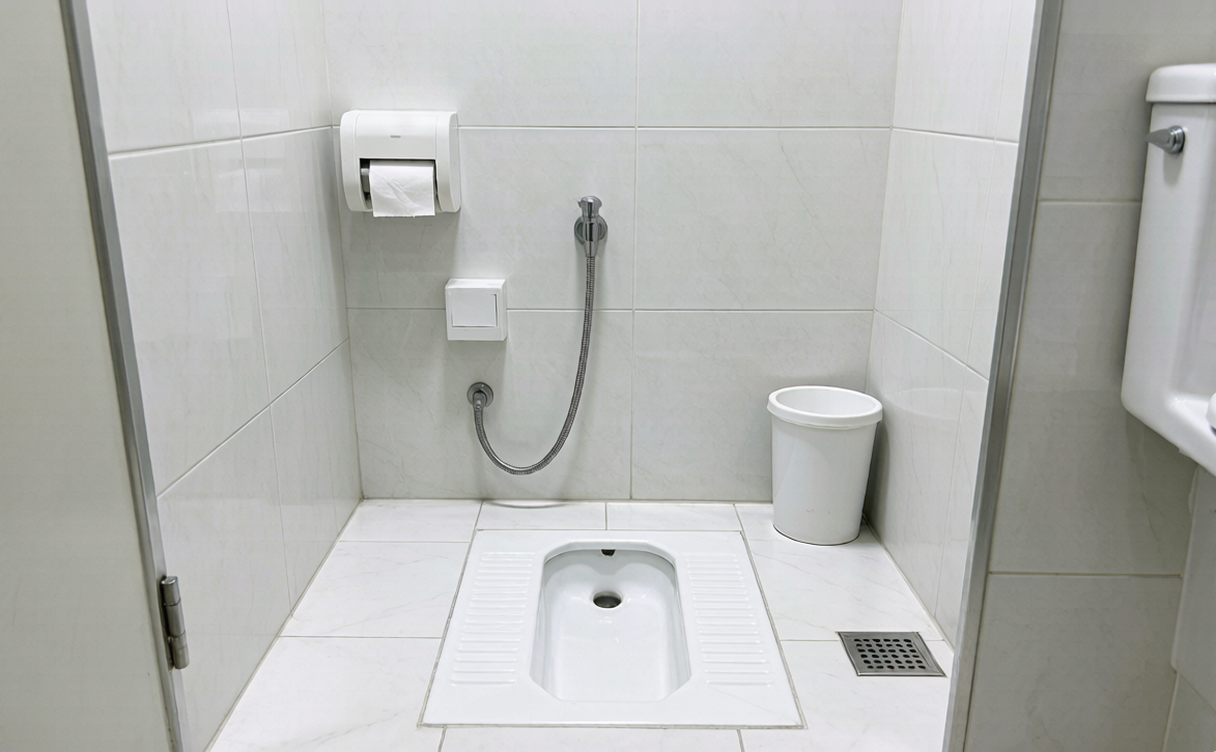
The most visible difference is the squat toilet how to use China question. A squat toilet is a porcelain or ceramic basin set flush with the floor, used by squatting rather than sitting. They are common in older buildings, train stations, and rural stops because they are hygienic, easy to clean, and familiar to locals. Newer malls, airports, and hotels increasingly offer seated Western-style toilets, often in the same facility labelled for accessibility or families.
To use a squat toilet, face the hood (the raised end), place your feet on the ridged footrests, and squat low. Keep weight centred, hold your belongings close, and use the provided flush lever, hose, or bucket of water. If balance is a concern, seek a seated stall or use facilities at your hotel.
Do Chinese Toilets Have Paper?
The honest answer to do Chinese toilets have paper is: sometimes, but do not rely on it. Many modern restrooms stock toilet paper, but supplies run out, and older or busy facilities simply do not provide any. The local custom is to carry your own tissue, and nearly every traveler quickly adopts this habit.
Pack a small packet of tissues or a travel roll in your day bag. Wet wipes are a bonus for longer days out. Our China packing list for first-timers lists tissues alongside the other small items that make a big difference.
Finding a Toilet in China With Apps
When nature calls and you are far from your hotel, the finding a toilet in China app approach saves the day. Maps services such as Amap (Gaode) and Baidu Maps let you search “公共厕所” (gong gong ce suo, public toilet) and show the nearest options with directions. WeChat’s mini-programs in some cities also map municipal restrooms.
In a pinch, the cleanest paid option is often a shopping mall, fast-food chain, or a hotel lobby open to the public. Subway stations almost always have a maintained restroom near the concourse. For newcomers, the broader orientation in our China travel guide for first-timers helps you read the signage that points the way.
Toilet Etiquette in China
Understanding toilet etiquette in China prevents awkward moments. The cardinal rule is to discard used paper in the bin provided, not in the bowl, because many drains cannot handle tissue and will clog. Flush solids and water as normal, then bin the paper.
Remove your backpack or sling it to the front in tight stalls. Avoid placing bags on the floor. If a squat pan lacks a flush, use the nearby bucket or hose. Queue politely; pushing is rare, but a calm wait is expected. Noise and phone calls are kept low, as in most public spaces. These small courtesies are part of the wider manners covered in our China etiquette guide for tourists. Public restrooms at temples and scenic mountains sometimes charge a small fee or require a paper ticket, so carry small change so a closed gate does not catch you out. During national holidays, popular sites get crowded, and timing visits for early morning keeps both the queues and the stress down.
Tips for Families and Travelers With Kids
Families face their own challenges, which our China travel with kids family guide addresses in full. Toddler seat adapters are uncommon, so a foldable travel seat or a parent’s lap is the workaround. Public baby-changing tables are rare outside major malls and airports, so plan stops around large shopping centres where facilities are reliable.
Train Stations, Scenic Areas, and Long Bus Rides
High-speed rail stations keep spotless, free restrooms, though they fill quickly at peak times. On long bus journeys through the countryside, rest stops may be basic squat pans with no paper, so your tissue stash earns its place. At popular mountains and heritage sites, attendants maintain the buses and entrances; queues form, so go when you arrive rather than waiting.
Airports, Long Trains, and Night Buses
The facilities you meet while travelling deserve their own plan. Major airports such as those in Beijing, Shanghai, and Chengdu offer spotless seated toilets with paper, soap, and changing tables, so use them before boarding. High-speed trains have free restrooms at each carriage end, usually a mix of squat and seated; they are cleaned at turnaround but can run low on paper mid-journey, which reinforces the tissue habit.
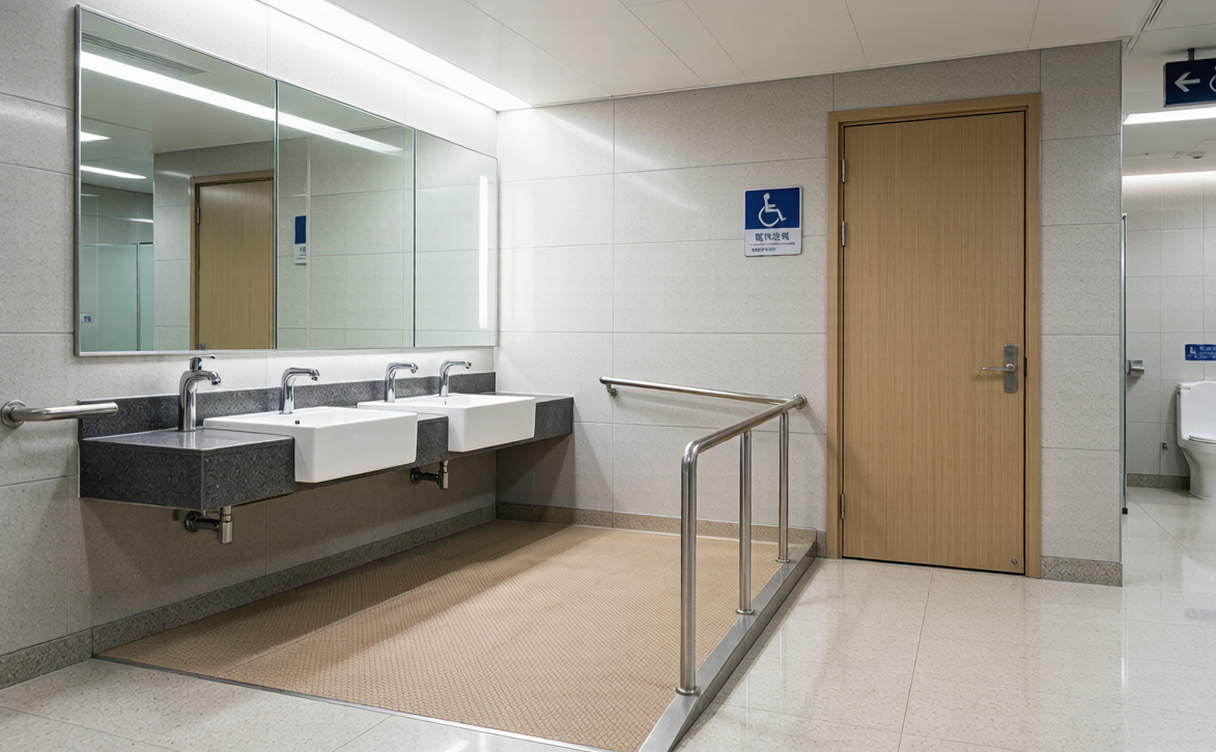
Sleeper trains and long-distance buses are harder. Overnight sleepers share one or two stalls per car, and at peak holiday times queues form, so go whenever you can rather than waiting. Rural bus rest stops may offer only a squat pan over a pit with no paper and no lock, so a small roll of tissue and a readiness to wait is the pragmatic answer. Gender signs use 男 (nan, male) and 女 (nv, female), occasionally with pictograms; accessible or family rooms are marked 无障碍 (wu zhang ai) and welcome travelers with young children or mobility needs.
When a restroom is busy, the local rhythm is efficient: do your business, wash quickly, and step out so the next person enters. Lingering at the mirror is unusual. Carry hand sanitiser because soap and dryers, though increasingly common, are not guaranteed. If you cannot find a public toilet, a fast-food outlet or shopping mall almost always has one, and staff rarely question a customer using the facilities. For travelers with limited mobility, the seated stall is often the accessible room; do not assume every facility has a separate disabled toilet, and allow extra time between connections so a distant restroom does not become stressful.
Conclusion
Public toilets in China are free, widespread, and far cleaner than their reputation suggests, as long as you arrive prepared. Pack your own paper, learn the squat stance, use maps to locate the nearest stall, and respect the bin-the-tissue rule. With those habits, restrooms become a non-issue on any trip. For official travel and health guidance when visiting the country, the China National Tourism Administration (English portal) is a reliable reference.