

Somewhere around your third day in Shanghai, after the noodle stalls and the dumpling queues, you start wondering what the top of the ladder looks like. It looks like a twelve-course tasting menu built on Huaiyang technique, served in a converted 1930s villa, with a deposit taken six weeks in advance. This Michelin restaurants China guide explains the two rating systems that matter here, what a seat actually costs, and — the part that trips up most visitors — the exact steps for booking fine dining in China as a foreigner without a local ID card or a Chinese bank account.
The short version: the food is world-class and often cheaper than its equivalent in Paris or Tokyo, but the reservation layer is built entirely around Chinese apps. Solve that, and the rest is easy.
Two Guides, Two Very Different Philosophies
The Michelin Guide arrived in mainland China in 2016 with Shanghai, then added Guangzhou, Beijing, Chengdu and Hangzhou, alongside its long-running coverage of Hong Kong, China and Macau, China. It brings the familiar vocabulary — one, two and three stars, plus the Bib Gourmand for good food at modest prices — and the familiar criticisms. Inspectors are French-trained, and the guide has historically rewarded European technique in ways that puzzle local diners. Note too that there is no single Michelin star Shanghai Beijing list: each city is published as its own guide on its own schedule.
The domestic answer is the Black Pearl restaurant guide China has published since 2018. Released annually by Meituan-Dianping around Chinese New Year, it uses diamonds rather than stars: one, two and three. It covers far more cities than Michelin does — roughly thirty across the country — and its judging panel is largely Chinese chefs, critics and food writers. In practice, Black Pearl is better at spotting the regional restaurant doing something extraordinary with Chaozhou seafood or Yunnan mountain ingredients, while Michelin is better at ranking the polished, internationally legible dining rooms.
Neither list is definitive. Use both, and treat any restaurant appearing on both as a safe bet.
| | Michelin Guide | Black Pearl |
|—|—|—|
| Launched in China | 2016 (Shanghai) | 2018 |
| Tiers | 1–3 stars, Bib Gourmand, Selected | 1–3 diamonds |
| Cities covered | A handful of major cities | Around 30 nationwide |
| Announced | Rolling, city by city | Annually, before Chinese New Year |
| Judging bias | Technique, consistency, service | Regional depth, ingredient sourcing |
| Best used for | Shortlisting in big cities | Finding standouts in second-tier cities |
What a Seat Actually Costs
Prices sit well below what the same cooking would cost in Europe, but the top end has climbed fast. As a working range for a Chinese fine dining tasting menu price in 2026:
- Three-star / three-diamond tasting menu: ¥1,800–3,500 per person (roughly US$250–490), before drinks
- One to two star: ¥700–1,500 per person (about US$100–210)
- Michelin-listed à la carte Cantonese or Huaiyang: ¥400–800 per person (US$55–110)
- Bib Gourmand and one-diamond: ¥120–350 per person (US$17–49)
Add a service charge of 10–15% at hotel restaurants and most international venues; independent Chinese restaurants often charge none, and tipping is not expected anywhere. Wine is where budgets die — import duty pushes bottles to two or three times European retail, so ask about tea pairings, which serious kitchens now treat as seriously as wine and which run ¥200–400.
The best value Michelin Bib Gourmand China offers is no consolation prize: a listed wonton shop or roast goose counter charging ¥60 a head is often the most memorable meal of a trip. Guangzhou is the clearest example, and our Guangzhou dim sum guide covers the teahouses that have quietly held listings for years.
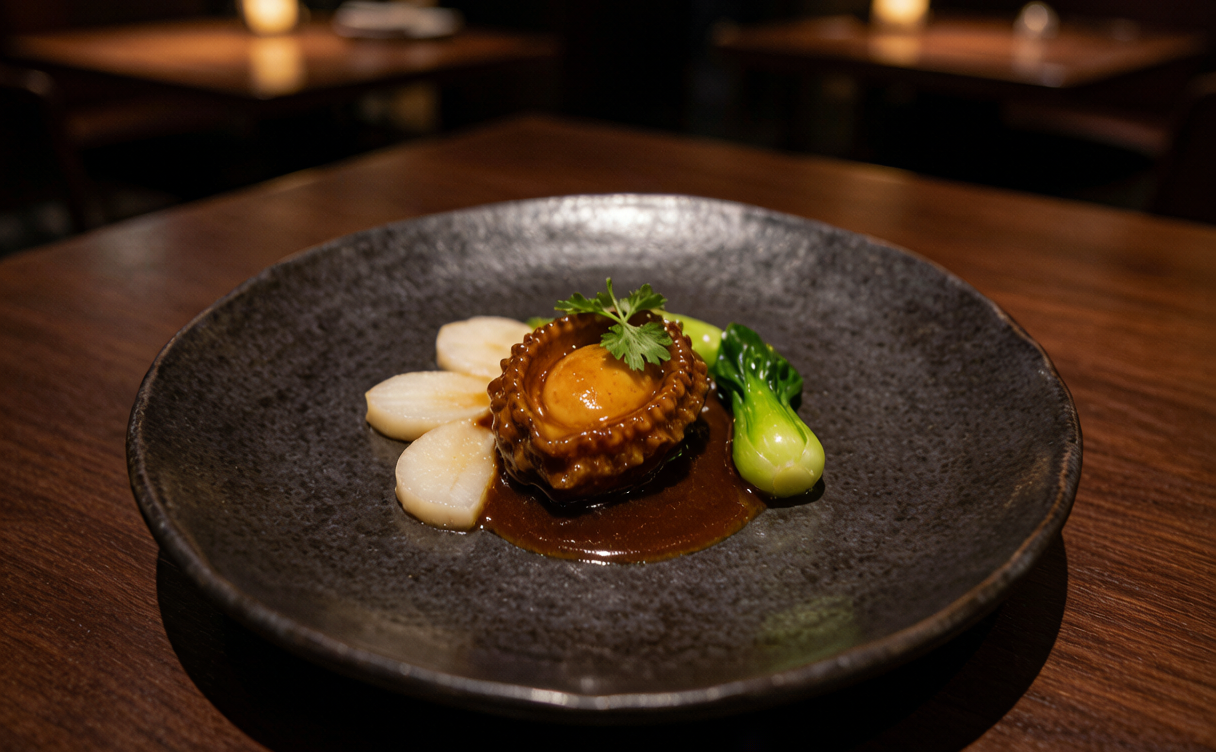
How to Book Fine Dining in China as a Foreigner
This is the actual obstacle. Almost no top restaurant in China takes bookings by email, and many have no English-language website at all. Here is the sequence that works.
Step 1 — Start early. Six to eight weeks out for three-star and three-diamond rooms; two to three weeks for one-star; a few days for Bib Gourmand. Chinese public holidays (early October, Chinese New Year, the May break) sell out months ahead.
Step 2 — Set up payment first. Bind an international Visa or Mastercard to Alipay or WeChat Pay before you leave home. Deposits are taken in-app, and a booking will collapse at the payment screen if this is not already working. Verification takes a few minutes and some card types are rejected outright, so test it with a small purchase before you need it.
Step 3 — Pick your channel. In descending order of reliability: your hotel concierge (by far the easiest route, and the one to use for three-star rooms); the restaurant’s own WeChat official account, which usually has a 预订 booking menu; the Dianping or Meituan mini program inside WeChat; a phone call, if you have a Mandarin speaker; a third-party concierge service, which will charge a fee of ¥200–500 per booking.
Step 4 — Have your details ready. Passport name exactly as printed, a mobile number that can receive SMS in China, party size, and any allergies written in Chinese. Screenshot the allergy list — badly translated, “no shellfish” has ruined many meals.
Step 5 — Pay the deposit. Expect ¥300–1,000 per person, deducted from the final bill. Cancellation windows are typically 48 to 72 hours; inside that, the deposit is gone.
Step 6 — Reconfirm 24 hours ahead. A short WeChat message is enough. Restaurants release unconfirmed tables.
When It Doesn’t Work: Fixes and Fallbacks
Your card is declined at the deposit stage. Try the other wallet, then try a different card. If both fail, ask the restaurant whether they will hold the table against a hotel guarantee — many will for guests of well-known properties.
You have no Chinese phone number. Use the hotel’s number and put the concierge’s name on the booking. Most Chinese systems will not accept an international number in the SMS field.
The restaurant is fully booked. Ask three questions in order: is there a lunch service (usually easier, and often 30–40% cheaper for a shortened menu); are there counter or bar seats held back for walk-ins; is there a waitlist you can join. Tuesday to Thursday openings appear constantly as deposits lapse.
You are refused outright. A handful of rooms genuinely only take members or repeat guests. This is not personal, and no amount of persistence changes it. Move down your list.
You need to cancel. Do it in writing through the same channel you booked. Outside the cancellation window you should get the deposit back within seven to fourteen working days; inside it, assume you will not.
Where the Cities Rank
Shanghai has the deepest bench: the largest concentration of starred restaurants in mainland China, the strongest international kitchens, and the best cocktail scene to bookend a meal. It pairs naturally with a stay on the Bund — see our Shanghai luxury hotels guide for properties whose concierges can actually get you tables.
Beijing skews formal and imperial: Peking duck at the top end, plus serious Sichuan and Jiangnan dining rooms in courtyard settings.
Guangzhou is the best-value fine dining city in the country and the strongest for Cantonese cooking. Chengdu, a UNESCO Creative City of Gastronomy, is where modern Sichuan cooking is being reinvented; you can check the designation on the UNESCO Creative Cities Network list. Hangzhou does refined Jiangnan cooking in lakeside settings, and several of the small design-led properties in our best boutique hotels in China round-up run kitchens good enough to eat in twice.
Hong Kong, China and Macau, China remain the most concentrated luxury dining destinations in the region, with Cantonese three-stars and European kitchens at prices closer to London than to Guangzhou.
If you want the wider picture of how these regional styles differ before you start booking, our guide to China’s eight great cuisines is the place to start.
Etiquette, Timing and Dress
Arrive on time — a fifteen-minute grace period is standard and a thirty-minute delay may cost you the table. Dress is smart casual almost everywhere; jackets are rarely required, but shorts and flip-flops will get you turned away at the top end. Service is generally quiet and efficient rather than performative, and the pace is faster than a European equivalent: a twelve-course menu typically runs two to two and a half hours.
Two habits are worth adopting. Let the kitchen lead — the set menu is where the best work happens. And order tea properly: a good restaurant will have a tea list as long as its wine list.
The Pitfalls Checklist
- Assuming you can walk in. Almost no starred restaurant in China accepts walk-ins at dinner.
- Leaving payment setup until you arrive. Sort the wallet at home.
- Booking three heavy tasting menus in three days. Two a week is plenty.
- Ignoring the deposit deadline. Diary the cancellation date when you book.
- Trusting outdated star lists — both guides are re-issued annually.
- Forgetting that many kitchens close around Chinese New Year.
Worked through properly, the admin in this Michelin restaurants China guide costs an hour of planning and pays back enormously. For the broader picture of high-end travel logistics — transfers, drivers, and which hotels employ concierges who can actually open these doors — see our China luxury travel guide, and if food is the whole point of the trip, our China food tour guide maps out the routes worth eating your way along.