

Few garments in the world carry as much quiet drama as the cheongsam. Known also as the qipao, this close-fitting, high-collared dress has become one of the most recognizable symbols of Chinese elegance. For travelers exploring China today, the cheongsam is more than a museum piece or a costume for photographs. It is a living thread that connects the glamour of old Shanghai to the boutiques, ateliers, and cultural exhibitions of the present day. This cheongsam guide will walk you through the dress’s origins, its defining silhouette, and the best places to see and buy one on your trip.
Where the Cheongsam Began
The story of the cheongsam begins in the 1920s and 1930s, a period when Shanghai was transforming into a cosmopolitan port city. The name itself reflects a layered history. “Qipao” literally describes a “banner gown,” a reference to the long robes worn by the Manchu people during the Qing dynasty. Over time, the garment was reinterpreted by the women of Shanghai, who tailored it into something sleeker and more form-fitting than its loose ancestral robes. The Cantonese term “cheongsam,” meaning “long dress,” traveled with migrants to Hong Kong and the wider world, and it is the word most English speakers use today.
What makes the early twentieth-century version so compelling is the fusion it represents. Shanghai in that era was a meeting point of East and West, and the dress absorbed both. Tailors borrowed from Western pattern-cutting to give the garment a tailored waist and a closer line along the body, while keeping Chinese details such as the standing collar and the frog-button closures. The result was a dress that looked modern and unmistakably Chinese at the same time.
The Silhouette That Defines It
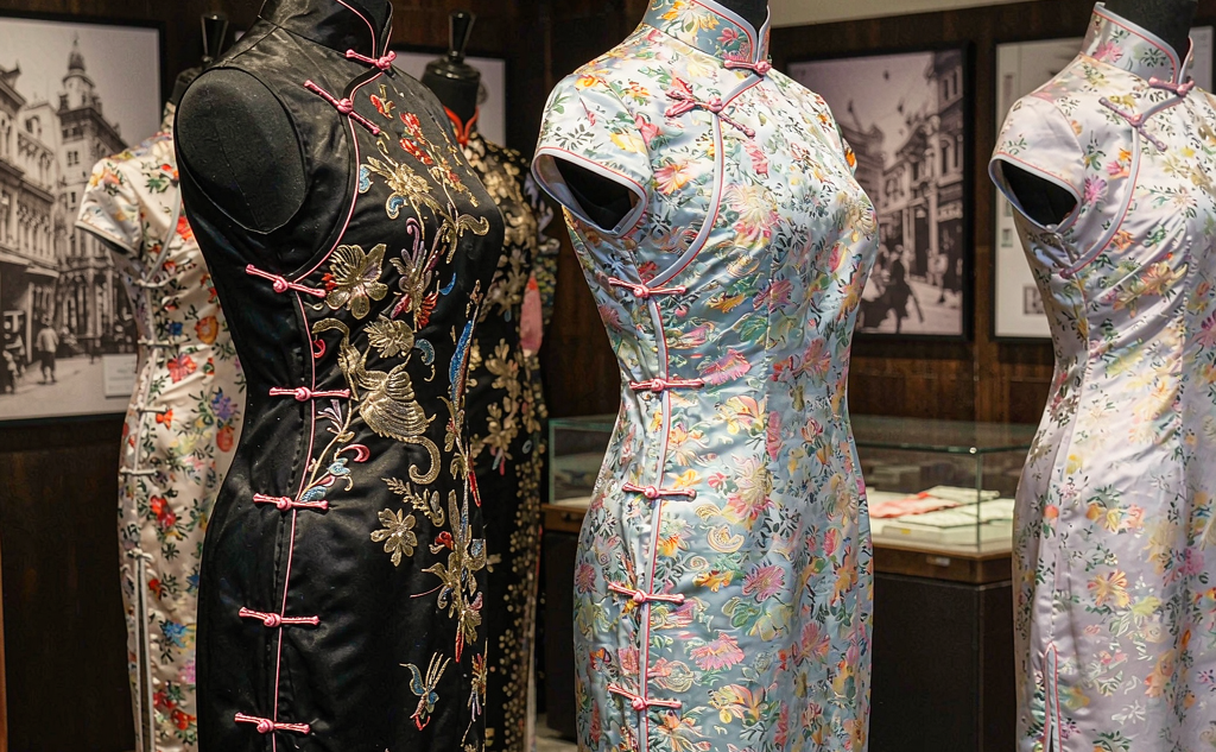
The most distinctive feature of the cheongsam is the mandarin collar, a straight, upright band that sits close to the neck. Unlike the soft folded lapels of Western dresses, the mandarin collar projects poise and restraint. It frames the face and forces a certain posture, which is part of why the dress reads as elegant rather than merely decorative.
The other signature element is the side slit, usually running up the right leg. The slit is practical as much as it is aesthetic: it allows the wearer to walk and move with ease while revealing a hint of movement beneath the fabric. Combined with the high collar, the slit creates a balance of modesty and allure that has fascinated designers for a century. A well-made cheongsam also uses the pankou, or frog knots, which are hand-looped fabric buttons that serve as both fastening and ornament.
Fabric choices have always mattered. Silk remains the classic choice, especially with embroidered patterns of peonies, cranes, or dragons. In the 1930s, Shanghai socialites favored richly patterned silks in jewel tones. Today you will find everything from breathable cotton versions for daily wear to elaborate brocade pieces made for weddings and stage performances.
From Streetwear to Symbol
During its golden age in Shanghai, the cheongsam was everyday wear for fashionable women. Film stars such as those in early Chinese cinema wore it on and off screen, and it became the uniform of the modern, independent woman of the city. It signaled education, sophistication, and a foot in both Chinese tradition and global modernity.
After the mid-twentieth century, the dress faded from daily life for a few decades, but it never disappeared. It re-emerged as a cultural emblem, worn at formal events, weddings, and national celebrations. In the late twentieth and early twenty-first centuries, designers in Shanghai, Hong Kong, and beyond began reinterpreting the cheongsam for new audiences. Some kept the classic cut; others played with length, fabric, and print. The garment became a way for Chinese designers to assert a confident, contemporary identity on the global fashion stage.
For a deeper look at the city where it all began, our Shanghai Tianzifang guide explores the lanes where you can still find independent tailors and boutiques.
Seeing the Cheongsam Today
Travelers who want to understand the cheongsam beyond a shop window should start with Shanghai’s museums. The city preserves an extraordinary record of republican-era fashion, and several institutions display vintage pieces with the embroidery and construction techniques intact. A visit gives you a sense of how the dress evolved decade by decade, from the looser shapes of the 1920s to the razor-sharp tailoring of the late 1930s.
Our Shanghai Museum guide points you toward collections where historical garments and decorative arts tell the broader story of Chinese craftsmanship. Even if a specific cheongsam is not on display during your visit, the textiles and costume sections offer essential context for appreciating the dress.
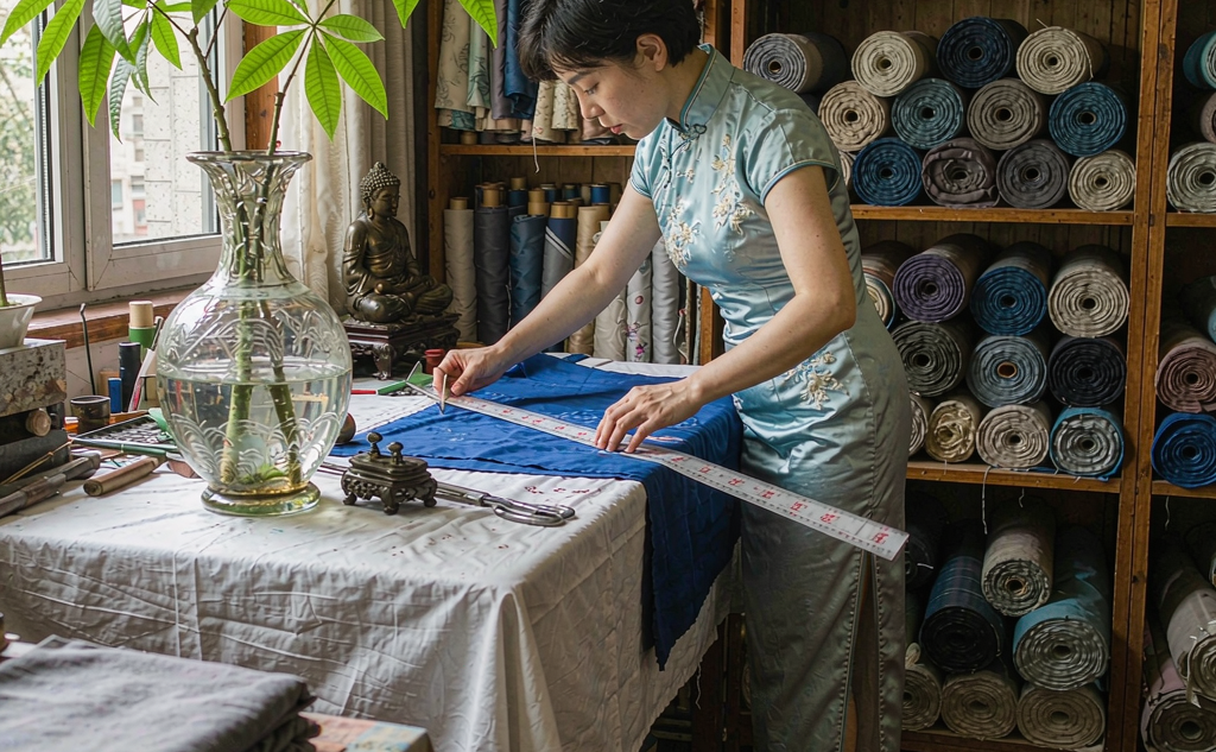
Beyond museums, Shanghai’s older neighborhoods are where the cheongsam stays alive in daily commerce. Tianzifang, with its maze of lane houses turned into studios and shops, is one of the most pleasant places to watch tailors at work. You can speak with a maker, choose a fabric, and order a custom piece that will fit your measurements exactly. This is the heart of any good cheongsam guide: the dress is best understood not as a static artifact but as something still being made by hand.
Buying Your Own Cheongsam
If you decide to take one home, a few practical notes will help. First, decide between ready-to-wear and custom. Ready-to-wear pieces are quicker and cheaper, widely available in tourist areas, but sizing can be inconsistent for Western body types. A custom dress from a Shanghai tailor typically takes a few days and costs more, yet the fit is transformative.
Second, mind the fabric. Pure silk drapes beautifully and breathes in summer, but it requires gentle care. Synthetic blends are more durable and travel-friendly if you plan to pack the dress in a suitcase. For a first purchase, many travelers choose a mid-weight silk with a simple pattern that works for both evening events and casual sightseeing.
Third, watch the slit and collar height. A very high slit and a very tall collar look striking in photos but may feel restrictive if you are not used to the cut. A reputable tailor will advise you honestly about what suits your comfort and purpose.
These small decisions make the difference between a souvenir and a garment you will actually wear. And if you are planning the wider trip, our China travel guide for first-timers covers the logistics that surround a fashion-focused visit.
A Garment With a Global Story
The cheongsam’s influence reaches well beyond China. It has appeared in international films, on runways from Paris to New York, and in the wardrobes of women who may never set foot in Shanghai. Part of its staying power is versatility: the same silhouette can read as vintage, futuristic, festive, or understated depending on fabric and styling.
Scholars of dress history note that the cheongsam is a rare example of a national garment that was reinvented by urban women rather than imposed from above. That bottom-up origin is part of why it feels personal rather than ceremonial. For travelers, this means the dress offers an intimate entry point into modern Chinese cultural history, one that complements the temples and landscapes usually associated with a trip to the country.
The external research community has documented this evolution extensively. For a clear, authoritative overview of the garment’s history and cultural meaning, the encyclopedic entry on the qipao from Britannica is an excellent starting point.
Making the Cheongsam Part of Your Trip
The best way to appreciate the cheongsam is to build it into your itinerary rather than leave it as an afterthought. Set aside an afternoon in Shanghai for a museum visit, then wander the lanes of Tianzifang or a similar district to meet the people who keep the craft alive. If your schedule allows, book a fitting early in your stay so the finished dress is ready before you fly home.
Travelers planning a longer journey through the country can pair a fashion stop with broader exploration. Our best things to do in China list includes cultural experiences that pair naturally with a cheongsam outing, from tea ceremonies to heritage architecture walks. And since the dress is most comfortable in mild weather, our best time to visit China guide can help you time your trip for pleasant strolling and outdoor photos.
Whether you admire it in a glass case or wear it through the streets of Shanghai, the cheongsam tells a story of reinvention. It is a dress that began as a response to changing times and became a timeless statement of elegance. For the traveler, few souvenirs carry as much history, craft, and quiet confidence as a well-made cheongsam bought where the tradition still thrives.