

The Pearl River, known locally as Zhujiang, is the third-longest river in China and one of the most important waterways in southern Asia. Stretching more than 2,400 kilometers from the rugged highlands of Yunnan and Guizhou to the warm waters of the South China Sea, the river has shaped the history, culture and economy of an entire region. For travelers, it offers a rare combination of modern city skylines, centuries-old trading ports and a delta so productive it powers one of the busiest economic zones on earth. This pearl river china guide will walk you through the highlights of the river, from its source to the estuary near Hong Kong, China, and explain why the waterway matters so much to the Guangdong-Hong Kong-Macao Greater Bay Area.
The course of the river
The Pearl River is not a single channel but a network of three major tributaries: the Xi River, the Bei River and the Dong River. These rivers gather rainfall from a vast basin that covers much of Guangdong, Guangxi and parts of Yunnan, Guizhou and Hunan before they merge near the city of Guangzhou. From there, the combined flow turns south and fans out into a sprawling delta, eventually reaching the sea through a series of outlets around the Pearl River Estuary.
What makes the Pearl River unusual is its relationship with the cities built along its banks. Unlike many great rivers that flow past a capital or a single dominant metropolis, the Pearl River threads together dozens of towns and several megacities. The result is a continuous urban corridor where one city bleeds into the next, linked by bridges, ferries and high-speed rail. For first-time visitors to the country, understanding this geography is a good first step, and a broader China travel guide for first-timers can help you plan the wider trip.
Guangzhou: the heart of the Pearl River
No visit to the Pearl River is complete without spending time in Guangzhou, the provincial capital of Guangdong and the historical trading hub of southern China. For more than two thousand years, ocean-going ships have sailed up the river to load silk, porcelain and tea, and the city grew rich on that commerce. Today Guangzhou is a thriving modern metropolis, but the river remains its defining feature.
The most famous landmark on the banks is the Canton Tower, a slender 600-meter structure that glows in shifting colors after dark. From the tower’s observation decks you can look down on the river as it curves through the city, its surface dotted with cruise boats and the lights of a dozen bridges. If you want the details before you go, our Guangzhou Canton Tower page covers opening hours, tickets and the best viewing platforms.
A Pearl River cruise is the single most popular way to experience Guangzhou from the water. Evening departures are the most atmospheric: as the sun sets, the towers along the riverfront switch on, and the Canton Tower becomes the centerpiece of a light show that plays across the skyline. Short cruises last about an hour and glide past Zhujiang New Town, the historic Shamian Island and the older districts where the city’s trading past is still visible in colonial-era warehouses.
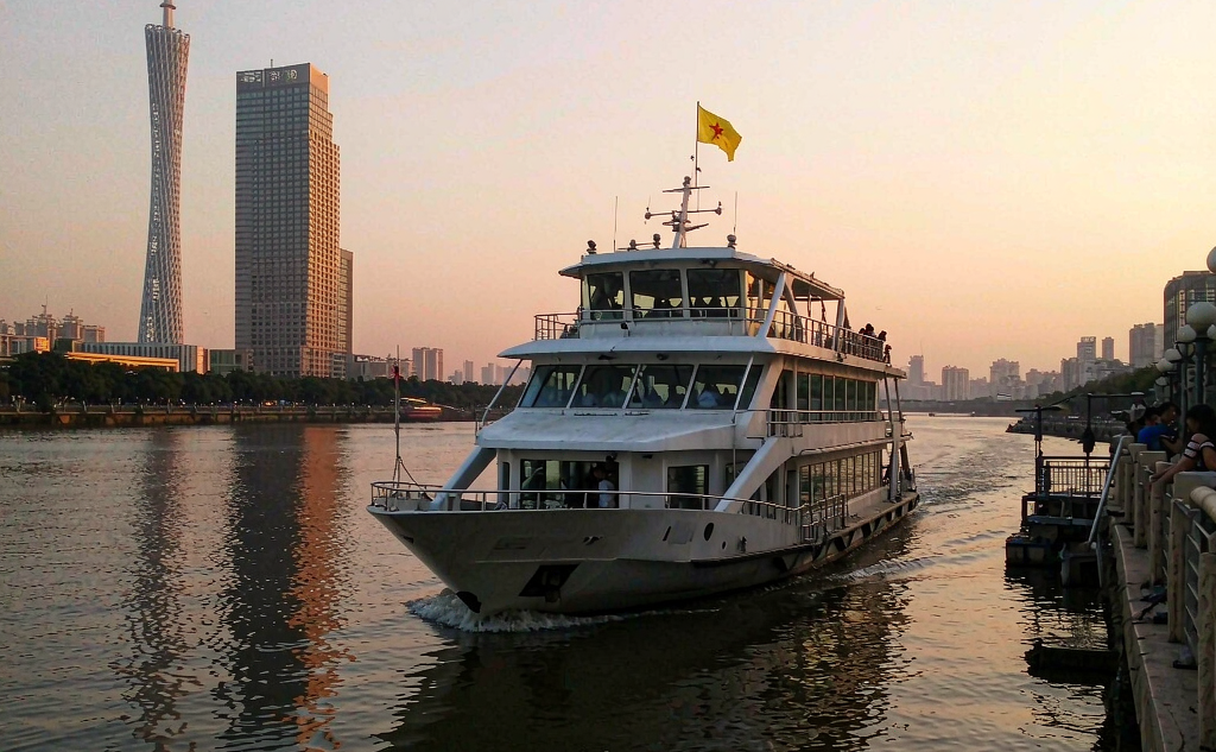
Beyond the tower and the cruises, Guangzhou rewards slower exploration. Riverside promenades are busy with cyclists and evening strollers, and the older neighborhoods near the water are full of dim sum teahouses where locals gather from early morning. The Pearl River is so central to the city’s identity that many of the best things to do in China can be enjoyed right here along its banks.
The Pearl River Delta
Downstream from Guangzhou, the river breaks into a maze of channels that form the Pearl River Delta. This is one of the most densely populated and industrially productive regions on the planet. Cities such as Foshan, Dongguan, Zhongshan, Zhuhai and Shenzhen sit within a short distance of one another, connected by an expanding web of bridges and expressways. The delta is also home to Macao, China, a compact city known for its layered history and riverside waterfront.
The delta’s importance comes from geography as much as history. Because the Pearl River provides a deep, sheltered route between the interior and the sea, goods have moved through this region for centuries. In the modern era, that same advantage turned the delta into a manufacturing powerhouse, with factories producing everything from electronics to furniture for export around the world. For travelers, the delta is less about a single sight and more about the experience of movement: ferries crossing green-brown water, cargo ships lining the horizon, and ancient water towns where residents still travel by small boat.
A good way to sample the delta is to follow the river by train or ferry between cities, stopping at a market town or a riverside temple along the way. The food changes subtly from place to place, and the Cantonese culinary tradition that began along these waterways remains one of the great pleasures of any visit.
Hong Kong, China and the estuary
Where the delta meets the sea, the Pearl River opens into a wide estuary that separates the mainland from Hong Kong, China. The water here is tidal and busy, carrying both fresh river flow and the salt of the South China Sea. On a clear day, ferries crossing from the mainland to Hong Kong, China pass container terminals, outlying islands and the distant silhouette of a world-class harbor city.
Hong Kong, China sits at the eastern edge of the Pearl River Estuary and owes much of its rise to the river’s protected deep-water port. Merchants once used the estuary as a gateway between southern China and global trade routes, and that maritime heritage is still visible in its harbors, ferries and waterfront promenades. A Victoria Harbour evening, with the skyline reflected on the tidal water, is in many ways the final chapter of the Pearl River story: the same water that began as mountain streams in the west now laps against one of the most famous shorelines in the world.
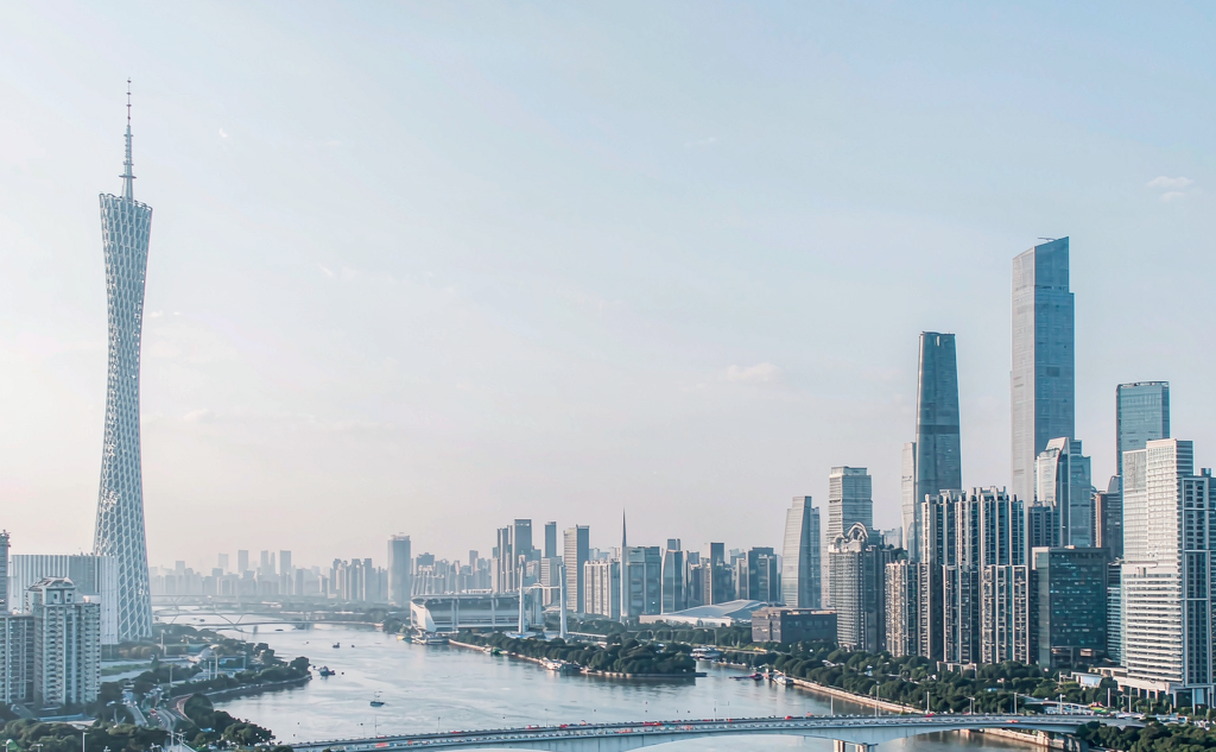
Travelers who want to connect the river with the wider region should note that the Greater Bay Area has made cross-city travel remarkably easy. High-speed trains, bridges and ferry services now link Guangzhou, Shenzhen, Zhuhai, Macao, China and Hong Kong, China into a single connected network, so you can trace the river from its urban heart to its ocean mouth in just a few days.
Trade, history and the Greater Bay Area
The Pearl River has always been a trade river. Imperial China restricted much of its foreign commerce to the port of Guangzhou, and the river became the channel through which the country met the outside world. That legacy continues today in the Guangdong-Hong Kong-Macao Greater Bay Area, an ambitious plan to integrate nine Guangdong cities with the special administrative regions of Hong Kong, China and Macao, China into a single mega-region focused on innovation, finance and advanced manufacturing.
For visitors, the Greater Bay Area is a living demonstration of how a river can shape an economy. The same waterway that carried teacups and silk now carries data, investment and millions of commuters. Planning a trip around the river lets you see both sides of that story: the ancient water towns and the glass towers, the cargo junks and the cruise ships, the quiet temples and the neon skyline.
According to the Encyclopaedia Britannica, the Pearl River system drains one of the largest and most fertile basins in southern China and supports a population of tens of millions, which helps explain why the region has remained economically vital for so long. You can read the authoritative overview at Britannica: Pearl River.
Planning your Pearl River trip
The best seasons to travel are spring and autumn, when the humidity eases and the river light is at its softest. Our best time to visit China guide breaks down regional weather month by month so you can time your cruise and city walks well. Guangzhou is the natural starting point, with international flights and high-speed rail connections into the delta and beyond.
Start with an evening cruise, then spend a day exploring the riverside districts on foot. From there, take a train into the delta to see how the water threads the cities together, and finish at the estuary near Hong Kong, China to watch the river meet the sea. This pearl river itinerary balances iconic sights with the slower pleasures of life along the water.
Whether you come for the Canton Tower light show, a quiet delta water town or the harbor views at the river’s mouth, the Pearl River offers a journey through the heart of southern China. Follow the water and you will understand not just a river, but the region it built.