

Why Chaji Village Anhui Beats the Famous Old Towns
I guide a lot of visitors to the Huangshan area, and almost all of them have heard of Hongcun. Few have heard of Chaji village Anhui, which is exactly why I send the patient ones there. The Chaji ancient village is a living settlement of more than a hundred Ming and Qing dynasty scholar residences, still occupied, still laundry-on-the-rail, and far quieter than the postcard villages an hour east. This Chaji travel guide is the pitch I wish I had before my first visit: what the houses actually show, why art students fill the lanes, and how to use the place as a slow base.
The village sits in Jingxian, Xuancheng, in the Huizhou cultural hills. Its appeal is not a single monument but the density of carved stone gates, horse-head walls, and ancestral halls strung along a shallow stream.
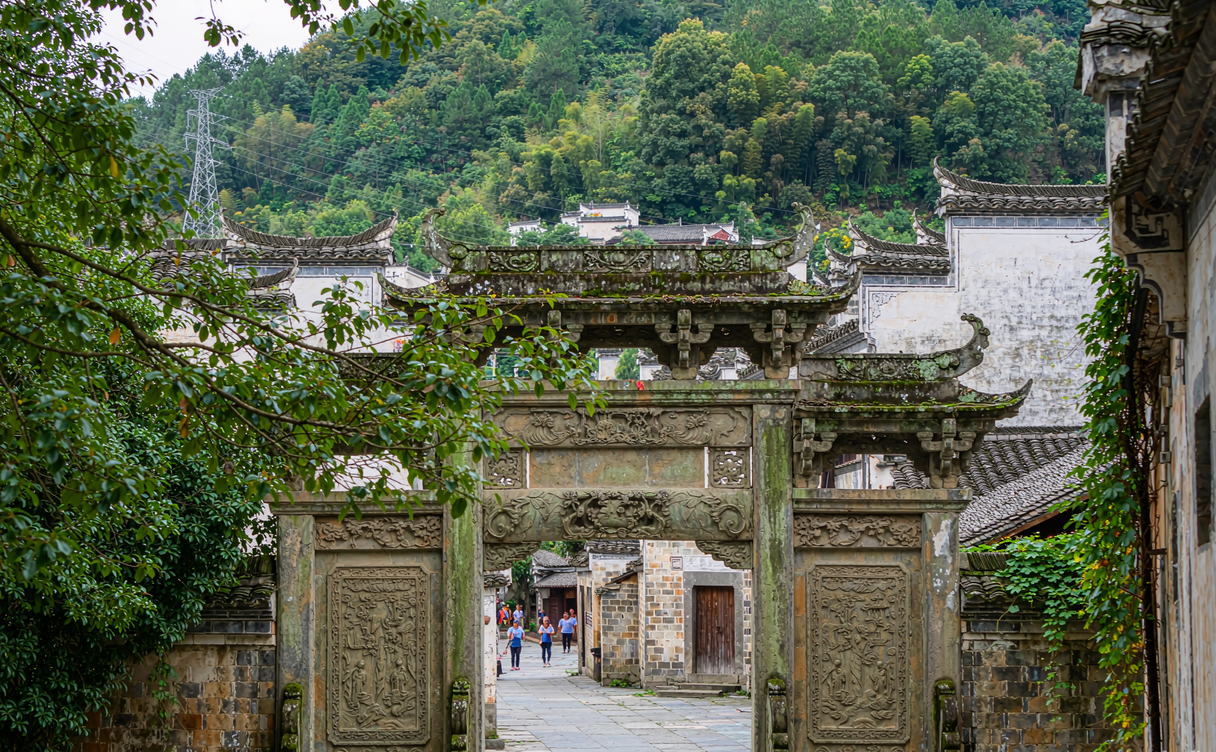
Chaji Huizhou Architecture You Can Walk Into
The Chaji Huizhou architecture is the reason the village is protected. The signature features are the stepping horse-head gables, the slender sky wells (inner light wells) that pull rain into a central tub, and the elaborate door stones carved with scholars, deer, and clouds. Several halls keep their original timber brackets. You can read the building tradition behind these forms on the Huizhou architecture page at Wikipedia.
What I point out to clients is that Chaji is not restored as a set. The Cai family ancestral hall is the showpiece, but the smaller lane houses are where you see real wear — roof tiles patched with modern clay, a TV aerial on a 400-year-old ridge. That mix is the honest part.
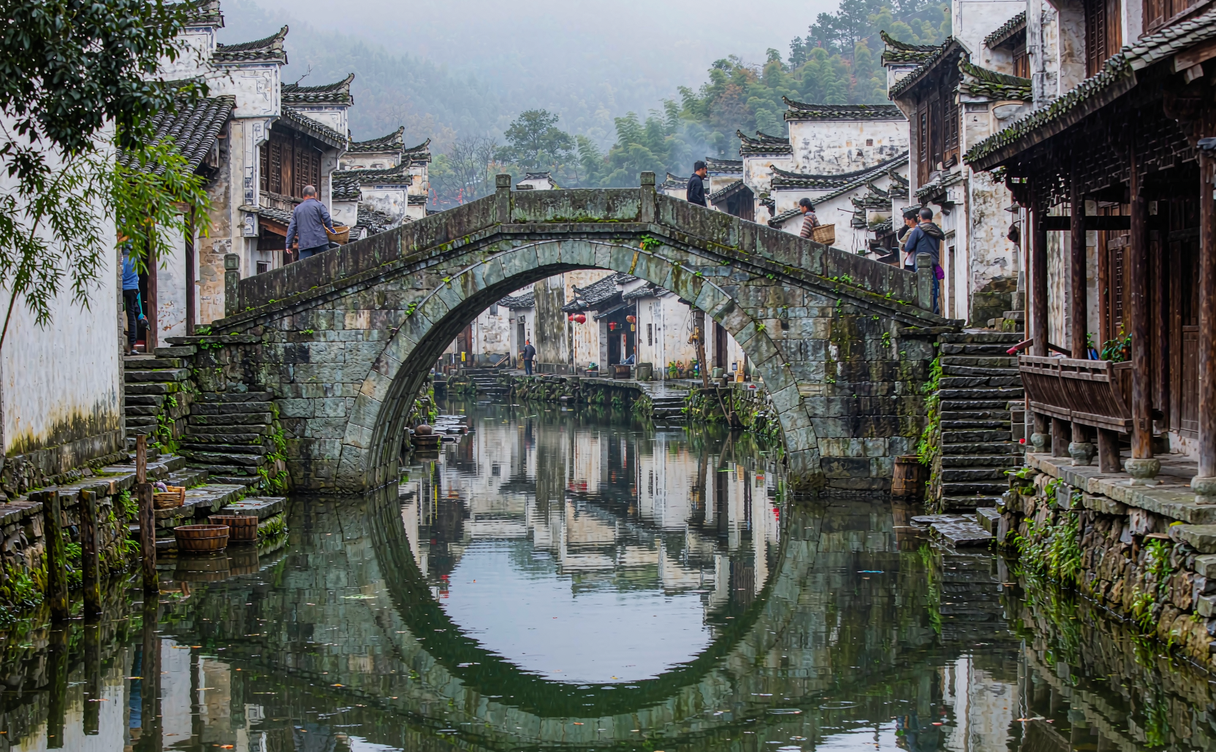
The Sketching Students and the Quiet Lanes
Most mornings from March to June, art students set up stools along the stream and copy the gables. I used to find this annoying until I realized they keep the lanes calm — they sit, they draw, they leave. If you want empty lanes, arrive before 9 a.m. or after 4 p.m.; the coach groups from bigger villages rarely stop here because there is no grand overlook for a selfie.
The shallow canal that runs the length of Chaji is the photographic spine. In spring it carries melted hill water; in dry autumn it is a thin thread under the bridges. Either way the arched stone crossings make the postcard.
I have joined the students once with a borrowed pencil and learned more about the proportions of a horse-head wall in twenty minutes than from any guidebook. If you are a painter, bring a small pad; the village is forgiving and the lanes are shaded by late morning.
Getting from Chaji to Huangshan
The drive from Chaji to Huangshan (Tunxi) is about 120 km and takes 2 to 2.5 hours by car on decent provincial roads. A private charter from Huangshan town to Chaji and back for the day runs ¥500–800 CNY; a taxi one-way is harder to fix, so I book the return car in advance. Buses run Huangshan/Tunxi to Jingxian (¥40–60 CNY, 2 h), then a local van or taxi covers the last 25 km to Chaji in 30–40 minutes for ¥50–80 CNY.
Because the two places pair so well, I link the mountain visit with the village in our Huangshan Yellow Mountain guide, using Chaji as the calm day after the summit crowds.
What to Eat in Chaji
Chaji feeds you simply and well. The lane guesthouses serve river fish from the stream, bamboo shoots in spring, and a salty cured pork that pairs with the local rice. A set dinner for two runs ¥90–150 CNY, and breakfast of rice congee with pickles is often included in the room. I send clients to the small noodle stall by the arched bridge for a ¥15 CNY bowl before the morning walk; it opens at 7 a.m. and the owner knows which hall light is best that hour.
There is no cafe culture here, and I like that. The pleasure is buying a few oranges from the lane cart and sitting on a bridge step, which is also what the sketching students do between classes.
Tickets, Opening Hours and Where to Stay
Entry to Chaji is ¥50–65 CNY, cheaper in the low season, and the ticket covers the main halls; the lanes themselves are open from about 7:30 a.m. to 5:30 p.m. There is no separate night ticket, but the village stays lit by household lamps after the gates close, which is the best time to walk.
Lodging is the strong point. Renovated lane houses take guests at ¥200–380 CNY for a double, and the better heritage courtyards with a sky-well room run ¥400–650 CNY. I book a courtyard stay for two nights minimum, because Chaji rewards slow mornings. The river towns of the region are covered in our Huizhou travel guide if you want to add Xidi and Shexian.
How Chaji Differs From Huangshan and Hongcun
Visitors always ask the comparison, so here is my straight answer. Hongcun is gorgeous and busy, with a fixed lake view and heavy foot traffic from open to close. Huangshan is a mountain, not a village, and you sleep on or near it for the sunrise. Chaji is fewer people, more original, and built around sketching and slow stays rather than one iconic frame. You come to Chaji to sit, draw, eat, and wander without a route. If you want a tea-valley contrast, our Hangzhou Longjing tea village guide shows a different kind of working Chinese village, and the Shaxi ancient town guide is the Yunnan cousin of the same idea.
Best Time Chaji Shows Its Soft Light
The best time Chaji gives you the cleanest photos is April–May and October–November. Spring fills the canal and greens the hills behind the gables; autumn is dry, gold, and free of the student-term crowds. I avoid the July–August heat and the National Day week, when even quiet villages near Huangshan pick up day-trippers. The canal freezes to a thin sheet some dry winters, which photographs beautifully but means slick stone; I wear felt soles then. Rainy June turns the lanes fragrant with wet timber and moss, good for mood shots if you don’t mind the drizzle.
Sample 2-Day Itinerary
Day 1: Drive Chaji to Huangshan in the morning (2.5 h), check into a lane courtyard, walk the stream and Cai hall at golden hour, dinner of river fish and bamboo shoots.
Day 2: Dawn empty-lane photography, breakfast at the guesthouse, sketching-lane stroll, lunch, then a slow drive back toward Huangshan or on to Xuancheng.
Frequently Asked Questions
Is Chaji village Anhui worth it if I am already doing Huangshan? Yes, as a low-key recovery day. The houses are real and the lanes are calm.
How far is Chaji to Huangshan and how long? About 120 km, 2–2.5 hours by car.
Why are there so many students? Chaji is a top sketching site for art schools, mostly March–June.
Is Chaji better than Hongcun? Different. Chaji is fewer people, more original, and slower; Hongcun is the famous view.
What is the best time Chaji for photos? April–May and October–November for soft light and a full canal.