

Taiyuan is the gateway most travelers sleep in without meaning to — they fly or train in to see the real prize, which is Shanxi’s absurd density of old towns, wooden temples, and grottoes. But we’ve learned to tell people not to rush the capital. It’s a leafy, livable city on the Fen River with a genuine museum scene, the best vinegar-and-noodle food in North China, and hotels that are both cheaper and better run than you’d expect for a provincial capital. This guide to the best hotels in Taiyuan is built from sending people through on their way to Pingyao, Datong, and Wutai Mountain.
Where the hotels actually are
Taiyuan is compact and the river splits it east–west. The downtown core (Yingze District), north of the Fen River, holds the old city center, the train stations, the shopping streets, and most of the local food. The south side (Xiaodian / the high-tech new town) has the big international towers and the convention hotels, plus the airport corridor. Jinci Temple, the city’s single must-see, sits 25 km southwest, so a Taiyuan hotel near Jinci Temple means either a resort out that way or a longer commute from downtown — we usually recommend downtown and a half-day taxi to Jinci instead.
In our experience, downtown is the right base for almost everyone: it’s walkable, it’s where the food is, and the high-speed station puts Pingyao 30 minutes away.
Luxury and international towers
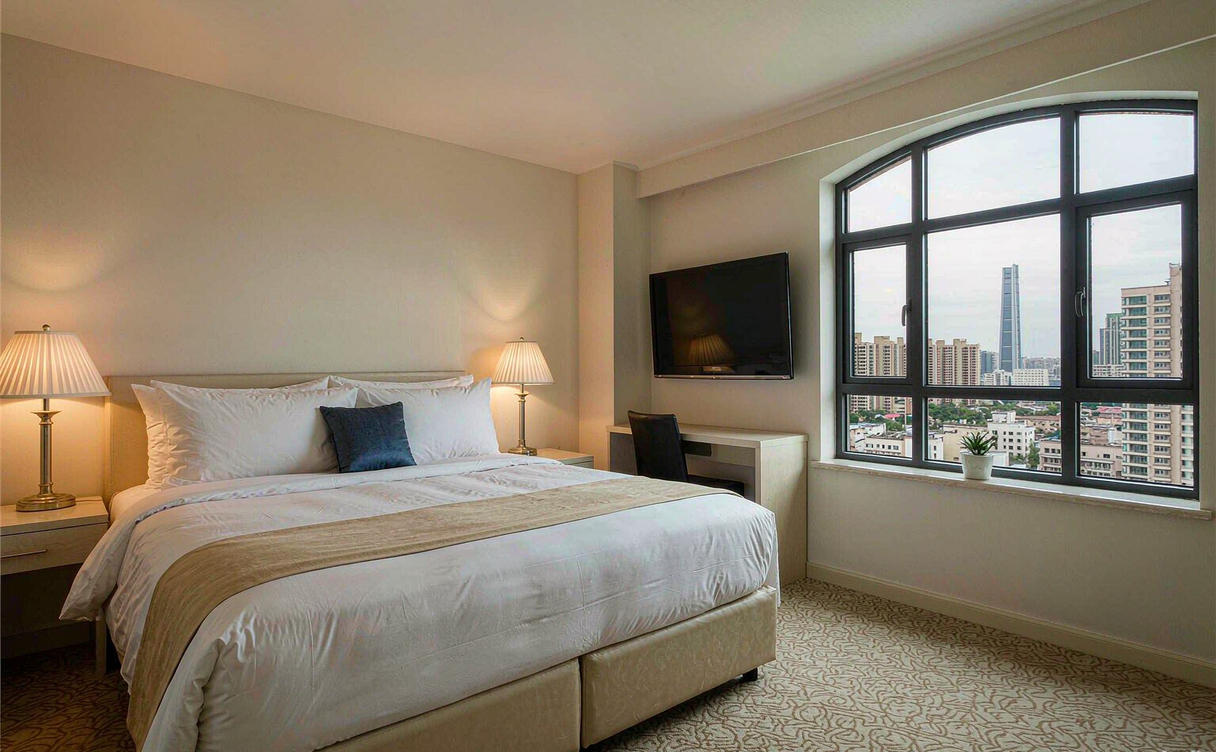
The top tier lines the south corridor and the river. The international towers anchor the CNY 700–1,200 club rooms, with proper spas, executive lounges, and Fen River views from the upper floors. We book the riverside Kempinski-class property for travelers who want European-style service and an easy airport run; the Marriott for its location near the new-town metro. For a Taiyuan luxury hotel with old-Shanxi character, a couple of the newer boutique towers downtown weave in brick-arch and courtyard motifs at CNY 500–800.
If you’re building a Shanxi loop, compare with the best hotels in Datong — Datong is the northern hub for the Yungang Grottoes and the Hanging Temple, and its hotel scene is smaller but improving fast. We typically do two nights Taiyuan, two nights Pingyao, two nights Datong.
Boutique and character stays
The Taiyuan boutique stays worth knowing are the courtyard-style design hotels near the old town (CNY 350–600) that riff on Shanxi merchant architecture — grey brick, lattice windows, courtyard breakfasts. They suit travelers who’d rather step out to a night market than ride an elevator to a 30th-floor lounge. We’ve had readers rave about the vinegar tastings and the noodle bars within walking distance. For the wider region, our Taiyuan travel guide maps the downtown eats and the Jinci day trip.
Budget and practical options
Taiyuan budget hotels are the reliable national chains (Atour, HanTing, Home Inn) near Taiyuan Station and the pedestrian streets: CNY 150–300, quiet, English-light apps, 24-hour fronts. We book these constantly for backpackers doing the Shanxi temple run. Hostels are thin, but the university-district guesthouses are friendly and cheap in summer.
A Taiyuan hotel near Jinci Temple makes sense only if Jinci is your whole reason to be in the city — it’s a 40-minute drive from downtown and the dining out there is limited. The temple complex itself, a thousand-year-old site with a Song-dynasty hall and a never-freezing spring, is summarized on Wikipedia’s Jinci page if you want the backstory. We’d rather you stay central and taxi out for the morning.
Seasons, transport, and pricing
Spring and autumn (April–June, September–October) are ideal — cool, clear, and good for temple courtyards. Winter is brutally dry and cold but cheap, and summer can be hot and occasionally smoggy, so check the air-quality apps and book a hotel with real filtration. Rates are stable year-round except the October National Day week, when you should book 3 weeks out.
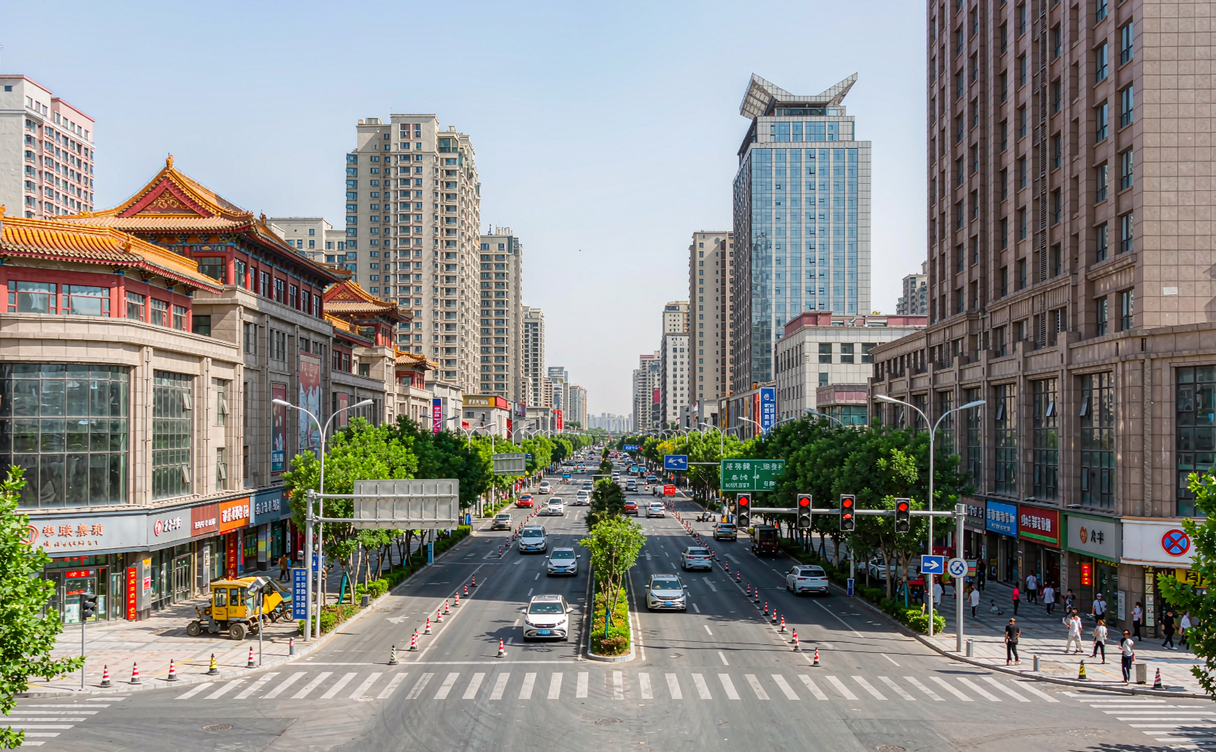
Taiyuan is the rail hub of Shanxi: the high-speed line puts Mount Wutai a few hours by road, Pingyao 30 minutes south, and Datong about 2.5 hours north. The airport connects to Beijing, Shanghai, Xi’an, and Guangzhou. Inside the city, Didi is cheap and the metro is expanding — a calm, efficient base for the whole province.
A 3-night Shanxi plan, and what to eat
We usually suggest three nights as a Shanxi base. Day one: settle downtown, walk the food streets, and order a plate of knife-shaved noodles (daoxiao mian) — the signature dish, ribbons of dough shaved straight into the pot and dressed in tomato-egg or braised pork. Day two: a half-day taxi to Jinci Temple southwest of the city, back for an afternoon in the Shanxi Museum. Day three: the high-speed train to Pingyao for the old town, or north to Datong for the grottoes, sleeping in Taiyuan both nights.
Food is why we tell people not to rush the capital. Beyond the noodles, Shanxi is the vinegar capital of China — mature, malty, and poured on everything — and the local fried pastries and lamb stews are worth a dedicated evening. The downtown night markets are cheap and busy; a noodle dinner runs CNY 15–30, and the museum-adjacent restaurants do a calmer, cleaner version if you want a table. We tell travelers to try the cold noodles in summer and the mutton hot pot in winter.
Getting around is straightforward. The metro reaches the high-speed station and the south corridor; Didi across town costs under CNY 25. The airport sits southeast, 40 minutes from downtown by expressway, and the hotel shuttles at the international towers make the airport run painless. We have had travelers base in Datong and try to day-trip Taiyuan — don’t; the city deserves its own nights, and the Jinci morning is the highlight.
A comfort note: spring and autumn are ideal, with clear cool days good for temple courtyards. Summer can be hot and, on bad days, hazy, so check the air-quality apps and book a hotel with real filtration. Winter is dry, cold, and very cheap; the heated lobbies and the noodle shops are cozy, but the outdoor sites bite. The October National Day week is the one stretch to book early or avoid.
For a deeper loop, add Pingyao (30 minutes south by rail) for the walled merchant town and Datong (2.5 hours north) for the Yungang Grottoes and the Hanging Temple. Taiyuan is the calm, central hinge for all of it — which is exactly why we keep sending people back.
Our booking advice
Base downtown unless you have a specific resort reason not to. Confirm the “Fen River view” actually faces water and not the rail line, and ask whether breakfast includes the local knife-shaved noodles — a small thing that tells you how much the hotel cares. For a Shanxi first night, central + metro-adjacent beats scenic-everything-else every time.
Map your Shanxi loop and book the capital base with our Pingyao Ancient Town guide before you arrive.
Head north to the grottoes: plan the Datong travel guide and a stay in the old city.
Go deeper into Shanxi’s temples with the Datong Yungang Grottoes guide on the same trip.