

Nanchang doesn’t always make the front page of China travel lists, but we’ve sent plenty of travelers through Jiangxi’s capital and almost all of them underestimate it. It’s a real city — over six million people — strung along the Ganjiang River, with a Tang-dynasty pavilion, a revolutionary-history core, and some of the best late-night noodles in the south. The trick is that Nanchang’s hotel geography is simple but decisive: the river splits the city, the landmarks sit on specific banks, and the best hotels in Nanchang line up neatly with whichever sight you came for. This guide lays out the neighborhoods and the rooms we’d actually book.
The two banks, and where to land
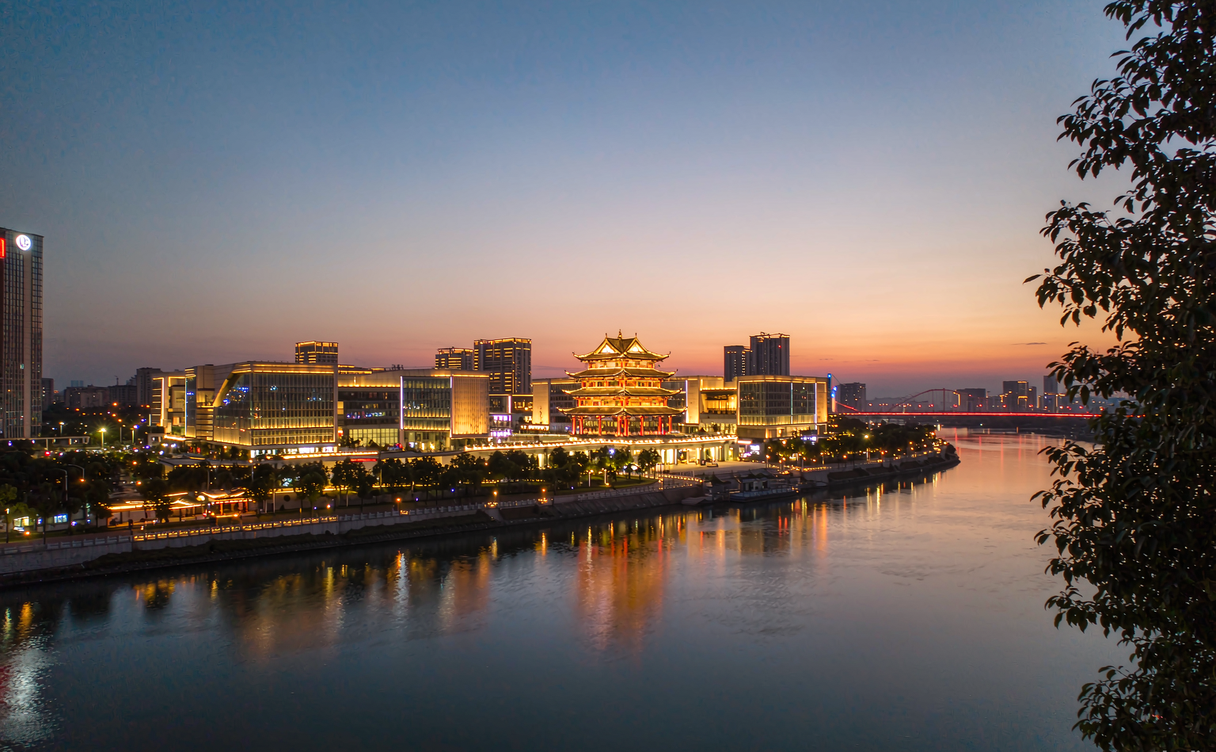
The Ganjiang River runs north–south through the middle. The west bank (Honggutan / Red Valley) is the modern CBD: skyscrapers, the convention center, the giant Ferris-wheel area, and the newest luxury towers. It’s clean, planned, and quiet at night. The east bank (old city core) holds the historic center, the railway stations, the shopping streets, and most of the local-food action. Tengwang Pavilion, the city’s signature landmark, sits right on the river’s west bank north of the bridges, so a Nanchang hotel near Tengwang Pavilion puts you within walking distance of both the pavilion and the riverside light show.
In our experience, food-and-history travelers prefer the east bank; business and skyline-view travelers prefer Honggutan. First-timers usually do fine on either side because the bridges and the metro make crossing trivial.
Luxury and high-rise stays
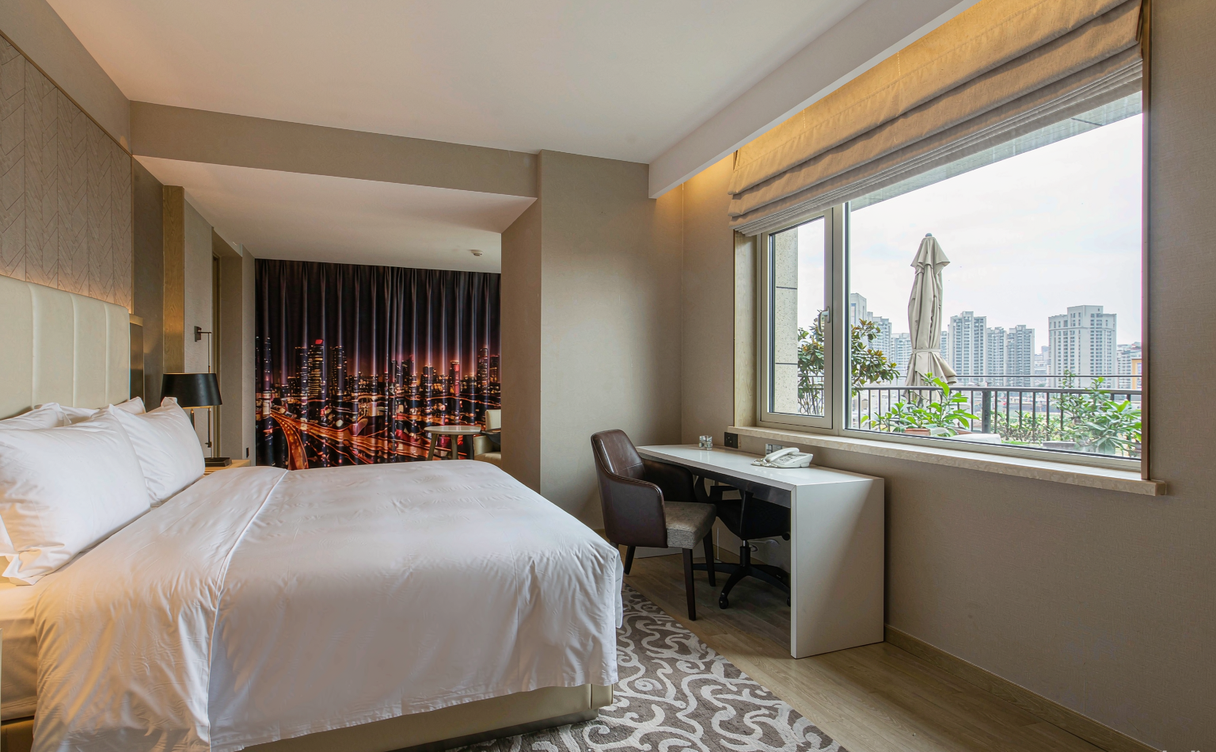
Nanchang’s luxury tier is concentrated in Honggutan. The international towers anchor the top end, with river-view club rooms in the CNY 800–1,300 range. The obvious choice if you want to wake up looking at Tengwang Pavilion across the water is the west-bank Sheraton-class property — we’ve booked it for anniversary trips and the view delivers. For a Nanchang riverfront hotel, the west-bank towers between the pavilion and the Ferris wheel are unbeatable at night when the whole shoreline lights up.
If you’re stringing together a Yangtze-region city hop, it’s worth comparing with the best hotels in Wuhan, just upriver. Wuhan is bigger and louder; Nanchang is the calmer, cheaper cousin, and you’ll often pay 25–35% less for the same brand and class.
Boutique and mid-range
The Nanchang boutique stays scene is smaller than in Chengdu or Hangzhou but growing, with a few design hotels around the east-bank old town (CNY 350–600) that lean into Jiangxi porcelain and scholar-garden motifs. These suit travelers who want to step out to night markets and the Nanchang walkable core rather than sit in a tower. We like them for the lobby coffee and the easy access to the food streets where you’ll eat your weight in clay-pot noodles.
Mid-range chains (Atour, Narada, Vienna) cluster near both railway stations and the east-bank commercial strips at CNY 300–500. Reliable, quiet, and an easy Didi to anywhere. We book these for most independent travelers who plan to be out all day.
Budget and practical picks
For Nanchang budget stays, the chain belt near Nanchang Station and the university district gives you clean rooms from CNY 150–280. Hostels are limited, but a couple near the east-bank pedestrian streets offer dorms and are social in summer. If you arrived by high-speed rail, staying near Nanchang West (Honggutan side) saves a transfer and puts you straight into the new city.
A Nanchang hotel near Tengwang Pavilion is the move if the pavilion is your priority — it’s a 10-minute walk from the Sheraton-class properties and a short ride from the east-bank food scene. The pavilion itself, rebuilt many times on its original Tang site, has the background on Wikipedia’s Pavilion of Prince Teng page if you want the poetry and history before you go.
Seasons, transport, and what to pay
Spring (March–May) and autumn (September–November) are the comfortable windows — mild, green, and good for riverside walks. Summer is hot and humid (the kind that soaks your shirt by noon), so budget for a hotel with a real pool or good AC; winter is cold and damp but cheap. Book 2–3 weeks ahead for the October National Day week, when the whole country travels and rates spike.
Nanchang is a major high-speed rail hub: under 2 hours from Wuhan, about 3 from Shanghai via the connector, and well linked to Lushan Mountain for a classic Jiangxi loop. The airport has flights from Beijing, Shanghai, Guangzhou, and Shenzhen. Inside the city, the metro is new and clean; Didi is cheap.
A 3-night stay plan, and where to eat
We usually suggest three nights for a first visit. Day one: settle on the east bank, walk the pedestrian streets, and eat a late bowl of clay-pot noodles (benhuo) at a corner shop — the dish Nanchang is famous for, simmered in a ceramic pot at the table. Day two: cross to the west bank for Tengwang Pavilion in the morning and the riverside light show at night; a west-bank hotel makes both effortless. Day three: a high-speed day trip to Lushan Mountain or a slow morning at the August 1st Uprising Museum before the train out.
Food is the real reason many travelers extend their stay. Beyond the clay-pot noodles, look for slivers of stir-fried river fish, stuffed tofu, and the sweet osmanthus cakes sold near the old town. The east-bank night markets run late and cheap; a full dinner for two rarely tops CNY 120 unless you order the river delicacies. We tell vegetarians to flag it early — Jiangxi cooking leans heavily on pork and chili, though most hotels can rustle up a simple vegetable spread if you ask.
Getting around is easy once you learn the rhythm. The metro has two lines crossing the river, and Didi rides between banks cost under CNY 20. The airport bus runs to both the east-bank station and Honggutan, but if you arrive by high-speed rail, staying near Nanchang West puts you straight into the new city without a transfer. We have had travelers try to do the city in one night and regret it — the pavilion alone deserves a relaxed evening.
A note on comfort: summer in Nanchang is the kind of humid heat that soaks your shirt by noon, so book a hotel with a real pool or, at minimum, reliable AC. Winter is cold and damp but dramatically cheaper, and the riverside walks are peaceful. The October National Day week is the one period to avoid unless you have no choice — rates double and the pavilion gets packed.
For a slower trip, add a night at Poyang Lake in winter to see the Siberian cranes, or pair the city with Jingdezhen to the east if you care about porcelain. Either way, lock the neighborhood first and the hotel second; the river view is worth paying for, but only if the room actually faces water.
Our booking advice
Decide bank first. Want the pavilion view and a quiet modern room? West bank, Honggutan, near Tengwang. Want noodles at midnight and the old city? East bank. Either way, confirm the river view actually faces the Ganjiang and not a service lane, and check whether the “breakfast” is a real buffet or a coupon — it changes the math on a multi-night stay.
Plan a Jiangxi stopover and lock in the right bank with our Tengwang Pavilion Nanchang guide before you book.
Add nature to the city: pair with the Poyang Lake guide for China’s largest freshwater lake and wintering cranes.
Comparing river cities? See the Wuhan travel guide to weigh Nanchang against its upriver neighbor.