

Shanxi’s south is a corridor of history so dense that a single county can hold a Tang-dynasty tower, a temple that inspired China’s most famous love story, and a set of iron oxen cast to anchor a bridge across the Yellow River. Yongji, a county-level city in Yuncheng prefecture on the south bank of the river, is exactly that place. This Yongji travel guide comes from the trips we have planned for readers who want the literary and historical Shanxi without the crowds of the big temple towns.
Yongji sits where the Zhongtiao Mountains meet the Yellow River, opposite Shaanxi, in the warm, flat south of the province. Its reputation rests on the Stork Tower Yongji is famous for — one of the great towers of classical China and the subject of a poem every Chinese schoolchild knows. But the county rewards a slower look: the monastery where The Romance of the Western Chamber is set, a mountain of Taoist retreats, and riverside fortifications. The encyclopaedic entry on the Stork Tower gives the literary background that makes a visit click into place.
Best time to visit Yongji
The best time to visit Yongji is spring and autumn, when the river plain is mild and the light on the tower is best for photography. April–May brings blossom and comfortable 18–26°C days; late September–October is our favourite, with harvest colours across the plain and thin crowds. Summer (July–August) is hot — often 33°C+ — but the riverside is breezier than inland, and it is the only season the evening light shows on the tower run late.
Avoid the May and October national holidays, when the Stork Tower’s esplanade gets busy. Winter is cold and grey but nearly empty, and the tower against a low winter sun is quietly beautiful if you don’t mind the chill. For the regional pattern, the trade-offs month by month follow the same rhythm as the rest of the North China plain.
How to get to Yongji
Understanding how to get to Yongji is easy, because the county sits on a main rail line. Options:
- High-speed train to Yongji North (永济北站): Trains from Taiyuan (about 2.5–3 hours), Xi’an (about 1.5–2 hours), and points along the Datong–Xi’an line stop here. Our China high-speed train guide for foreigners covers booking and station navigation. From the station, buses and taxis reach the sights in 20–40 minutes.
- Train or bus via Yuncheng: Yuncheng (运城) is the prefectural seat, with an airport and more services; buses run Yuncheng–Yongji in about 40 minutes (¥12–¥18). Our Yuncheng travel guide details the hub.
- Self-drive: Comfortable on the plain roads, and useful if you want to combine Yongji with the Yellow River ferry towns or the Pujiu Temple at your own pace.
The sights are spread across a 20 km arc south of the city, so a car or a hired driver is the efficient choice; public buses exist but run on relaxed schedules.
Things to do in Yongji
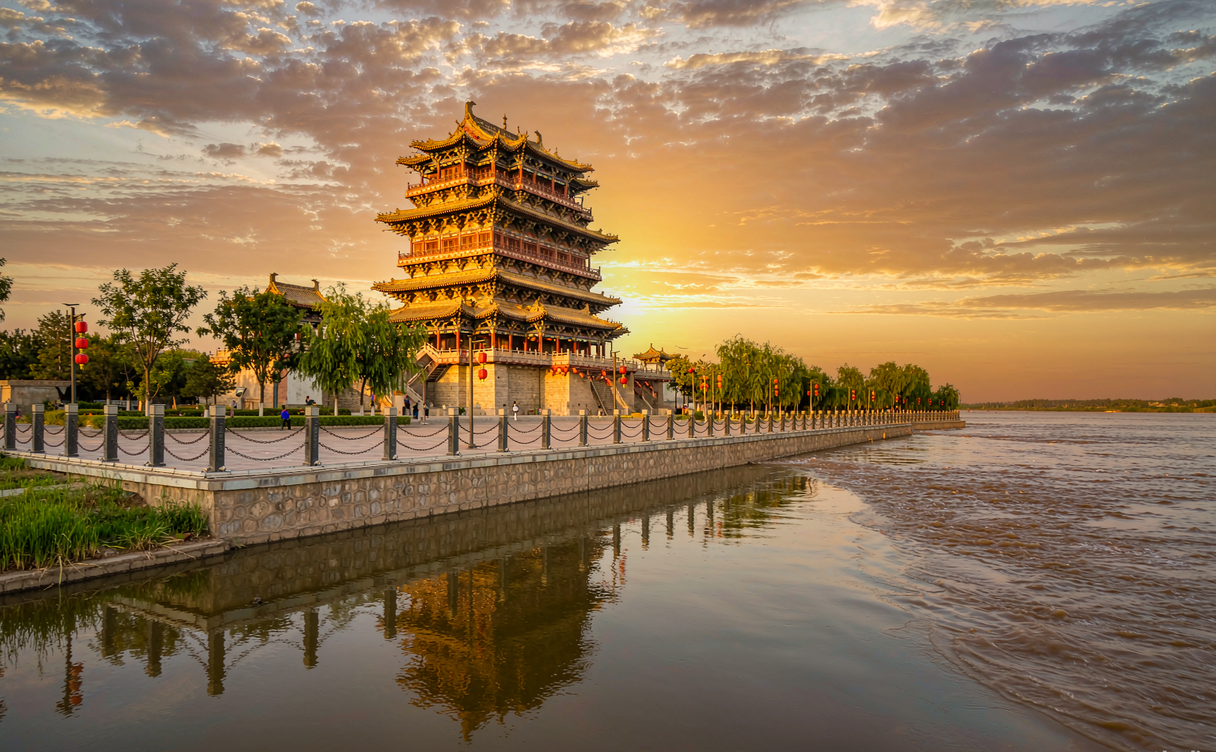
The spine of things to do in Yongji is the riverbank cultural belt. The headline is the Stork Tower (鹳雀楼), a reconstruction of the Tang tower where the poet Wang Zhihuan wrote “欲穷千里目,更上一层楼” (to see a thousand miles more, climb one storey higher). The current building is a faithful modern reconstruction on the original site, and climbing its levels gives widening views over the Yellow River flats — exactly the vista the poem describes. Entry is around ¥60.
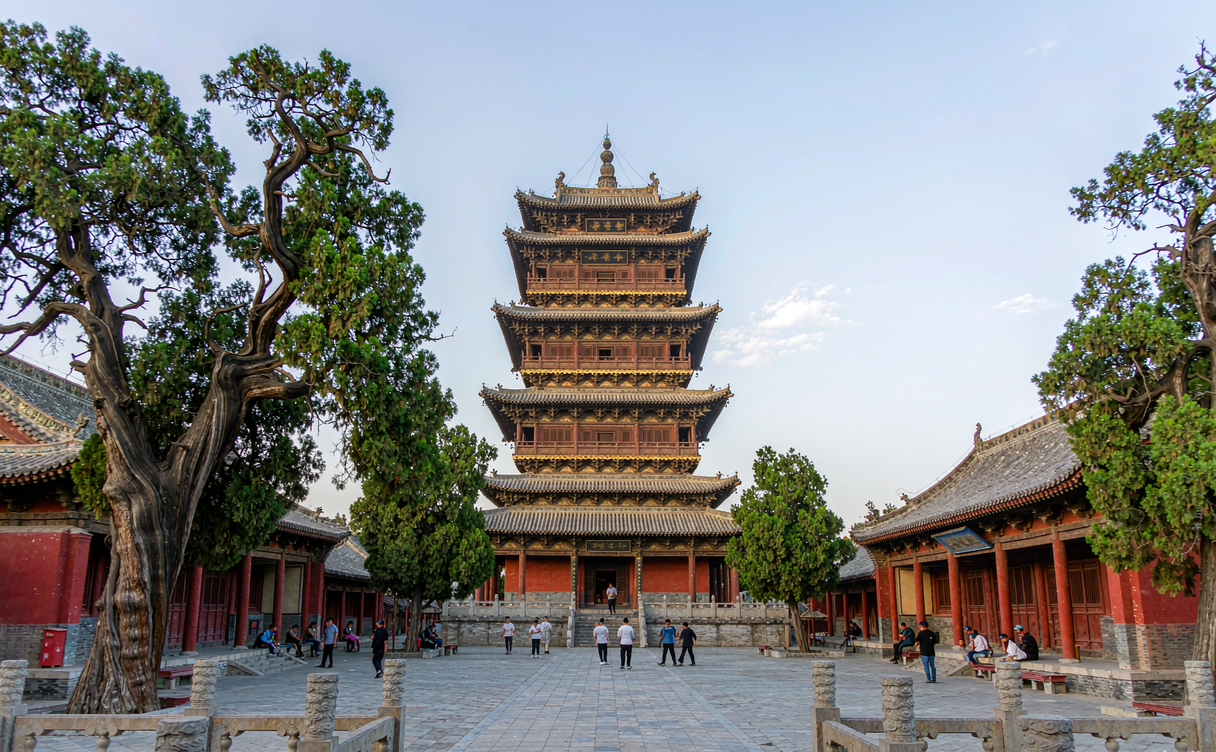
A few kilometres east, Pujiu Temple (普救寺) is the monastery where The Romance of the Western Chamber (西厢记) is set, the most beloved love story in classical Chinese drama. The “Moonlight Hall” and the “Yingying Pagoda,” from which a lover’s echo is said to answer, are the draws; entry about ¥50. Nearby, the Yellow River iron oxen (黄河大铁牛) are four massive Tang-dynasty cast-iron oxen, each several tonnes, that anchored the piers of a great river bridge 1,300 years ago — a remarkable piece of engineering history, and free to view in its open-air pavilion.
For altitude and views, Wulao Peak (五老峰) rises behind the city with cable car, cliff temples, and a ridge walk; allow half a day. Our best things to do in China roundup places Yongji among Shanxi’s most rewarding small-city stops.
The Yongji Shanxi Yellow River setting
The Yongji Shanxi Yellow River position is the key to why this county matters. For two thousand years it was a crossing point on the great river, the seam between Shanxi and Shaanxi, and the towers and oxen here were instruments of that corridor. Standing on the Stork Tower platform, you are looking at the same broad, silty current that Tang poets watched — the river has shifted course over the centuries, but the plain and the light are unchanged.
We tell travelers to time the tower for late afternoon, when the sun is behind you and the river catches the colour, and to stay for the brief evening light show projected on the tower in summer (check locally; schedules vary). The riverside esplanade below is free and pleasant for a post-visit walk.
Where to stay and eat
Yongji city has the practical lodging: business hotels at ¥130–¥260 a night, a few riverside options near the tower at ¥300–¥450. For a quieter, prettier base, Puzhou (蒲州), the old town by the temple and iron oxen, has courtyard guesthouses at ¥200–¥400. Yuncheng, 40 minutes north, has the widest hotel range if you want a chain standard.
Food is southern Shanxi comfort cooking. 永济扯面 (Yongji hand-pulled noodles, ¥12–¥20 a bowl) is the local staple — thick, chewy, and dressed with vinegar and chilli. 羊肉泡 (mutton stew with bread) and 凉皮 (cold noodles) fill out casual meals; a satisfying dinner for two runs ¥50–¥90. The night market off the city’s main street is the best grazing spot, and the riverside snack stalls do a brisk trade in 黄河鲤鱼 (Yellow River carp, ¥60–¥90) when fresh.
Practical tips before you go
Notes from our trips: buy the Stork Tower and Pujiu Temple tickets separately rather than hunting for a combo that may not exist; wear sun protection on the open river plain in summer; and carry RMB, as the smaller pavilions and stalls often don’t take cards. The sites close around 5–6 p.m. (later in summer), so start at the tower and work east to the temple and oxen.
First-timers should read our China travel guide for first-timers, which covers payment apps, SIM cards, and getting around county-level China smoothly.
Pairing Yongji with the ancient towns
Yongji pairs naturally with slower historic stops. The wider region is dotted with walled old towns and river crossings that reward a day or two of unhurried exploration; our best ancient towns in China guide lists several within easy reach that combine well with a Yongji base.
What to do beyond the obvious
Once the tower and temple are done, two quieter rewards remain. Wulao Peak at dawn is a different mountain from its midday self — the cable car opens early, and the ridge above the river fog is a fine hike. And the old Puzhou town walls, a short walk from the iron oxen, are free to wander and almost devoid of tourists, with the kind of everyday small-city life that the marquee sights screen out.
Final thoughts
Yongji is a reminder that Shanxi’s south is as much about rivers and poetry as about coal and merchants. The Stork Tower is the headline, but the iron oxen and the temple of the Western Chamber give the county a depth that rewards a slow day. We keep sending readers here because it delivers the literary China you read about, in a place that still feels like real life.