

Most travelers who plan a Fujian trip fixate on the tulou round houses or the coastal buzz of Xiamen, and they sail right past a walled river city that historians quietly rank among the best-preserved ancient county seats in all of southern China. That city is Changing (长汀), tucked into the hills where the Ting River bends through Longyan prefecture in western Fujian. We’ve sent travelers here who came for a single night and stayed three days, and the reason is simple: this is the most complete Hakka ancient city Fujian still has, and it wears its age without a costume.
Why Changing earns a place on your Fujian route
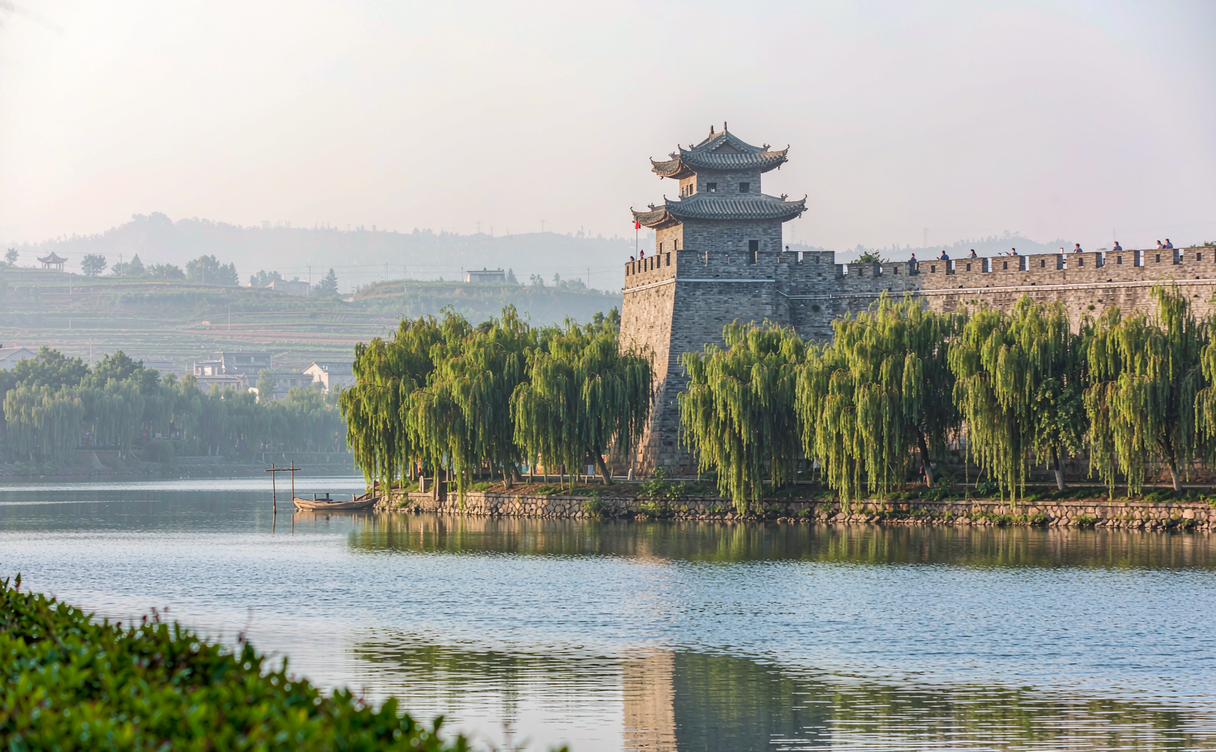
The Ting River is the spine of the place. The old town clusters on its north bank behind a Tang-dynasty wall whose line you can still trace, and the waterfront is where daily life actually happens — women washing vegetables at the stone steps, old men playing cards under the acacia trees, and night-food stalls setting up before the sun is fully down.
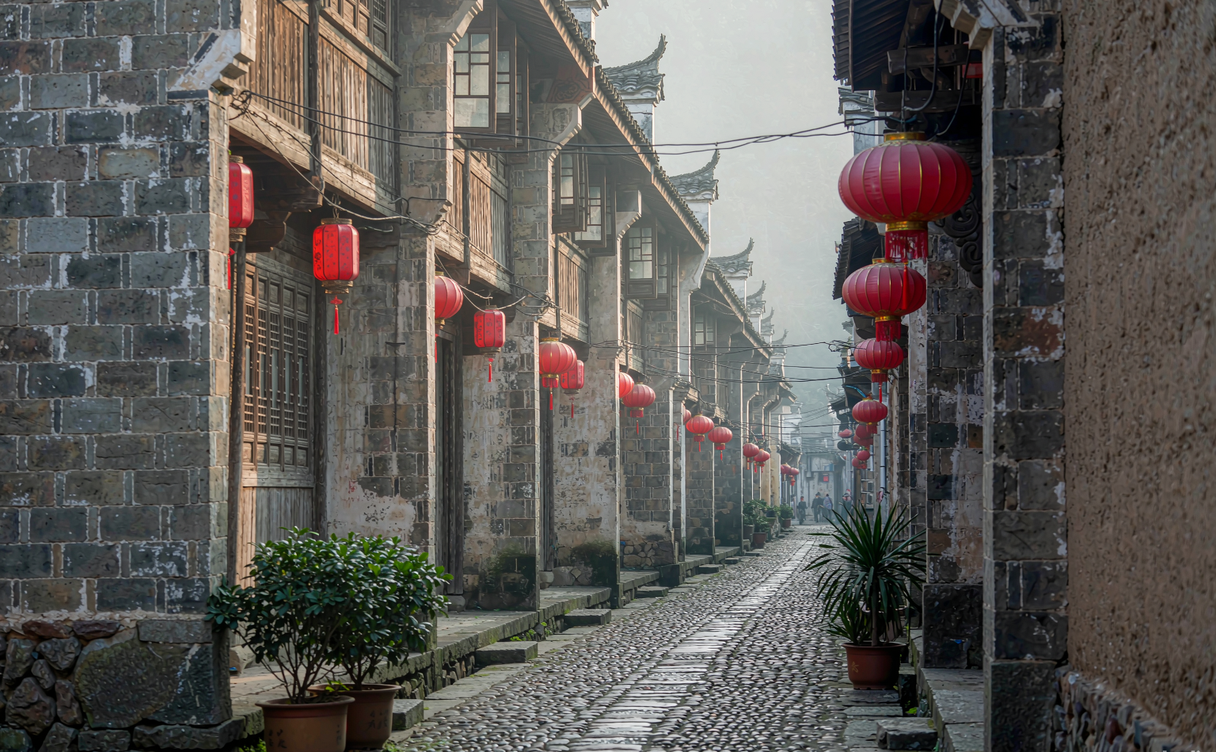
For a proper Changing Hakka town guide, start with the layout. The historic core is compact, roughly one by two kilometers, and you can walk it end to end in twenty minutes. What rewards you is lingering. The Sanyuan Pavilion (三元阁) marks the old southern gate; from there the pedestrian lanes run north past the Confucian Temple (文庙), the riverside academies, and the cluster of Ming–Qing residential courtyards near Dongdajie.
In our experience, the single best orientation is to climb Wolong Mountain (卧龙山) at the city’s back. There’s a Ming-era wall-walk along the ridge, and from the top you see the Ting River curving around the old wall like a blue comma. Come at dusk. The town lights up slowly and the river goes orange, and you understand why a revolutionary government chose this defensible, hidden valley in the 1930s.
The Hakka story and what to actually see
Changing Fujian history is inseparable from the Hakka migration. The Hakka (“guest people”) moved south in waves over more than a millennium to escape war and famine in the Central Plains, and western Fujian became one of their great gathering grounds. Changing calls itself the “Hakka capital,” and the evidence is in the food, the dialect, and the domestic architecture — courtyard houses built low and deep, with grey brick, timber screens, and drainage you can still admire eight hundred years later.
Things to do in Changing, concretely, fall into five pockets:
- The Ancient City Wall and gates. Walk the surviving southern and eastern stretches. The wall dates to the Tang dynasty with later Ming repairs; the stonework near Jishi Gate is the most photogenic, and the riverside section gives you the classic reflection shot.
- Tianhou Temple (天后宫). A river-god and Mazu temple on the waterfront, small but active, with good carved beams and a steady trickle of local worshippers.
- The revolutionary-era sites. Changing was a base of the Chinese Soviet in the early 1930s; the museum and several preserved courtyards explain this chapter without hammering you with it. The Former Residence of Fu Lianzhang is the easiest to visit.
- Longtan and the riverside steps. A relaxed hour of watching the river and the footbridges, best with a paper cup of local tea bought from a passing vendor.
- A Hakka food crawl. Changing’s Hetian chicken (河田鸡, a local breed prized for firm, sweet flesh and usually poached plainly with ginger-scallion dip), dried tofu skin (豆腐干), and glutinous rice cakes are the local trinity. Eat at a riverside stall, not a hotel banquet.
Best time to visit and how to time your days
The best time to visit Changing is March to May and September to November. Spring brings green terraces and comfortable 18–25°C days; autumn is dry and clear, ideal for the ridge walk and for photography without the summer haze. Summer (June–August) is hot and humid, often above 33°C, with sudden afternoon thunderstorms — still workable if you do outdoor stuff in the morning and retreat to shaded courtyards at noon. Winter is cold and damp but nearly tourist-free, and the Lunar New Year period puts genuine local life on display, with temple fairs and family Banquets spilling into the lanes.
If you’re building a longer trip, this pairs naturally with our Fujian 7-day itinerary, and it sits comfortably on any list of best ancient towns in China. We usually recommend giving Changing two nights rather than one, because the evening river scene and the morning market are completely different experiences.
How to get to Changing
How to get to Changing is easier than most people expect. The nearest real hub is Longyan, and Changing South Railway Station (长汀南站) sits on the Ganzhou–Longyan line with direct high-speed trains. From Xiamen you can reach Changing in roughly 2.5–3.5 hours, usually with a change at Longyan or a single comfortable routing depending on the timetable; from Longyan city itself it’s about 40–60 minutes by train. Second-class fares run roughly ¥50–90. From the station, a taxi to the old town is ¥15–25 and takes 10–15 minutes, while the local bus 3 or 5 gets you there for ¥2 if you’re traveling light.
If you’re arriving from outside Fujian, fly or take the train to Xiamen or Longyan first. Our China high-speed train guide for foreigners walks through buying tickets and navigating stations without the usual confusion. For first-time visitors to the country, start with our China travel guide for first-timers, which covers SIM cards, payments, and the small logistics that otherwise eat a half-day.
Where to eat and stay
Budget eats are the soul here. A riverside dinner of Hetian chicken, stir-fried greens, and dried tofu with a small bottle of local rice wine runs ¥40–70 per person. Mid-range restaurants in the new town charge ¥80–130 per head for a fuller Hakka spread that might include braised pork belly with preserved mustard, stuffed tofu, and a clay-pot soup.
For stays, the old town has a growing set of restored-courtyard guesthouses at ¥200–400 a night — atmospheric but with thin walls, so pack earplugs. Chain hotels near the station and new town run ¥260–500 and trade charm for reliable air-conditioning and quiet. We generally put travelers inside the wall for the night walk, then move on.
A half-day and a full-day plan
If you have half a day, do the wall walk, Sanyuan Pavilion, Tianhou Temple, and a riverside dinner. With a full day, add the Wolong ridge at dawn, the revolutionary museum mid-morning, a long lunch, and a bicycle ride out to the riverside villages in the afternoon — the flat paths along the Ting are gentle and the villages sell nothing you can’t eat on the spot.
The Hakka story continues north into the tulou country, and travelers who want the full arc can string Changing together with the coastal highlights in our Xiamen travel guide. The two together make a convincing argument that Fujian is really two provinces wearing one name.
Practical notes before you go
Changing is small enough that you won’t need a guide for the core, but a local Hakka-food guide for one evening doubles the payoff and gets you into kitchens that don’t take walk-ins. English signage is limited, so a translation app helps more than a phrasebook. ATMs exist but carry some cash for the smaller stalls, which often run on WeChat Pay alone. The town is safe and walkable after dark, and the worst hazard is a stray scooter on the pedestrian lanes.
For weather and seasonal packing across the region, our best time to visit China overview gives the provincial picture and helps you avoid the worst of the July humidity.
For background on the people who built this city, the Hakka people on Wikipedia is a solid, neutral read that will make the architecture and food click into place before you arrive.