

I came to Yanbian for the border scenery and stayed for the food. Within an hour of landing in Yanji, I was sitting at a low table with a brass bowl of iced broth and a tangle of chewy buckwheat noodles in front of me, the air thick with grilled sesame and chili. This corner of Jilin Province, where China meets the Korean peninsula across the Tumen River, is home to the country’s largest Korean ethnic community, and its kitchens are the most delicious argument for getting off the beaten path. This Yanbian Korean cuisine guide tells you what to eat, where to find it, what it costs, and how to get there.
Yanbian Korean Autonomous Prefecture sits in the far east of Jilin Province, wrapping around the slopes that fall toward the North Korean border. Its capital, Yanji, is a city where bilingual Korean-Chinese signage is the norm, where ajummas (married women) run the best noodle shops, and where the rhythm of daily life follows the table. For a foreign traveler, it is one of the few places in China where you can eat a cuisine that is at once familiar (Korean) and distinctly local (Chinese-Korean, or Chaoxianzu, cooking).
Why the food here is different
Before listing dishes, it helps to understand the context. The Korean community in Yanbian has lived here for over a century, and their cooking evolved with local ingredients: colder climate, freshwater fish from the Tumen, wild mountain greens, and Jilin’s own rice. The result is a cuisine that shares roots with Seoul and Pyongyang but tastes of this specific borderland. A Yanbian food guide is really a guide to a living culture, where every meal begins with a free spread of kimchi, pickles, and bean sprouts and ends with a sweet cold barley tea.
The dishes you cannot miss
Yanbian cold noodles (naengmyeon)
Top of any list of things to eat in Yanbian is the cold noodle, or naengmyeon. Served in a metal bowl over a block of ice, the broth is beef or dongchimi (radish-water) based, sweet-sour, and bracingly cold — a revelation on a humid summer day. The noodles are made from buckwheat or starch, slippery and springy, topped with sliced pear, cucumber, a halved boiled egg, and sometimes a slice of chewy beef. A bowl costs CNY 15–25. My first bite was a shock of cold and tang that reset my whole palate; by the third visit I was ordering two.
Korean BBQ and grilled meat
No Jilin Korean restaurants experience is complete without tabletop grilling. Pork belly (samgyeopsal), marinated beef short rib (galbi), and chicken are grilled over charcoal at your table, wrapped in lettuce with garlic, chili paste, and sesame oil. Expect to pay CNY 60–120 per person with sides. The Yanji style leans heavier on cumin and sesame than the version south of the border, a quiet local twist worth noticing.
Bibimbap and rice cakes
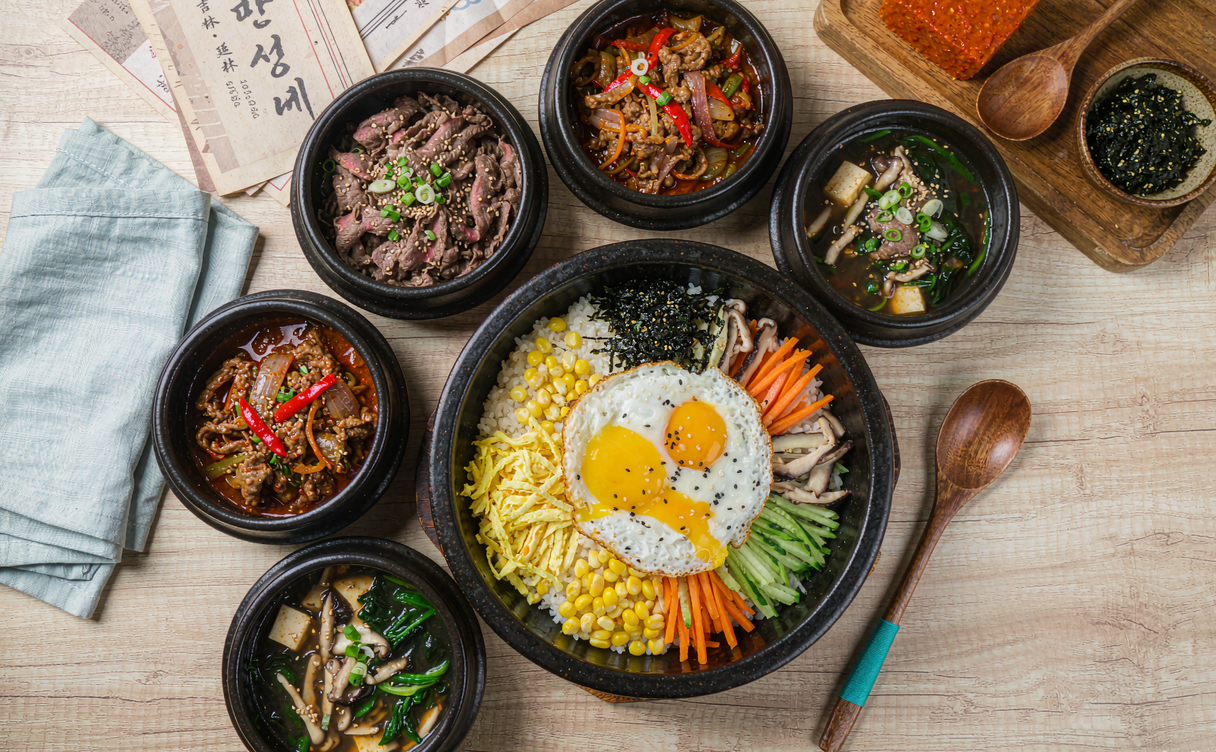
Bi bim bap — rice topped with sautéed vegetables, a fried egg, and gochujang — is a reliable, vegetarian-friendly option at CNY 25–40. The local tteok (rice cakes) come in chewy cylinders served in a soy-based broth or stir-fried with chili; they are comfort food, not street spectacle.
Kimchi, pancakes, and soy-sauce crab
The kimchi here is fermented longer and funkier than mass-produced versions, with whole cabbage, radish, and scallion. Bindaetteok (mung-bean pancakes) are crisp, savory, and perfect with a local beer. A seasonal delicacy is ganjang gejang — raw crab cured in soy sauce — pungent and addictive if you are adventurous. These small plates define the best Korean food in Yanbian for locals, who judge a restaurant by its free banchan (side dishes) before the main course arrives.
Where to eat in Yanji
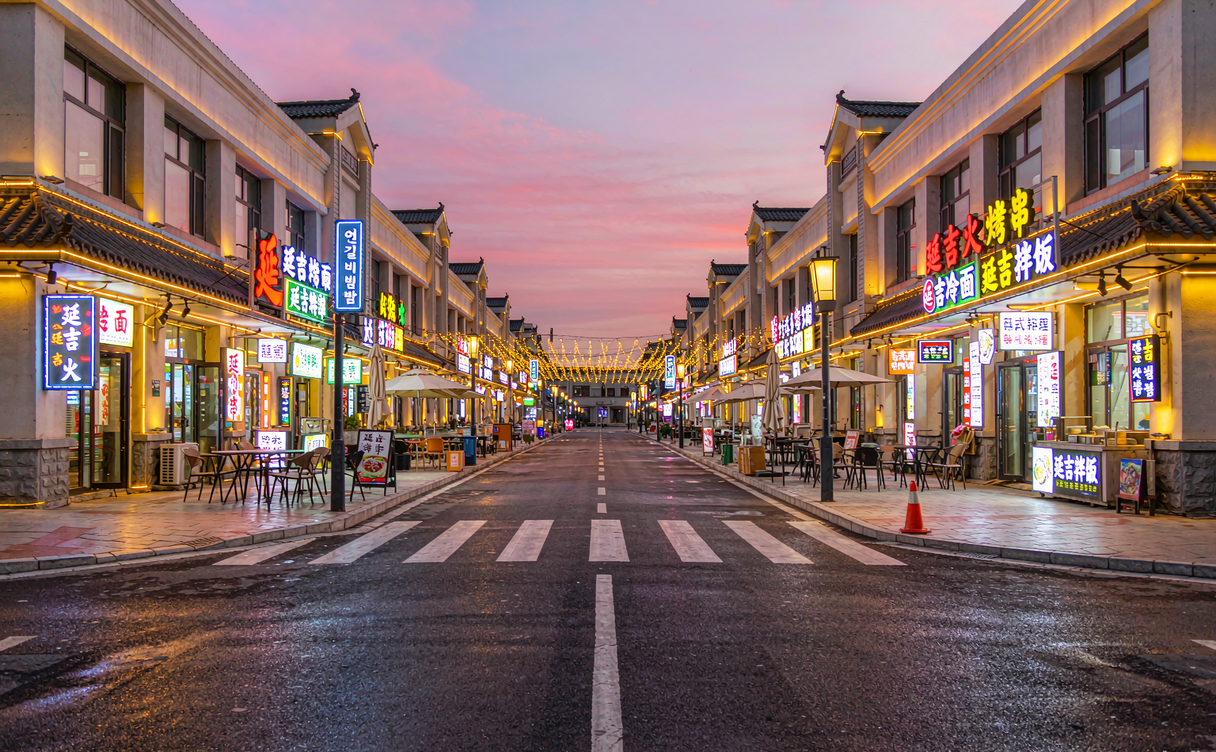
The easiest way to eat well is to follow the neon. Yanji’s main food streets — especially around the pedestrian thoroughfare near the university and the morning market — are lined with BBQ joints, cold-noodle houses, and 24-hour tofu soup spots. The Yanji travel guide on our site maps the specific neighborhoods and names a few longtime favorites. For a broader sweep of the prefecture, the Yanbian travel guide covers the smaller towns of Tumen and Hunchun, where the border crossings and seafood (shipped from the Sea of Japan via Russia) add new flavors.
Best time to visit for food
There is no bad season, but each brings its own menu. Summer (June to August) is festival season, with the Yanbian Korean Ethnic Culture Festival filling streets with music and open-air eating; it is also when cold noodles taste best. Autumn (September to October) brings harvest vegetables and clearest weather for exploring. Winter is ferociously cold but perfect for hot tofu soup, BBQ, and steamed rice cakes — and the snowy streets lit with Korean signage are atmospheric in a way photos rarely capture. If you are matching food to season across the country, our best things to do in China list flags Yanbian as a top culinary destination.
How to get to Yanbian
Reaching this borderland is easier than it looks. The realistic routes:
- Fly: Yanji Chaoyangchuan International Airport has direct flights from Beijing, Shanghai, and Seoul, among others. From the airport, a taxi to the city center is about 20–30 minutes.
- High-speed train: Trains run from Changchun (roughly 2.5–3 hours) and from Beijing via transfer; the ride is comfortable and scenic. Our China high-speed train guide for foreigners explains ticketing and real-name rules.
- From the Russian or Korean border towns: Hunchun connects onward to Russia’s Primorye; Tumen looks across to North Korea. These make Yanbian a fascinating multi-country hub.
A sample day of eating
If you want a plan, here is the day I wish I’d had: breakfast at the morning market on a bowl of sujebi (hand-torn dough soup) and a fried squid skewer; lunch at a famous cold-noodle house, ordering the half-and-half (meat broth plus dongchimi); an afternoon coffee at one of Yanji’s surprisingly serious cafés (the city has a thriving coffee culture); dinner at a BBQ joint with friends, ending with a bowl of cold barley tea and a walk under the signs. That rhythm is the real Yanbian Korean cuisine guide — not a list of restaurants but a way of spending a day.
Etiquette and tips
- Banchan is free and refillable. Don’t pay for the small dishes; they are meant to be endless.
- Sharing is the norm. Order a few mains for the table rather than one per person.
- Spice is adjustable. Ask for “wei la” (mild) if you are unsure; the default can be fiery.
- Cash and apps. Most places take mobile pay; carry some cash for market stalls.
- Respect the culture. This is a living ethnic community, not a theme park — shoot photos kindly and ask before photographing people.
For travelers who want food to be the centerpiece of a trip, our China food tour guide lays out regional routes that put Yanbian alongside Sichuan, Guangzhou, and Xi’an. And if this is your first time in the country, the China travel guide for first-timers covers everything from payments to table manners.
The bigger picture
Yanbian’s Korean cooking is recognized as part of a wider cultural heritage; the tradition of kimchi-making, shared across the peninsula and its diaspora, is inscribed by UNESCO as intangible cultural heritage, a testament to how a humble fermented cabbage became a cornerstone of identity. For background on the region itself, the Yanbian Korean Autonomous Prefecture entry on Wikipedia is a reliable overview of its history and demographics.
What stays with me from Yanbian is not any single dish but the feeling of a borderland that turned its geography into a feast. The cold noodles, the sizzle of the grill, the bilingual hum of the streets — it all adds up to one of China’s most underrated food scenes. Go hungry, go curious, and let the banchan lead.