

The first time I trekked in China, I underestimated everything: the distance, the vertical gain, and the kindness of strangers who pressed warm sweet potatoes into my hands at a mountain pass. That was Tiger Leaping Gorge in Yunnan, and it hooked me on China trekking for good. This country is one of the great walking destinations on Earth — from glacial alpine ridges to subtropical karst valleys — yet most foreign hikers only hear about Everest Base Camp. This guide covers the routes that are accessible, bookable, and genuinely world-class, with real costs, seasons, and the logistics that keep you safe.
Why trek in China
China trekking rewards you with landscapes that are simply not found elsewhere: quartz-sandstone pillars wrapped in cloud, terraced rice fields climbing to the sky, and turquoise alpine lakes at 3,000 meters. The trail infrastructure has improved enormously. Many routes now have village guesthouses every 8–12 km, clear signage (sometimes in English), and affordable guiding. For China mountain trekking, the variety means you can hike in tropical, temperate, and alpine zones within a single two-week trip.
The best seasons are spring (April–May) and autumn (September–November). Summer brings heat and landslides in the south; winter closes high passes. Our best time to visit China article breaks down regional windows so you can stack routes back-to-back in one trip.
Best trekking routes in China
Here is my shortlist of the best trekking routes in China, all doable for fit travelers without mountaineering permits.
Tiger Leaping Gorge, Yunnan. A two-day, 25 km walk along the upper Yangtze with a 2,000 m vertical wall on one side. I did it in late April; the trail is well-graded, guesthouses like Halfway and Tina’s offer beds for 80–150 RMB and hearty meals for 40–60 RMB. No permit needed. This remains my favorite multi-day hike in China for first-timers.
Zhangjiajie, Hunan. The Avatar mountains. You can day-hike the Golden Whip Stream and climb Tianzi Mountain, or string together two days on the marked paths. Entry to the park is 225 RMB (valid four days in peak season), and the Zhangjiajie travel guide details the loop that avoids the worst cable-car queues.
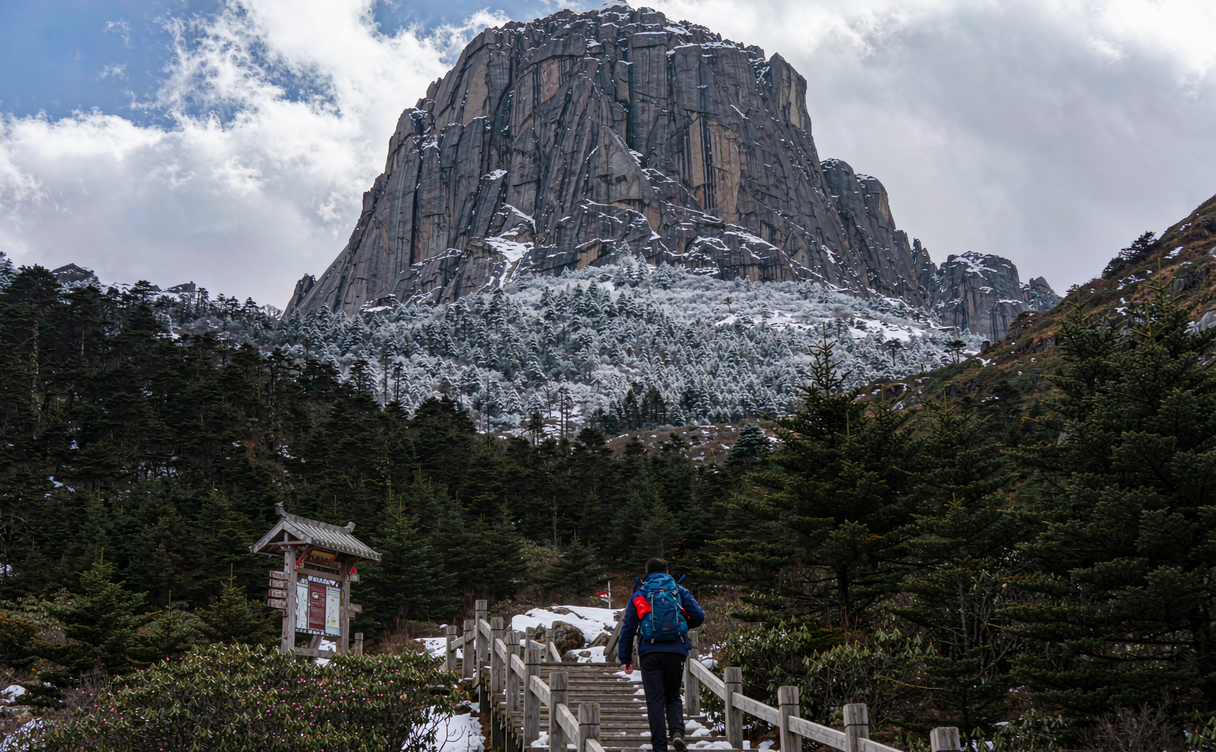
Huangshan, Anhui. The classic “you must climb to understand” mountain. The West Sea Canyon loop is a stunning half-day, and sunrise from Bright Summit is unforgettable. Cable cars (80–100 RMB each way) save your legs; a dorm bed near the summit is 200–400 RMB.
Mount Emei, Sichuan. A two-day temple-to-temple walk ending at the Golden Summit, with wild macaques en route. The full ascent from the base is about 50 km; most hikers take the bus partway.
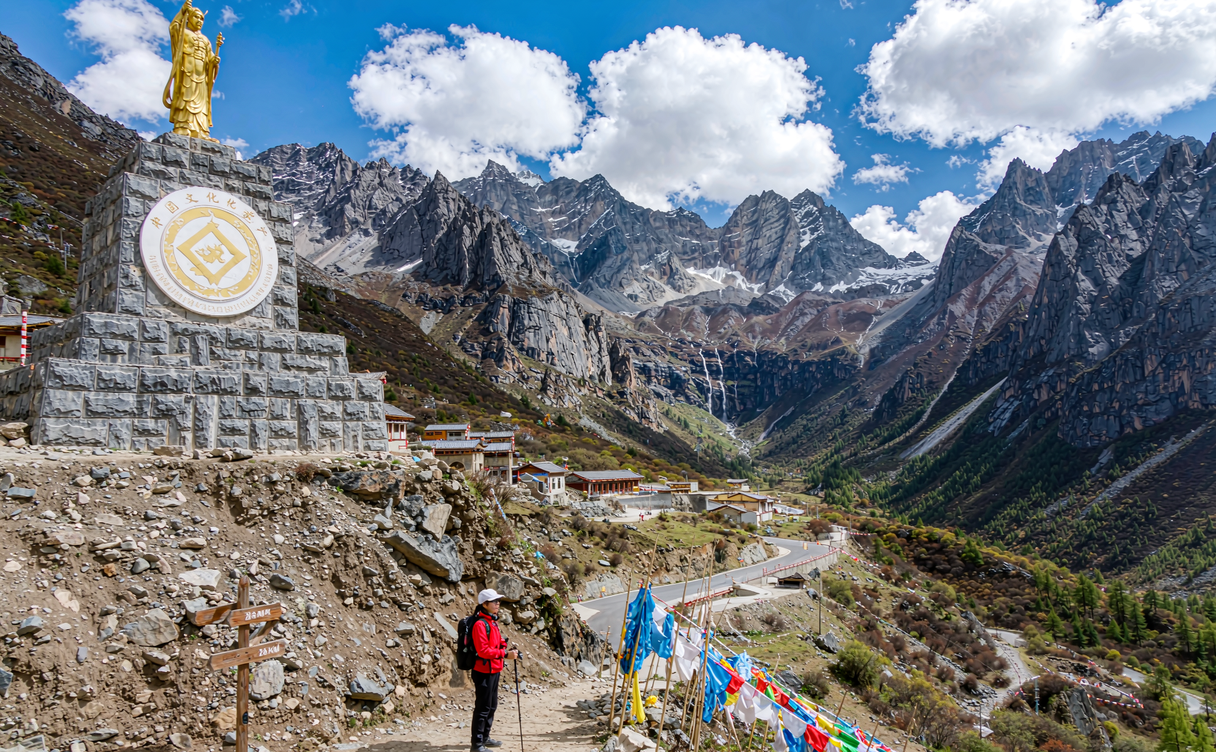
Jiuzhaigou, Sichuan. Less a “trek” than a series of boardwalk loops through fairy-tale lakes, but the nearby Mount Siguniang area offers serious China mountain trekking for the ambitious, including the multi-day Changping Valley to Bipeng Valley traverse.
A China hiking itinerary
A realistic China hiking itinerary should chain two or three regions by train rather than flying across the country each time. Here is a two-week plan I have ridden.
Days 1–3: Tiger Leaping Gorge. Fly into Lijiang, bus two hours to the trailhead at Qiaotou, walk to Middle Gorge, overnight, finish at Tina’s, bus to Lijiang.
Days 4–6: Lijiang and Shaxi. Recover in the old town, then a three-hour bus to Shaxi, a caravan-era village now a hiker’s haven. Easy valley walks here are perfect active-rest days.
Days 7–9: Zhangjiajie. Fly or train to Zhangjiajie, spend two full days on the mountain. The Zhangjiajie travel guide maps the two-day route that catches both sunrise and the sea-of-clouds.
Days 10–12: Jiuzhaigou. Fly to Jiuzhaigou (or train via Chengdu), spend a day on the boardwalks. Pair it with Huanglong’s travertine terraces if altitude agrees with you.
Days 13–14: Chengdu. Noodles, pandas, and a flight home.
For broader context, the best things to do in China page lists more active experiences from cycling to river rafting.
China trekking tips that actually help
My hard-won China trekking tips:
1. Carry cash. Guesthouses in Tiger Leaping Gorge and Shaxi often have weak card readers; 200–500 RMB in small notes covers beds and meals.
2. Download offline maps. Gaode (Amap) works better than Google in China; save your trail as a screenshot regardless.
3. Book the first train. High-speed rail sells out on weekends; our China high-speed train guide for foreigners explains the 12306 and Trip.com booking flow.
4. Respect altitude. Anything above 2,500 m deserves acclimatization days. Jiuzhaigou sits at 2,000–3,000 m; ascend gradually.
5. Pack light but layered. A rain shell, a warm mid-layer, blister plasters, and 2 liters of capacity matter more than fancy gear.
Multi-day hikes and permits
Beyond the beginner routes, multi-day hikes in China include the Gaoligong traverse in Yunnan, the Kailash-style walks in western Sichuan, and the Mount Siguniang circuits. Most do not require permits for foreigners except in designated protected zones near the borders — always confirm with a local guide or your guesthouse before setting out, because rules shift and a wrong turn can mean a fined retreat. Expect to pay 300–600 RMB per day for a licensed guide on the more remote routes, and 150–300 RMB per night for a teahouse or tented stay on established trails. I once joined a four-day Siguniang circuit where the guide carried the stove and we slept in stone herder huts; the total cost, split between four walkers, came to roughly 1,800 RMB each including food, which is a bargain for that kind of wilderness access.
Physical preparation matters more than gear for these longer routes. I train with back-to-back 15 km walks carrying a 10 kg pack for a month beforehand, and it makes the real passes feel manageable rather than punishing. Trail food is simple — noodles, eggs, and the occasional brilliant plate of stir-fried potatoes — so pack a few energy bars from home if you are picky. Water is refillable at most villages; a filter bottle saves both money and plastic on the multi-day routes.
My honest take after many trails
The thing nobody tells you about China trekking is how social it is. On Tiger Leaping Gorge I shared a long table with a French couple, a Chengdu family, and a solo Japanese hiker; by dinner we were swapping routes. The trails are safe, the food is cheap and filling, and the scenery is, frankly, absurd. For first-timers, start with the gorge and Zhangjiajie; they build confidence fast. Our China travel guide for first-timers covers the visa and payment setup you will want sorted before you hit the trailhead.
One note on preservation: Jiuzhaigou’s lakes are part of a UNESCO World Heritage Site and the boardwalks exist precisely so the fragile shoreline stays intact — stay on them.
Practical bookability
Trailhead transport is easy: long-distance buses from Lijiang to Qiaotou cost about 35 RMB; the Zhangjiajie airport bus is 20 RMB to the park gate; Jiuzhaigou has direct flights from Chengdu (about 350–600 RMB). Guesthouses on the major treks can be booked on Trip.com or booked in person with cash. Park entries: Tiger Leaping Gorge is free to walk, Zhangjiajie 225 RMB, Huangshan 190 RMB, Jiuzhaigou 169–190 RMB by season. Budget roughly 250–400 RMB per person per day all-in on the established routes, more if you hire a guide.