

Straddling the border of Anhui, Hubei, and Henan, the Dabie Mountains are one of central China’s great green escapes — and the Jinzhai section in Anhui, China is its most accessible, most scenic slice. We have routed hikers here from Hefei for a weekend of waterfalls, cloud seas, and revolutionary history, and it delivers without the crowds of Huangshan. If you want a taste of China’s wild interior, our China travel guide for first-timers can help you slot Dabie into a longer Anhui itinerary.
Where the Dabie Mountains Are
The range runs east–west across three provinces, but the most visitor-ready area is Tiantangzhai (“Heaven’s Village”) in Jinzhai County, Lu’an City, Anhui, China, near the Hubei border. Peaks here top 1,700 m, with the aptly named Tiantangzhai summit at 1,729 m marking the Anhui–Hubei line. The Dabie Mountains overview on Wikipedia gives good geographic context before you go, including how the range divides the Yangtze and Huai river basins and why its forests stayed so wild through the 20th century.
Getting There
The hub is Hefei, the Anhui provincial capital, reachable by high-speed train from Shanghai (about 3–4 hrs, ¥230–¥400) and Beijing (about 4–5 hrs, ¥500–¥700). From Hefei, a direct tourist bus or private car covers the roughly 150 km to Tiantangzhai in 2.5–3.5 hours; a private transfer runs ¥400–¥700. There is no train to the mountain itself, but our high-speed train guide for foreigners walks you through booking the Hefei leg with a passport. Within the scenic area, shuttle buses connect the entrance to trailheads (included or ¥20–¥40), and a cable car spares the steepest climb.
Best Time to Visit
Per our best time to visit China guide, the Dabie Mountains shine in two windows: late March to May (azaleas and new green, 15–25°C) and late September to mid-November (autumn foliage, 12–22°C). July–August is warm but popular with domestic families escaping the cities; winter brings occasional snow and thin crowds but some closures. We steer travelers to October, when the maples turn and the cloud sea is most reliable after rain. May’s azalea bloom on the mid-slopes is another underrated highlight if you prefer flowers to foliage.
Things to Do: Dabie Mountain Hiking
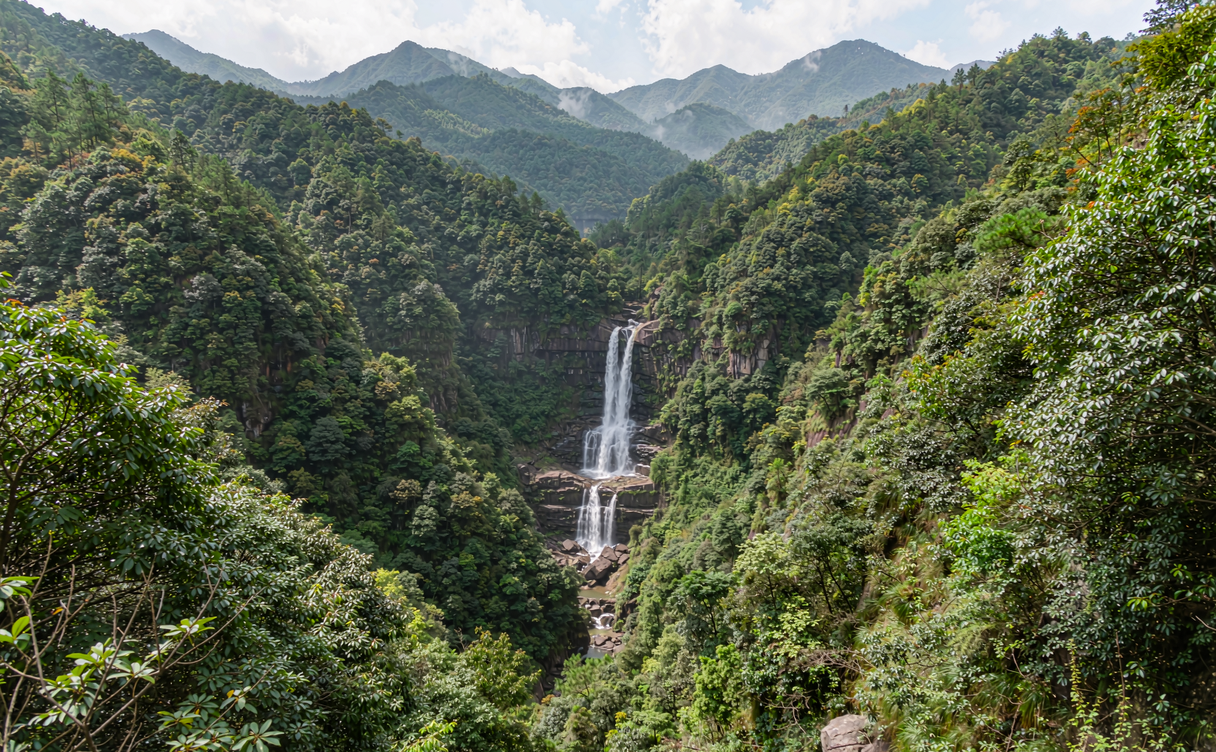
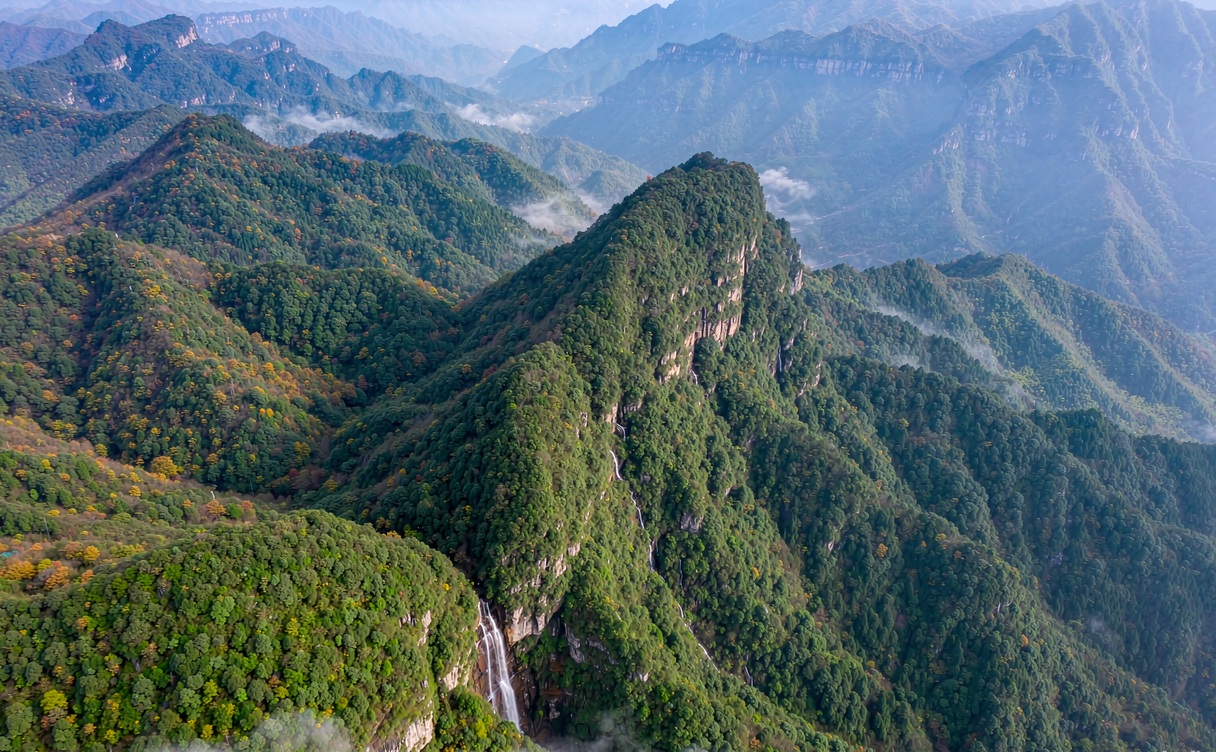
Tiantangzhai is the headline hike. The classic route climbs from the lower falls (Baijiangping, Jiuyingpeng) to the summit ridge, about 4–6 hours round trip depending on fitness and cable-car use. A one-way cable car saves the knees for ¥60–¥100. At the top you straddle two provinces and, on clear mornings, look out over a sea of clouds. The best things to do in China for nature lovers include exactly this kind of ridge walk, and Dabie’s are gentler and cheaper than the famous peaks to the south.
Beyond Tiantangzhai, Jinzhai rewards history buffs. It is known as the “hometown of generals” for its outsized role in modern Chinese history, with memorials and the Revolutionary Museum in Jinzhai town. Combine nature and history for a full two days, and you will understand why this corner of Anhui, China punches above its weight. The nearby Matoujian and Baimajian ridges offer quieter trails if you want to escape even the Tiantangzhai crowds.
Tickets and Costs
Scenic-area entry to Tiantangzhai is about ¥100–¥130 (peak/off-season), with cable cars extra. A typical day with transport, ticket, and lunch runs ¥300–¥500 per person if you come independently. Guided two-day packages from Hefei, including lodging, start around ¥800–¥1,200. Book tickets on the scenic area’s official WeChat mini-program or via major Chinese travel apps; foreign passport holders can usually show the passport at the gate, though it helps to buy in advance through a hotel or agency if the app rejects a foreign ID. Arrive before 9 am in peak season to beat the tour buses at the lower falls.
Where to Stay
Inside the area, guesthouses in Tiantangzhai village offer basic but clean rooms at ¥150–¥350 per night, often with family-style dinners (¥50–¥80). For more comfort, stay in Jinzhai town or Hefei and do a long day trip. If you enjoy historic towns and old villages, add a night in nearby Hongcun or Tunxi in southern Anhui on the same trip (reachable by train via Hefei) — the Huizhou architecture there is a perfect cultural bookend to the mountains.
Food
Dabie cuisine leans rustic: mountain bamboo shoots, free-range chicken soup, wild mushrooms, and river fish. A hearty farmhouse meal is ¥40–¥70 per person. Try the local “pickled vegetable” (xuecai) with tofu — simple, salty, and exactly what you want after a hike. In season, the chestnuts and walnuts of the Dabie foothills show up in everything from stir-fries to steamed breads, and the stream trout is a deserved local specialty worth ordering.
Practical Tips
Trails are well marked but can be slippery after rain — bring sturdy shoes and a rain layer. Mornings are best for the cloud sea; arrive at the summit by 8 am. Mobile coverage is good near villages but patchy on the ridges, so download offline maps. Altitude is low (under 1,800 m), so acclimatization is not an issue — a welcome change from Tibet, China or Xinjiang, China trips. Carry water and a snack; the only stalls are at the base, and the summit wind is stronger than you expect.
Sample 2-Day Plan
- Day 1: Hefei to Tiantangzhai (afternoon walk to lower falls); overnight village guesthouse.
- Day 2: Sunrise cable car to summit, ridge walk, descend; return to Hefei.
For travelers compiling a list of historic towns and villages to visit, Dabie pairs naturally with Anhui’s famous Huizhou villages further south, making a rounded province loop of mountains and old lanes.
What to Pack
Dabie’s trails are damp and changeable, so bring broken-in hiking shoes with grip, a light rain jacket, and a daypack with water and snacks — stalls are only at the base. Trekking poles help on the descent, and a warm layer covers the summit wind even in summer. A power bank keeps your phone alive for maps and photos, since the ridges have patchy signal.
Photography Tips
The cloud sea is the headline shot, and it favors early risers: aim to reach the summit by 8 am after a sunrise cable-car ride. A wide lens captures the layered ridges disappearing into mist, while a telephoto compresses the sea of clouds below the peak. Autumn brings the easiest compositions, with red and gold foliage framing every viewpoint; bring a polarizer to manage the haze.
Nearby Add-On: Hongcun
If the Huizhou villages tempt you, Hongcun is the classic choice — a 600-year-old settlement of white walls, horseshoe-shaped ponds, and arched bridges that has appeared in films and textbooks alike. It sits about four hours south of Hefei by train and bus, pairing naturally with Dabie on a week-long Anhui loop. Stay overnight to catch the ponds at dawn before the day-trippers arrive.
FAQ
Is Dabie good for beginners?
Yes. Trails range from easy boardwalk strolls to the summit ridge; cable cars make the top reachable for most fitness levels.
How far is it from Shanghai?
About 3–4 hours by high-speed train to Hefei, then 2.5–3.5 hours by road — a realistic weekend.
When is the foliage best?
Mid-to-late October, with the maples and tallow trees turning red and gold.