

Where to stay near Lijiang Old Town: pick Dayan (大研) if you want the postcard lanes and accept bar noise, Shuhe (束河) if you sleep lightly, and Baisha (白沙) if you want mountain views and the lowest prices. Most courtyard rooms in the old towns run ¥300–900 a night; international resorts outside the pedestrian core run ¥1,500–5,000. Cars cannot reach most courtyard doors — a porter carries your bags the last 200–800 metres for roughly ¥20–50.
By Karl Huang, travel content editor. Last verified November 2026. Prices are typical published ranges checked against current Yunnan hotel listings, not quotes for a specific date; confirm the final rate, heating, and luggage arrangement with the property before you pay.
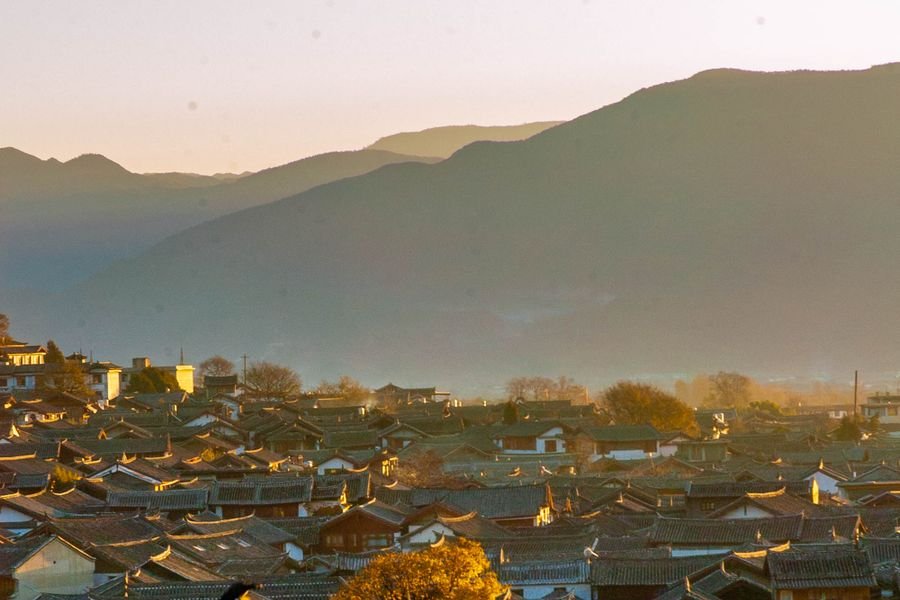
The Old Town of Lijiang (Dayan) holds UNESCO World Heritage status for its Naxi timber architecture and a working network of open water channels. That designation is why new building is restricted, why the good courtyards stay small, and why the best ones are gone early in autumn. It also explains the single most misunderstood part of a Lijiang booking: the old town is a pedestrian, cobbled, canal-crossed maze. The hotel pin on the map is almost never where your taxi can stop.
Start with the luggage, not the room
Almost every disappointing Lijiang arrival starts the same way: a traveller books a beautiful courtyard, lands at Lijiang Sanyi Airport (LJG) about 30 km from the old town, takes a taxi 40–50 minutes for roughly ¥80–120, and is dropped at an outer gate or a designated drop-off point. From there the lanes are too narrow and too uneven for a suitcase. The inn sends someone with a handcart or a porter carries the bags; the walk is usually 5–15 minutes over wet cobblestone, and the fee is typically ¥20–50 depending on distance and bag count.
Three things follow from that. First, pack a small overnight bag with your charger, medication and a change of clothes — the rest can arrive an hour later. Second, tell the inn your flight or train number at least a day ahead so someone is actually waiting; gate access is controlled and a Driver cannot simply drive to the courtyard. Third, if you are arriving late at night with children or a large suitcase, book a property just outside the pedestrian core for the first night. The view is slightly worse and the sleep is much better.
Getting to the old town
- From Lijiang Sanyi Airport (LJG): roughly 30–32 km, 40–50 minutes by taxi, typically ¥80–120. Airport shuttle buses run to the city for a fraction of that but drop you further from the lanes.
- From Lijiang railway station: the high-speed line from Kunming takes roughly 3–4 hours; the station is about 8 km from Dayan and a DiDi ride runs around ¥25–40, 20–30 minutes.
- On foot inside the lanes: signage is poor and the same street name repeats. Save the inn’s Chinese name and phone number offline — data coverage is fine, but mapping apps route you to the nearest gate, not the door.
Which old town should you actually book in?
The three settlements are only a few kilometres apart but they are different products. This is the comparison that matters more than any star rating:
| Area | Best for | Typical courtyard rate | Car to door | Noise after 10 p.m. |
|---|---|---|---|---|
| Dayan (main Old Town) | First visits, photography, lion-hill panorama | ¥300–900; boutique courtyards ¥700–1,200 | No — porter 5–15 min | High near the square, low in back lanes |
| Shuhe, ~6 km north | Light sleepers, families, longer stays | ¥350–700 | Sometimes — some inns have a vehicle lane | Low |
| Baisha, ~8 km further north | Mountain views, value, quiet | ¥250–500 | Often yes | Very low |
| Yulong village / resort strip | Heated pools, spa, unobstructed snow-mountain view | ¥1,500–5,000 | Yes | None |
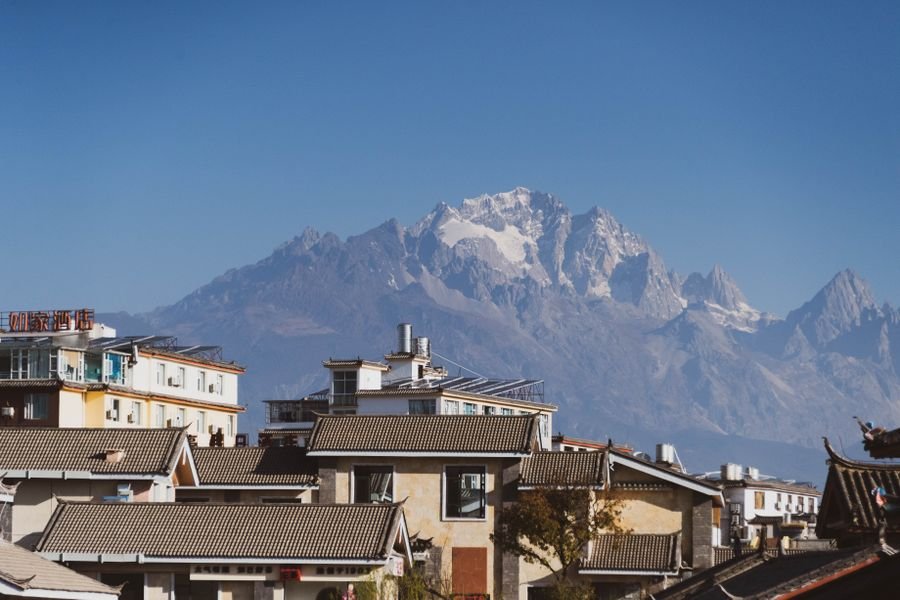
Dayan is the atmospheric heart and the strictest on vehicle access. The bars around the main square get loud past 10 p.m. and the cobbles amplify footsteps; a “courtyard view” room on a back lane can be genuinely silent, while a cheaper room fronting a bar lane is not. Shuhe has its own canals and a fraction of the crowds, with the same Naxi building style. Baisha is a working village beneath Jade Dragon Snow Mountain with a handful of small inns — the widest views and the best value, at the cost of a 20-minute ride to dinner.
Our Lijiang travel guide covers the walking routes between the three, and the Lijiang and Dali loop itinerary shows how travellers normally slot a Lijiang stay into a wider Yunnan week.
What the price bands actually buy
Resorts with the mountain in frame
Banyan Tree Lijiang, in the Yulong village area outside Dayan, is the high end of this market — typical nightly rates sit around ¥2,800–5,000 for a villa with a heated pool, spa and a clear view of Jade Dragon Snow Mountain from the terrace. Pullman Lijiang Resort, nearer Shuhe, is usually ¥1,500–2,800 and is the more balanced choice if you want international-standard bedding and a car that reaches the door. Both are outside the pedestrian core, which is a real advantage with luggage and with children. Neither is a walk to the old town’s nightlife. If you want to compare current Lijiang resort rates and mountain-view rooms, check the live inventory before you fix your dates — autumn villas move quickly.
Boutique Naxi courtyards inside the lanes
This is where Lijiang is genuinely distinctive. A considered courtyard inn runs ¥400–900: carved wooden windows, a planted central court, thick walls, and often a rooftop with a mountain sightline. The jump from a generic ¥400 room to a well-designed ¥900 one is large — better glazing, real heating, quieter lanes, and staff who can arrange a porter without being asked. The Lijiang boutique inns guide goes deeper on what separates a real courtyard from a repainted guesthouse.
Mid-range and budget rooms
The ¥300–600 band inside Dayan is crowded with mediocre rooms. The ones worth booking share three traits: a lane set back from the main drag, double-glazed or at least well-sealed windows, and a rooftop or shared terrace. Shuhe’s comparable inns run ¥350–700 and are quieter for the same money. Baisha inns start around ¥250–500. Verified current listings in Lijiang frequently show rooms below these figures in low season, so treat the ranges as planning bands rather than fixed rates.
Booking details that change the experience
Inventory is tightest in autumn, when the air is clearest and Jade Dragon Snow Mountain is most likely to be visible, and loosest in winter. Boutique inns commonly ask for a one-night deposit; many refund it up to seven days before arrival, but the rule varies by property and by platform. Ask four questions before paying:
- Is there heating, and is it central or a plug-in unit? Lijiang sits at roughly 2,400 m. Nights in December and January can drop near freezing, and old courtyards without insulation are cold inside. A plug-in heater in one corner is not equivalent to central heating.
- Can you arrange the porter, and what is the charge? Confirm the amount and whether it is per bag or per trip. The walk is over uneven stone and is genuinely difficult with a 23 kg case.
- Is the room facing the lane or the courtyard? “Old town view” often means a window over a bar lane. Ask for the Chinese room description or a photo taken from the window.
- Is there a bathroom with a seated toilet and reliable hot water? Many renovated Naxi houses have Western-style bathrooms, but the older budget rooms do not always have consistent hot water in the evening peak.
Payment is usually card or Alipay/WeChat Pay at the property; international cards are accepted by the larger inns and resorts but often not by small family courtyards. If you are booking direct, agree the arrival time and keep a screenshot of the confirmation — many small inns answer WeChat faster than email.
On the ground: weather, water and the first afternoon
Lijiang’s altitude is around 2,400 m. Most travellers feel nothing more than a slightly shorter breath, but anyone arriving from sea level should take the first afternoon slowly: walk the lanes, drink water, skip the climb up Lion Hill until day two. Spring (March–May) brings wildflowers on the slopes and comfortable 15–22°C days. Autumn (September–November) is the clearest window for the snow peak and the busiest for rooms. Summer (June–August) is green but rainy, with afternoon storms that hide the mountain; carry a light rain jacket rather than an umbrella, because the lanes are narrow and the wind comes off the peak. Winter is cold at night, crowd-free and cheap — resort villas can fall below ¥2,500 in January.
The Spring Festival and National Day weeks are the two periods to avoid if you value quiet. Rates can double, the lanes become a slow shuffle, and the restaurant queues spill into the street. Convenience stores are plentiful near the main gates but thin inside the back lanes; stock up on water and any medication before you head in for the night. Tap water is generally treated in the hotels, but most travellers in Lijiang drink bottled or boiled water — the inns usually provide a kettle.
Eating near your inn
The lanes serve Naxi and Bai cooking. Lijiang baba, a fried flatbread, costs around ¥8–15; yak-meat hotpot (牦牛火锅) runs roughly ¥128–228 for two; cured pork-rib soup appears on most courtyard menus. The bars on the square get loud after 10 p.m., which is the practical reason to sleep in Shuhe. For a fuller account of local dishes, see the Naxi food guide and the Bai food guide; the best hotels in Lijiang page lists a wider set of properties by district.
If you are comparing Lijiang with the rest of the province, the Yunnan travel guide and the Shangri-La hotel guide cover the alternatives further north, and Lashihai Lake is an easy half-day out of town when you want wetland and horse trails instead of lanes.
Frequently asked questions
Should I stay inside Lijiang Old Town or outside it?
Inside if you want atmosphere and are willing to have a porter carry your bags. Outside if you have a large suitcase, young children, or want a heated pool and a mountain view. Shuhe is the practical middle ground.
How much does a porter cost in Lijiang Old Town?
Typically ¥20–50 depending on distance from the drop-off point and the number of bags. Confirm the fee with the inn when you arrange the pickup; it is rarely included in the room rate.
Can a taxi reach hotels in the old town?
Not most of them. Dayan’s core is pedestrian and cobbled, with canal bridges. Taxis stop at an outer point and the inn’s porter or cart covers the last 5–15 minutes on foot.
Which area is quietest at night?
Baisha first, Shuhe second. In Dayan, ask specifically for a courtyard-facing room on a back lane; rooms on the square stay noisy until late.
When is the best time to book, and how far ahead?
September to November for the clearest mountain views, March to May for flowers. Book several weeks ahead in those windows, and earlier for the boutique courtyards, which have very few rooms. Winter is the easiest time to find a deal. For a bookable Lijiang courtyard stay with instant confirmation, filter for properties that explicitly list porter service and heating rather than relying on the district label alone.
Do Lijiang inns have heating and Western bathrooms?
Many do, but not all. Confirm central heating rather than a plug-in unit, and ask whether the bathroom has a seated toilet and steady hot water — budget courtyard conversions vary widely.
Lijiang rewards travellers who plan the arrival before the room. Choose the old town that matches how you sleep, settle the luggage question in advance, and the courtyard you book becomes the best part of the trip rather than a logistical problem.