

Perched high in the mountains of northwest Yunnan, Lijiang is the cultural heartland of the Naxi people and the single best place in China to taste their cooking. Naxi food is not a subsystem of Sichuan or Cantonese cooking; it is a distinct ethnic cuisine shaped by altitude, by centuries of caravan trade, and by the meeting of Tibetan, Bai, and Han influences. The result is hearty, aromatic, and deeply local. If you are putting together a Naxi food guide for an upcoming trip, this article walks you through the signature plates, the markets, and the humble dining rooms where residents actually eat.
Most visitors arrive for the cobbled lanes and snow-mountain views, then discover that the table is just as memorable. Naxi cuisine Lijiang style rewards the curious traveler who is willing to step into a narrow alley restaurant, point at a steaming clay pot, and ask what is in it. This Naxi food guide is written for exactly that kind of eater.
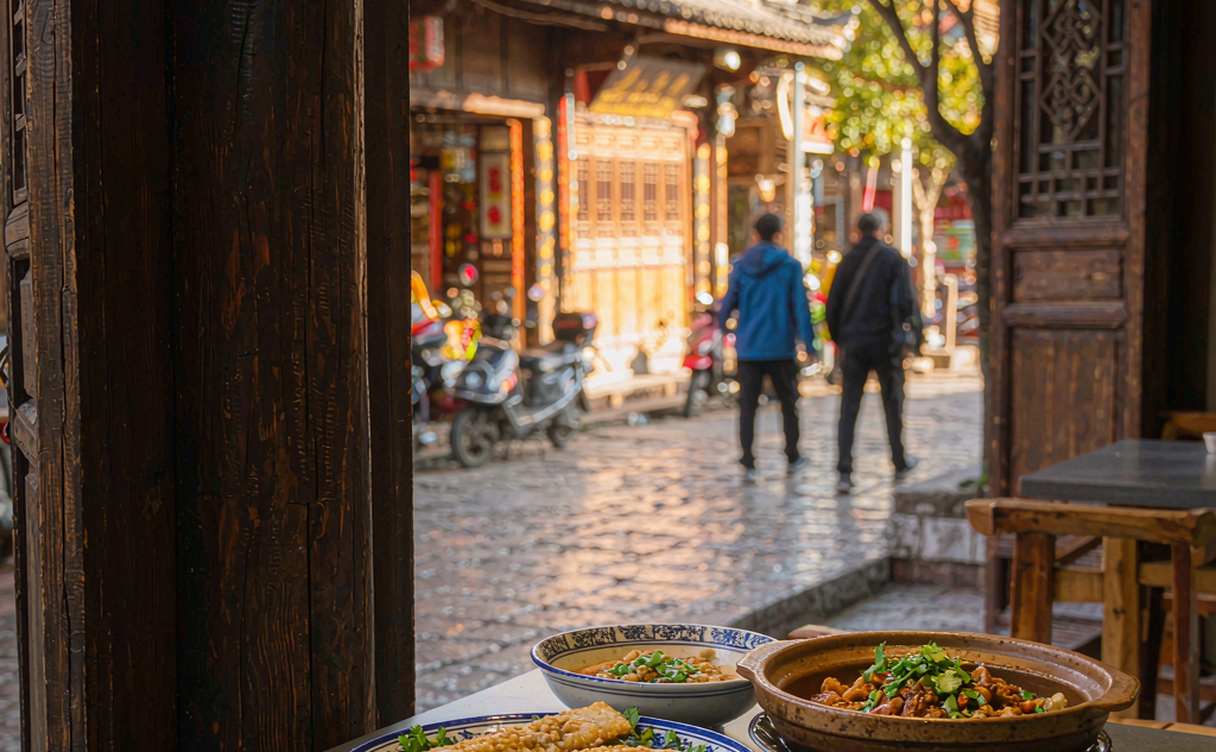
What Makes Naxi Cuisine Lijiang Unique?
The People Behind the Plates
The Naxi are one of China’s recognized ethnic minorities, with a history that stretches back more than a thousand years in the high valleys around Lijiang. Their ancient Dongba pictographic script, their matriarchal family traditions, and their music have all drawn scholarly attention, and the old town itself is protected as a UNESCO World Heritage site. You can read more about the wider region’s culture and history through this official overview from China.org.cn.
Food is the most approachable part of that heritage. Because Lijiang sits at roughly 2,400 meters, the cooking leans on ingredients that keep and warm the body: cured meats, yak and goat, potatoes, beans, and a wide range of mountain herbs and wild fungi. Tibetan influence shows up in butter tea and dried dairy, while nearby Bai and Han traditions contributed techniques for brewing, pickling, and noodle making. The cooking is rarely fiery; instead it favors slow roasting, stewing, and a generous hand with local chili, Sichuan pepper, and aromatic herbs.
Flavor Principles
If you have sampled the heavy heat of other regional styles, Naxi cuisine Lijiang will feel refreshingly different. Dishes tend to be savory and smoky rather than numbingly spicy, with sour notes from pickled vegetables and fermented bean curd cutting through rich meats. Freshwater fish from nearby lakes, free-range chicken, and wind-dried pork appear again and again. Understanding these building blocks makes the rest of this Naxi food guide far easier to navigate once you sit down to order.
Traditional Naxi Dishes You Should Not Miss
The best way to understand this cuisine is through its classics. The following traditional Naxi dishes appear on nearly every local menu, and each one tells you something about the land and the people.
Lijiang Baked Fish
Perhaps the most famous of all traditional Naxi dishes, baked fish is typically made with a whole carp or grass carp stuffed with scallions, ginger, chili, and fermented bean paste, then grilled over charcoal until the skin blisters and the flesh turns tender. It arrives sizzling, often on a bed of bean sprouts, and the contrasting textures are the point. Order it for a table to share, because portions are generous.
Lijiang Babo
These round, flaky flatbreads are a beloved Naxi snack and a common breakfast item. Bakeries in the old town turn out both savory versions, layered with minced pork and scallion, and sweet ones filled with sugar and sesame. A warm babo with a cup of local tea is one of the simple pleasures that experienced travelers hunt down. Some visitors compare them to a cross between a scallion pancake and a flaky pastry, but the local version has its own distinct character.
Black Goat Hot Pot
Mountain goat is a staple here, and hot pot is the most sociable way to enjoy it. Thin slices of meat are swished in a bubbling broth flavored with herbs and chili, then dipped in a sesame and chili sauce. This dish is especially welcome on cool evenings, and it is a favorite at family gatherings. It also illustrates why Naxi food Yunnan cooking is so closely tied to the highland climate.
Chicken Bean Jelly and Street Snacks
Cold chicken bean jelly, served in cubes with vinegar, chili oil, and crushed peanuts, is a refreshing Lijiang specialty that appears in markets and small shops. Alongside it you will find yak yogurt, roasted potatoes dusted with chili salt, and skewers of grilled meat. Noodles are another constant; if you want to trace how the region’s noodle culture developed, the Yunnan rice noodles guide gives useful background before you eat your way through the stalls.
Cured Ham and Dairy
Wind-cured ham, prepared in a manner similar to the famous hams of the wider province, finds its way into stir-fries and soups. Yak butter tea, salty and thick, is a Tibetan-influenced drink you will encounter in guesthouses and mountain villages. It is an acquired taste for many first-timers, but it is an authentic part of the local table.
Where to Eat Naxi Food in Lijiang
Knowing where to eat Naxi food makes the difference between a forgettable meal and a memorable one. The old town is the obvious starting point, but it is also full of tourist-oriented menus, so a little strategy helps.
Inside the Old Town
The lanes of the ancient town are lined with small restaurants, and many of the best are tucked away from the main squares. Look for places with a visible grill, a crowd of local diners, and a short handwritten menu rather than a glossy picture book. For help planning the rest of your time in this atmospheric district, consult the Lijiang Old Town travel guide before you choose where to base yourself.
Markets and Neighborhood Dining
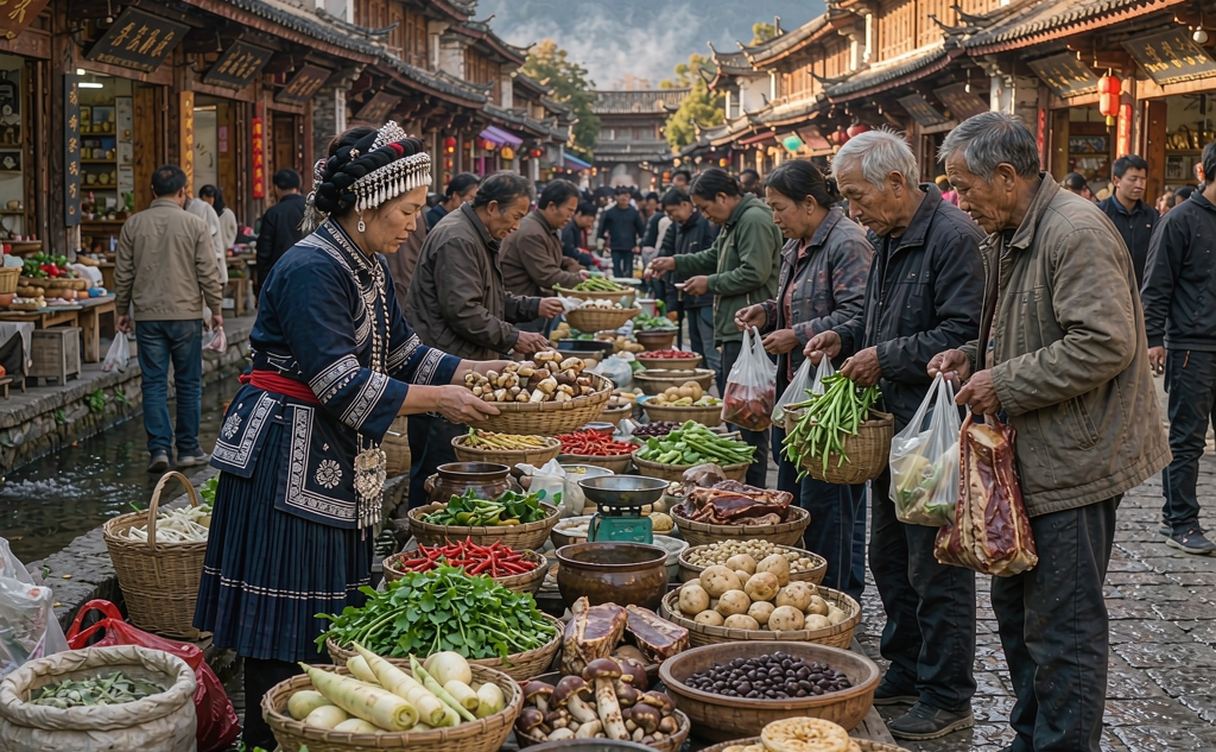
For the most authentic experience, head to a neighborhood market in the morning, where vendors sell fresh noodles, pickled greens, and ready-to-eat snacks. A bowl of noodles at a market stall costs a fraction of a restaurant meal and is often more flavorful. If you want a broader rundown of the city’s dining scene, the Lijiang food guide covers additional neighborhoods and dishes worth seeking out.
Naxi Food Yunnan: How It Fits Into the Bigger Picture
Naxi cuisine Lijiang does not exist in isolation. To understand Naxi food Yunnan style fully, it helps to compare it with the cooking of neighboring cities and ethnic groups across the province.
Neighboring Culinary Traditions
Travel south to Dali, home of the Bai people, and the flavors shift toward lake fish, sour soups, and delicate herbs. The Dali food guide explains that regional cooking in its own right. Continue on to the provincial capital, where the Kunming food guide introduces an even broader range of Yunnan ingredients and techniques.
One of the oldest and most storied culinary traditions in the region is Gaichen cuisine, a historic style that shares the highland love of preserved meats and slow cooking. The Yunnan Gaichen food guide traces its origins and shows how it connects to the dishes described here. Seen together, these traditions reveal Naxi cooking as one vibrant thread in a much larger regional tapestry.
Ingredients That Cross Borders
Many of the ingredients on a Naxi table are shared across Yunnan, but the preparation is what makes the cuisine distinct. Wild mushrooms, for example, appear in markets across the province, yet Lijiang cooks often preserve them by drying and then rehydrate them in slow stews. This habit reflects a highland society that historically needed food to last through long winters and to sustain travelers on ancient trade routes.
Practical Tips for Enjoying Naxi Food
Ordering well is partly a matter of timing and partly a matter of confidence.
- Eat at local hours. Lunch is typically early and dinner begins around six in the evening in Lijiang. Restaurants geared toward foreign visitors may keep later hours, but the most authentic kitchens do not.
- Ask about spice levels. Naxi food is usually milder than Sichuan cooking, but chili still features prominently. A simple phrase meaning “less chili” goes a long way.
- Share dishes. A Chinese table is built around shared plates. Ordering several traditional Naxi dishes for the table lets you sample far more than a single main course.
- Carry cash and a payment app. Small stalls may not accept foreign cards, so keep some cash and a working mobile payment option on hand.
- Try the breakfasts. Morning is when bakeries turn out fresh babo and when noodle shops are at their busiest. This is the simplest way to see how residents really eat.
Following these tips will help you get more from this Naxi food guide, whatever your budget or travel style.
Frequently Asked Questions
What is the most famous Naxi dish?
Lijiang baked fish is probably the best-known single dish, followed closely by Lijiang babo and black goat hot pot. All three appear on local menus throughout the old town.
Is Naxi food spicy?
Generally less spicy than Sichuan cuisine. The flavors lean smoky, savory, and herbal, with chili used as an accent rather than the dominant note. You can usually request milder versions.
Where to eat Naxi food on a short visit?
If you only have a day or two, focus on one good old-town restaurant for a sit-down meal and one market visit for breakfast or snacks. That combination gives you a broad introduction without wasting time.
Can vegetarians enjoy Naxi cuisine Lijiang?
Yes, though the range is narrower. Bean dishes, potato preparations, pickled vegetables, cold bean jelly, and vegetable noodle soups are widely available. Just be aware that many broths contain meat.
When is the best time to visit for food?
Spring and autumn are pleasant and coincide with a good supply of fresh ingredients. Noodles, cured meats, and baked breads are available year-round, so any season offers plenty to taste.
Final Thoughts
Naxi cooking is one of the great culinary rewards of a trip to northwest Yunnan. It is unpretentious, rooted in a specific place, and best enjoyed slowly, one shared plate at a time. Use this Naxi food guide as a starting point, then follow your curiosity through the markets and side streets of Lijiang. The traditional Naxi dishes you discover there will likely linger in your memory far longer than the souvenirs you bring home. Wherever your travels in Yunnan take you, make room at the table for Naxi food.