

Shangri-La, Yunnan, China — the town formerly called Zhongdian, renamed in 2001 to match the legend — sits at about 3,200 meters above sea level on the Tibetan Plateau edge of northwest Yunnan. We have sent travelers here who booked the first hotel they found and spent a restless first night fighting the altitude, and others who chose well and woke to prayer flags and snow peaks. This guide to the best hotels in Shangri-La is built from those contrasts: where to stay by budget, which neighborhoods suit which traveler, and the altitude, heating, and booking realities that matter more here than almost anywhere else in China. For the sightseeing frame, our Shangri-La travel guide covers the monasteries and gorges beyond your door.
Luxury: Tibetan-style retreats and heritage resorts
The standout luxury stays are low-slung, Tibetan-influenced resorts on the valley rim rather than in the dense old town. Banyan Tree Ringha, set in a renovated Tibetan village a short drive out, offers heated villas with wood stoves and butler service from roughly ¥2,000 to ¥4,000 per night in peak season. Songtsam Retreat, closer to the old town, blends stone-and-timber design with altitude-friendly amenities around ¥1,500 to ¥3,000. These are the properties we recommend for a first high-altitude trip because they take heating, oxygen, and acclimatization seriously — details that budget guesthouses often skip. Book at least a month ahead for October, the clearest and most popular month, and ask for a room with a view of the Meili foothills if the budget allows the splurge.
Mid-range: old-town guesthouses with character
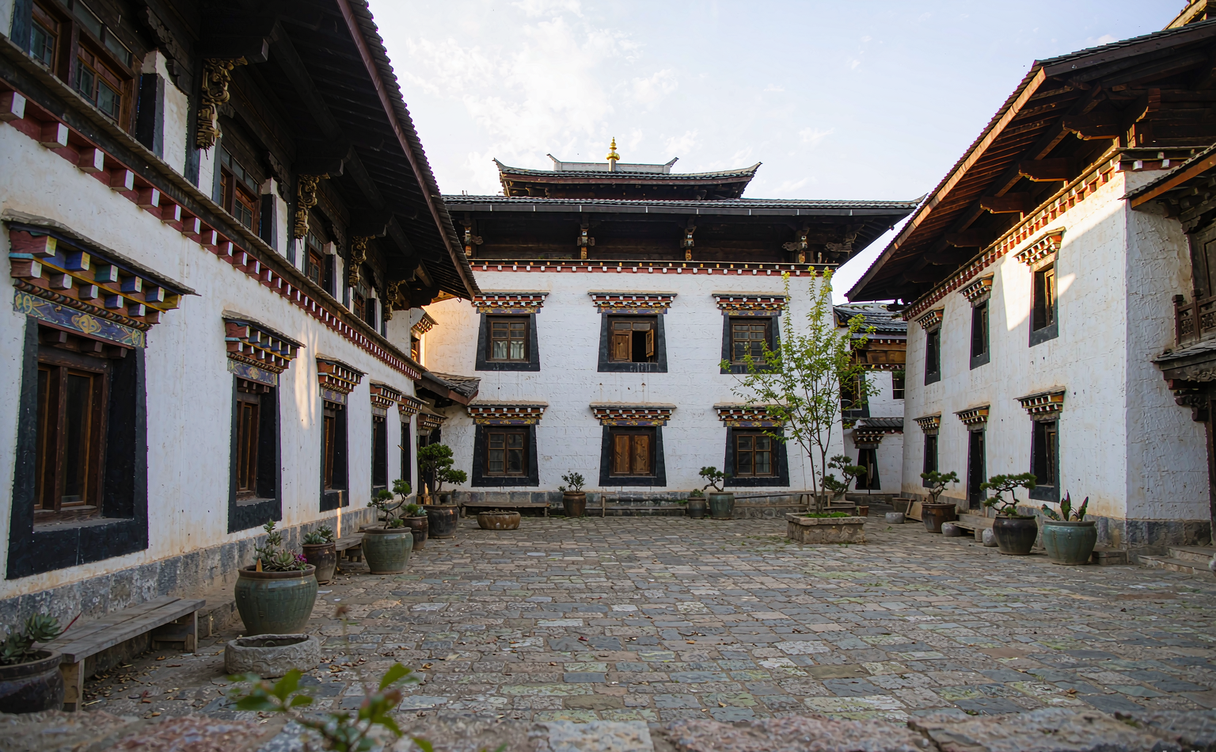
For most travelers, the sweet spot is a restored courtyard guesthouse inside Dukezong, the old Tibetan town. Expect heated rooms, a communal yak-butter-tea lounge, and hosts who arrange monastery trips, typically ¥300 to ¥600 per night. The trade-off is the old town’s stone lanes are cold and quiet after dark, and some rooms lack strong insulation — ask specifically for a room with underfloor heating or a heating unit, not just extra blankets. We like this tier for the atmosphere: you step out to spinning prayer wheels and dawn light on the hills. Reserve two to three weeks ahead in spring and autumn, and read the most recent reviews for mentions of “warm” and “quiet,” since older timber buildings vary room to room.
Budget and hostels: clean, basic, high up
Backpacker and budget hotels, including a few well-run hostels, run ¥80 to ¥180 for a private room and ¥50 to ¥90 for a dorm bed. They are functional rather than charming, and the main risk is thin walls and weak heating at altitude, so read recent reviews for mentions of “warm” and “oxygen.” Located mostly in the new town, they suit travelers who spend their days out and just need a clean bed. Keep in mind that at 3,200 meters a cold room worsens altitude symptoms, so spend a little more if your budget allows, and avoid the cheapest unheated options in the depths of winter.
Where to stay: old town vs new town
Dukezong old town wins on atmosphere and walkable monasteries; the new town wins on taxis, ATMs, and reliable heating. First-time visitors prone to altitude should lean new town for the first night, then move to an old-town guesthouse once acclimatized. We have found that splitting the stay — two nights new town, two nights old town — gives both comfort and character without committing to one extreme. Either way, choose a place within a short taxi ride of the town center, since walking uphill at altitude is exhausting for the first day or two, and a ¥10 to ¥20 ride saves real energy. For families or groups, renting a whole courtyard guesthouse in Dukezong can be cheaper per head than several hotel rooms and gives you a private heated common area to gather in the evenings. We have arranged this for travelers with older parents who needed a calm base away from the new town’s traffic, and it worked far better than splitting across two hotel floors, so book these a month ahead in autumn when only a handful of well-run ones remain.
Dining near your hotel
Wherever you stay, the local table is part of the experience. Tibetan hotpot — a rich, peppery broth with yak meat, mushrooms, and tofu cooked at the table — runs ¥80 to ¥150 per person and is the best cold-weather meal in town. Try butter tea (su you cha) and tsampa (roasted barley) at least once, and sample barley wine (qing ke jiu) in small amounts, since the altitude amplifies its effect. Most hotel concierges can point you to a family-run spot a few minutes away, which is usually better and cheaper than the restaurants aimed squarely at tour buses.
A suggested stay plan
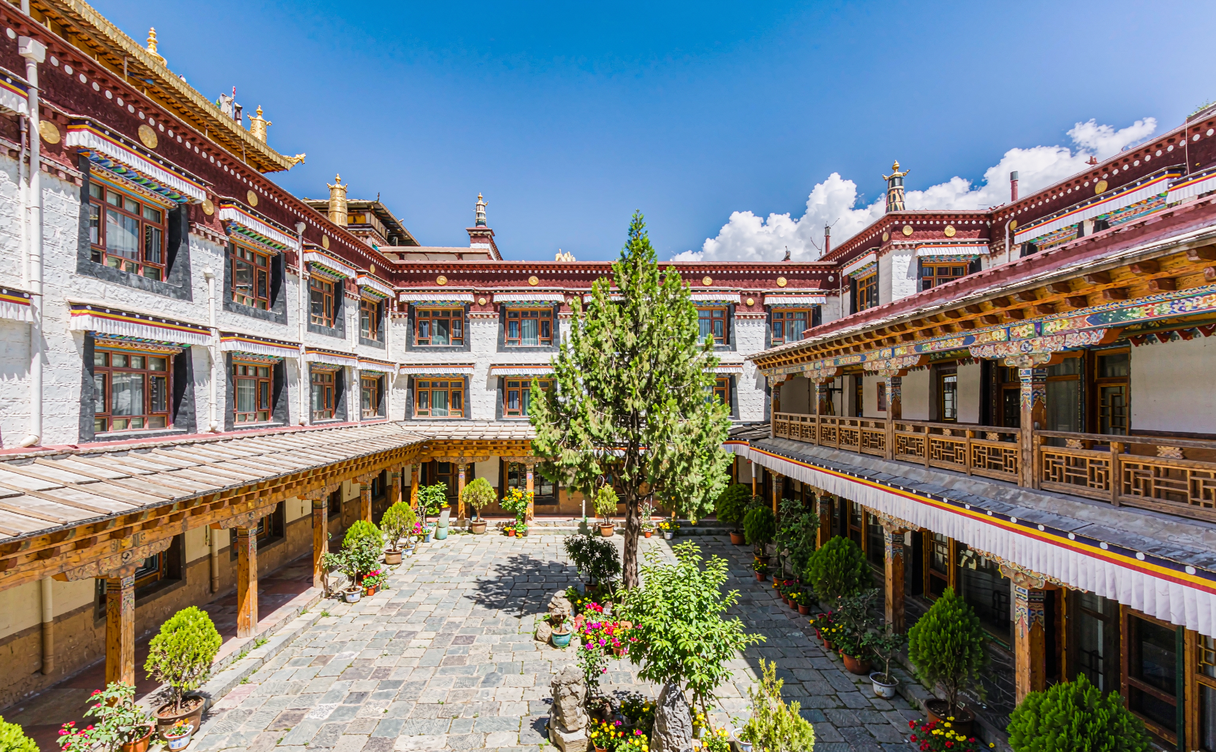
If you have three nights, we suggest a rhythm that respects the altitude. Arrive in the new town for night one, eat light, and sleep with the heating on. Day two, move to a Dukezong guesthouse, wander the old town and the Giant Buddha monastery, and do a short Songzanlin Monastery trip in the afternoon rather than a long hike. Night three, either stay in the old town for the atmosphere or return to the new town for an early airport departure. This slow pacing is not just comfortable — it is the difference between enjoying Shangri-La, Yunnan, China and spending your trip recovering from a headache at 3,200 meters. Add a fourth night only if you plan a Tiger Leaping Gorge day trek after acclimatizing.
What to pack for the altitude
Packing shapes your first night as much as the hotel does. Bring a refillable bottle (the dry air and altitude dehydrate you fast), lip balm, and a warm layer even in summer, because nights at 3,200 meters are cold year-round. Slip-on shoes help at the monasteries where you remove footwear, and a small flashlight is useful in the old town’s dim lanes. We also suggest packing any personal medications in your carry-on, since the town’s pharmacies stock basics but not every brand a foreign visitor expects, and a delayed bag at altitude is no time to run out.
Altitude, heating, and what to book
The single most important hotel feature in Shangri-La, Yunnan, China is heating that works through the night — confirm it before booking, not on arrival. Ask about oxygen supply or in-room oxygen concentrators if you are sensitive to altitude, and plan a day of light activity on arrival: no showers straight off the plane, no heavy hiking for the first 24 hours. Rooms with a confirmed heating unit and a kettle for hot drinks make the first night far easier. We also suggest booking with a free-cancellation rate where possible, because weather and altitude can reshape plans quickly in the mountains.
Getting there and the best season
Most travelers fly into Diqing Shangri-La Airport from Kunming, Chengdu, or Lijiang; the flight from Chengdu is the common international gateway connection. Overland routes via Tiger Leaping Gorge are spectacular but strenuous at altitude, and best attempted only after a night of acclimatization. The most comfortable seasons are spring (April to June) and autumn (September to October); our best time to visit China guide has the full national calendar. Peak autumn rooms sell out, so lock in lodging before flights, and confirm whether your rate includes the plateau breakfast buffet.
The wider region is part of the Three Parallel Rivers of Yunnan Protected Areas, a UNESCO World Heritage site, which is why the scenery from your hotel window can be the highlight of the trip.